

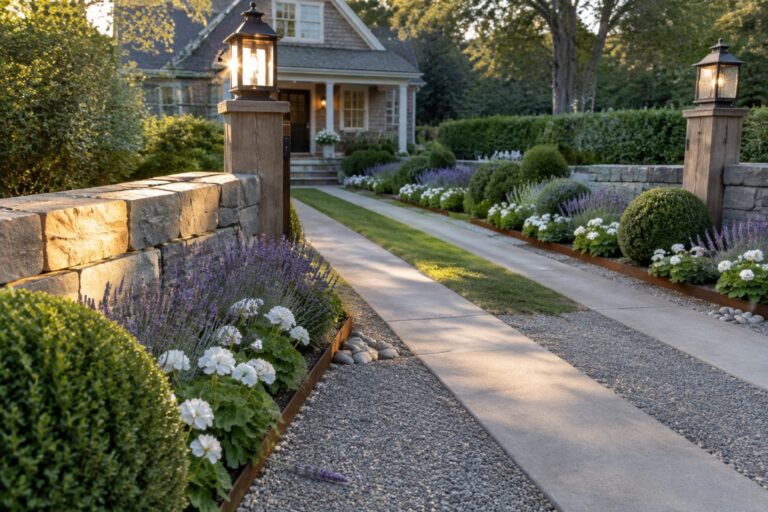
A driveway entrance sets the tone before anyone reaches the front door, and balanced planting can make it feel considered without looking formal.
I find that matching plants on either side works best when their scale suits the driveway and leaves enough room for cars, foot traffic, and a clear view of the house.
The border itself matters too, since edging, paths, and changes in height help the entrance feel connected to the rest of the yard.
Some designs keep things neat with clipped shrubs, while others soften the symmetry with grasses, flowers, or small trees.
I’d save the ideas that fit your light and maintenance needs, then adapt their spacing and plant choices to your own entrance.
Use a Straight Path to Organize the Entry

A straight walkway gives a driveway entrance a clear, orderly feel. Matching planted beds on either side repeat the same line and help guide visitors toward the front door without making the yard feel crowded.
For a similar look, keep the path simple and use plants of different heights in each bed, such as rounded shrubs behind lower flowers. This approach works especially well where the driveway leads directly to the house; leave enough width for people to pass comfortably.
Use Matching Borders to Define a Gravel Driveway
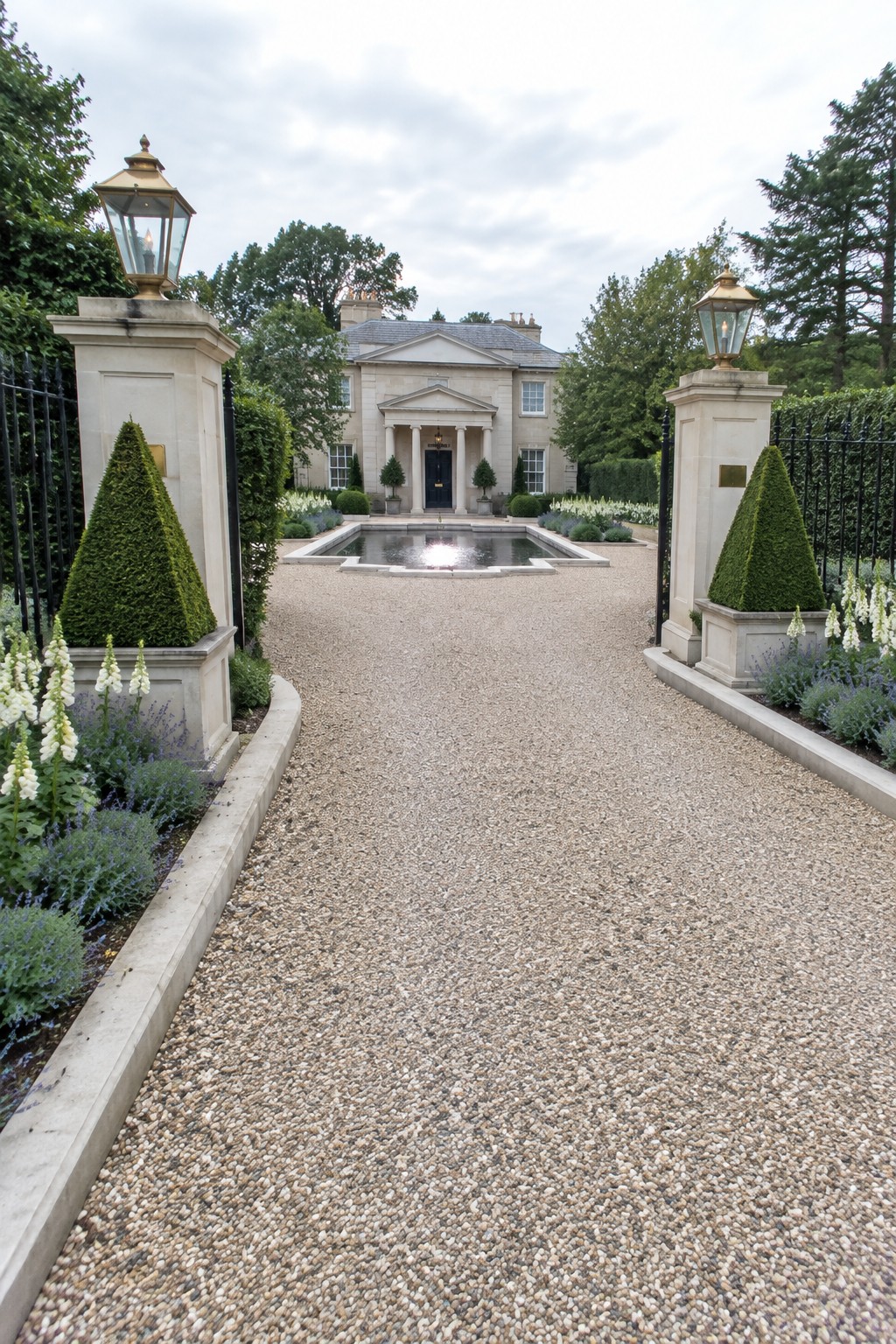
A gravel driveway feels more finished when its edges are clearly marked. Matching stone borders and repeated planting make the entrance look orderly, while keeping gravel from spilling into the beds.
This approach works especially well on a straight driveway leading to a formal entry. Use the same border treatment on both sides, then repeat a few plants for a simple rhythm. Leave enough room for cars to pass without brushing the planting.
Use Gravel Paths To Define The Entrance
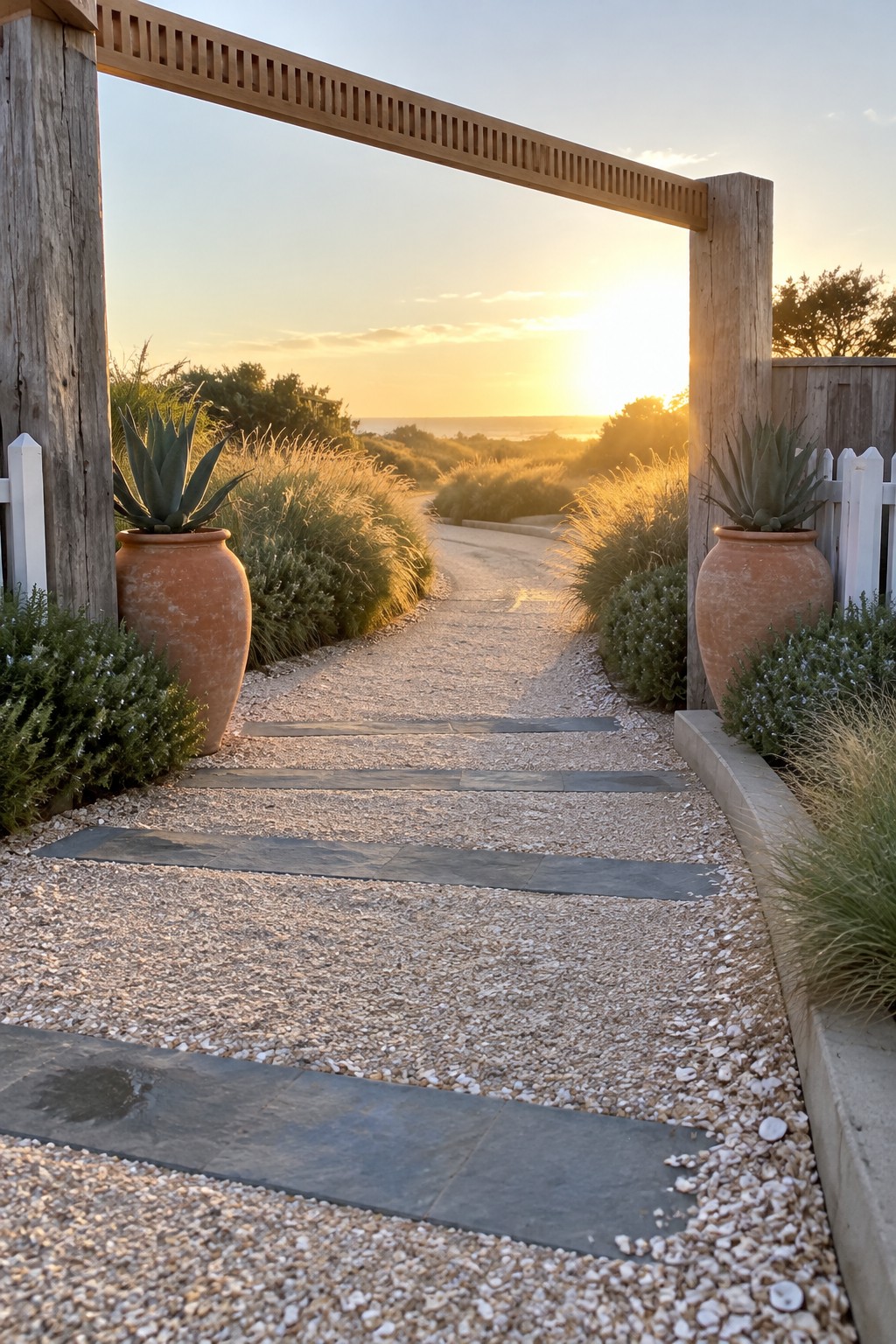
A gravel path gives a driveway entrance a clear route through the landscape without making it feel too formal. Dark stone strips set across the path add a steady rhythm and help mark where the approach begins.
This idea works well for garden entrances and long driveways, especially where a loose, natural look suits the home. Choose gravel that stays in place underfoot and set the stone bands level so they are easy to cross.
Use a Straight Path to Organize the Entrance

A straight concrete walkway gives a driveway entrance a clear, orderly route to the front door. A strip of grass between the paving helps define the path without adding much visual clutter.
This layout suits modern homes and works best when the walkway is wide enough for comfortable foot traffic. Keep the planting and stone edging tidy so the path stays easy to use and maintain.
Use Stone Steps to Mark the Driveway Entrance
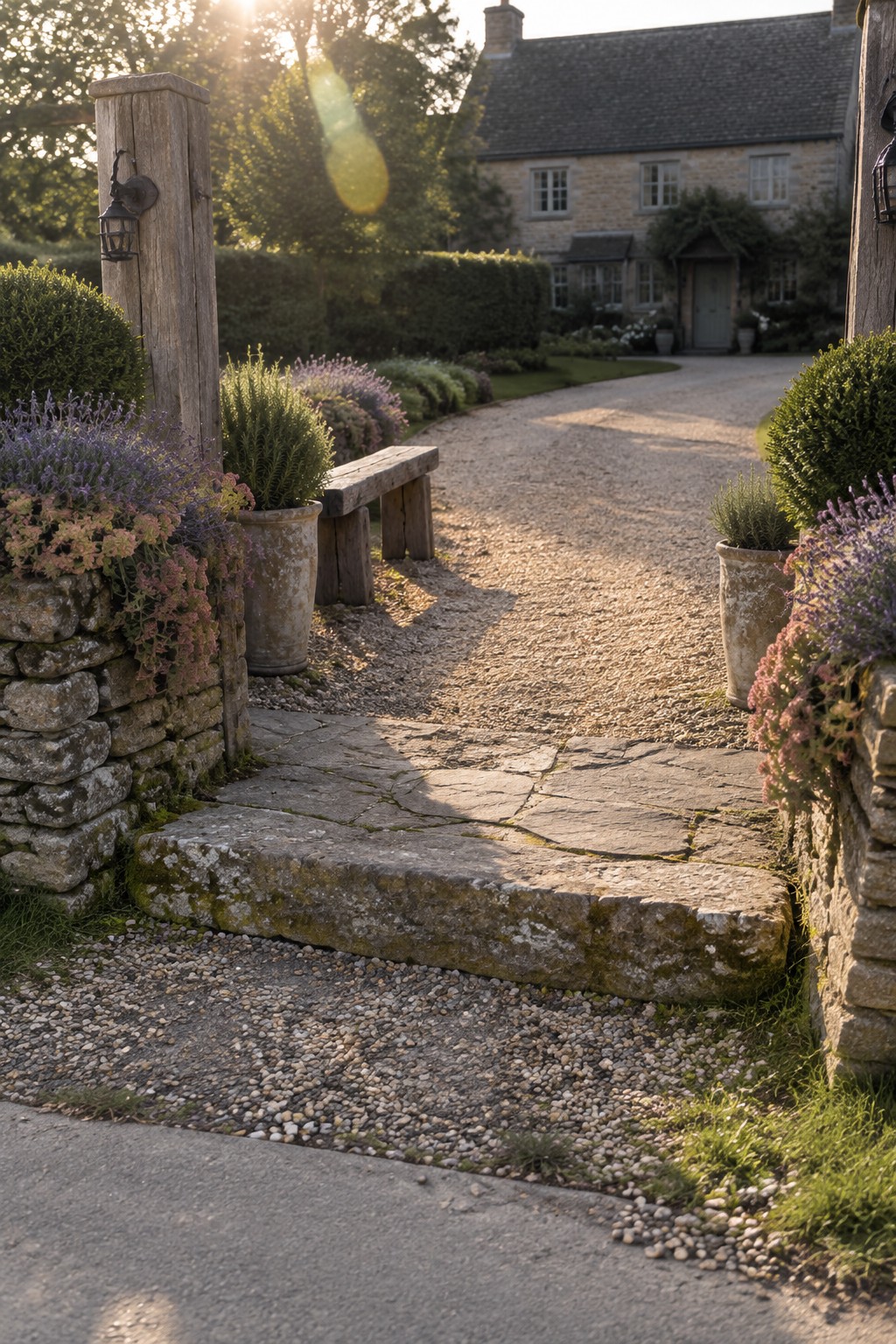
A low stone step is a simple way to signal where a driveway entrance begins. Here, it separates the approach from the gravel drive while giving the planting beds a clear edge.
This works well in a cottage-style garden or anywhere the driveway slopes slightly. Keep the step low and broad so it is easy to walk over, and use matching stone nearby to make the transition feel natural.
Use Stone Paving to Define the Entrance

A stone-paved approach gives an entrance a clear, durable route and makes the planting feel organized around it. Here, the straight path keeps the garden beds on either side in balance without needing elaborate edging.
This approach works well for a formal front garden or a wide driveway entrance. Choose paving that suits the home, and leave enough room at the sides for gravel or planting so the path does not feel cramped.
Use Stone Strips to Guide the Entrance
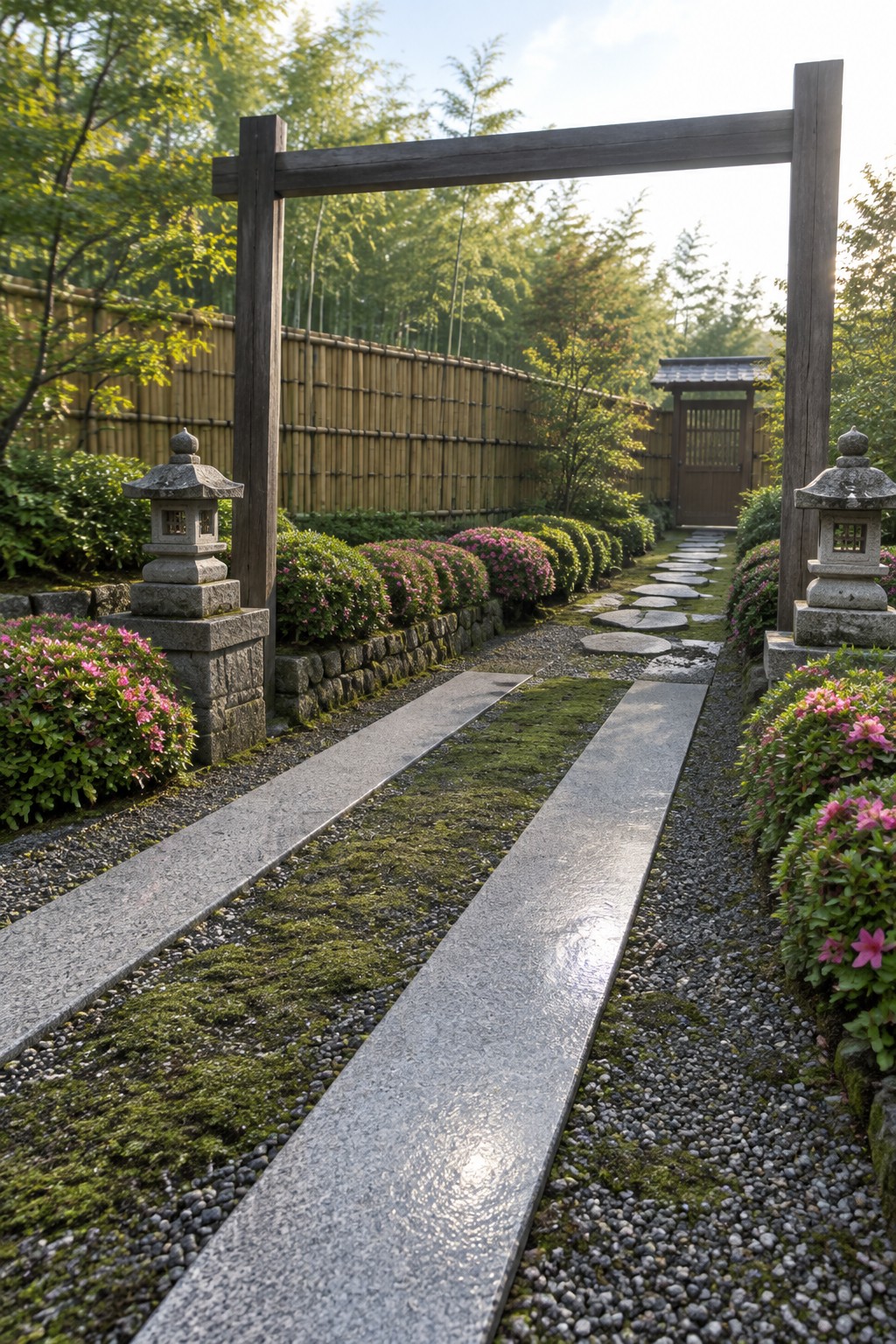
Long stone strips set into gravel make a clear route through the garden and lead the eye toward the gate. The moss between them keeps the hard surface from feeling too stark, while the simple layout suits a narrow entrance.
This idea can work along a driveway or garden approach, especially where you want a defined walking line without paving the whole area. Leave enough room for the gravel to drain, and choose stones with a surface that stays safe underfoot when wet.
Use Repeating Hedges to Guide the Driveway
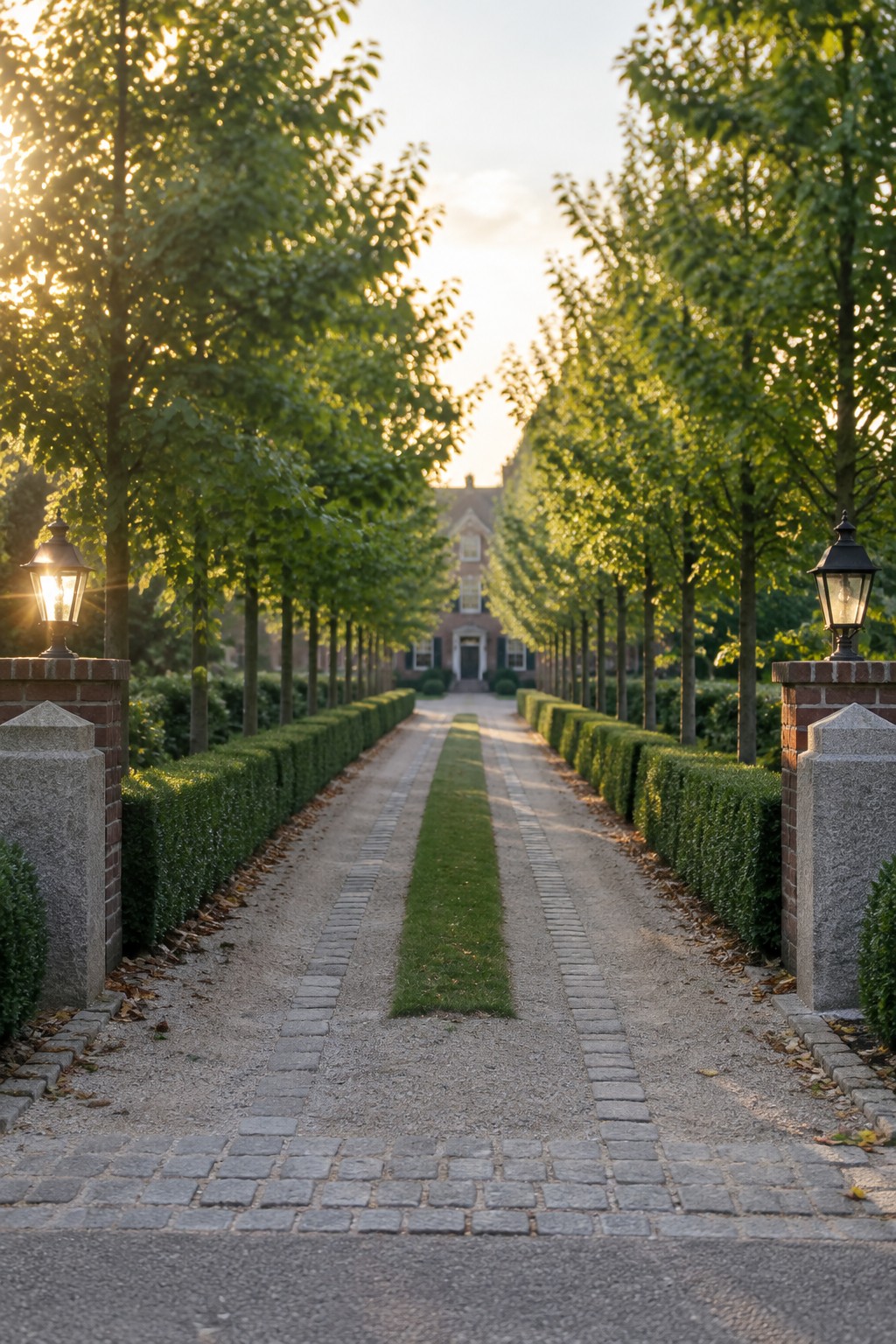
A straight driveway feels orderly when low hedges run along both sides at regular intervals. The repeated planting leads the eye toward the entrance and gives the path a clear edge without making it feel closed in.
This approach suits long driveways and formal front gardens. Keep the hedges at a height that leaves the path easy to see, and allow enough room for them to grow without crowding the drive.
Use Gabion Walls to Mark the Driveway Entrance

Low gabion walls make a clear edge for a driveway entrance without blocking the view beyond it. Their stone-filled cages also give the planting beds a sturdy border, so the approach feels organized rather than open-ended.
This idea suits modern homes and dry-climate gardens, where gravel and sculptural plants fit naturally. Keep the walls low enough to preserve sightlines, and use matching sections on both sides of the path for a more orderly entrance.
Use Brick Paving to Shape the Garden Path

Brick paving gives an entrance path a clear route while adding a traditional feel. The curved edge beside the raised planting bed keeps the path from reading like a plain strip through the garden.
This approach works well for cottage-style gardens and older homes. Use bricks suited to the house, and keep the path wide enough for comfortable walking. A low stone retaining wall can help hold the bed in place.
Use Low Stone Walls to Shape the Entrance
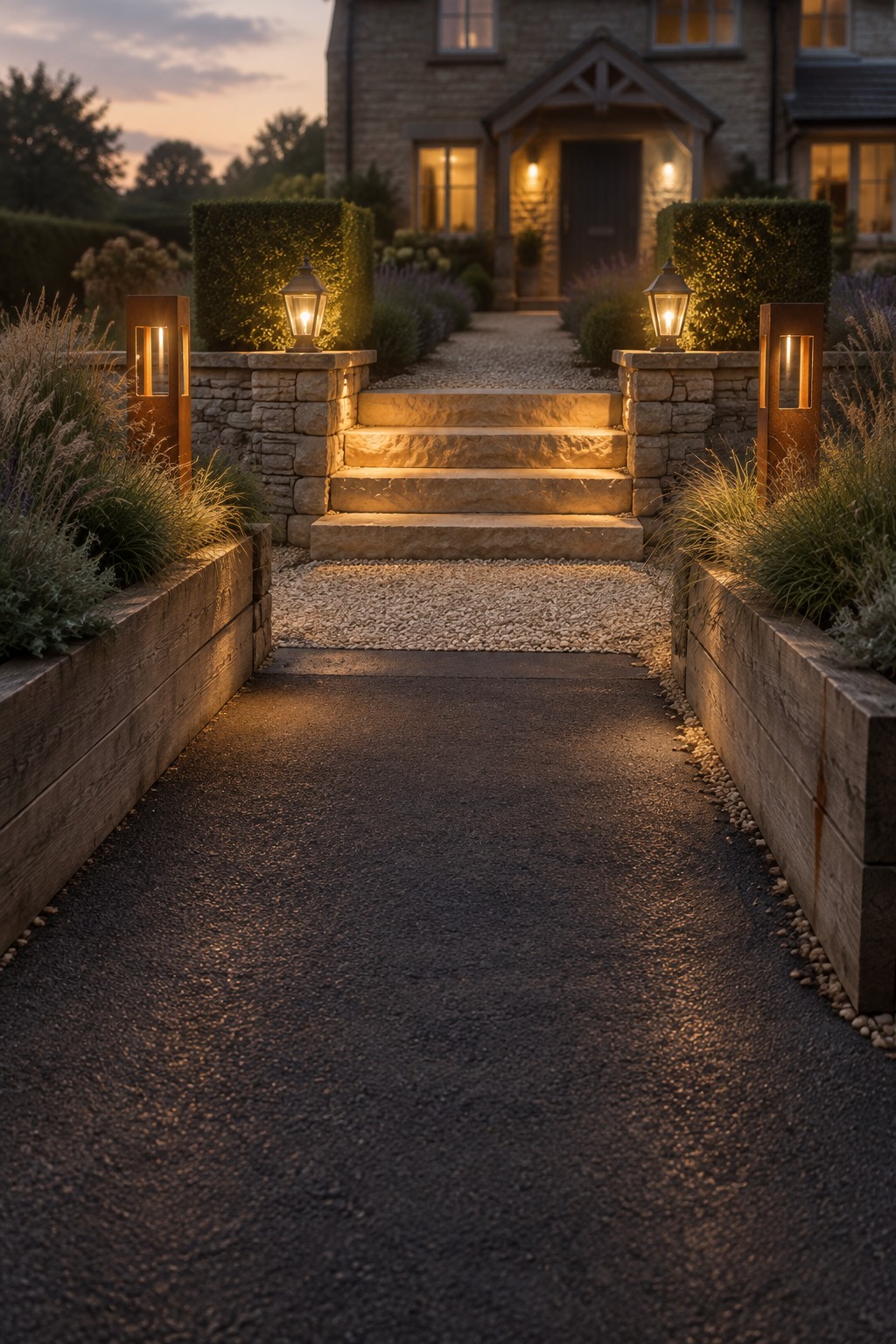
Low stone walls give a driveway entrance a clear edge and make the approach feel organized. Here, matching walls flank the steps, so the path feels defined without needing a tall fence or dense planting.
This idea works well where a gravel drive or walkway meets a raised front entry. Keep the walls low enough to leave the planting visible, and use a similar stone on the steps to make the transition feel natural.
Use a Raised Flower Bed to Mark the Driveway Entrance

A raised planting bed makes a driveway entrance easier to recognize without adding a large structure. Its curved brick edge gives the garden a clear boundary, while the clipped trees create a steady rhythm on either side.
This approach works well where a drive opens into a wider gravel area. Keep the bed low enough to preserve sightlines, and repeat a few of the same plants nearby so the entrance feels connected to the rest of the garden.
Use Matching Planters to Create a Formal Entrance

A straight concrete path feels more orderly when it has the same planting border on both sides. Here, clipped shrubs and small trees repeat along the raised beds, giving the narrow entrance a clear, balanced shape.
This approach works well in a front garden or driveway approach where space is limited. Keep the planting height consistent so the path stays open, and choose sturdy plants that can handle regular trimming.
Use Stone Paving for a Garden Approach

A stone path gives a home entrance a clear route and a more finished edge. Here, the broad paving stones stand out against the gravel, while the straight layout keeps the approach easy to follow.
This idea works well for a driveway entrance or front garden where you want a defined walking route without paving the whole area. Leave enough space between the path and the planting for practical access, and choose stones with a surface that stays steady underfoot.
Use Symmetrical Planting Along the Driveway

Matching rows of trees and low hedges give a driveway entrance a clear, orderly shape. The repeated planting guides the eye toward the home and makes the approach feel planned without relying on elaborate paving.
Use this layout for a long, straight drive where the plants have room to grow without narrowing the route. Keep the hedge height modest near the entrance, and choose trees suited to your climate so the rows stay manageable over time.
Use a Center Strip to Break Up a Long Driveway

A narrow planted strip between two paved lanes gives a straight driveway a clear center line. Here, moss fills the gap, adding a bit of green without taking up much space.
This idea works well on long, simple driveways where a solid expanse of paving might feel stark. Choose low-growing plants that can handle the local conditions, and leave enough width for easy upkeep.
Use a Gravel Walkway to Mark the Entrance

A straight gravel walkway gives an entrance a clear route and helps organize the planting on either side. In this design, the low stone walls and matching plant beds make the path feel intentional without needing a paved surface.
This approach suits a garden entrance or a long driveway leading to a gate. Use compacted, well-draining gravel and a firm edge to keep it in place, especially where the path meets planting beds.
Use a Paver Walkway to Lead to the Front Door

A straight paver walkway gives a driveway entrance a clear route to the house. Here, the neat rows of paving stand out against the loose gravel borders, while matching trees on both sides make the approach feel orderly.
This layout works well when the front door sits back from the street. Keep the path wide enough for two people to walk comfortably, and choose paving that suits the home’s exterior. A simple, consistent layout is easier to maintain than a path with lots of small turns.
Frequently Asked Questions
Q: How wide should the planted borders be beside a driveway?
A: Leave enough room for the plants to grow without spilling into the driving area. A narrow border can still look balanced with compact shrubs or low flowers, while a wider entrance can handle layered planting.
Q: What plants work well near a driveway entrance?
A: Choose sturdy plants that suit your climate and won’t block the view of cars, pedestrians, or the road. Low-growing shrubs and grasses are easy choices, especially near the driveway opening.
Q: How do I keep the entrance looking symmetrical as plants grow?
A: Start with matching plants on both sides and give them similar space to spread. Trim them at the same time, but leave a little room for natural growth so the borders don’t look overly rigid.
Q: Can I add flowers without making the entrance look too busy?
A: Yes. Keep the main structure simple with matching shrubs, then add a small amount of seasonal color along the edges. That gives the entrance a welcoming touch without competing with the driveway framing.
