


A driveway can take up a lot of the view from the street, so its edges have more influence on curb appeal than I used to think.
Contrasting brick gives the boundary definition and can tie the driveway to the home’s facade, walkway, or front entry without changing the whole surface.
The trick is choosing a color and pattern that feel connected to the house rather than competing with it.
I’d pay attention to how the edging meets the lawn and handles curves, since those details can look quite different in everyday use than they do in a photo.
Some of these approaches are simple enough to adapt to an existing driveway, while others may be worth saving for a larger update.
Use Contrasting Brick to Edge the Driveway

A brick border gives a wide concrete driveway a clear edge and makes the transition to the garden feel intentional. The darker pavers stand out against the pale concrete, while the narrow gravel bed adds a tidy break between driveway and lawn.
This approach works well on straight or gently curving drives, especially when the edging follows the shape of nearby planting beds. Choose pavers that can handle vehicle traffic, and make sure the border is set firmly so it stays level over time.
Use Contrasting Brick to Edge a Curved Driveway

A curved brick edge gives a driveway a clear outline and helps a large paved area feel connected to the planting bed beside it. The change in color and texture makes the border easy to see without needing a tall wall.
For a similar look, lay bricks in a gentle curve along the edge of a stone or concrete driveway. Keep the brick line consistent, and make sure it sits securely so it can hold its shape over time. This works especially well where a driveway meets a garden bed.
Use Brick Edging to Define a Garden Path

A narrow brick border gives a gravel driveway a clear edge and keeps it distinct from the planting bed. The contrast also makes the path feel more finished without taking attention away from the flowers.
Choose brick that suits the house and lay it in a consistent line along the driveway. This approach works well beside a cottage-style garden, but make sure the edging sits firmly and stays level so gravel does not spill into the bed.
Use Brick Borders to Define Large Driveway Pavers

Brick edging gives broad concrete driveway slabs a clear outline and helps separate the paved area from planting beds. Small stone-filled joints keep the surface from reading as one uninterrupted expanse.
This approach works well when you want a driveway to feel structured without covering it in decorative patterns. Use contrasting brick along the edges or between sections, and keep the border consistent so the paving still feels calm.
Carry Brick Edging Into a Garden Path

A brick border can make a paved path feel like part of the garden rather than a route set apart from it. Here, a narrow line of red brick separates the concrete walkway from the planted bed and gives the path a clear edge.
This idea works well for a path leading to a front door or winding through a yard. Use bricks in a contrasting color, and keep them level with the paving so they create a neat boundary without becoming a trip hazard.
Give a Stone Driveway a Brick Border

A narrow brick edge can make large driveway stones look more defined without taking attention away from them. The darker color also gives the paving a neat outer line.
This approach works well for a broad driveway or front walk where the main paving needs a clear boundary. Keep the brick edging consistent along both sides, and make sure it follows the paving’s shape.
Use Gravel Strips to Set Off a Paved Walkway

A narrow gravel strip can give a paved path a clear edge without adding another solid border. Here, small stones sit between the large paving slabs and dark brick edging, making the walkway feel neatly defined.
This approach works well in a side yard or other narrow passage where a simple, easy-to-follow path is useful. Keep the gravel contained and choose a stone color that contrasts gently with the paving.
Use Brick Edging to Separate the Driveway From Planting

A narrow brick border can give a gravel driveway a clear edge without making it feel too formal. Here, the brick strip runs beside a low stone curb, helping keep loose gravel out of the planted area.
This approach works well where a driveway meets a garden bed or fence line. Keep the border wide enough to stay visible, and use a stable edge so gravel and soil do not gradually spill across it.
Use a Brick Border to Define a Paved Drive

A contrasting border can give a paved drive a clear edge and make the main surface feel more finished. The dark brick strip beside the terracotta pavers shows how a narrow band can create separation without competing with the paving.
This approach works well on a broad driveway or entry walk, especially when the home already has warm-toned brick or tile. Keep the border consistent in width, and make sure it follows the paving neatly so the edge stays easy to maintain.
Add a Brick Center Strip to a Concrete Driveway
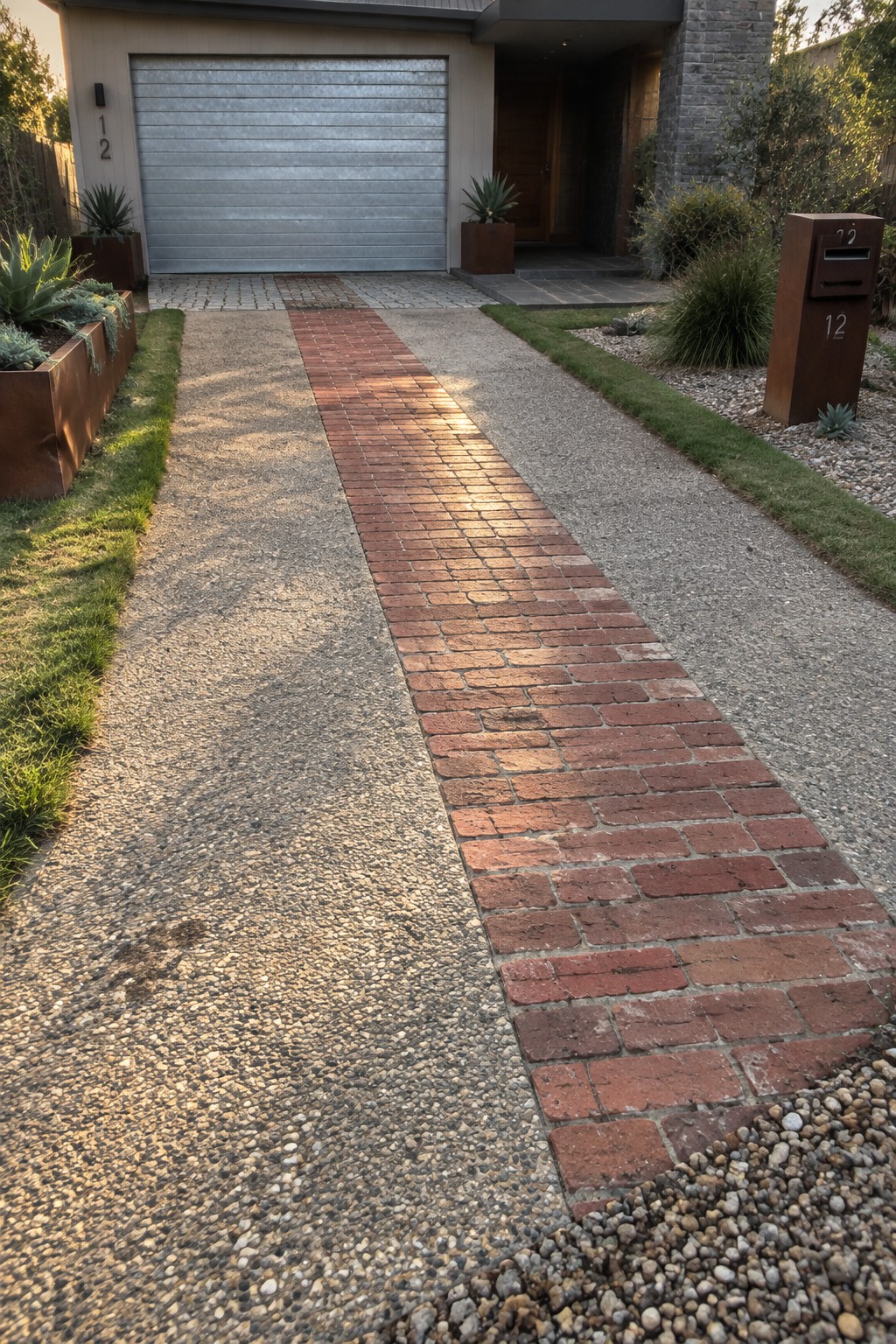
A narrow brick strip can break up a broad concrete driveway and give it a more finished look. Here, the red pavers run down the center, creating a clear route to the garage without covering the whole drive in brick.
This approach suits a straight driveway with enough room on either side for concrete. Choose brick that contrasts with the main surface, and keep the strip wide enough to look intentional and remain easy to walk on.
Use Brick to Edge the Entry Walk
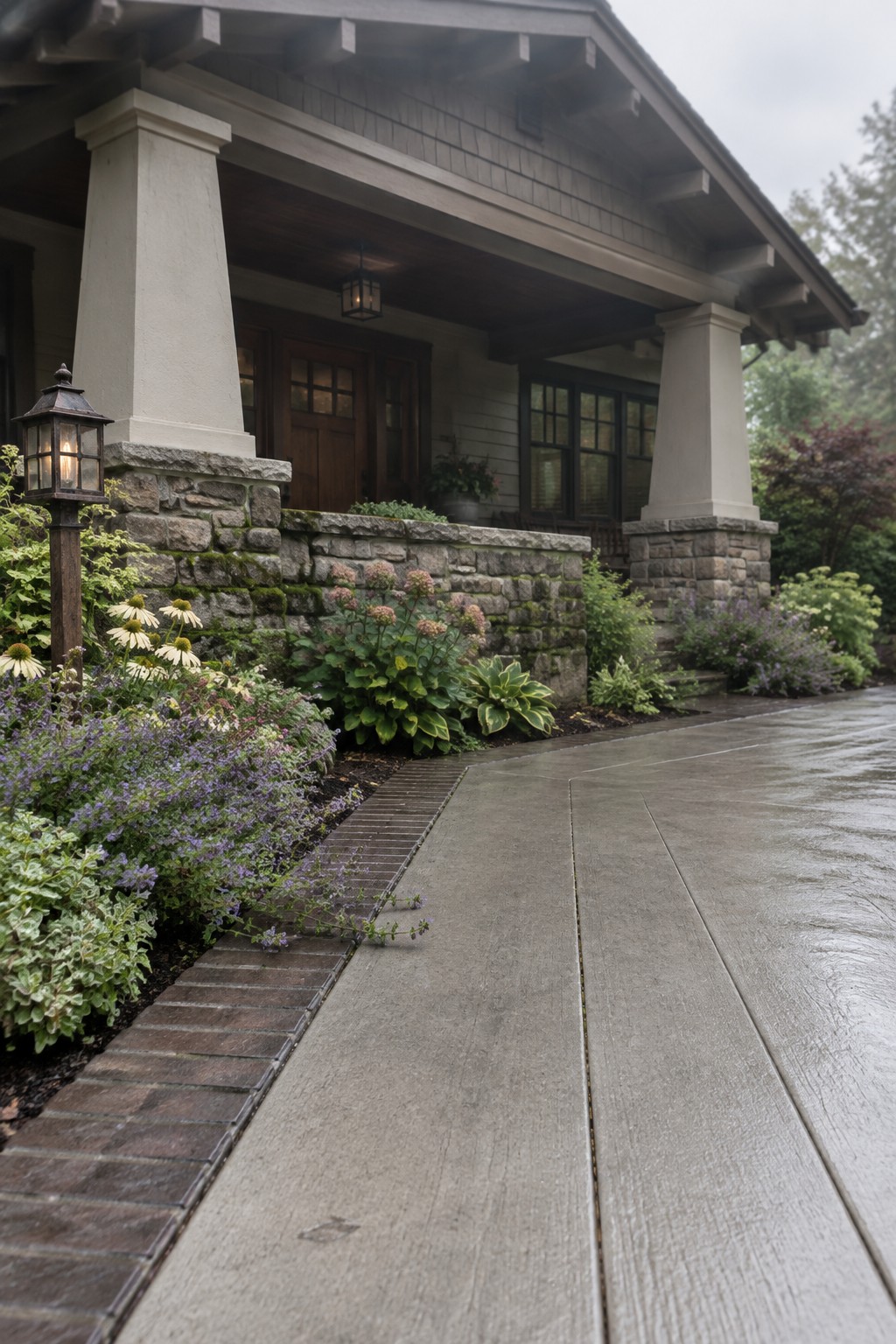
A brick border can give a broad concrete walk a clearer edge and help it sit neatly beside the planting bed. The change in material makes the path easier to read without making the paving feel busy.
This works well at a front entry where a straight concrete walk meets a garden. Choose bricks that suit the house and set them firmly in a narrow, even strip so the edge stays tidy over time.
Use Wide Pavers for a Garden Walkway

Wide stone pavers make a garden path comfortable to walk on and give it a steady rhythm. The narrow gravel strips and moss between the slabs keep the hard surface from taking over the landscape.
This approach works well beside a garden, pool, or modern home where a simple path is useful. Leave enough space between pavers for a natural look, but keep the walking surface level and stable.
Use a Cobblestone Driveway With Brick Edging

A cobblestone driveway can give a traditional home a welcoming, established look. A contrasting brick edge helps mark the route clearly and keeps the irregular stone surface looking neatly contained.
This approach works well on long drives and turning areas, especially around older or formal homes. Choose brick that complements the stone without blending into it, and keep the border wide enough to stay visible.
Use Brick Edging to Define a Grass Paver Driveway

Grass-filled pavers give a driveway a softer, more permeable look, but a clear edge helps keep the layout neat. A narrow brick border separates the green paving from nearby gravel and planting without making the driveway feel too formal.
This approach works well for an entry path or driveway where you want some greenery underfoot. Set the bricks firmly and keep the edge consistent so the pavers stay in place and the grass is easier to trim.
Use Brick Edging to Guide a Garden Path

A clear edge helps a garden path feel like part of the landscape rather than a strip of paving through the plants. Contrasting brick can define the route and keep the boundary easy to see.
This approach works well on a narrow path beside a cottage or in a small garden. Use brick that complements the paving, and keep the edge low so it does not become a tripping hazard.
Use Brick Bands to Break Up a Wide Driveway
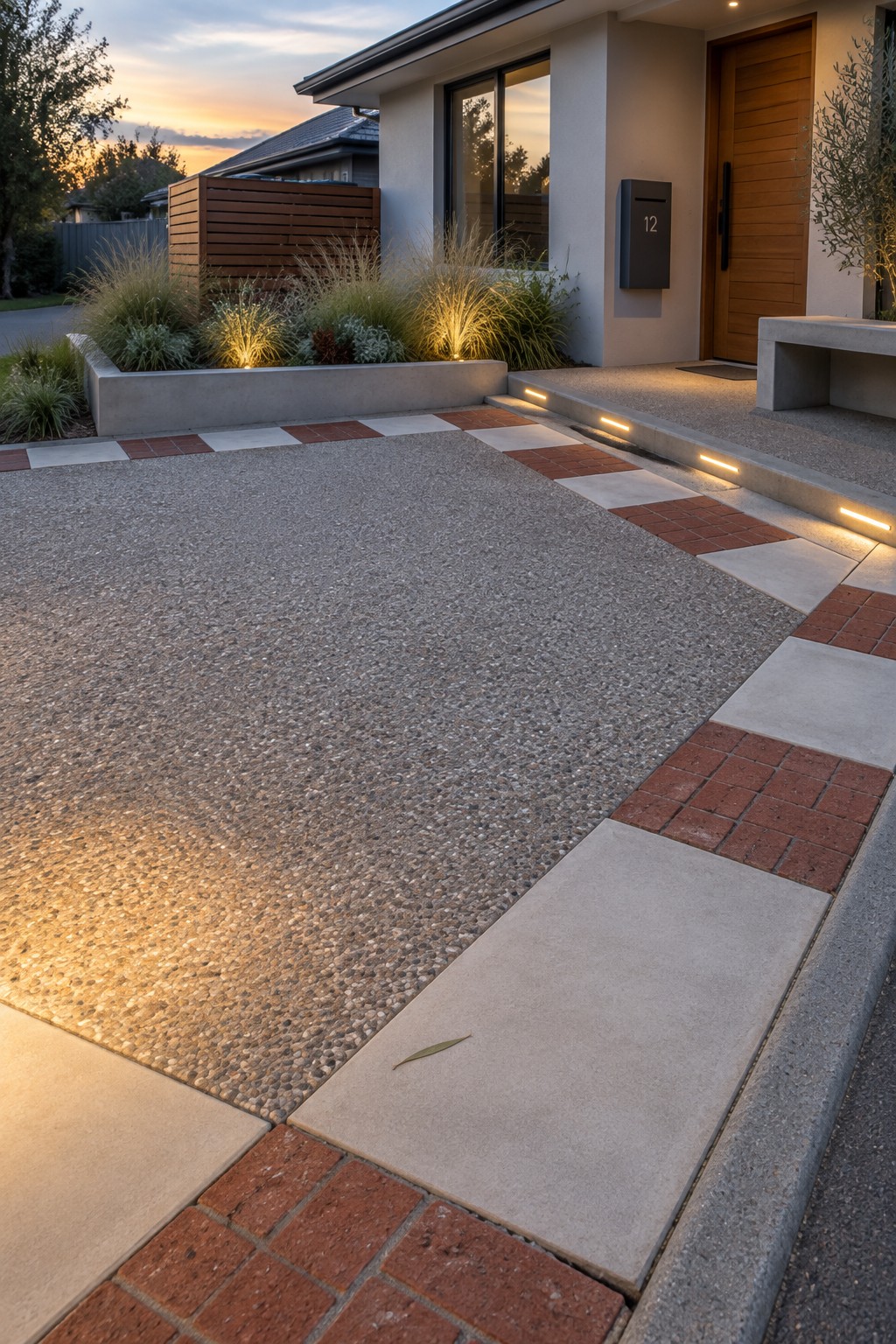
A broad driveway can feel like one large, uninterrupted surface. Alternating red brick and pale concrete pavers create a simple pattern that gives the paving a clearer edge and adds interest without making the layout fussy.
This approach works well on wide, mostly flat driveways, especially when the brick color picks up tones used elsewhere near the entry. Keep the bands consistent in width and spacing so the pattern feels orderly rather than busy.
Use Brick Edging to Separate the Driveway From Planting

A narrow brick edge gives the planted bed a clear boundary beside the concrete driveway. It’s a practical way to keep soil and mulch from spreading onto the paving, while adding a bit of contrast.
This approach works well where a driveway curves past a garden bed. Set the bricks firmly and keep their height even with the paving so the edge stays neat and easy to maintain.
Use a Brick Edge to Shape a Garden Path

A low brick edge can give a curving path a clear boundary while keeping the planting bed in place. The gentle curve feels more natural in a garden than a straight border, and the brick adds a tidy transition between plants and paving.
Use this approach where a walkway runs beside a garden bed or turns toward a garage entrance. Keep the edging low so it defines the route without blocking the plants, and choose a brick tone that works with the nearby stone or paving.
Use Brick Edging to Shape a Curved Gravel Driveway
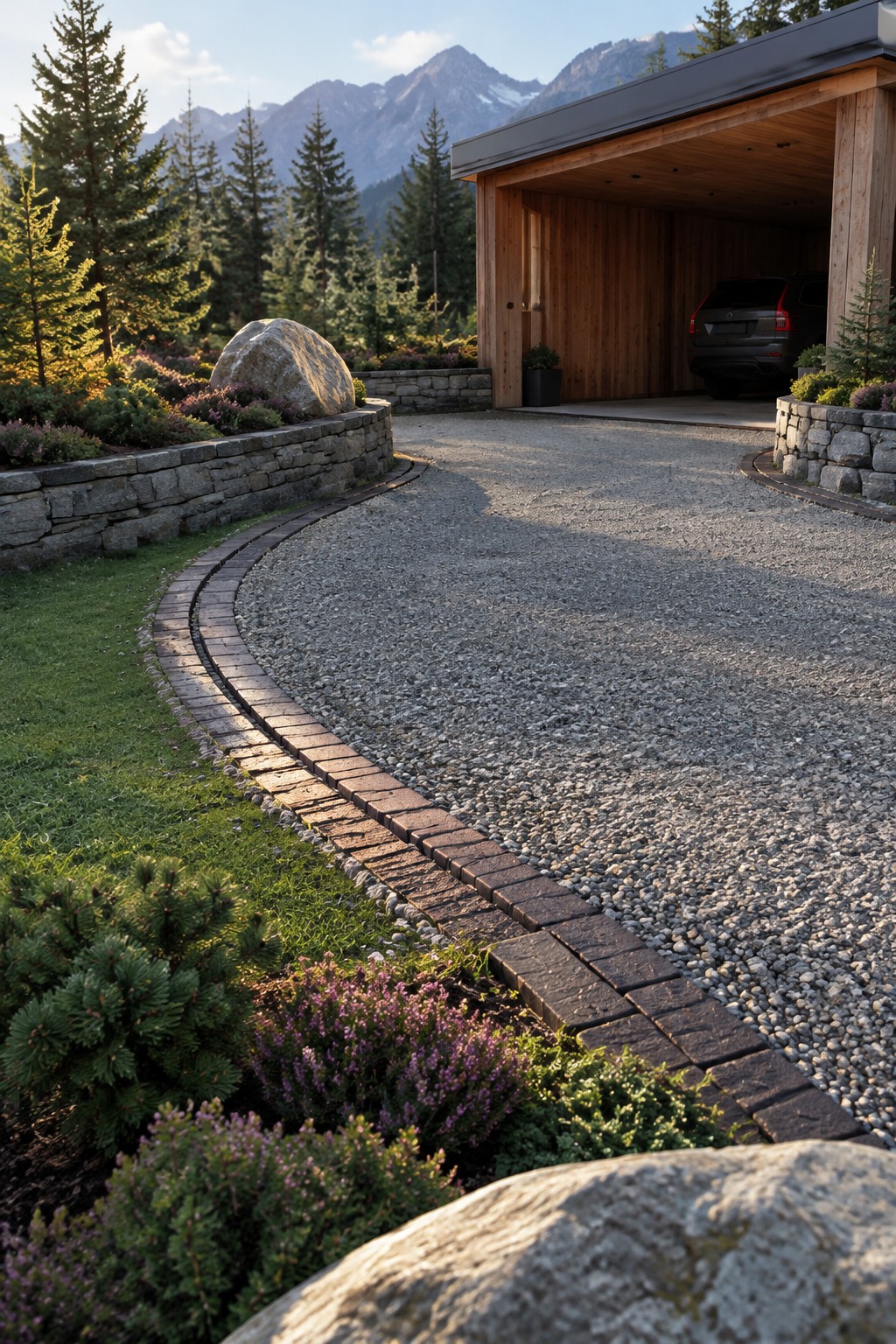
A curved driveway feels more settled when its edge follows the bend instead of cutting across it. A narrow line of contrasting brick gives loose gravel a clear boundary and makes the route easier to read.
This approach works well for a driveway that curves around a planting bed or leads toward a garage. Lay the bricks in a consistent pattern, and set them firmly so they stay in place as cars pass.
Add a Planted Strip Between Driveway Lanes
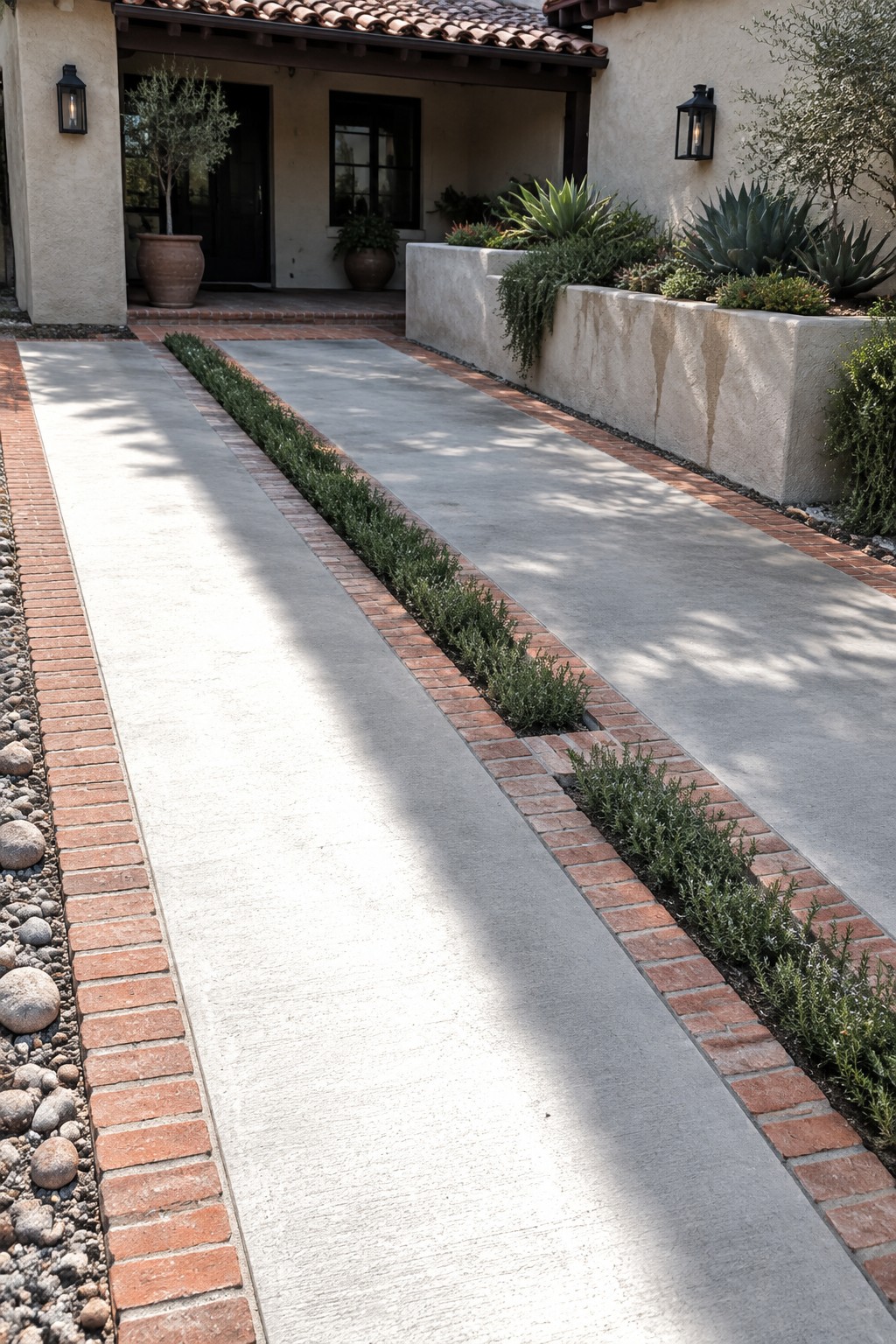
A narrow planted strip can break up a broad concrete driveway and give it a more garden-like feel. Here, brick edges set off the two paved lanes and keep the planting neatly contained.
This layout works well on a long, straight approach where there is room for a slim center bed. Choose compact, low-growing plants so they do not spill into the driving area, and make sure the strip is wide enough to maintain.
Use a Dark Brick Border to Edge Large Driveway Pavers
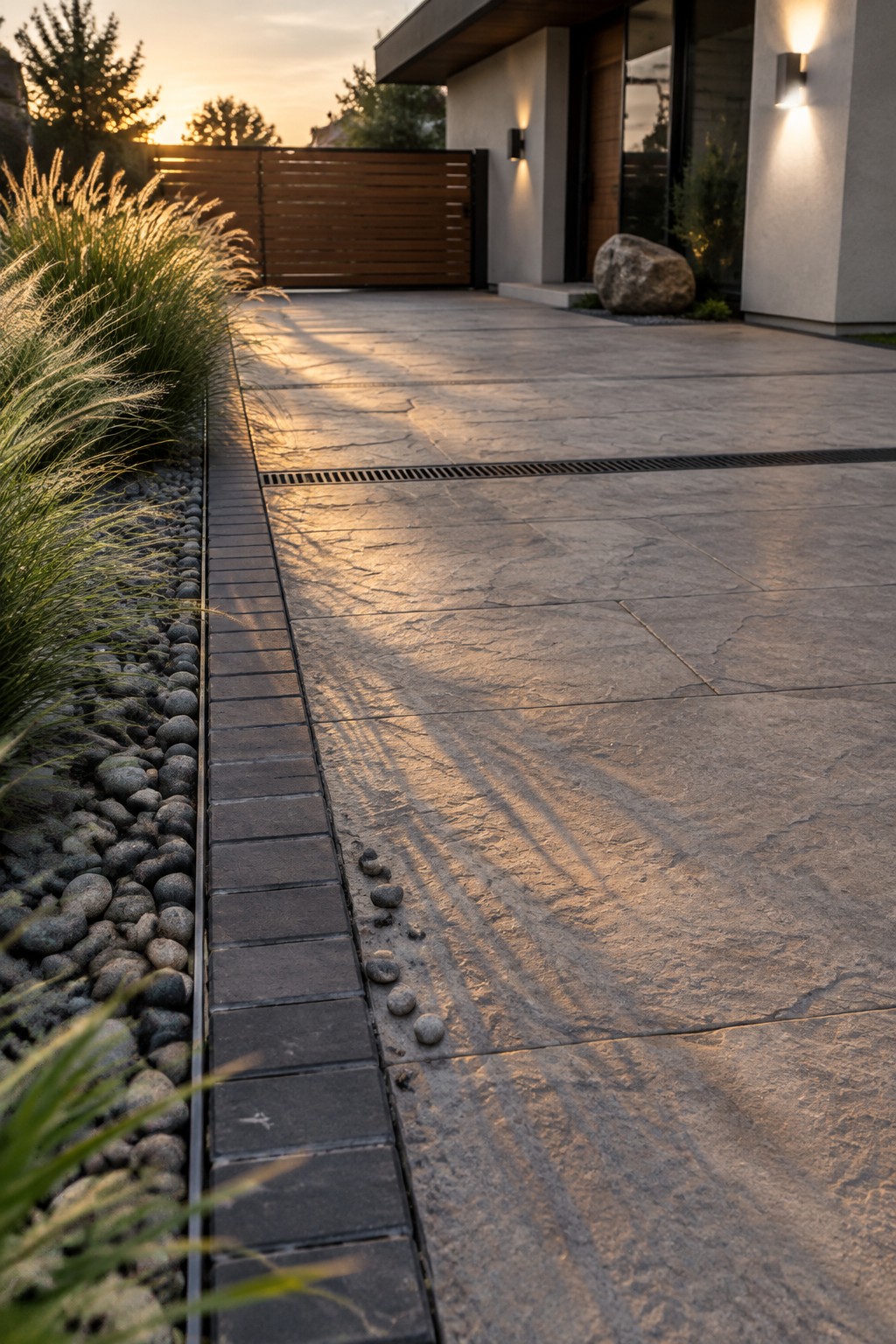
A narrow border of dark brick gives large driveway pavers a clear edge and makes the paved area look more finished. The contrast is noticeable without competing with the stone surface.
This approach works well on broad, mostly level drives where large pavers might otherwise run right up to a planting bed. Set the brick in a straight line for a clean look, and make sure the border sits firmly so it stays even with the driveway over time.
Frequently Asked Questions
Q: What brick color works best with a light-colored driveway?
A: Red or deep brown brick gives a light driveway a clear edge without feeling too formal. Bring home a few samples and check them in daylight beside your paving before choosing.
Q: Can brick edging handle cars driving over it?
A: Yes, if the bricks sit on a solid, compacted base and are set firmly in place. Keep the edging level with the driveway where tires might cross it, so the bricks do not become a bump or shift under pressure.
Q: How wide should the brick border be?
A: A single row often gives a neat outline, while two rows make the contrast more noticeable. If you want the edging to double as a narrow walking strip, leave enough room for a comfortable step.
Q: Do I need to seal brick driveway edging?
A: Sealing is usually optional, but it can help reduce staining and make cleanup easier. Check the sealer label first, since some products can change the brick’s color or make the surface slippery.
