

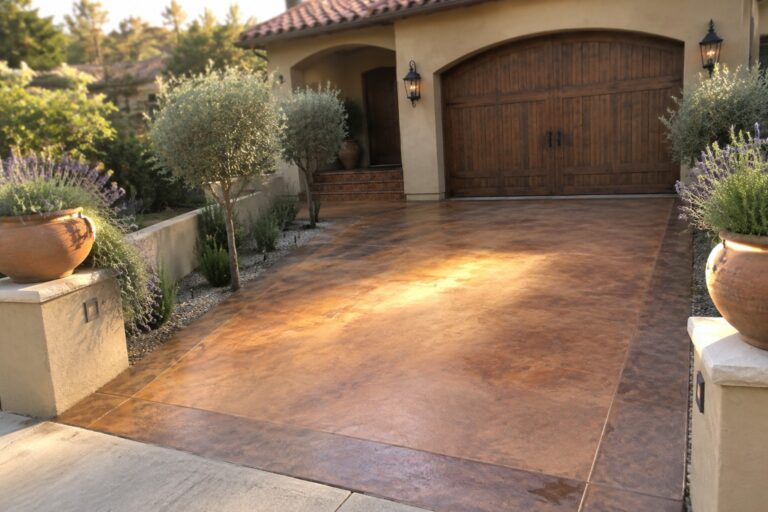
A driveway can shape the first impression of a home just as much as the entry or front facade, especially when its color and texture stand out from the street.
I find that stained concrete works best when the finish suits the house and does not compete with its landscaping or exterior materials.
Subtle shifts in tone, borders, and patterns can give a plain slab more character while keeping it practical for daily parking and foot traffic.
Some finishes may look bold in a photo, so I would consider how they will wear and look in changing light before choosing one.
These makeovers offer details worth saving and adapting to the style and needs of a real home.
Use a Warm Stained Finish for the Driveway
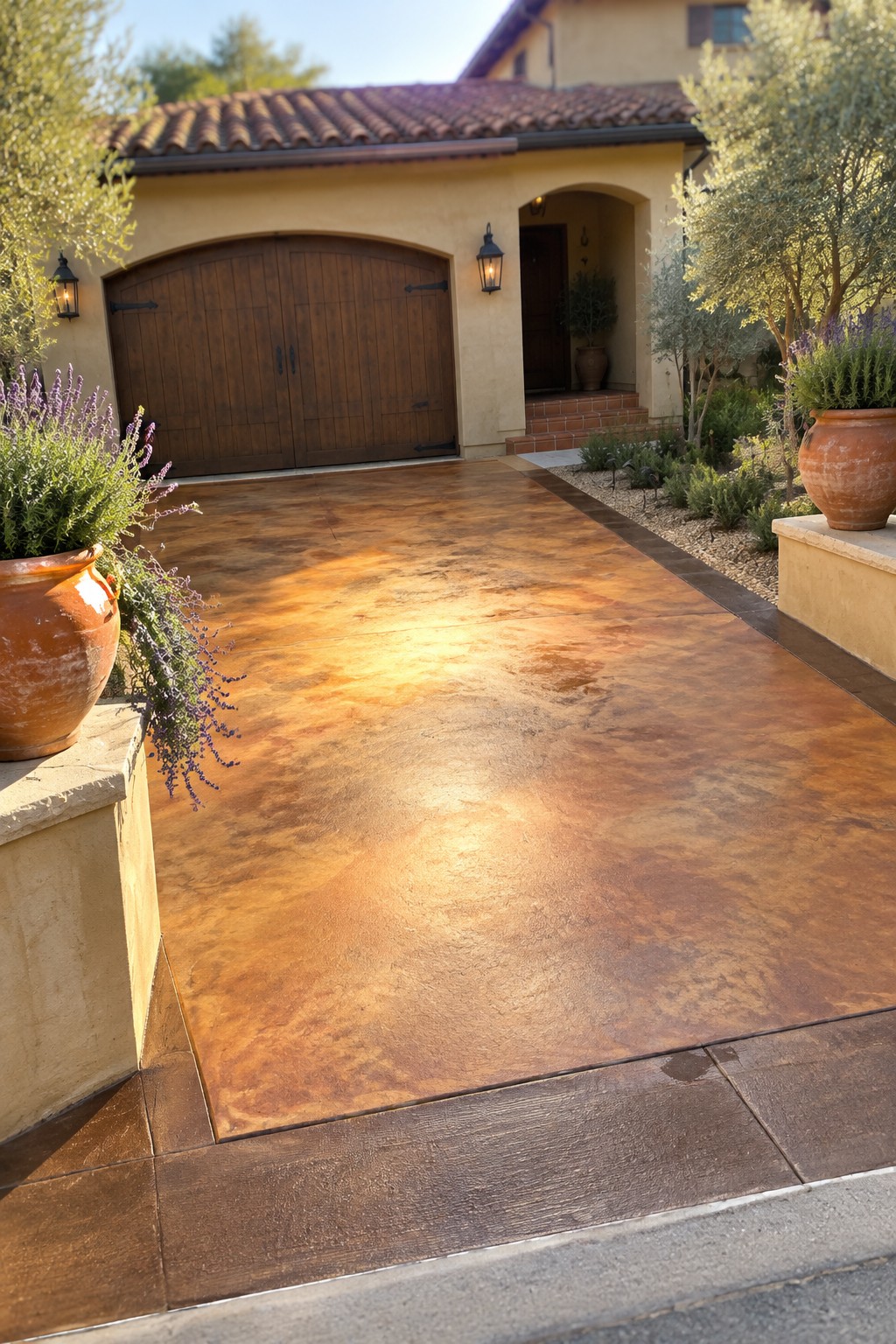
A warm brown stain gives a concrete driveway a more natural, settled look than plain gray. Here, the mottled finish works especially well with the home’s stucco exterior and wooden garage door.
This approach suits homes with earthy colors and traditional details. Choose a stain made for exterior concrete, and test a small area first since the final shade can vary with the surface.
Use Stained Concrete to Define the Driveway
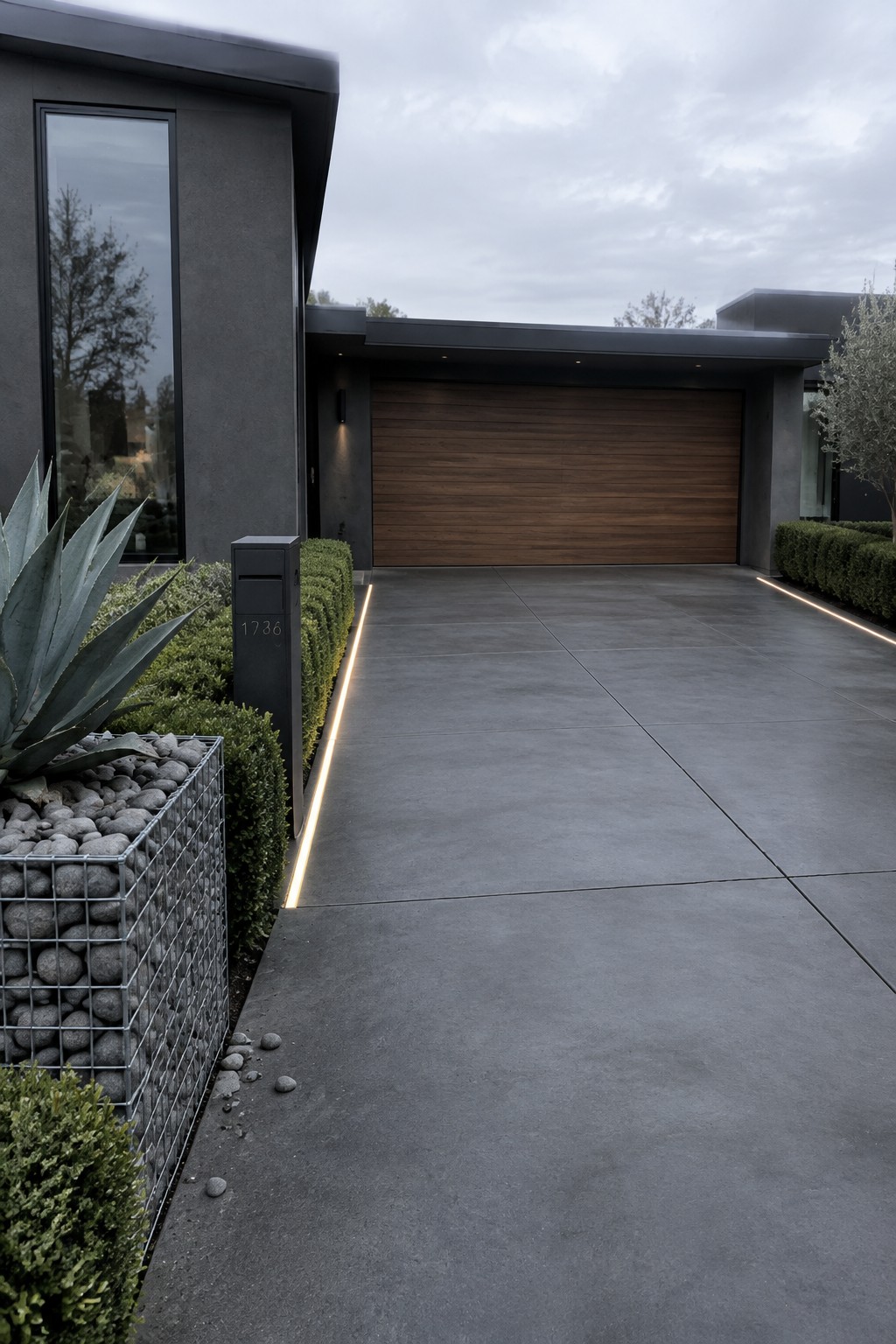
A stained concrete driveway can give a modern home a more finished look without adding a busy pattern. A deep gray stain suits a simple facade, while subtle variation in the concrete keeps the surface from looking too uniform.
For a similar effect, choose a stain that works with the house’s exterior colors, then test it on a small area before covering the full drive. A restrained finish is often easier to live with than a strong color or high-contrast design.
Use Stained Concrete to Define a Curved Driveway
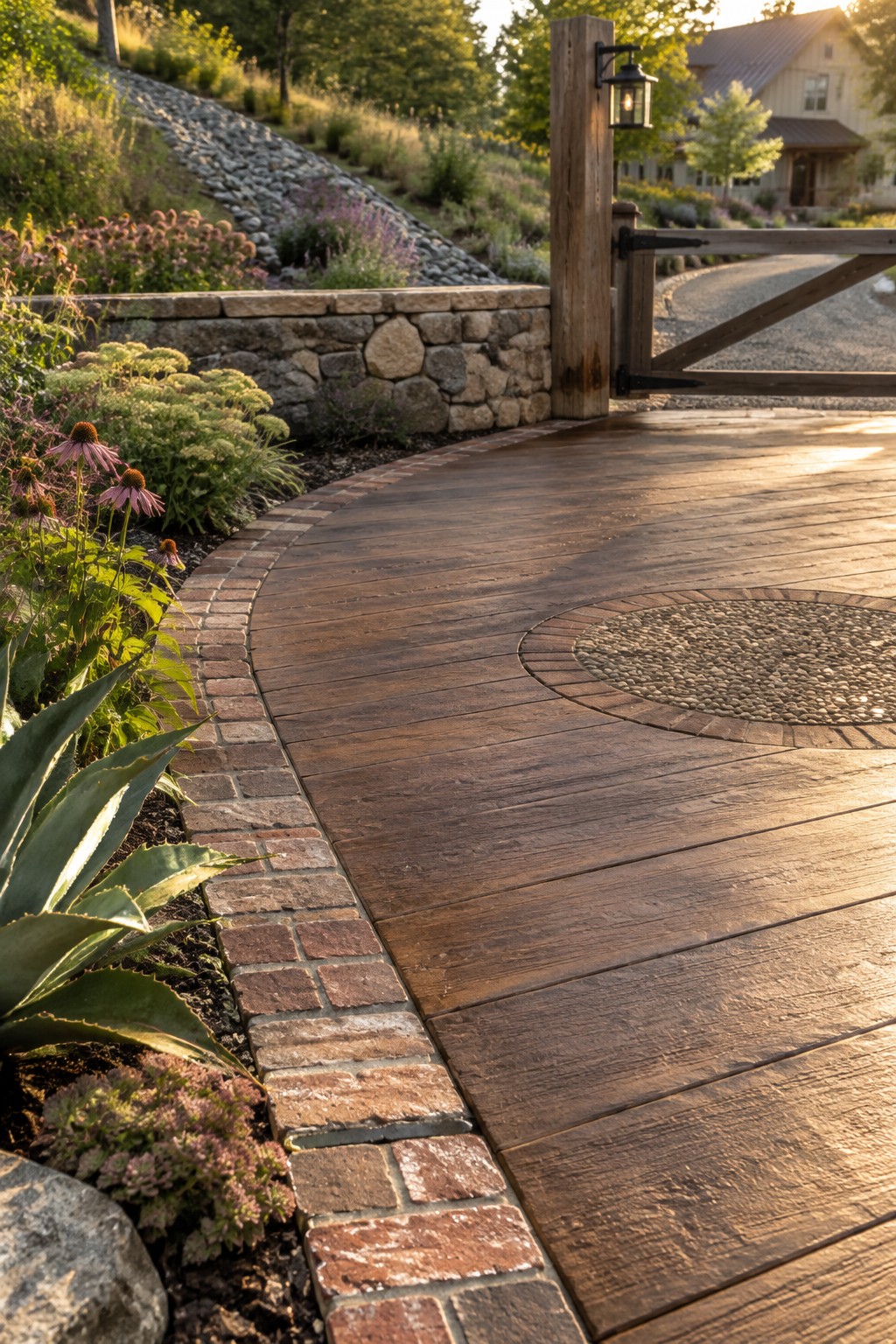
A stained concrete driveway can feel less plain when its edges follow a gentle curve instead of a straight line. Here, the wood-toned surface and brick border show how color and a clear edge can give a paved area a more finished look.
This approach works well for a driveway that meets a garden or entry path. Choose a stain that suits the home, and use a durable border to mark the curve. Keep the shape practical so cars can turn and park comfortably.
Stained Concrete for a Coastal Poolside
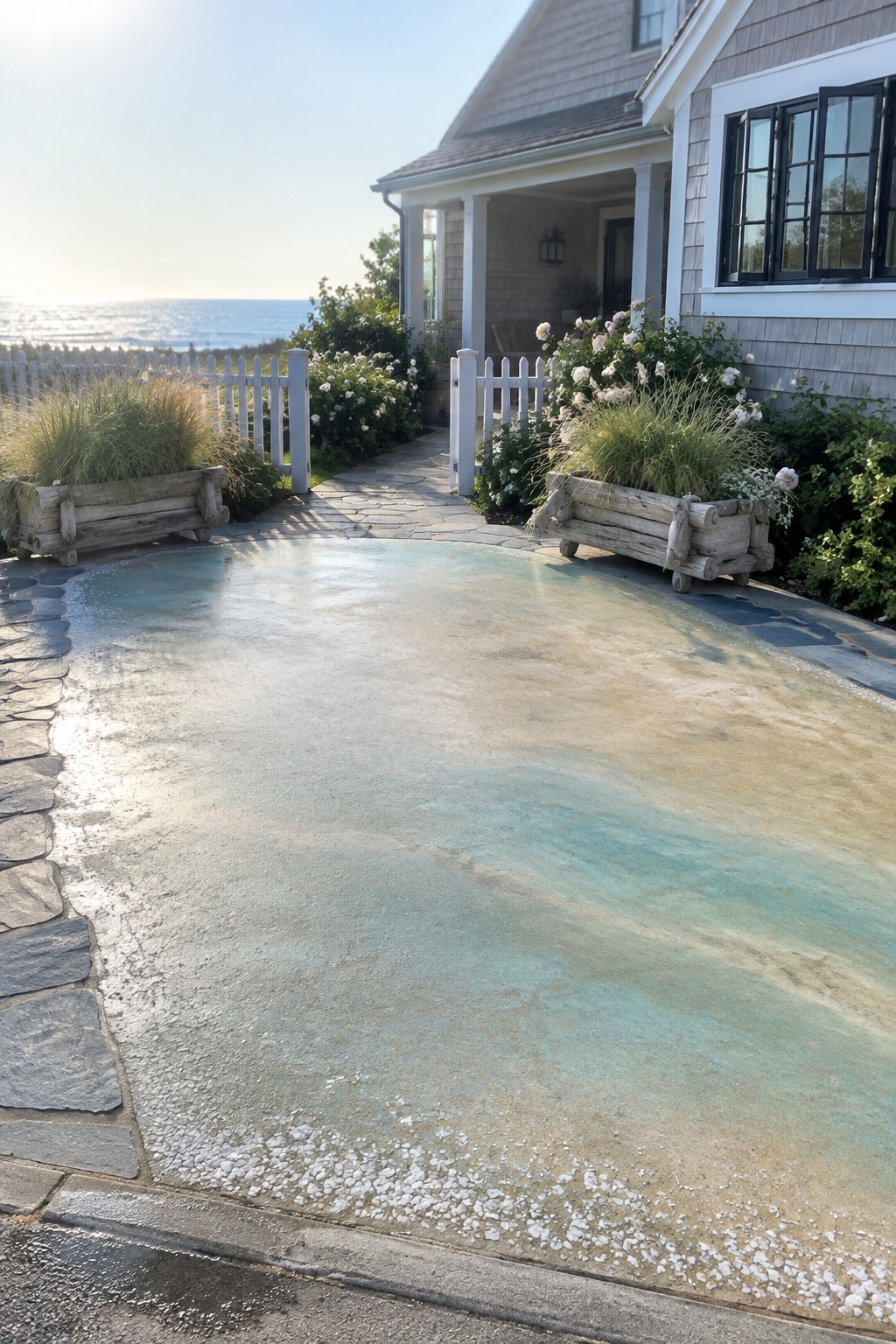
A stained concrete surface can give a pool area the look of pale sand and shallow water without relying on a single flat color. The subtle variation helps a broad expanse of concrete feel more natural, while still being practical for an outdoor space.
This approach works well around pools and coastal homes, where softer tones suit the setting. Test stain samples on the actual concrete first, since its texture and condition can change the final color. Keep the finish slip-resistant when wet.
Use Stained Concrete for a Welcoming Entry
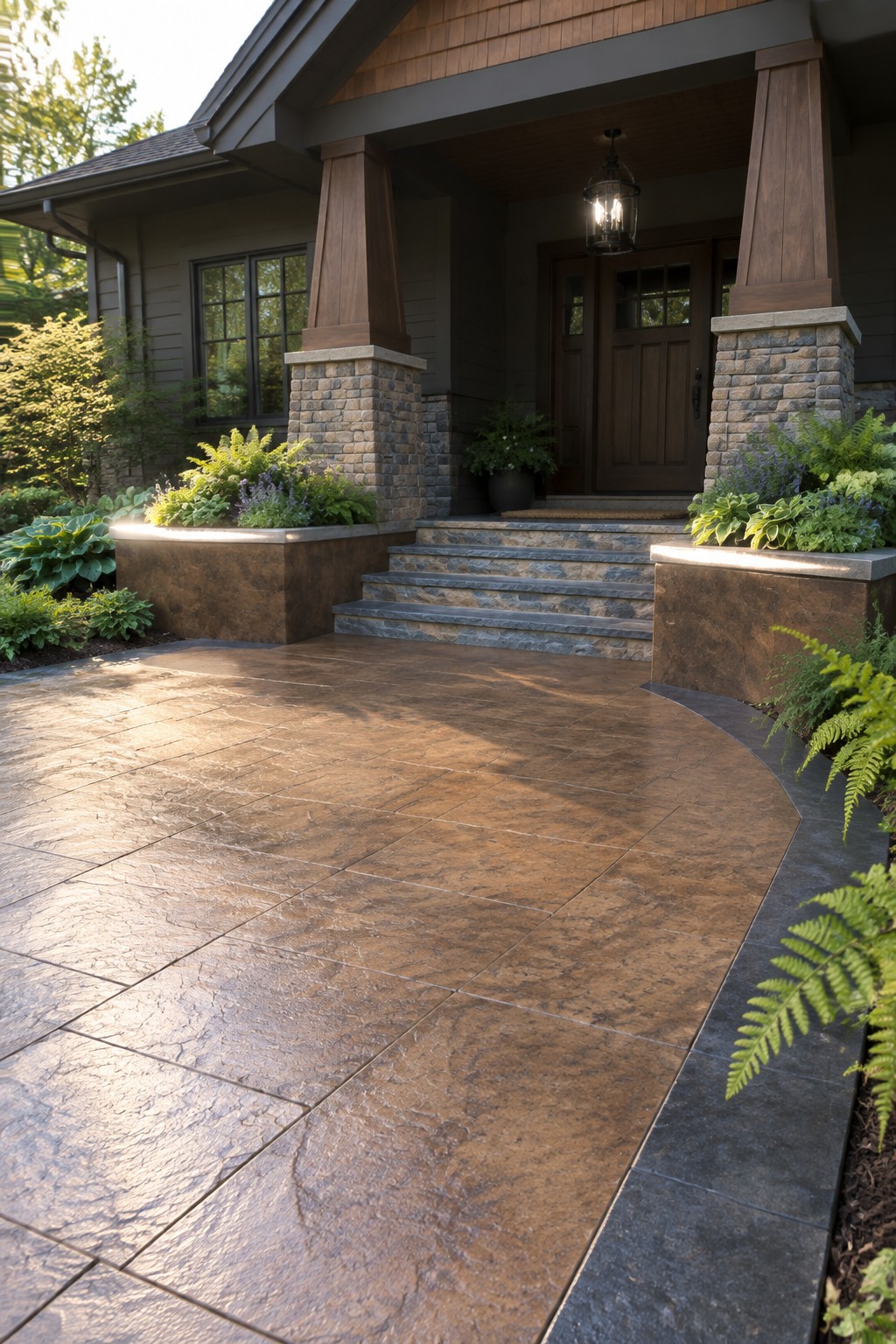
A stained concrete approach can make the walk to the front door feel like part of the home’s design. Here, the warm brown paving gives the entry a clear route and suits the home’s wood and stone details.
This idea works well for a front walk or driveway that leads to a covered porch. Choose a stain that complements the exterior, and consider a darker border to define the paved area without adding another material.
Add a Stained Strip to a Concrete Driveway
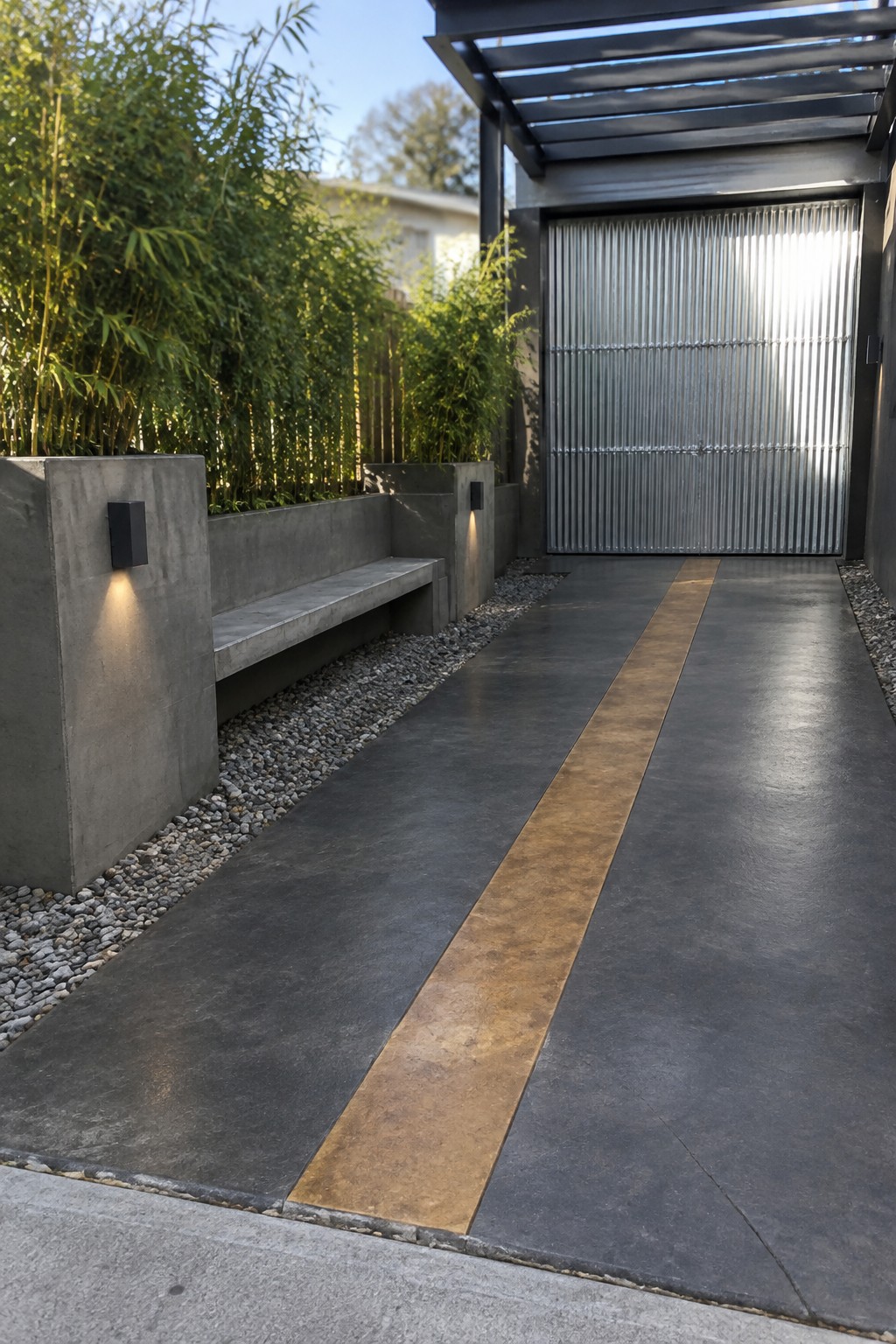
A narrow stained strip can give a concrete driveway a clear line to follow without covering the whole surface in color. It breaks up a broad expanse of gray and gives the driveway a simple, intentional detail.
For a similar look, keep the strip straight and wide enough to read from the street. A warm brown stain works well against charcoal concrete, though it’s worth testing samples first since the color can shift across the surface.
Use a Circular Stain Pattern in the Concrete
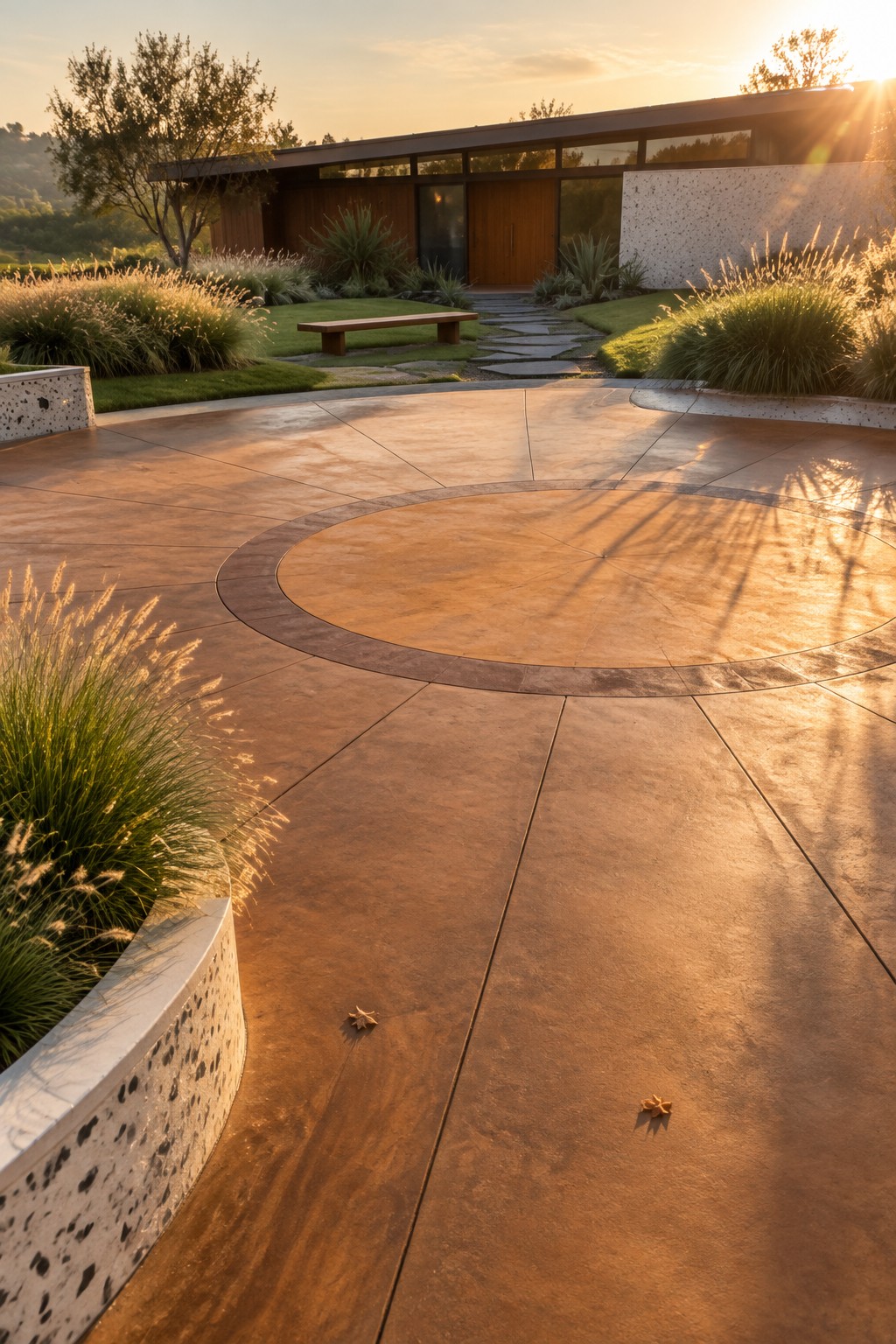
A circular band in stained concrete can break up a large paved area without adding a different material. The darker ring gives the surface a clear focal point, while the surrounding concrete still reads as one continuous finish.
This approach can work on a broad driveway or entry court, especially in front of a modern home. Keep the circle large enough to relate to the space, and choose stain colors with enough contrast to make the pattern visible but not harsh.
Use Stained Concrete to Give a Driveway a Courtyard Feel
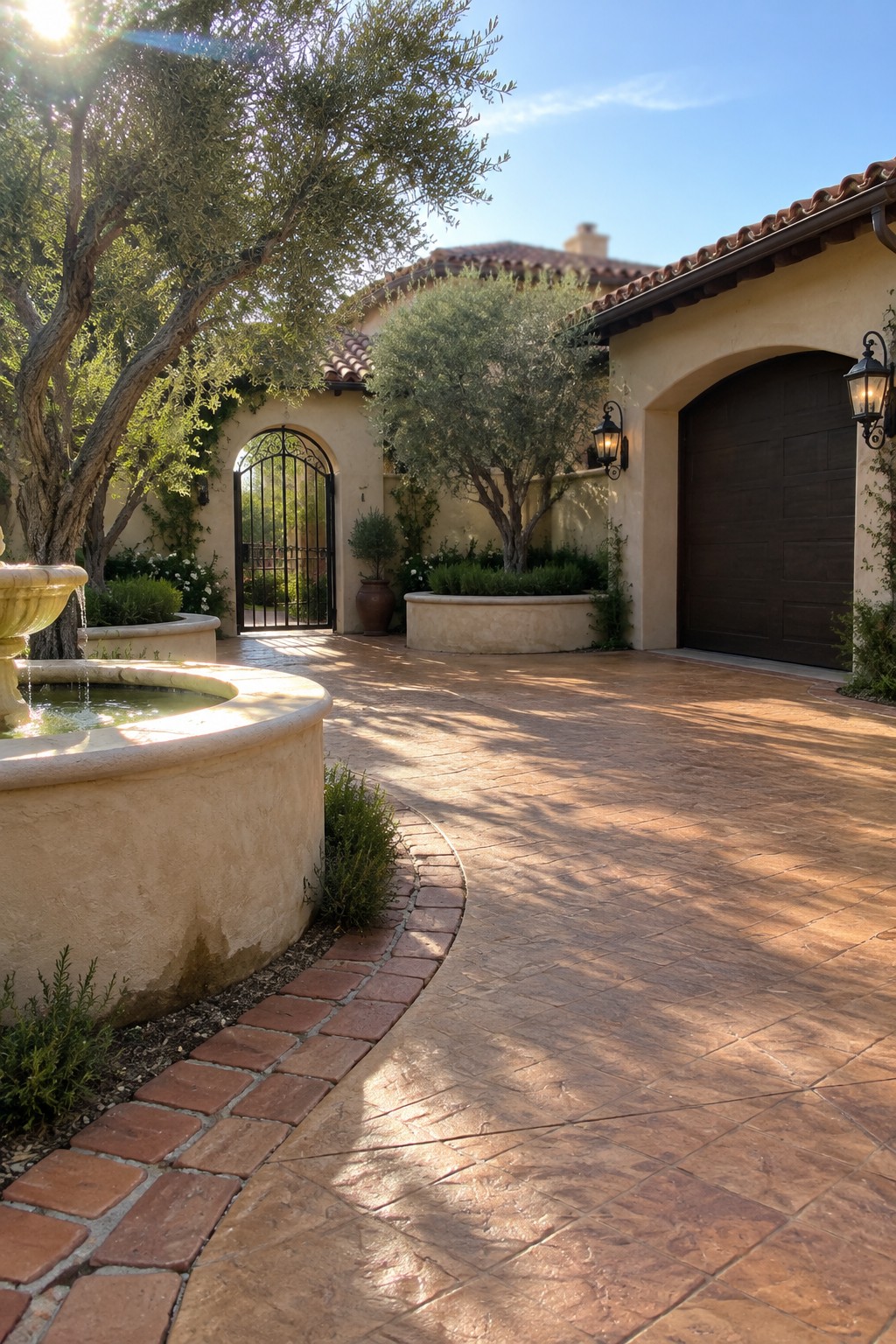
A stained concrete driveway can feel more like part of a courtyard when its color and pattern suit the home’s architecture. Here, the warm, brick-toned surface works naturally with the Spanish-style exterior and gives the broad paved area a more settled look.
This approach suits homes with stucco walls or clay roof tiles, especially when the driveway curves around a garden bed or fountain. Choose a finish that complements the house, and keep the pattern subtle so it doesn’t compete with the landscaping.
Use Wood-Look Stained Bands in the Driveway
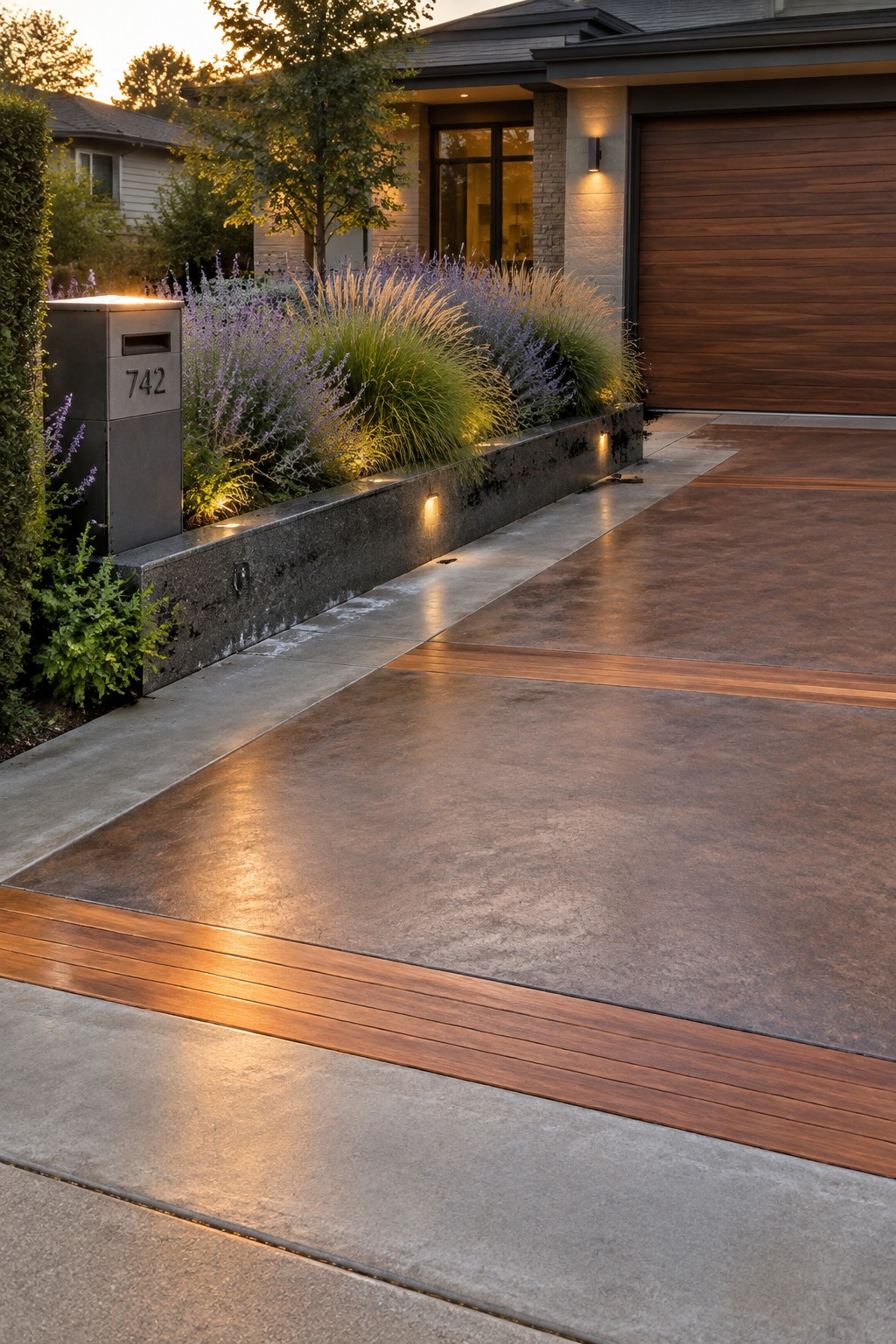
A broad stained concrete driveway can feel less plain when narrow bands of color break up the surface. Here, wood-toned strips add a simple pattern without making the driveway busy.
This approach works well on large driveways where a little visual structure helps. Choose a stain that suits the home’s exterior, and keep the bands evenly spaced so they read as part of the design rather than an afterthought.
Use Mossy Stained Concrete for a Natural Look
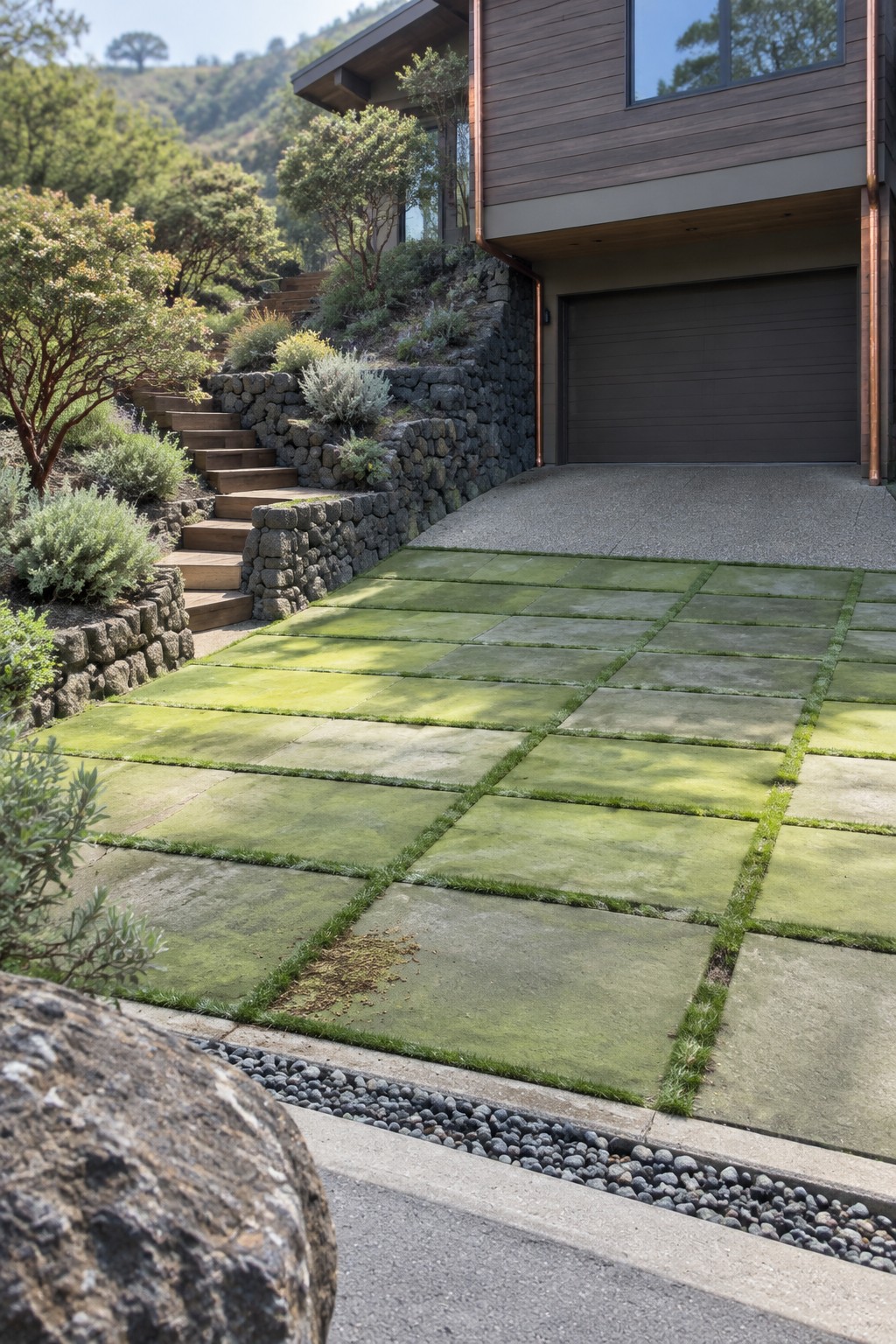
A stained concrete driveway does not have to look perfectly uniform. Muted green tones and a softly varied finish can help a broad paved area feel more at home in a garden setting.
For this look, use large concrete sections and keep the stain subtle, with narrow planted joints to break up the surface. It suits homes with natural stone or wood nearby, but make sure the finish stays even enough to avoid looking patchy or worn.
Use Stained Concrete to Break Up a Wide Driveway
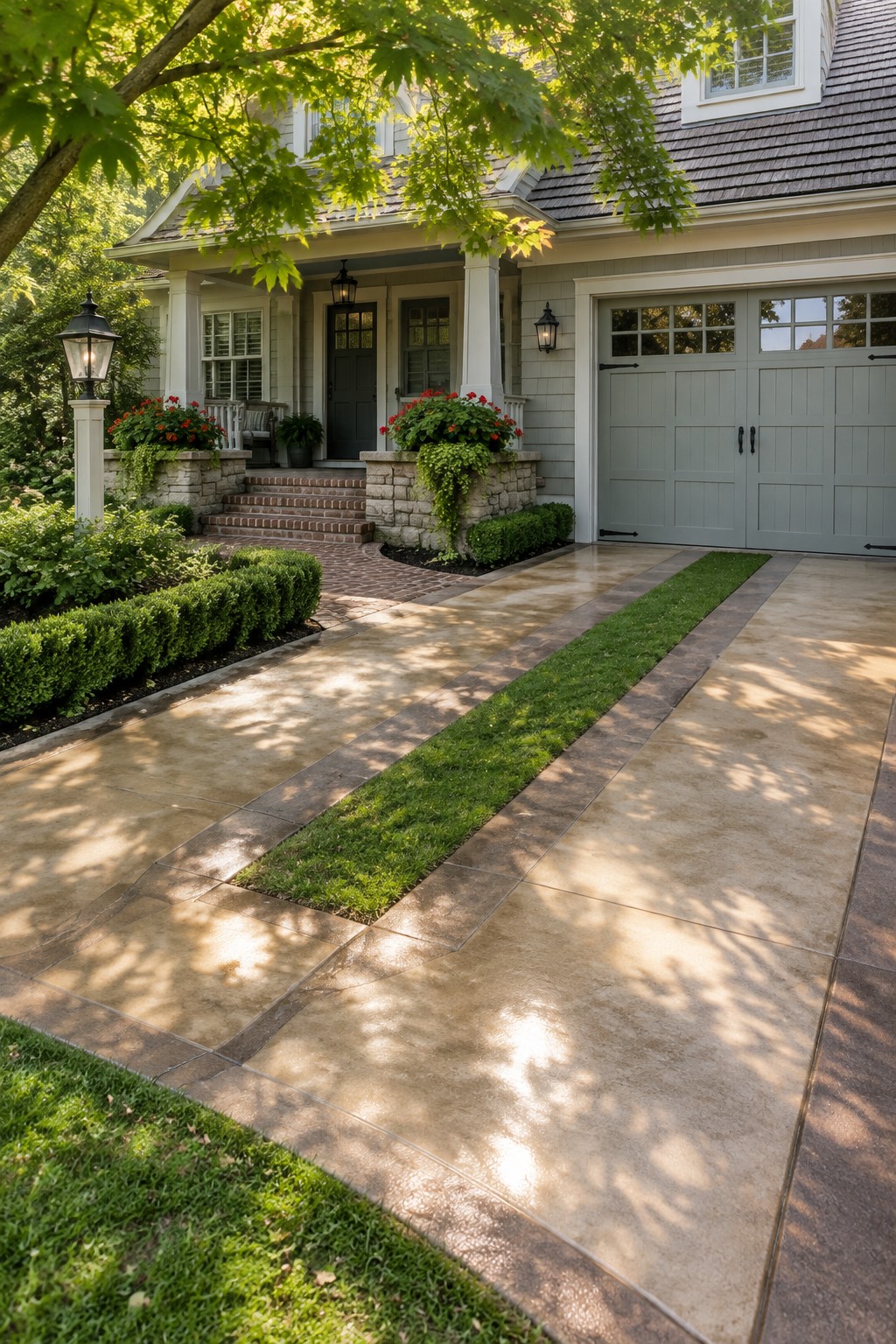
A broad concrete driveway can feel less plain when a stained band separates the driving surface into clear sections. Here, a narrow strip of grass runs down the middle, while darker brown borders give the paving a more finished look.
This approach works well on wide, mostly flat driveways where there is room for a central planting strip. If grass seems hard to maintain, use a low ground cover or a contrasting stained-concrete band instead.
Use a Dark Stained Band to Break Up the Driveway
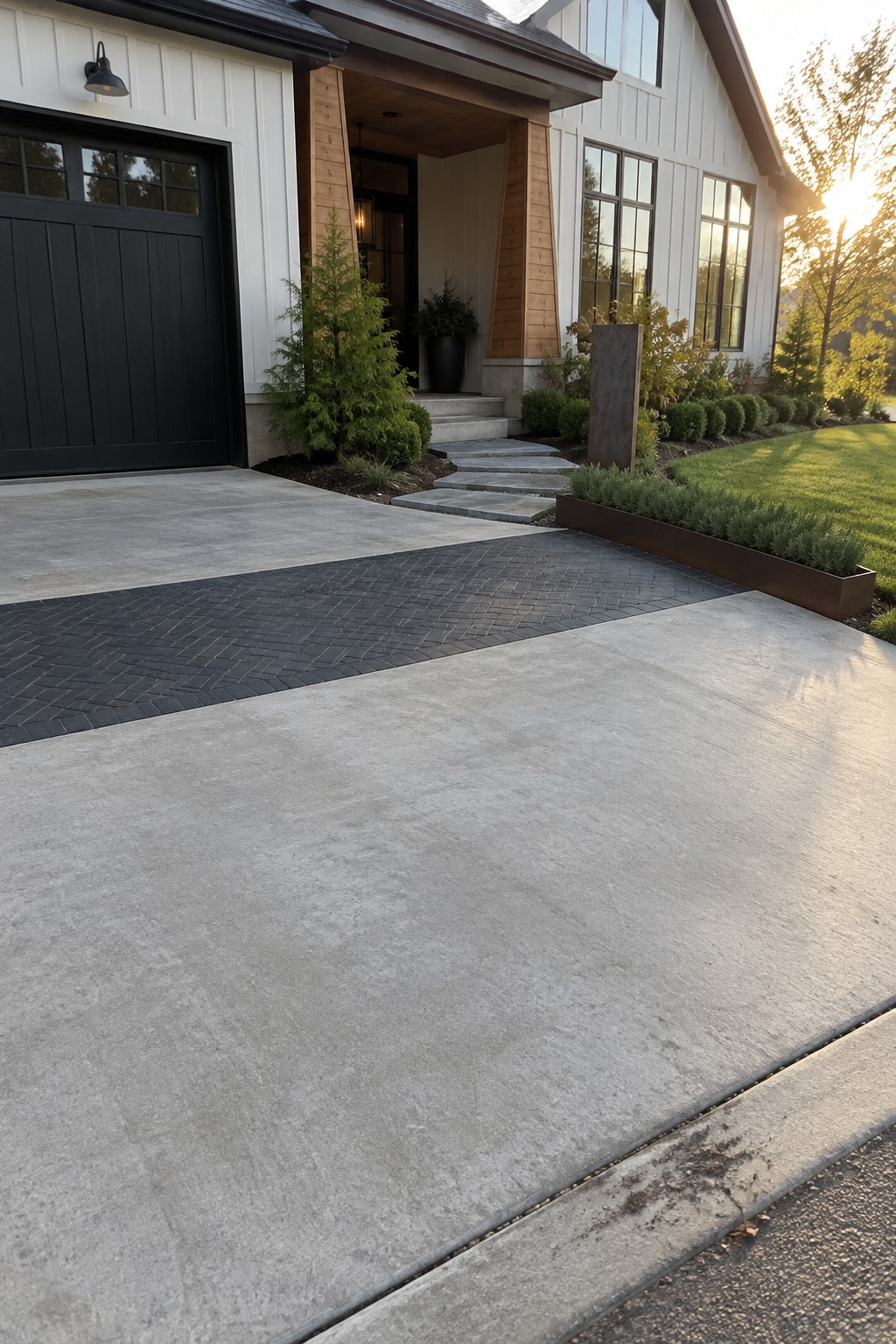
A dark band set into a light concrete driveway gives the surface a little more definition without changing the whole layout. Here, the herringbone pattern makes the stained section feel intentional and helps mark the route toward the front entry.
This idea works well on a broad driveway where a single color might feel plain. Use a charcoal stain for contrast, and keep the band wide enough to read clearly from the street. Test the stain on a small area first, since the final shade can vary with the concrete.
Use Stained Concrete for a Tropical Entry Path
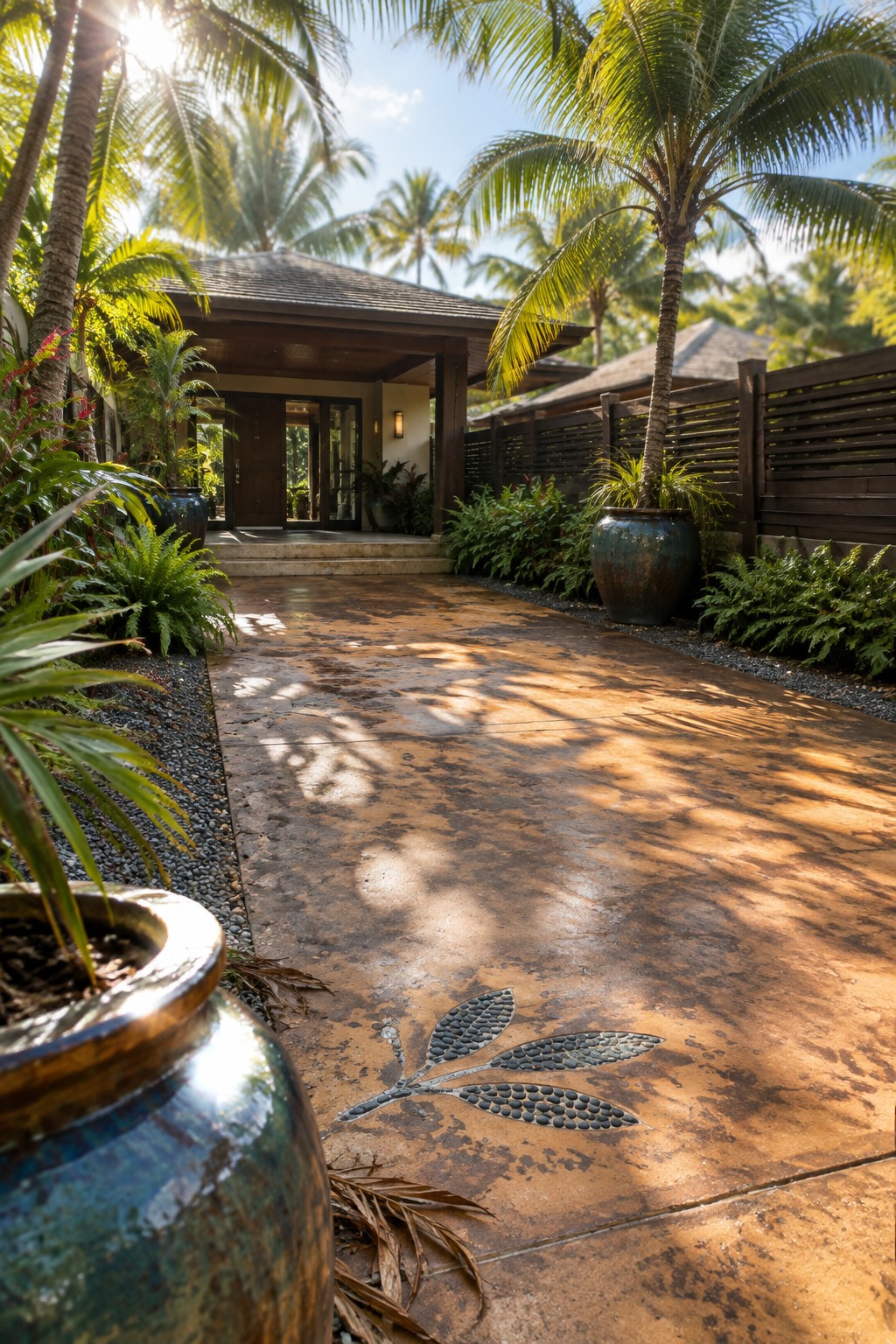
A stained concrete path can make a home’s entrance feel like part of the landscape. Here, the warm, mottled finish suits a tropical garden and gives the approach more character than plain gray concrete.
This idea works well for a front entry or garden path where you want a durable surface that still feels natural. Choose a stain with subtle variation, and keep the pattern simple so it does not compete with nearby plants.
Use Stained Concrete to Continue a Garden Path
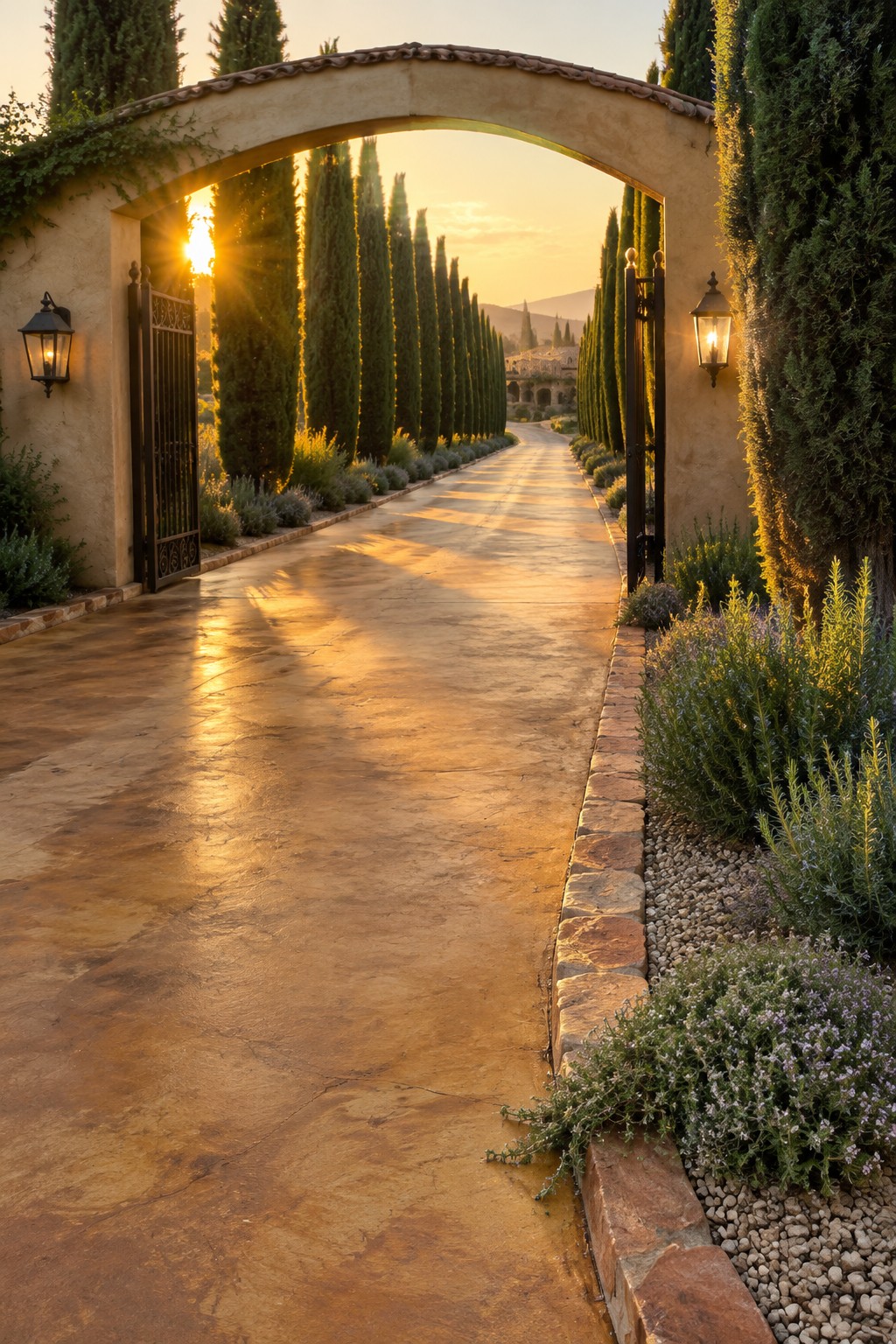
A stained concrete path can lead the eye through a garden while giving the walking surface a warm, natural tone. Here, the earthy finish suits the stone entry and cypress-lined approach without competing with the planting.
This idea works well for long paths or driveways that connect an entry to a garden or courtyard. Choose a stain that complements nearby stone, and keep the finish subtle so the surface still feels at home among the greenery.
Use a Concrete Walkway to Set Off the Driveway
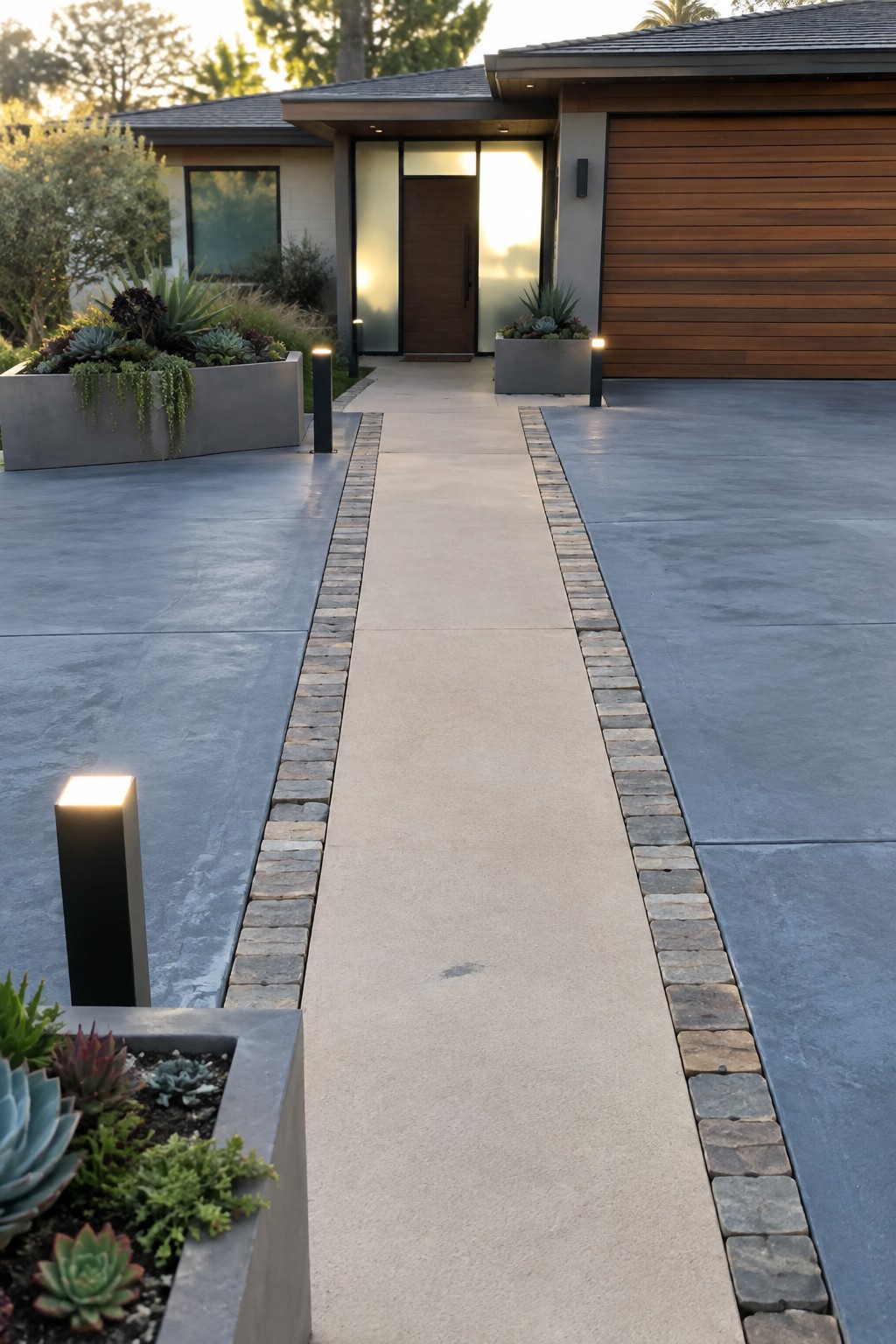
A simple walkway can give a broad concrete driveway a clearer route to the front door. Here, a light concrete path runs through the darker paved area, with narrow stone borders marking its edges.
This approach works well when you want the driveway and entry to feel connected without using the same finish everywhere. Keep the path wide enough for comfortable use, and choose border stones that suit the color and texture of the concrete.
Use Curved Bands to Shape a Concrete Driveway
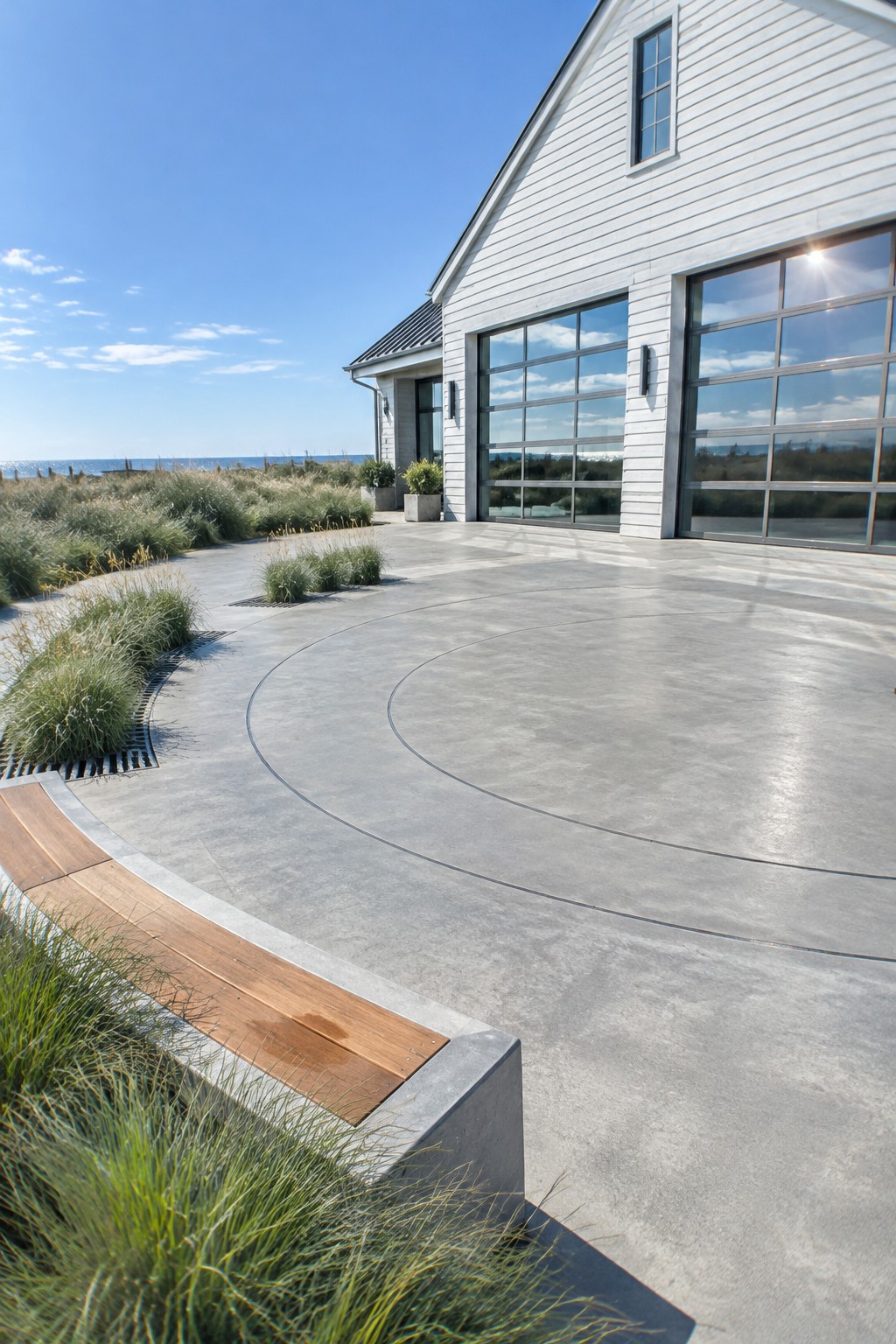
Curved bands in a concrete driveway can make a broad paved area feel more considered without changing its overall layout. Here, fine dark lines form wide arcs that give the surface a gentle sense of movement.
This approach works well in front of a modern or coastal home, especially where there is plenty of open paving. Use a stain that contrasts with the main concrete but stays close in tone, so the curves are easy to see without becoming too busy.
Use Stained Concrete for a Garden Path
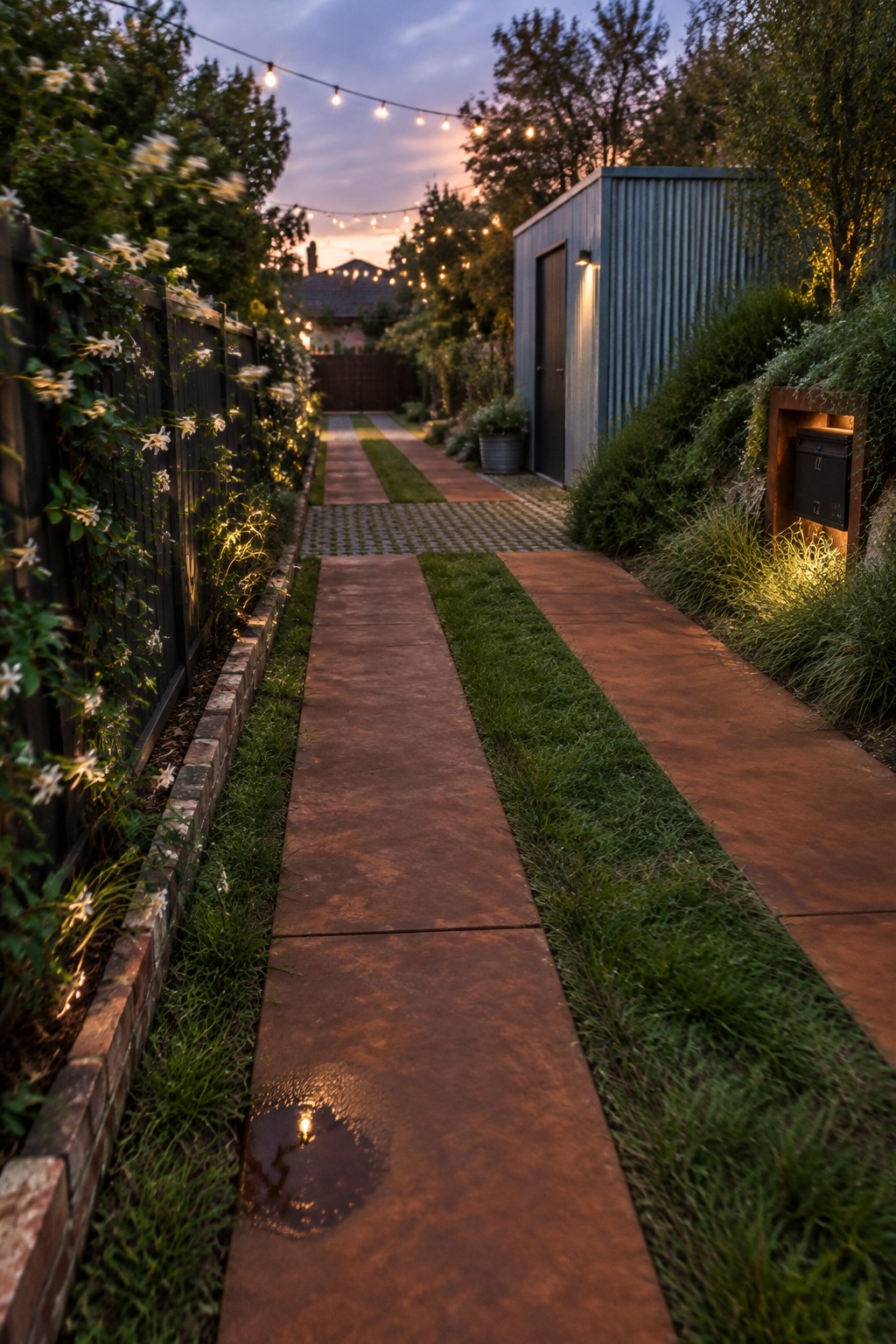
A garden path can feel more connected to the yard when its concrete has a warm, earthy stain. Long slabs with grass between them make a simple route feel less like a plain walkway, while still giving you a firm surface to walk on.
This approach works well beside garden beds or along a side yard where a solid paved strip might feel too stark. Choose a stain that suits the surrounding brick or planting, and make sure the slabs have a practical, even surface for everyday use.
Use a Stained Driveway to Complement a Classic Entry
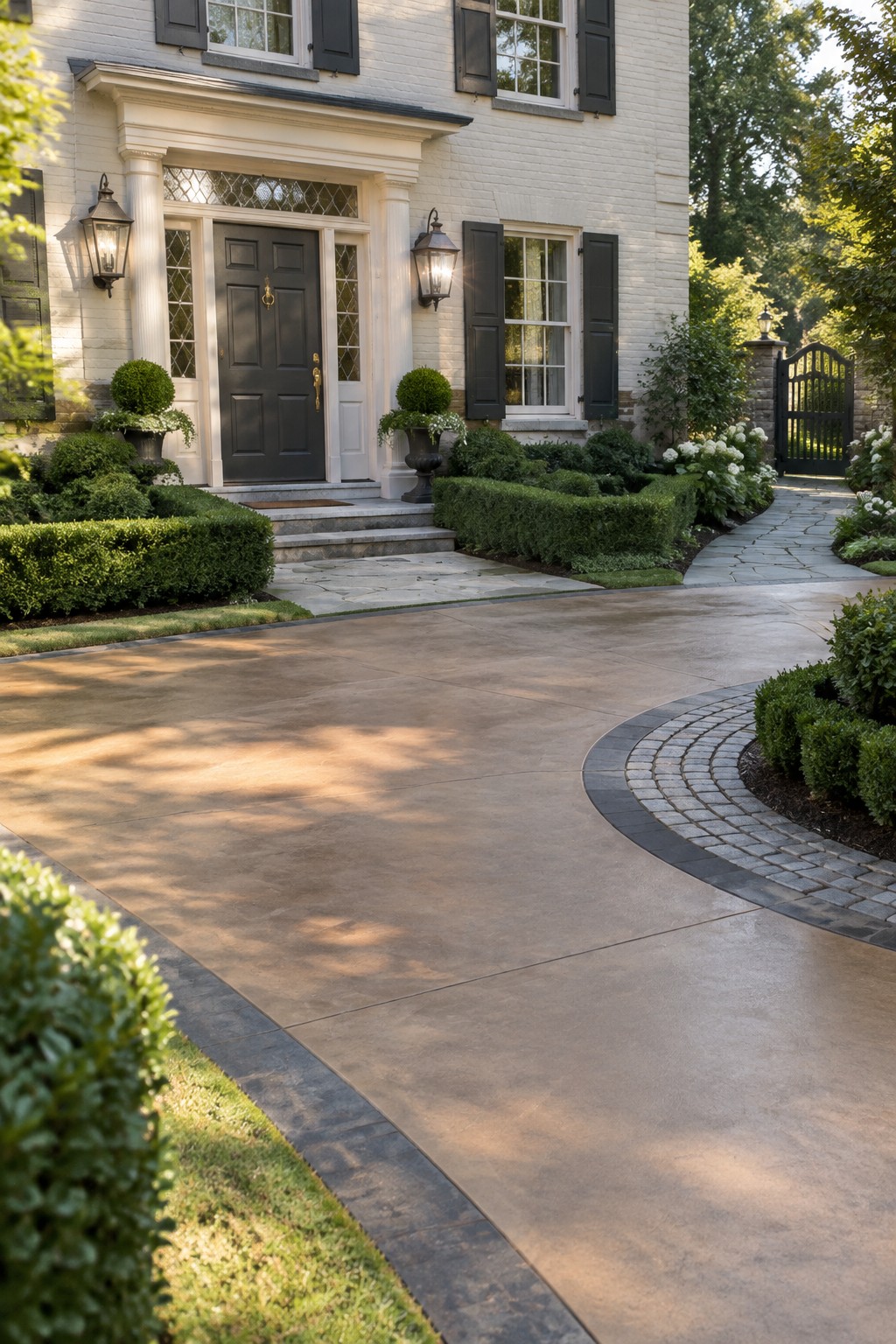
A warm stained finish can make a concrete driveway feel more considered without competing with a traditional home. Here, the broad surface and darker curved border give the entry a clear shape while keeping the look fairly understated.
This approach suits homes with classic details, especially when the driveway leads directly to the front door. Choose a stain that works with the house’s brick or trim, and keep the border simple so it defines the driveway without making it feel busy.
Use a Warm Stained Finish for a Curved Driveway
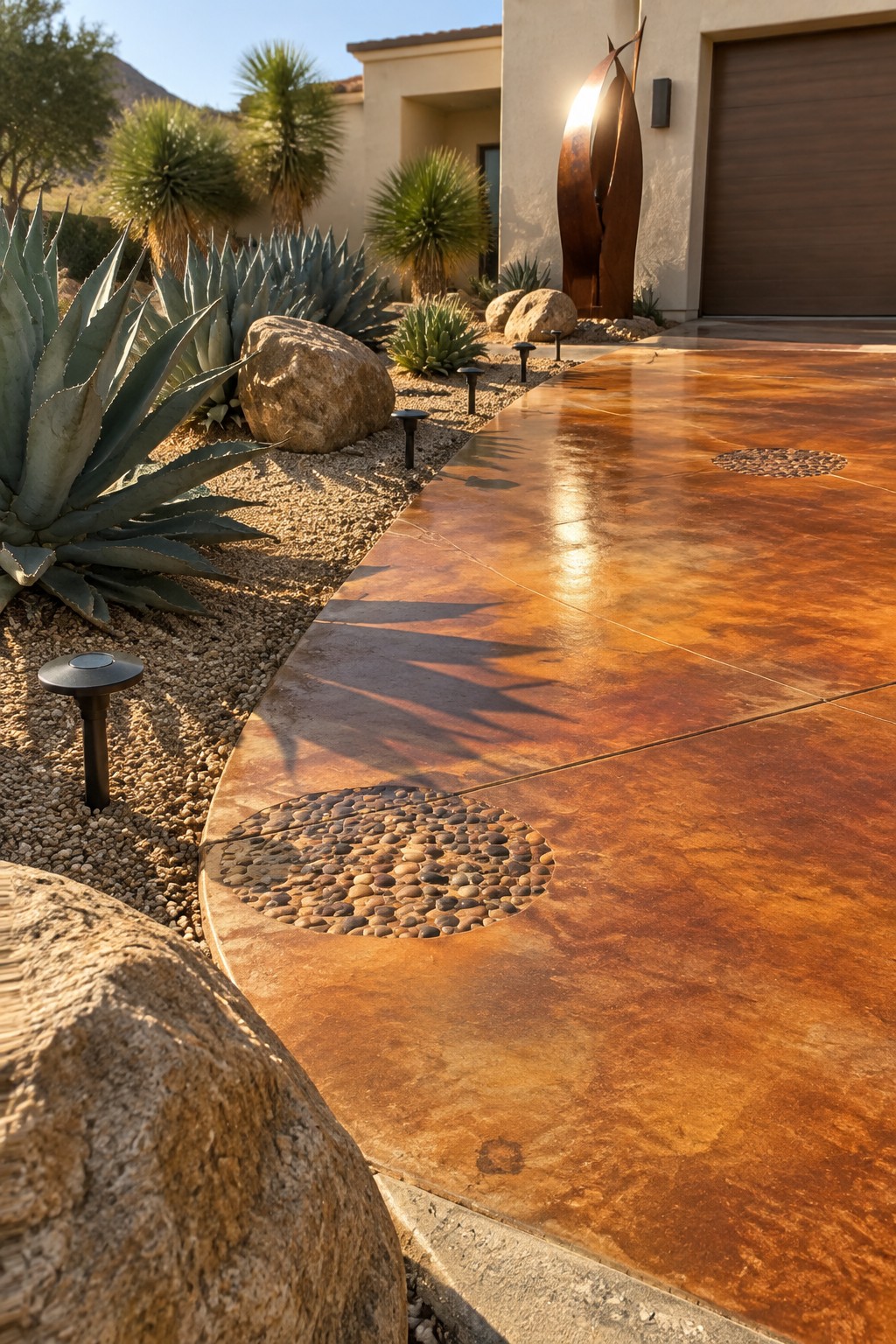
A warm, rust-toned stain can make a concrete driveway feel more connected to a desert-style home. Here, the curved edge gives the broad paved area a softer outline, while small pebble insets add a bit of pattern without taking over.
This approach suits homes with natural stone, stucco, or gravel landscaping. Keep the stain varied but fairly consistent, and use decorative insets sparingly so the driveway stays easy to maintain.
Use a Stained Driveway for a Classic Home
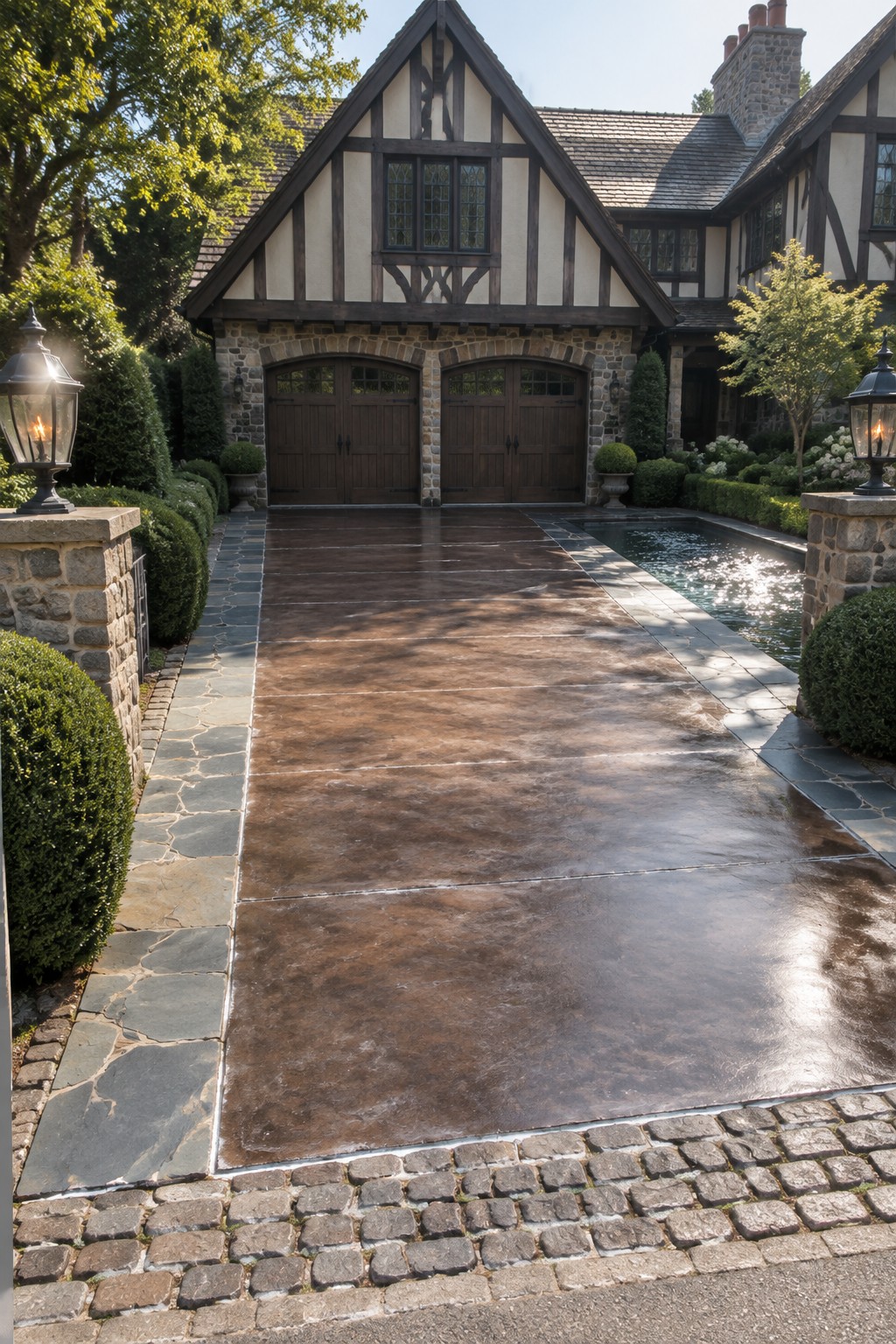
A warm brown stain gives this concrete driveway the look of aged paving, which suits a traditional home especially well. The broad, simple surface feels more finished than plain gray concrete without competing with the stone and timber details nearby.
This approach works well on a long driveway where the finish has room to show. Keep the stain fairly even, and use stone edging or a cobbled apron to mark the transition at the street.
Use Light Staining to Break Up a Wide Driveway
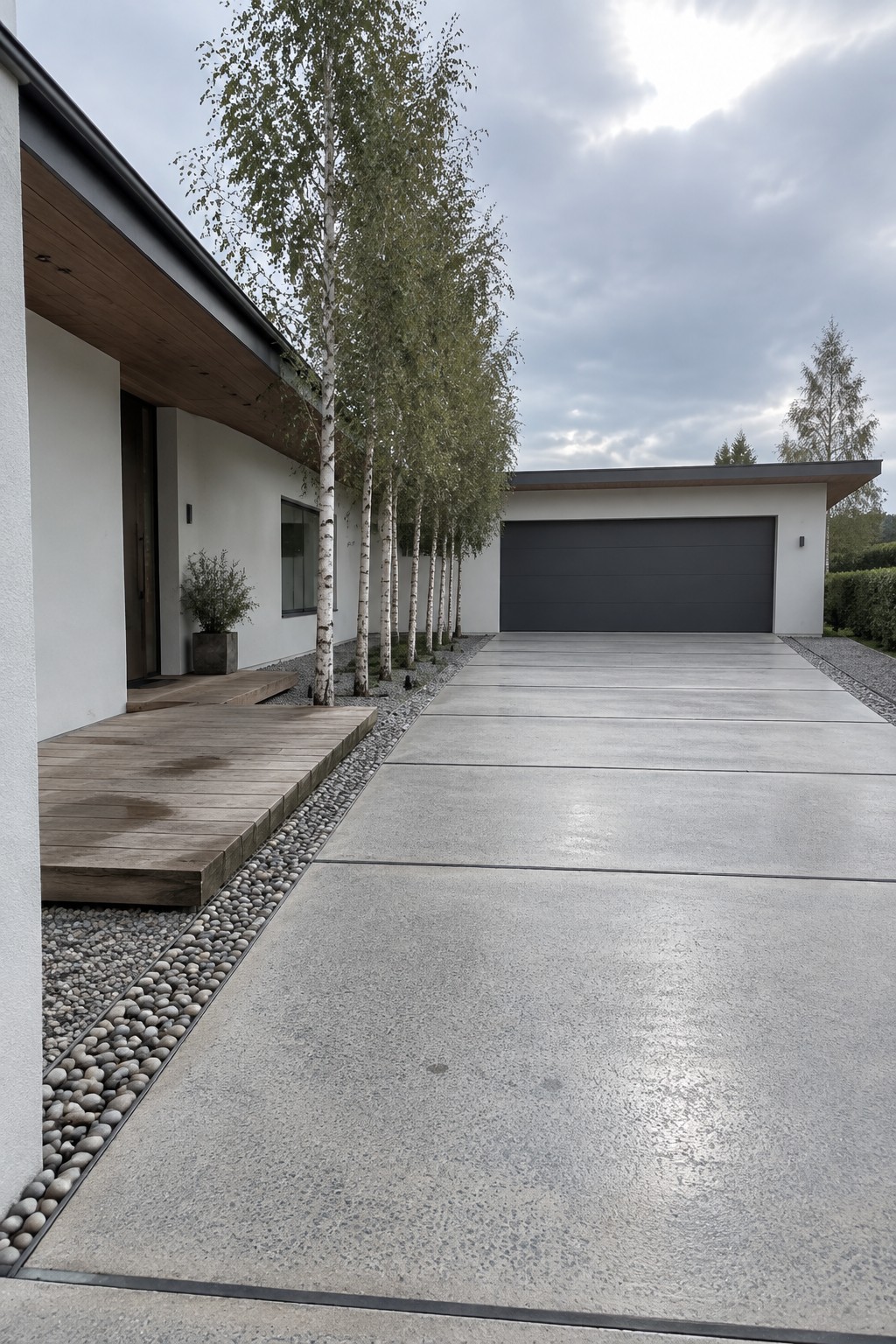
A broad concrete driveway can feel plain when it runs straight to the garage. A subtle stained finish gives the surface a little variation while keeping the overall look simple.
For a similar effect, choose a light gray stain and keep the finish consistent across the driveway panels. It suits modern homes especially well, but make sure the color works with the exterior and does not become slippery when wet.
Frequently Asked Questions
Q: Can I stain an old concrete driveway, or does it need to be new?
A: Older concrete can take stain nicely if it’s still solid and free of sealer, paint, and heavy oil stains. Clean a small test area first to see how the color looks, since patches and repairs may absorb stain differently.
Q: Will stained concrete get slippery when it rains?
A: A smooth sealed finish can feel slick when wet, especially on a sloped driveway. Choose a sealer with a slip-resistant additive, and ask for a test patch if you’re unsure how the finish will feel.
Q: How often does a stained driveway need resealing?
A: Most driveways need a fresh coat every few years, depending on traffic, weather, and wear. When water stops beading on the surface or the color starts to look dull, it’s a good time to check the sealer.
Q: Can stain hide cracks and oil spots?
A: Stain adds color, but it won’t cover damage or deep stains the way paint might. Clean oil spots and repair cracks before staining so they don’t stand out even more afterward.
