

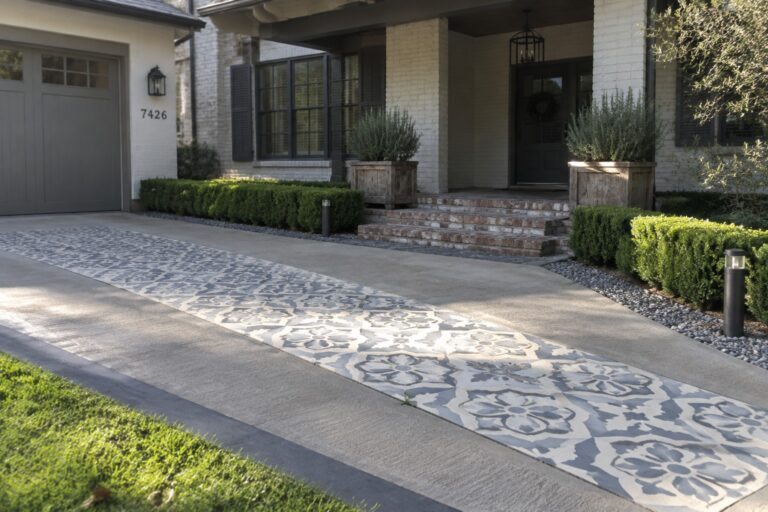
A worn concrete driveway can make the whole front of a home feel a little tired, since it is one of the first surfaces people notice from the street.
Replacing it is not always practical, though, and many driveways have enough life left for a thoughtful refresh.
I would start by looking at the stains, cracks, and edges, then choose a fix that suits both the concrete’s condition and the home’s exterior.
Some changes can improve the finish, while others use borders, color, or nearby planting to make the driveway feel more intentional.
The best options are the ones I can adapt to my budget and upkeep plans without taking on a full replacement.
Add a Decorative Tile Strip to a Concrete Driveway
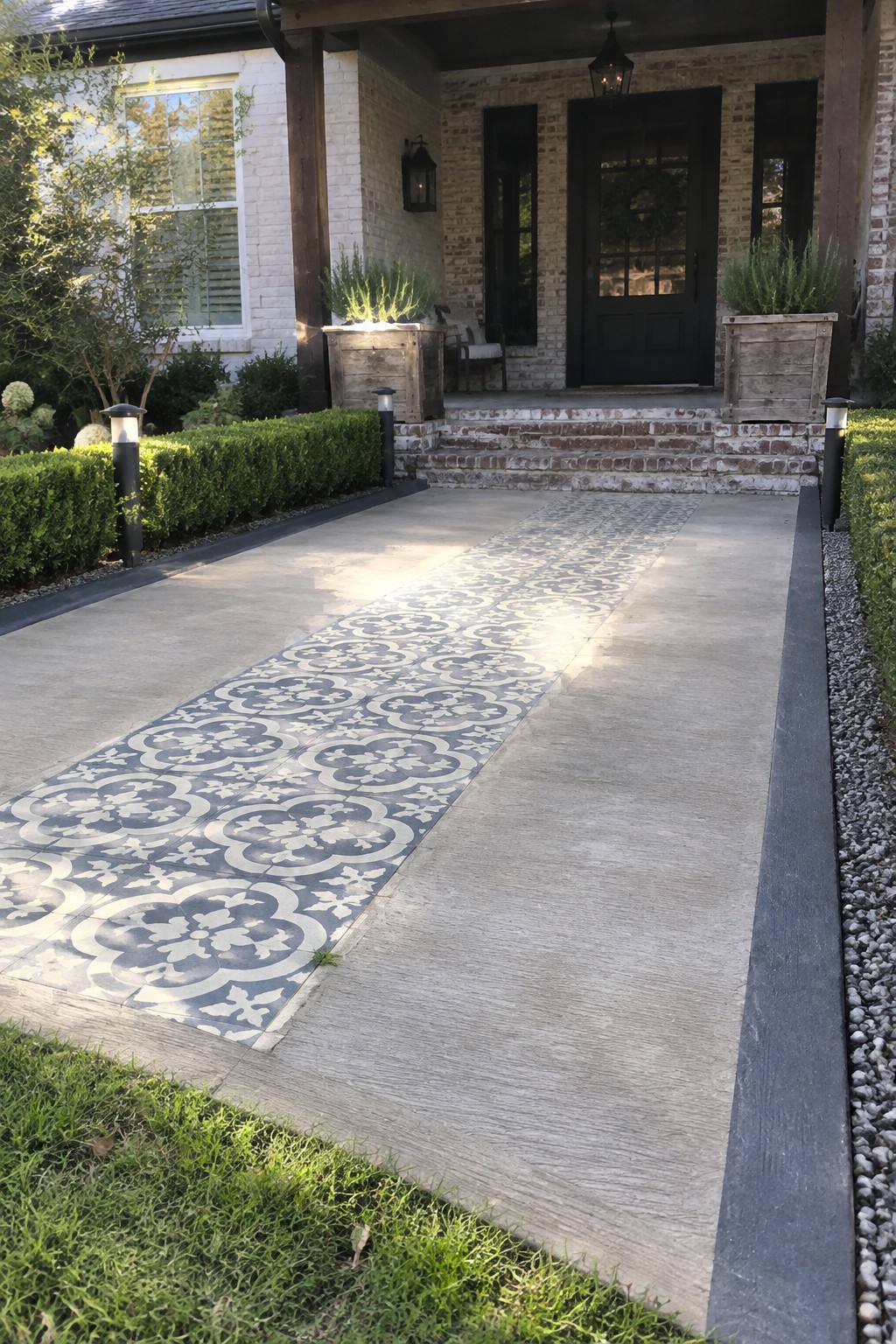
A narrow strip of patterned tile can make a plain concrete driveway feel more finished without replacing the whole surface. It gives the entrance a bit of character while leaving most of the existing concrete in place.
Use outdoor-rated tile and have the concrete checked for cracks or movement before installing it. A straight strip works well on a walkway or driveway leading to the front door, but make sure the surface stays even and slip-resistant.
Use a Concrete Driveway Border to Define the Edges
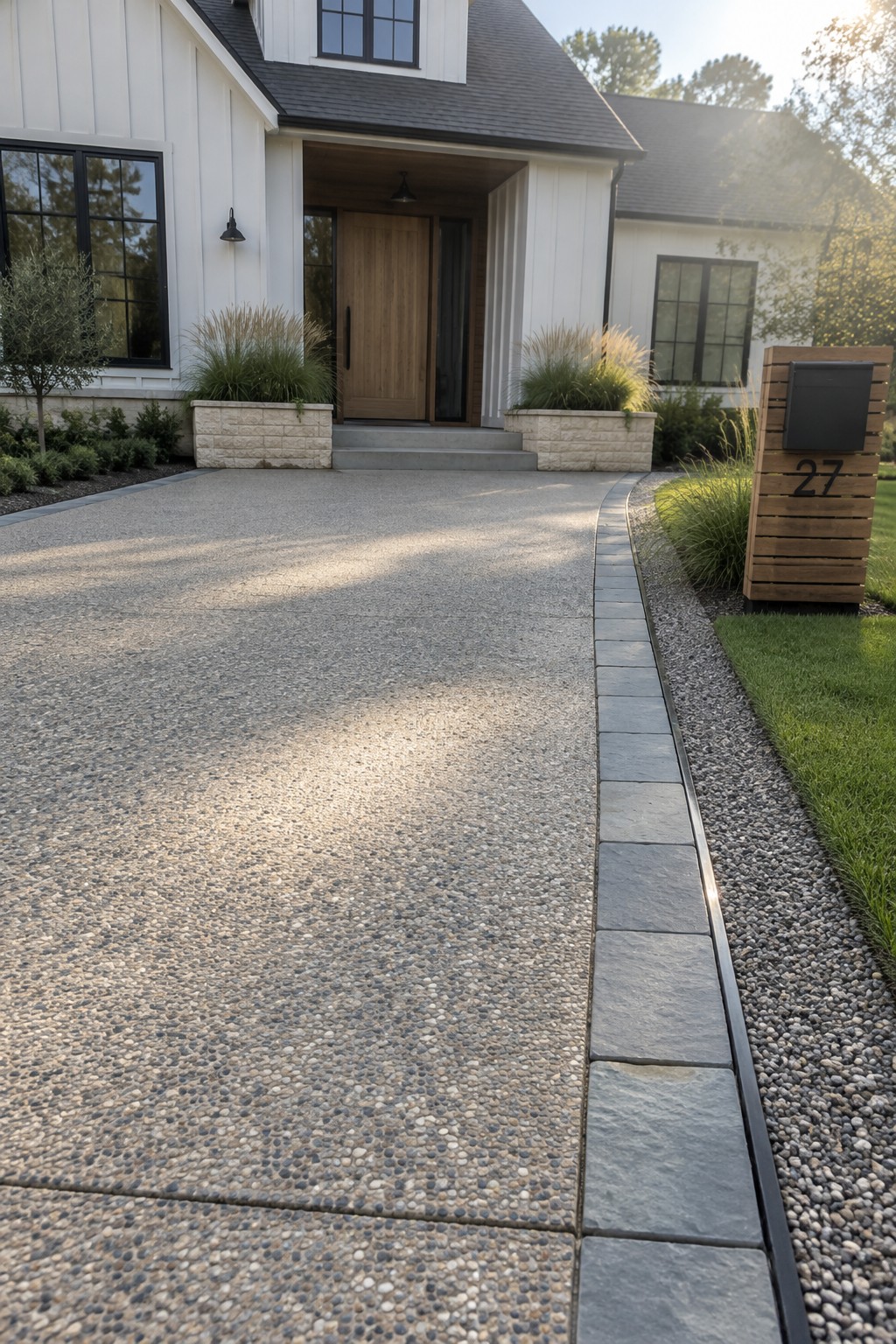
A narrow border of pavers can give an existing concrete driveway a more finished look without replacing the main surface. The change is especially useful when the driveway already has a sound, textured finish but needs clearer edges.
Choose pavers that suit the house and keep the border consistent along the driveway’s curves. A neat edge works best when it sits level with the concrete and leaves enough room for proper drainage.
Use Concrete Slabs With Grass Joints
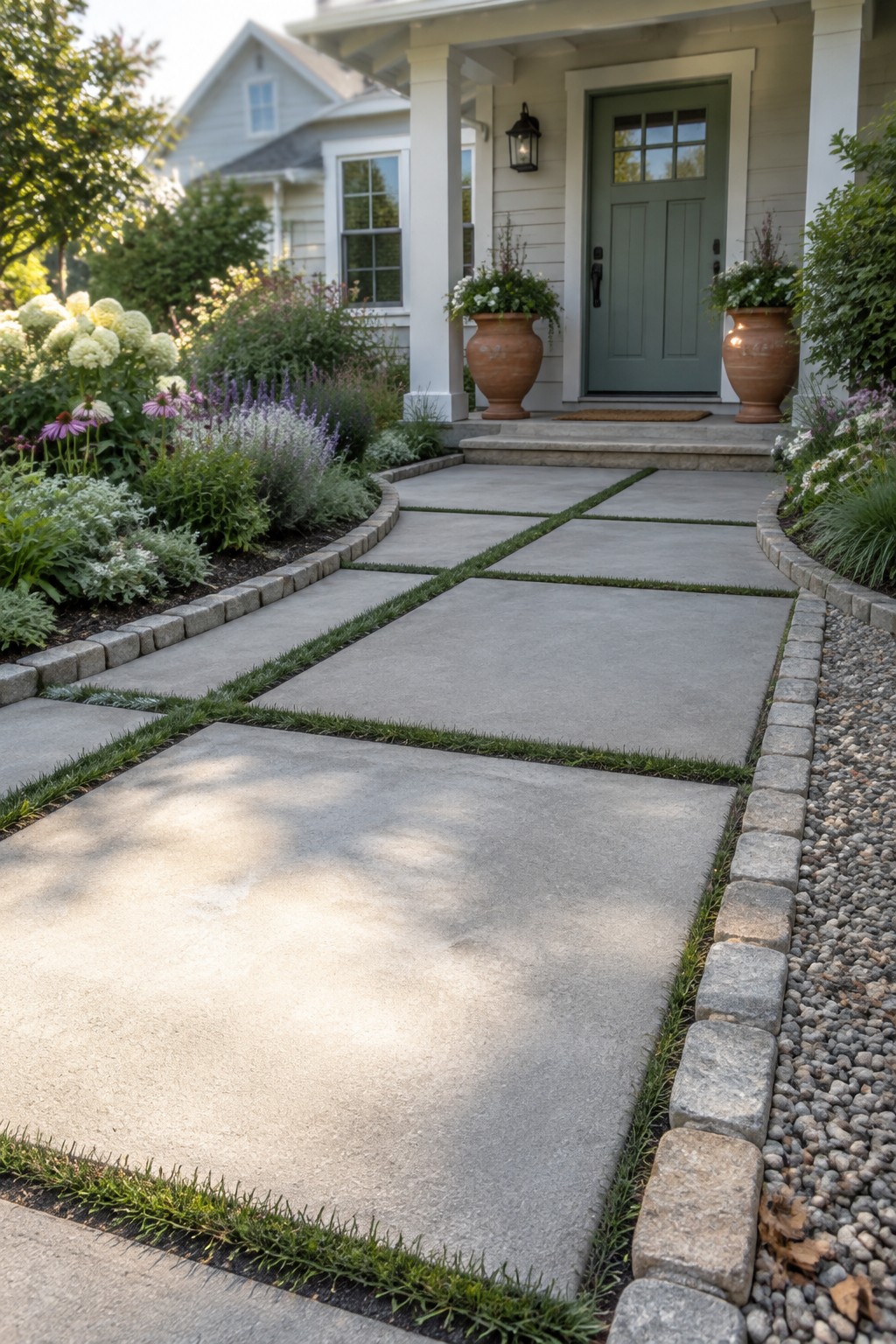
Oversized concrete slabs separated by narrow strips of grass make a driveway feel more like a garden path. The simple grid adds interest without replacing the concrete with a more expensive paving material.
For a similar look, leave slim, even gaps between new or existing slabs and plant them with tough grass that can handle occasional foot traffic. This works best where the joints can drain well and be trimmed easily. Keep the strips narrow so the concrete remains practical for parking.
Add Simple Inlays to Refresh a Concrete Driveway
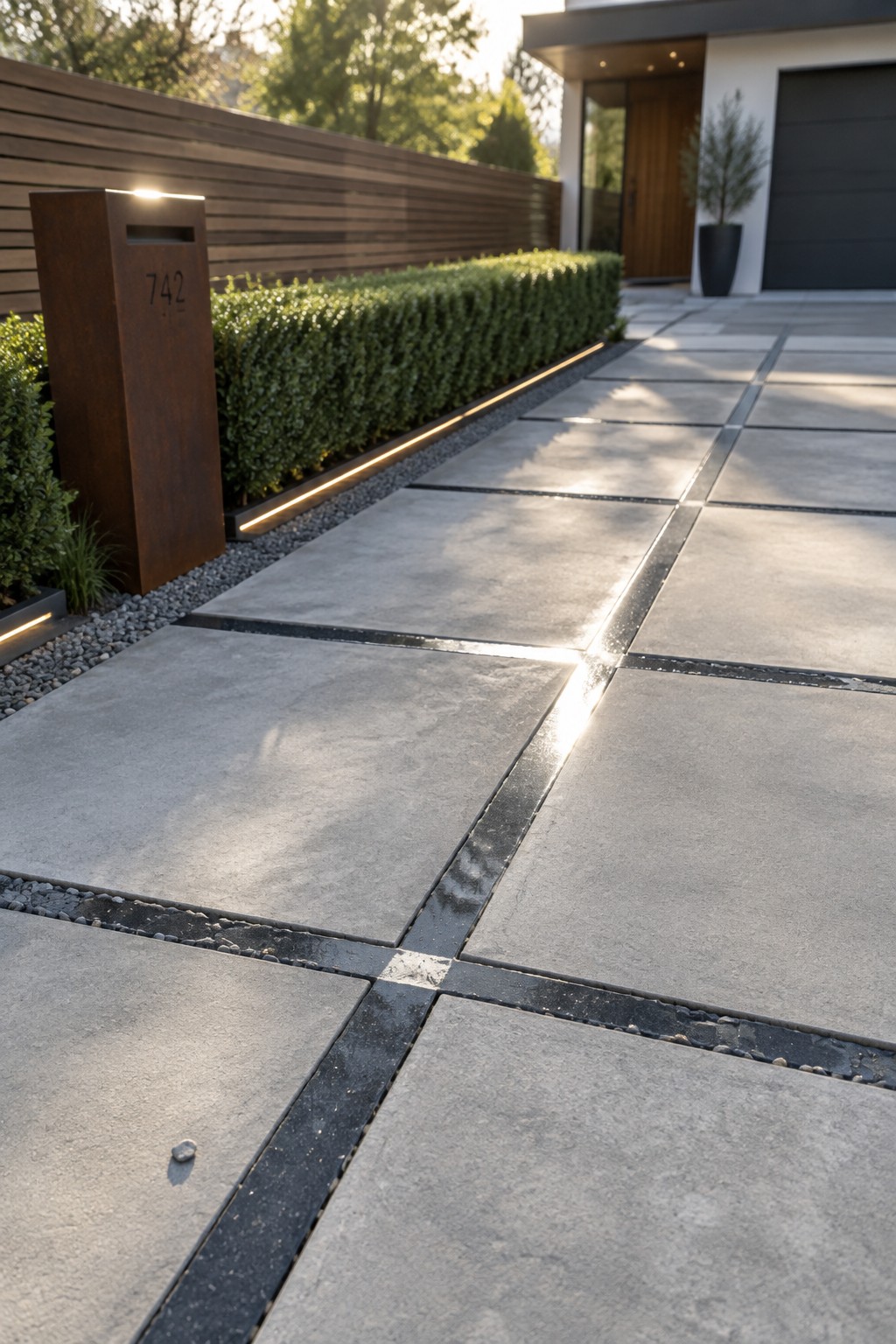
A narrow inlay can give an existing concrete driveway a more finished look without replacing the main surface. Dark strips between the large slabs create a clear pattern and make the plain concrete feel more intentional.
For a budget-friendly update, consider adding contrasting pavers or stone to selected joints, rather than reworking the whole driveway. Check that the inlay sits level with the concrete and allows water to drain properly.
Use Pebble Aggregate to Refresh a Concrete Walkway
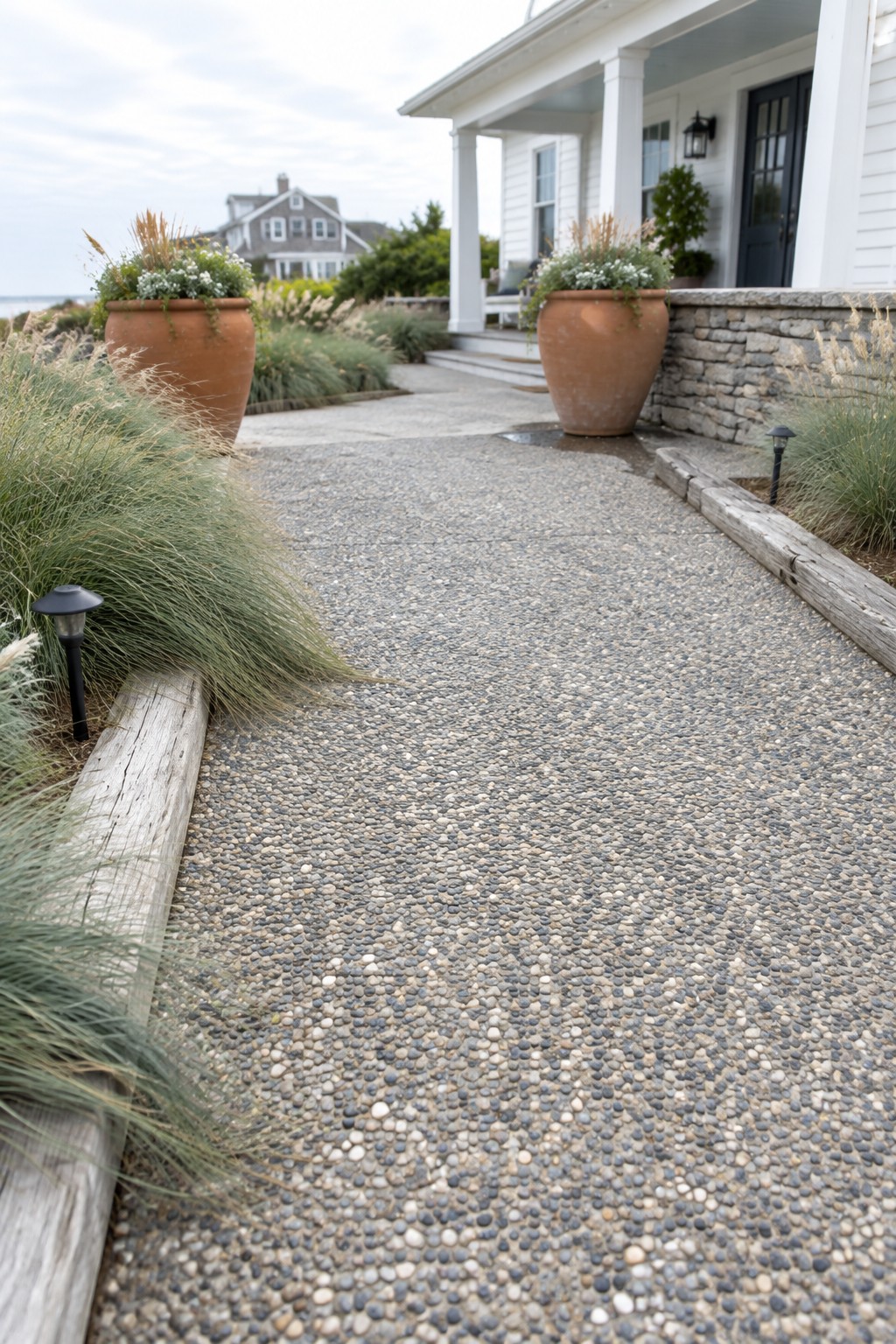
Exposed aggregate gives a plain concrete path more texture and color without changing its basic layout. The small stones create a durable, grippy surface, which can be a practical choice for an entry walk.
For a similar look on an existing concrete driveway, a contractor can apply an aggregate overlay rather than remove the whole slab. It works best when the concrete is sound and well drained. The finish is rougher than smooth concrete, so consider how easy it will be to sweep and clear in winter.
Use a Stone Pattern to Refresh a Concrete Driveway
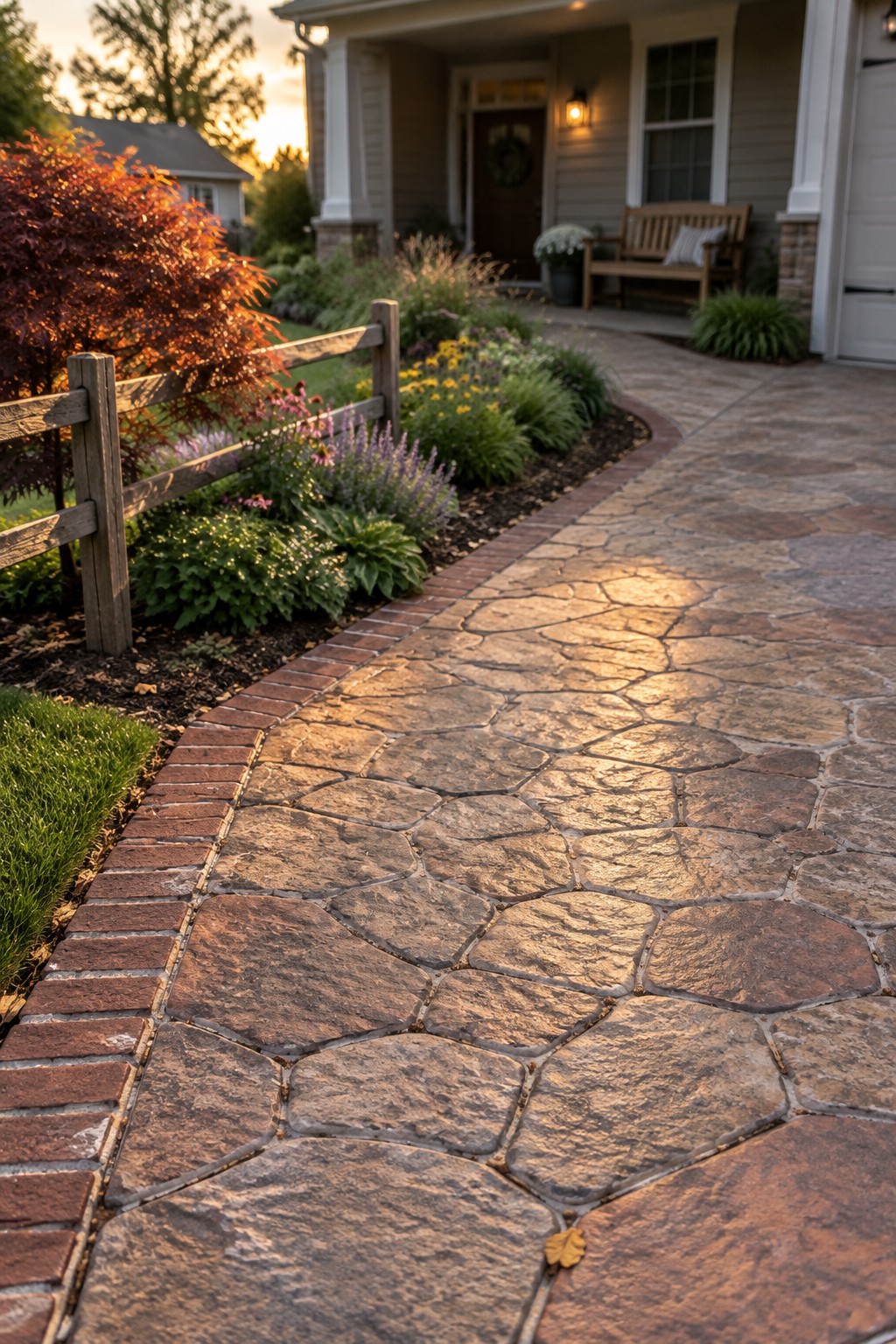
Stamped concrete can give an existing driveway the look of irregular stone without replacing the whole surface. The varied pattern makes a broad driveway feel less plain, while a brick edge gives the design a clear boundary.
For a budget-conscious update, a contractor can apply a stone-pattern stamp and color treatment to sound concrete. Check that the surface is in good condition first, since cracks or uneven areas may need repair before resurfacing.
Add Patterned Tile Insets to a Concrete Walkway
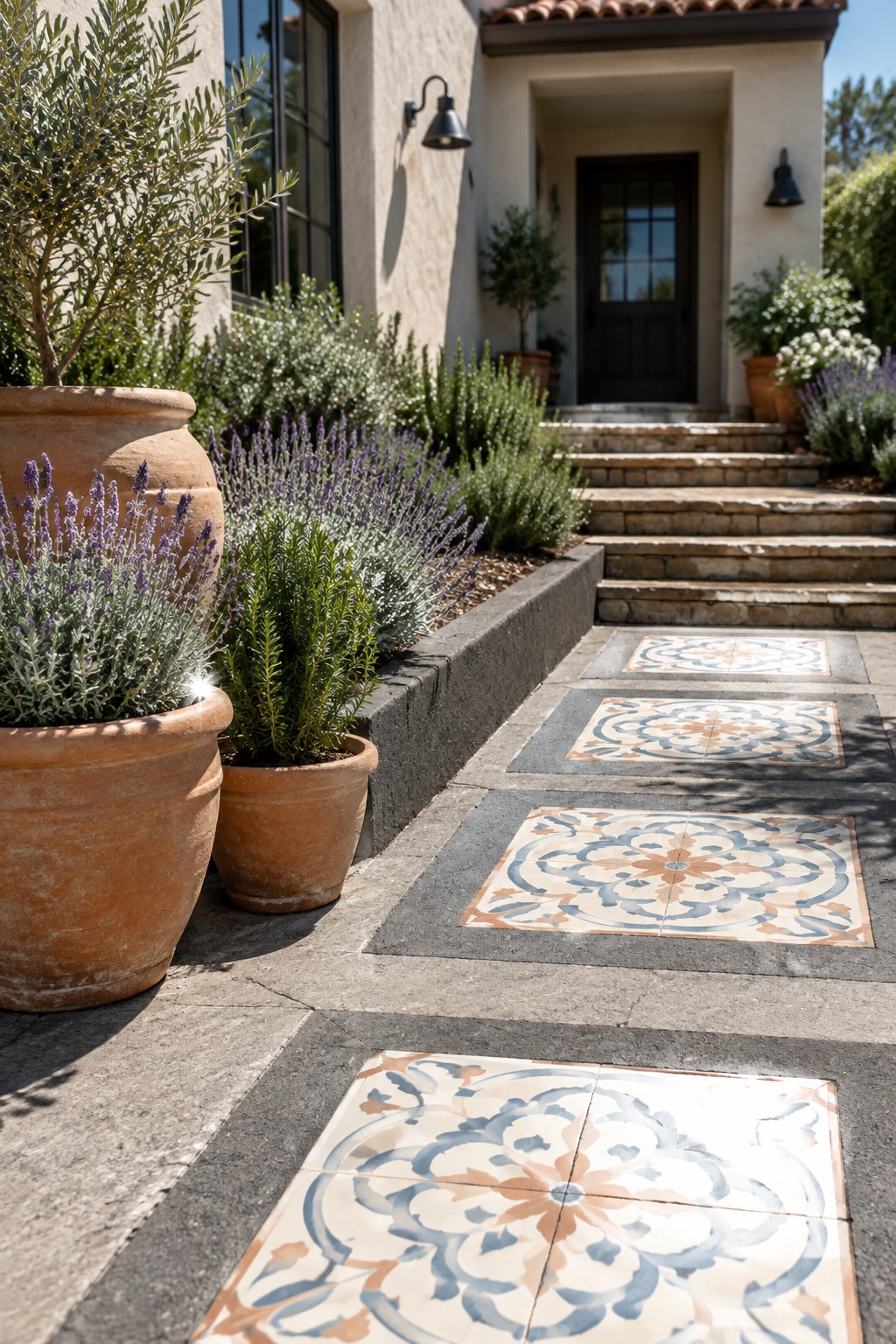
Decorative tile insets can break up a plain concrete surface without replacing the whole path. They give a long walkway a bit of pattern, while the surrounding concrete keeps the look simple.
For a similar update on a driveway, use a few tile sections as accents rather than covering the full surface. Choose outdoor-rated tile and have it set flush with the concrete so the edges are less likely to chip or catch a tire.
Add Low Groundcover Between Concrete Slabs
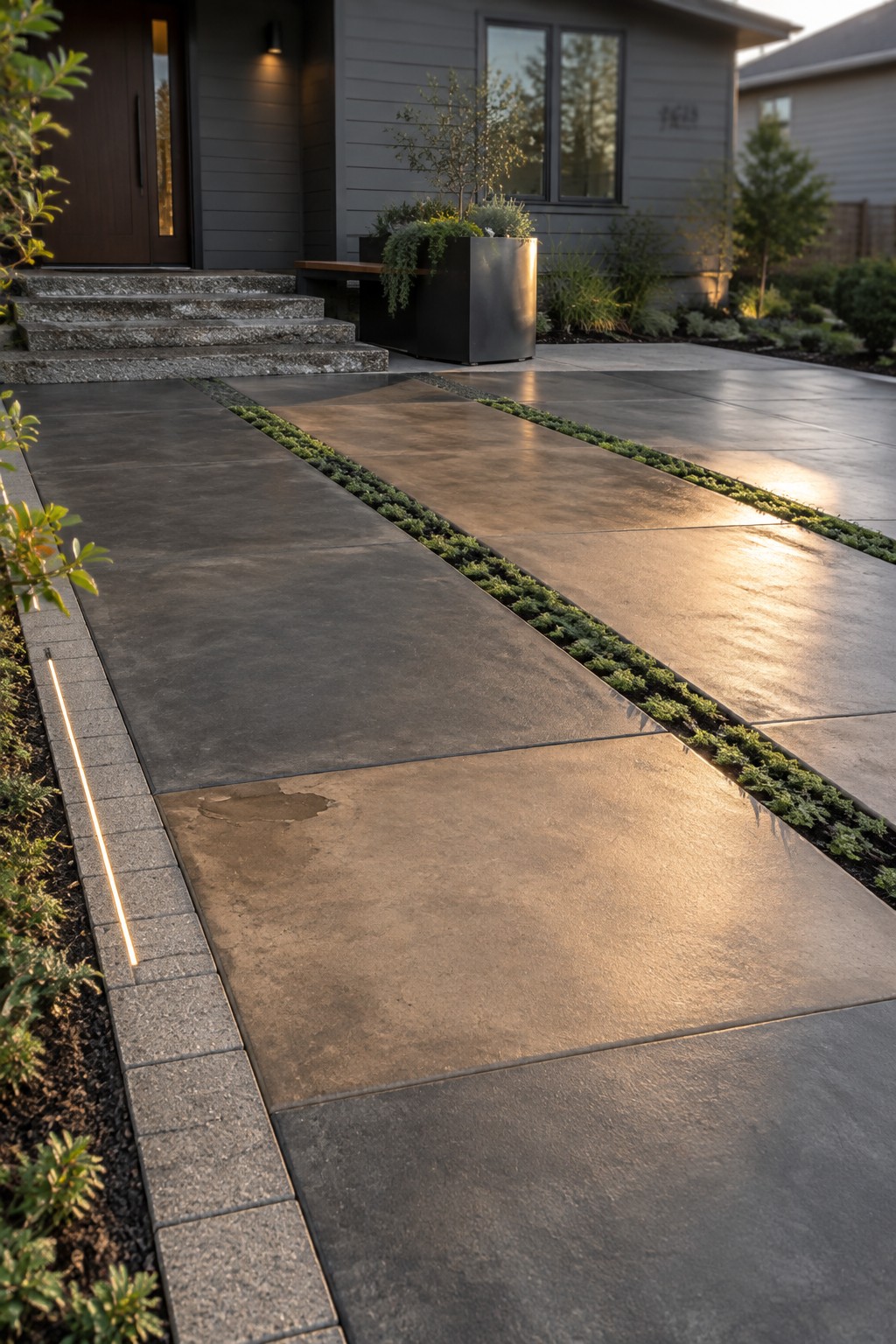
Narrow planted joints can make a concrete driveway feel less like one large paved surface. Low groundcover adds a bit of green while keeping the broad slabs easy to walk and drive on.
Use this approach for a modern home or a walkway that gets some sun. Choose a hardy, low-growing plant that can handle occasional foot traffic, and leave enough space between the slabs for it to spread without spilling over the edges.
Add a Stone Border to Define a Concrete Driveway
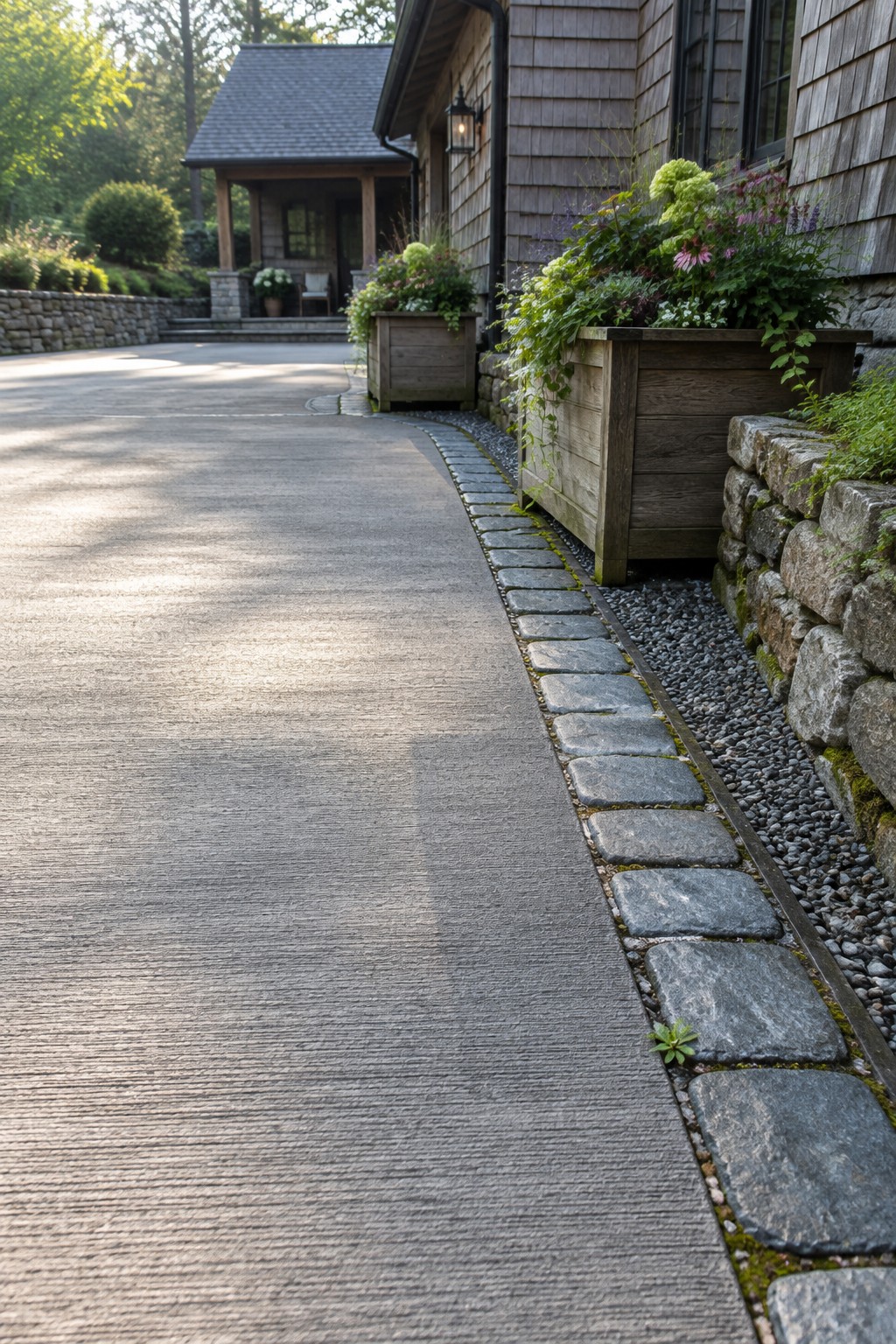
A narrow border of stone pavers can give an existing concrete driveway a more finished look without replacing the main surface. It also makes the edge easier to follow where the driveway curves beside a garden or house.
Use pavers that suit the home’s style, and set them firmly so they stay level with the concrete. This works especially well when the driveway is in good condition but its plain edges need a little definition.
Use a Brick Border to Define a Concrete Driveway
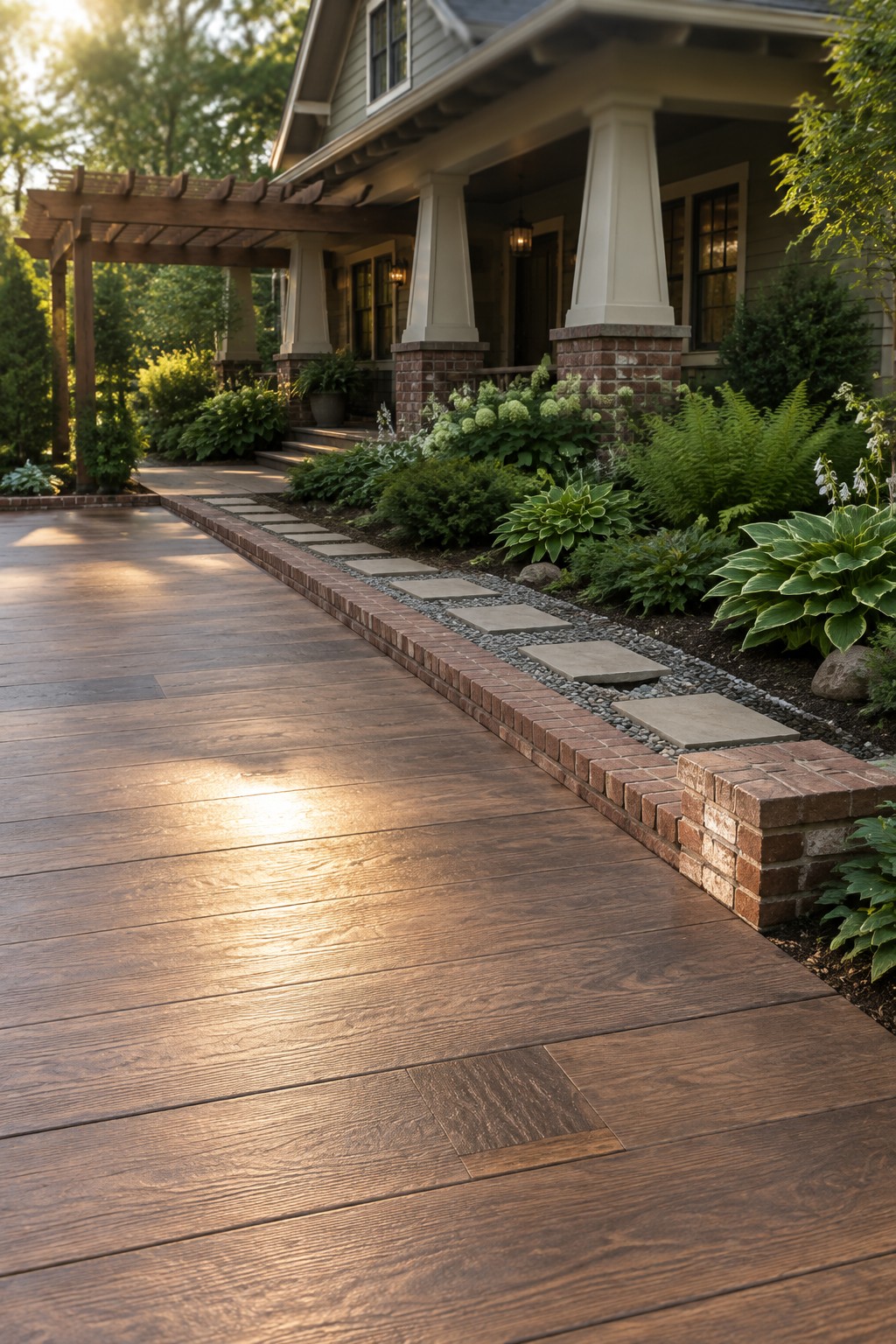
A narrow brick edge can give an existing concrete driveway a more finished look without replacing the main surface. It also creates a clear boundary between the driveway and nearby garden beds.
Use bricks along one or both sides, keeping the edge straight and level with the concrete. This works especially well beside established planting, but make sure the border is set firmly so it stays in place under regular use.
Paint a Bold Pattern on the Concrete Driveway
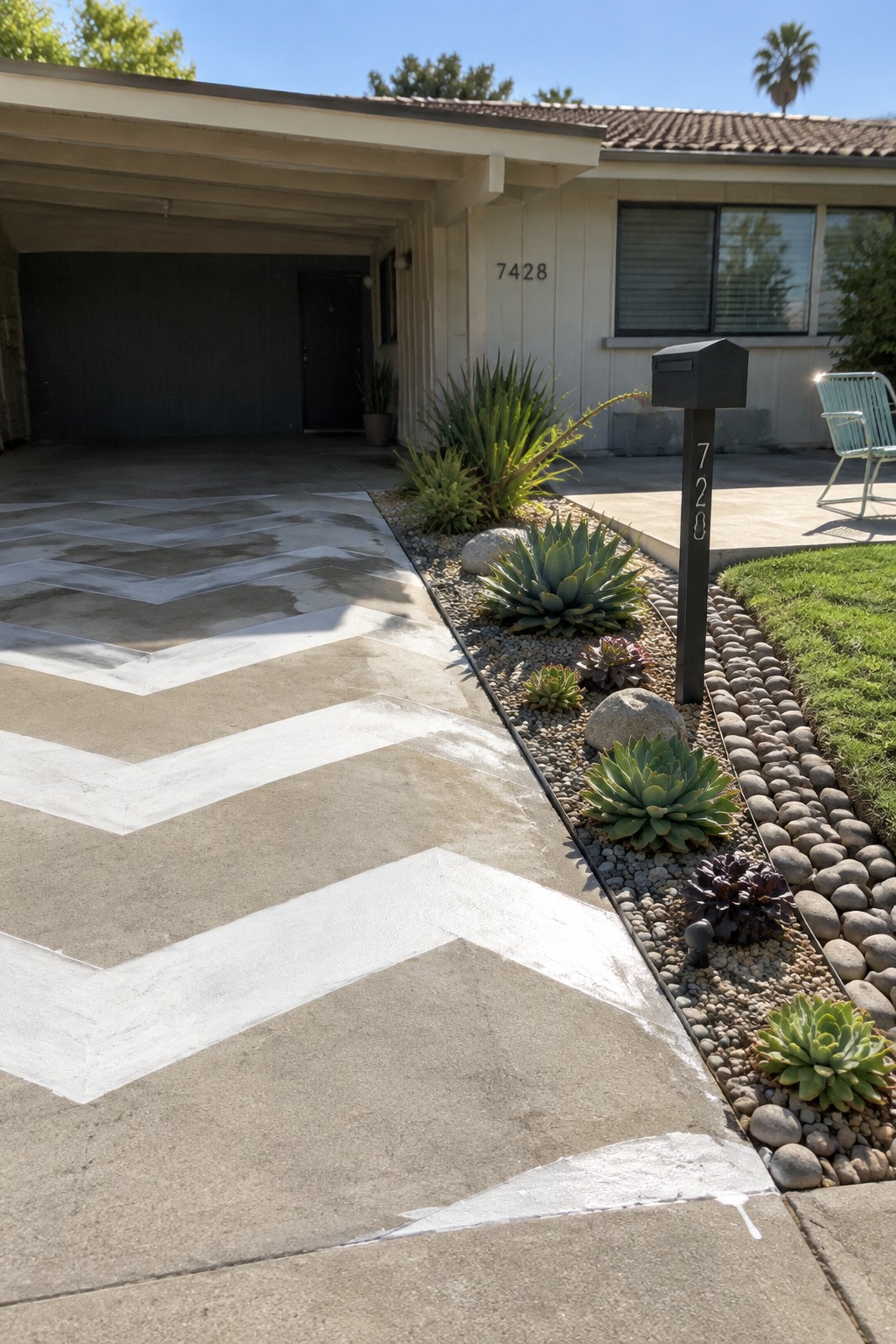
A painted geometric pattern can give a plain concrete driveway a fresh look without replacing the slab. Wide white stripes stand out against the gray surface and make the approach feel more intentional.
Use concrete-safe exterior paint or stain, and plan the pattern around the driveway’s joints so it looks tidy as the concrete expands and contracts. This works well on a sound, clean driveway. Repair cracks and test a small area first, since painted finishes need occasional touch-ups.
Use Large Concrete Slabs to Update a Driveway
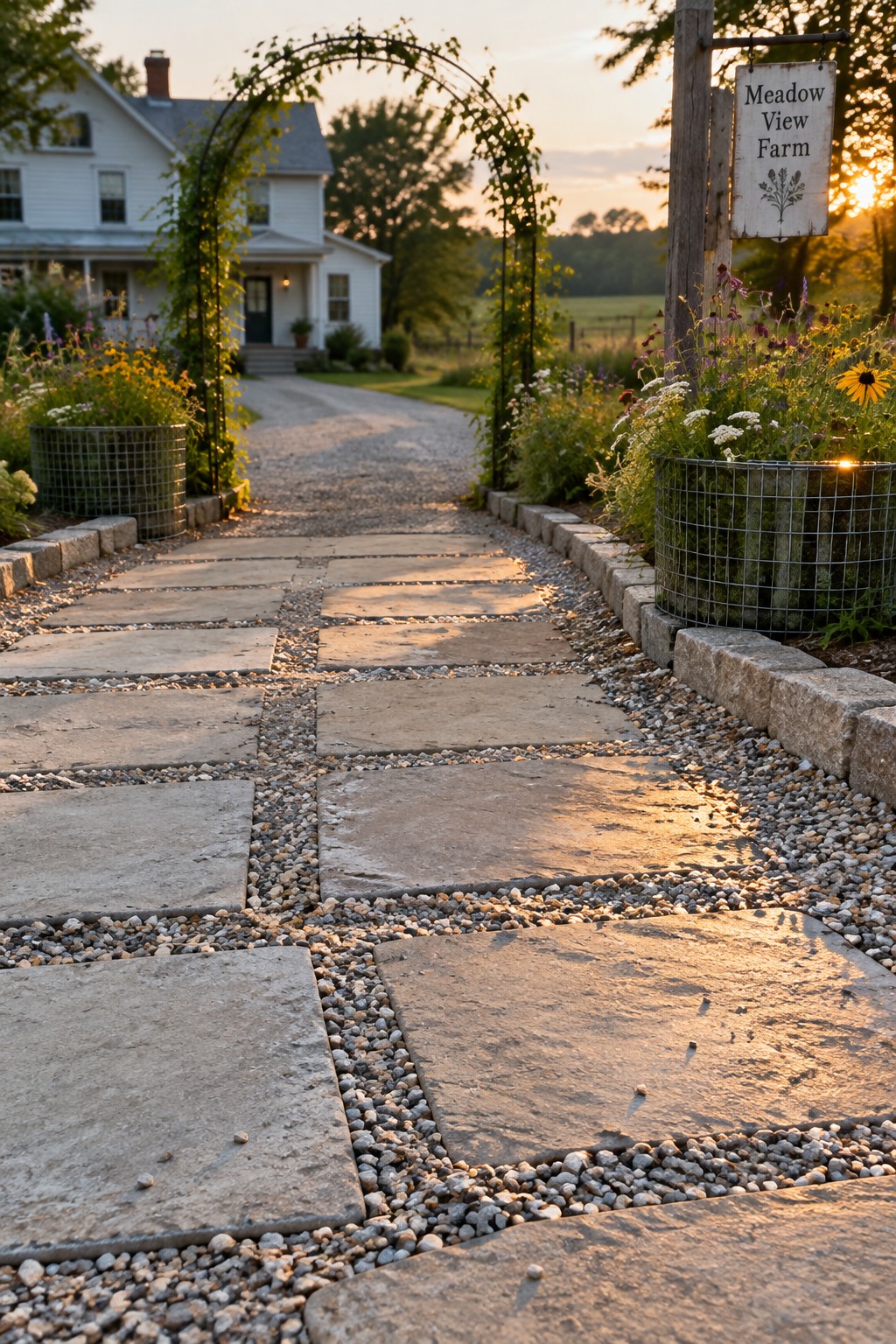
Large concrete slabs set in gravel offer a simple way to change the look of a driveway without replacing the entire surface. The open joints give the path a more relaxed, garden-style feel, and the same layout can work for a walkway or a short approach to the house.
For a budget-minded update, use this idea on a smaller section, such as the entrance or a side path, and keep the existing driveway in place. Choose slabs thick enough for the intended use, and make sure they sit level on a firm base so they do not shift.
Refresh a Concrete Walkway With Patterned Pavers
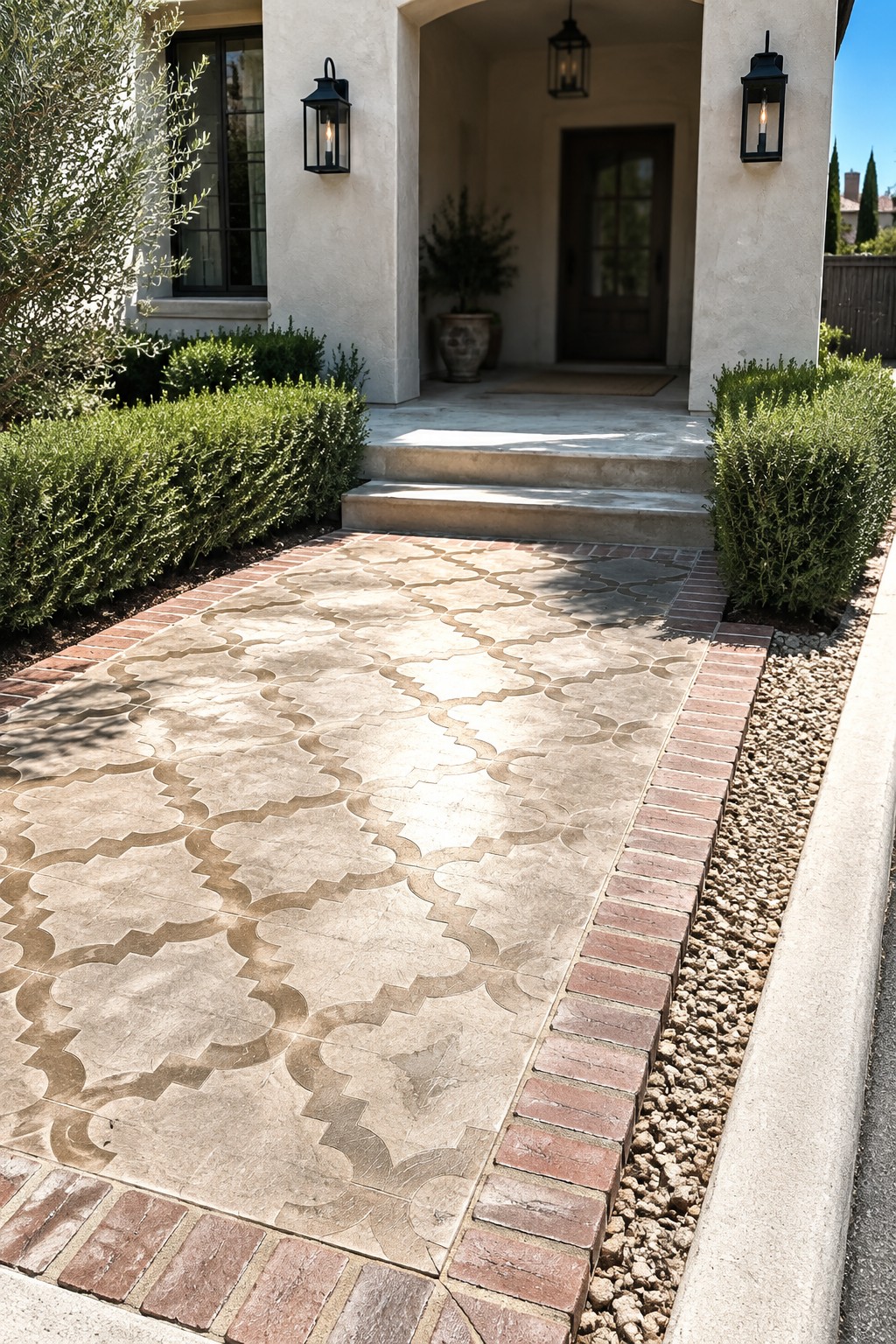
Patterned concrete pavers can give a plain walkway a more finished look without replacing the whole surface. A simple brick edge helps contain the design and makes the patterned center feel intentional.
Use this approach on an entry path or a small section of driveway, and keep the existing concrete where it is still sound. Choose outdoor-rated pavers with a grippy finish, and check that they sit level so the walkway stays easy to use.
Use Groundcover Between Large Concrete Slabs
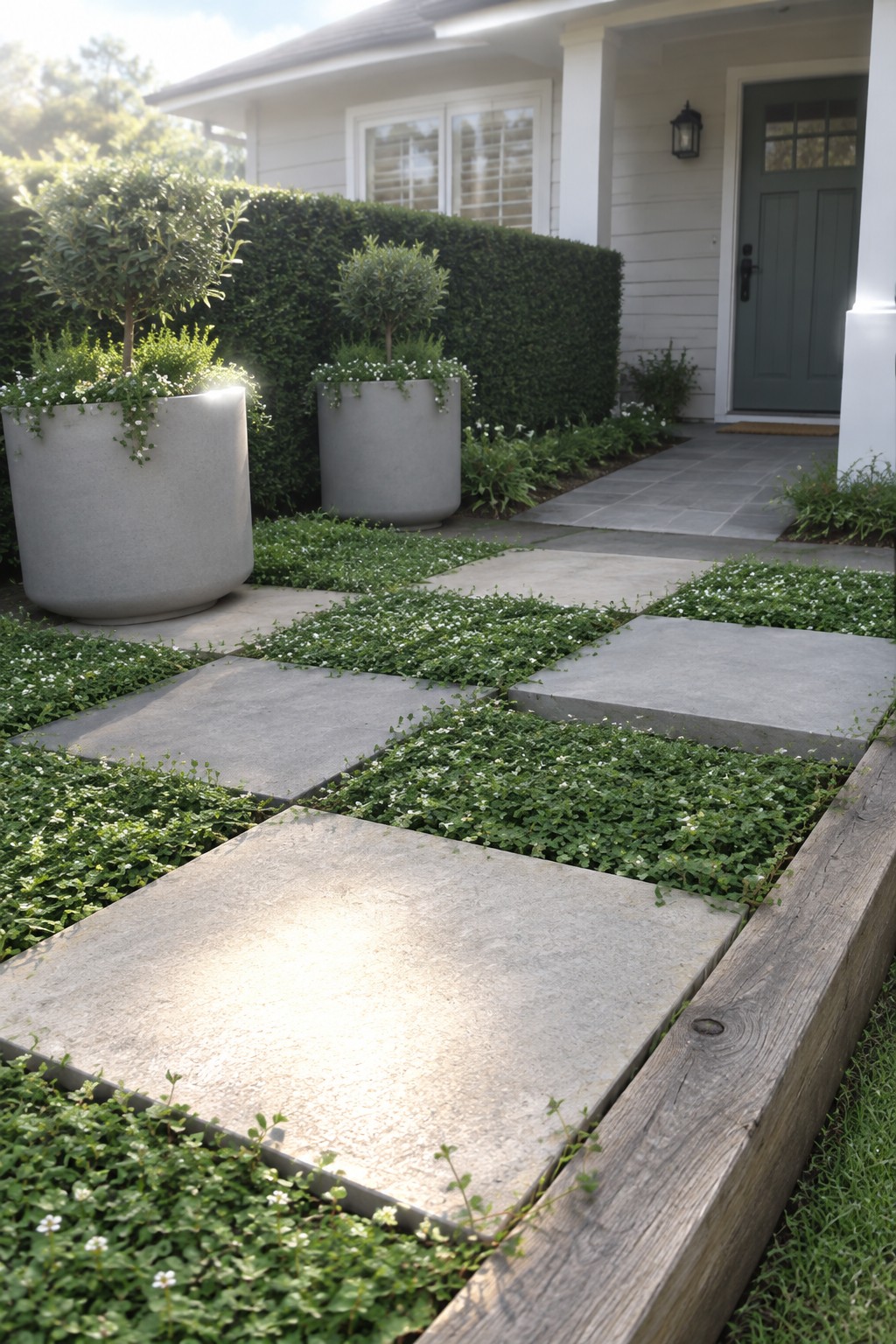
Large concrete slabs separated by low groundcover offer a simple way to change the look of an existing paved area without replacing the concrete. The plants fill the wide joints and make the paving feel more like part of the garden.
This approach works best where the gaps can be kept clear of heavy foot traffic and the groundcover suits the amount of sun and water available. Use it along a walkway or driveway edge, and leave enough room between slabs for comfortable, steady footing.
Add a Gravel Border Along a Concrete Path
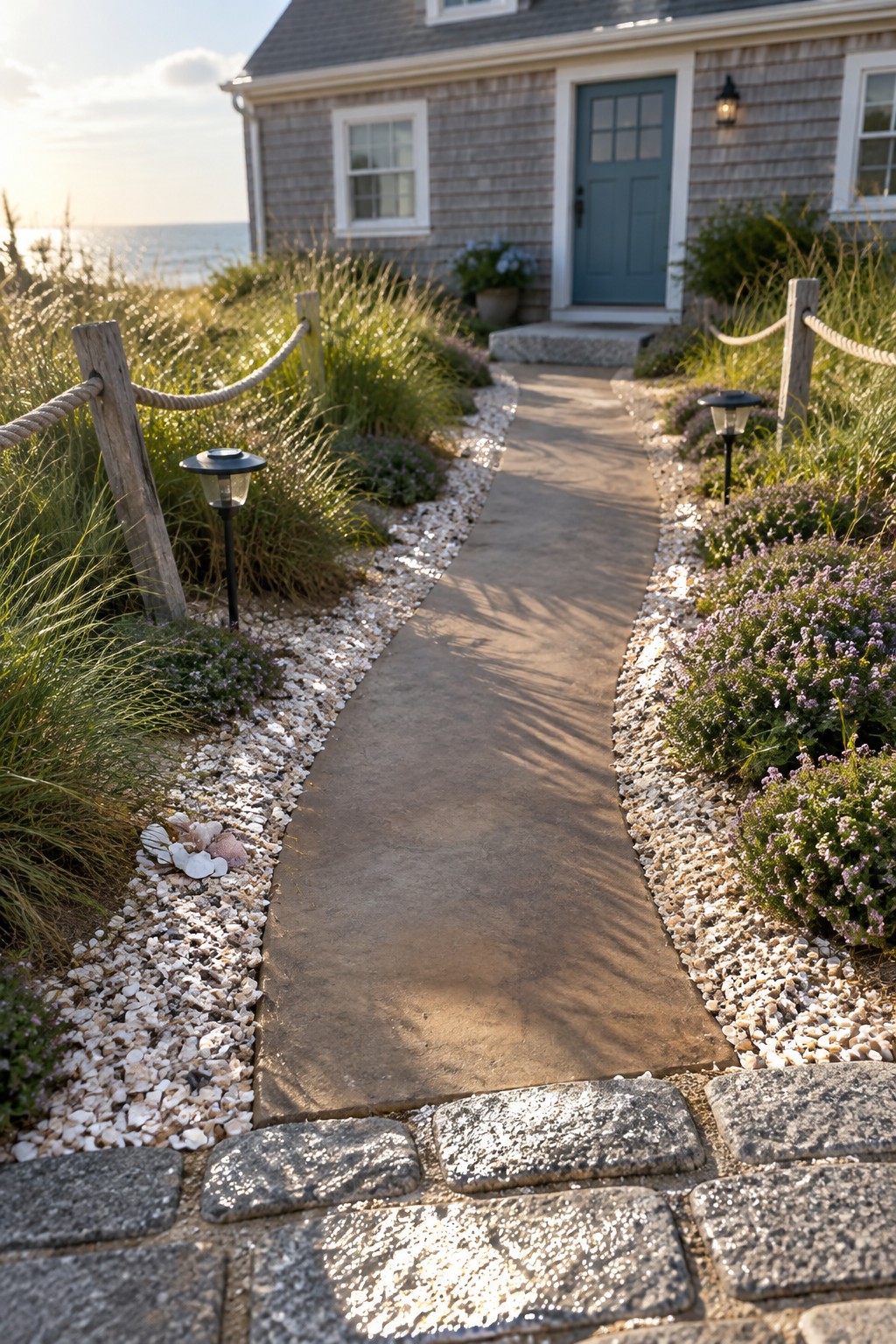
A strip of decorative gravel is a simple way to give an existing concrete path a neater edge. It separates the walkway from the planting beds and can make a plain slab feel more considered without replacing it.
Use light-colored gravel along a straight or gently curving path, keeping the strip wide enough to stay visible. A firm edge helps keep stones from spreading onto the concrete, and the gravel should slope so water drains away from the walkway.
Add Thin Metal Strips to a Concrete Driveway
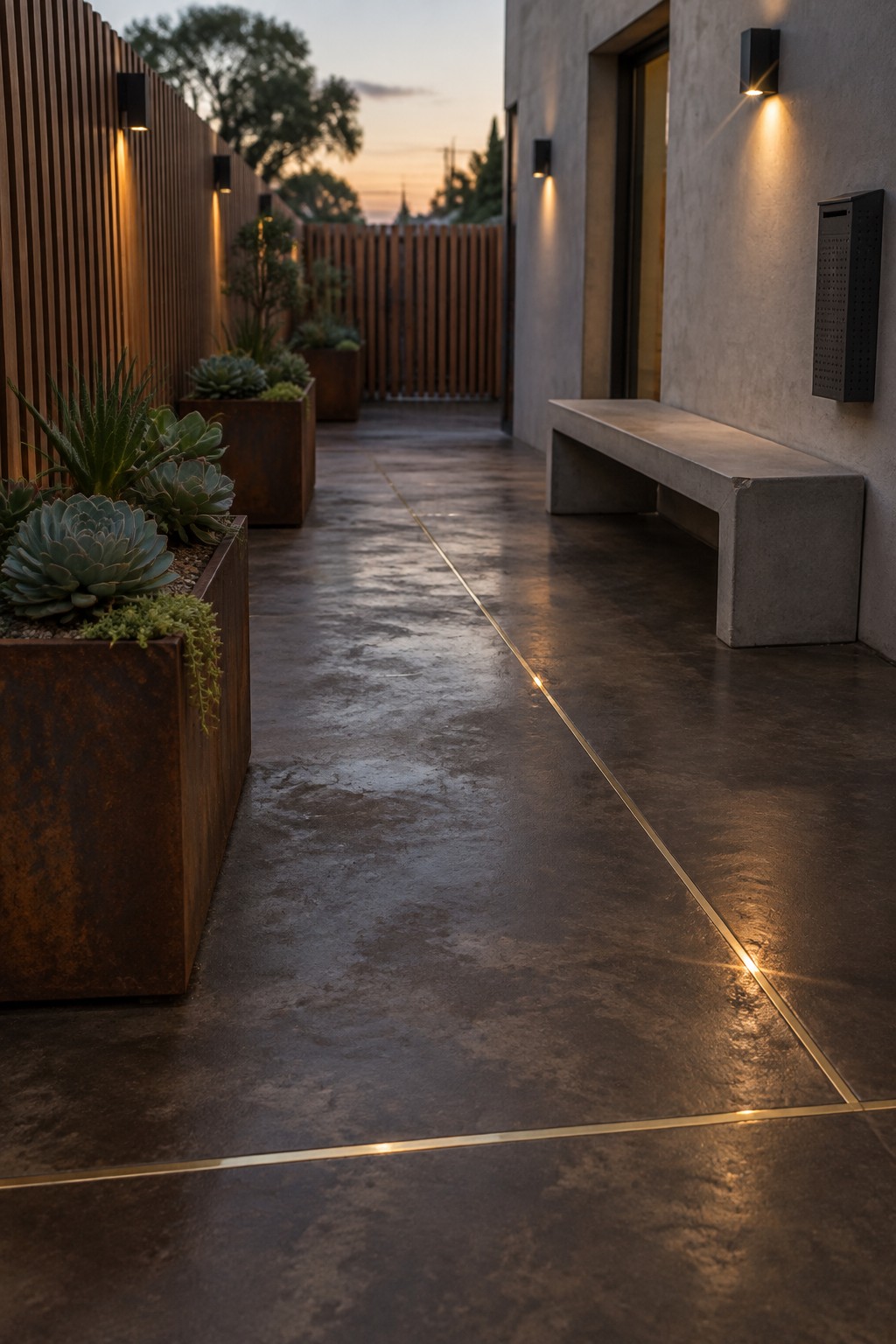
Slim metal inlays can break up a broad concrete surface without requiring the driveway to be replaced. Set into the paving, they create a clean line that gives plain concrete a more considered look.
Use this idea on an existing driveway if the concrete is sound and there is room to cut narrow, even channels for the strips. A single line or a simple grid is usually enough; keep the inlays flush with the surface so they do not catch tires or create a tripping edge.
Refresh a Concrete Path With Stepping Stones
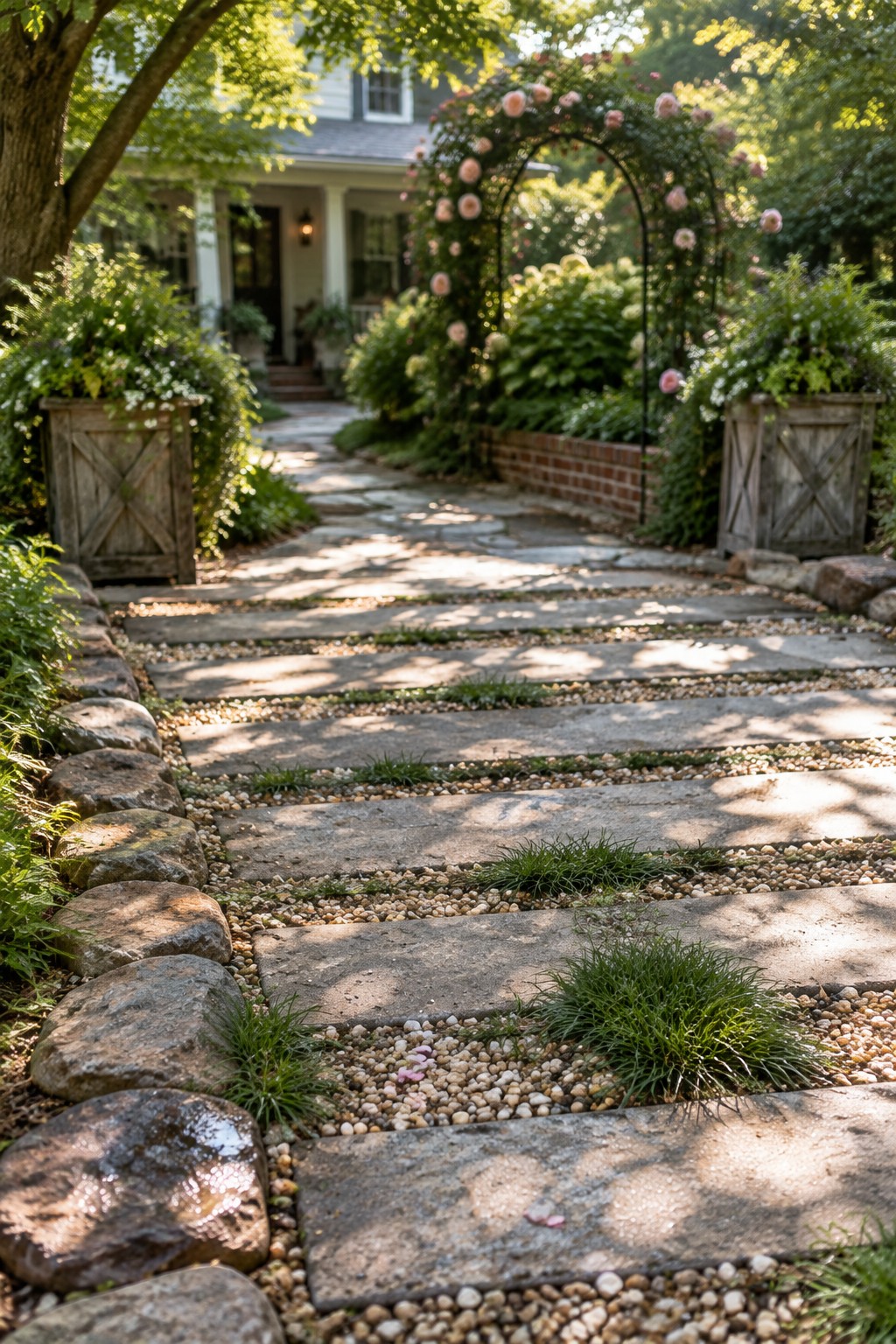
Large, irregular stone slabs can give a plain concrete path a more relaxed garden look without replacing the whole walkway. The open joints are part of the design, so the surface feels less like one broad stretch of concrete.
Use this approach on a garden path where the slabs can sit securely and the gaps can be filled with gravel or low groundcover. Keep the walking surface even, especially near steps or the entrance, so the path stays comfortable to use.
Use Grass Strips to Break Up Concrete
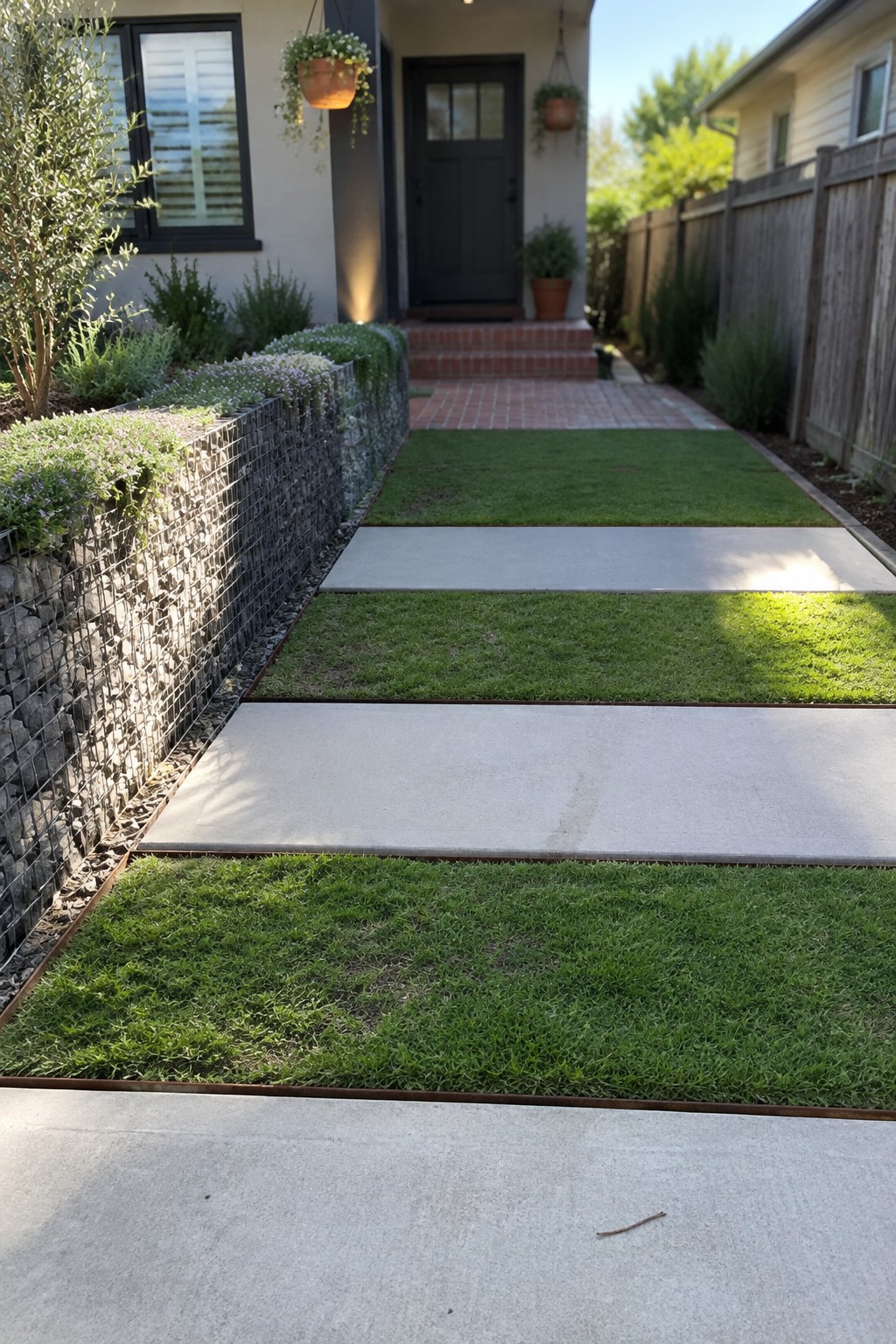
Grass joints between broad concrete slabs give a plain driveway or front walk a more relaxed look without removing the existing concrete. The green bands create a clear rhythm along the route to the door and make the hard surface feel less extensive.
For a similar update, use this layout on a straight approach where the slabs can sit evenly and the grass is easy to maintain. Keep the joints wide enough for your chosen grass or groundcover, and make sure the concrete remains level and practical to walk or drive on.
Add a Curved Brick Edge to a Concrete Driveway

A curved brick edge is a simple way to give an existing concrete driveway a more finished look without replacing the main surface. The brick follows the driveway’s bend and makes a clear transition to nearby gravel and garden beds.
Use a contrasting brick color to outline a straight or curved section of concrete. It works especially well on traditional homes, but keep the border even and securely set so it stays neat and doesn’t become a tripping edge.
Add Built-In Details to a Concrete Garden Wall

A concrete driveway or walkway can feel more finished when a nearby retaining wall includes a simple built-in detail. Recessed pebble insets, like the ones shown here, break up a long concrete surface without requiring the driveway itself to be replaced.
This idea works best where the wall runs alongside a path or driveway and has enough space for a shallow recess. Use durable materials and keep the insets small enough that they don’t weaken the wall.
Frequently Asked Questions
Q: Can I paint a concrete driveway that has a few cracks?
A: Yes, if the cracks are stable and the concrete is clean and sound. Patch them first, then use a coating made for exterior concrete. Paint won’t hide moving cracks, and those may show through again.
Q: How do I know whether resurfacing is enough, or if the driveway needs replacing?
A: Resurfacing can work when the slab is mostly solid, with shallow cracks or surface wear. If sections are sinking, crumbling badly, or breaking apart, a new layer may not hold up.
Q: Can I park on a freshly resurfaced or painted driveway right away?
A: Usually not. Check the product’s label for its exact cure time, and keep cars off until it’s ready. Foot traffic may be allowed sooner, but rushing the process can leave marks or damage the finish.
Q: What’s the simplest way to improve a plain driveway without coating the whole thing?
A: Add a defined border with gravel, pavers, or planting beds. It can make the concrete look more intentional without the cost and prep work of covering the entire surface.
