


A driveway often sets the first impression of a home, and its edges can either feel tidy and considered or like an afterthought.
I find flowering borders work best when they follow the shape of the drive without narrowing the path or making it harder to get in and out of a car.
The right mix of heights, colors, and foliage can soften paving while still giving the yard a clear structure through the seasons.
Some of these planting ideas could be adapted to a narrow strip, while others suit a longer drive with room for layered beds.
I’d start by saving the layouts that match your light and available space, then choose plants that can thrive there over time.
Use a Curving Path to Shape the Border Garden

A gently curving path gives a driveway border garden a more natural shape than a straight edge. The paving stones here lead the eye along the planting bed, while the flowers and shrubs make the edge feel full without blocking the way.
This approach works well beside driveways with enough room for a planted strip. Keep the path wide enough for everyday use, and choose sturdy edging stones to hold the line where paving meets gravel or soil.
Use Gravel Paths to Define a Flowering Border Garden

A gravel path can give a driveway border a clear shape while keeping the planting bed easy to reach. White flowering plants stand out against the gravel, and the path helps separate the garden from the paved surface.
For a similar look, set stepping stones into compacted gravel and keep them level for comfortable walking. This approach suits a narrow side border or entry path, especially when you want a defined route without paving the whole area.
Use a Curved Brick Edge Along the Garden Path

A low brick border gives a pathside garden a clear shape and keeps the planting bed separate from the paving. It works especially well with informal flowers and herbs, where a crisp edge helps the mix look intentional.
For a similar border, use bricks that suit the home and set them along the path in a gentle curve. Keep the edge low so it defines the bed without making the walkway feel narrow.
Use a Low Stone Wall Along the Driveway

A low stone wall gives a driveway garden a clear edge without hiding the flowers behind it. It also helps keep loose soil and mulch out of the drive, while making a long planting bed feel orderly.
Use the wall where a driveway borders a sloped or wide garden bed, and keep it low enough to see the plants. Leave room for flowers and grasses to grow without spilling onto the driving surface.
Line a Brick Walkway With Low Flower Beds
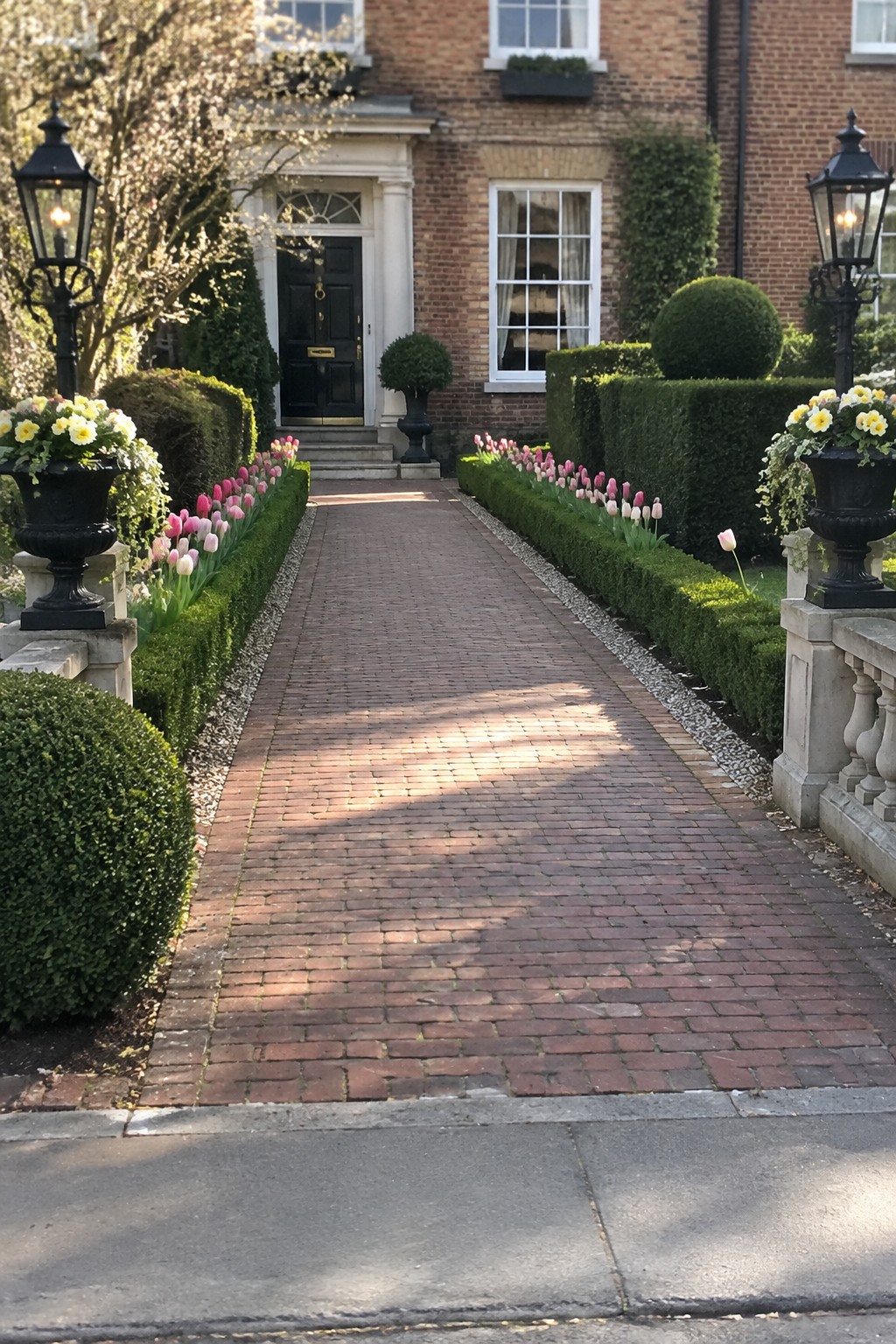
A straight brick path gives a front garden a tidy, easy-to-follow layout. Low clipped hedges keep the edges neat, while tulips bring color close to the walkway without blocking the route.
This approach works well for a formal entry or a narrow garden leading to the front door. Keep flowers low near the path, and leave enough room for comfortable walking and trimming.
Use Rope Fencing to Mark the Garden Edge
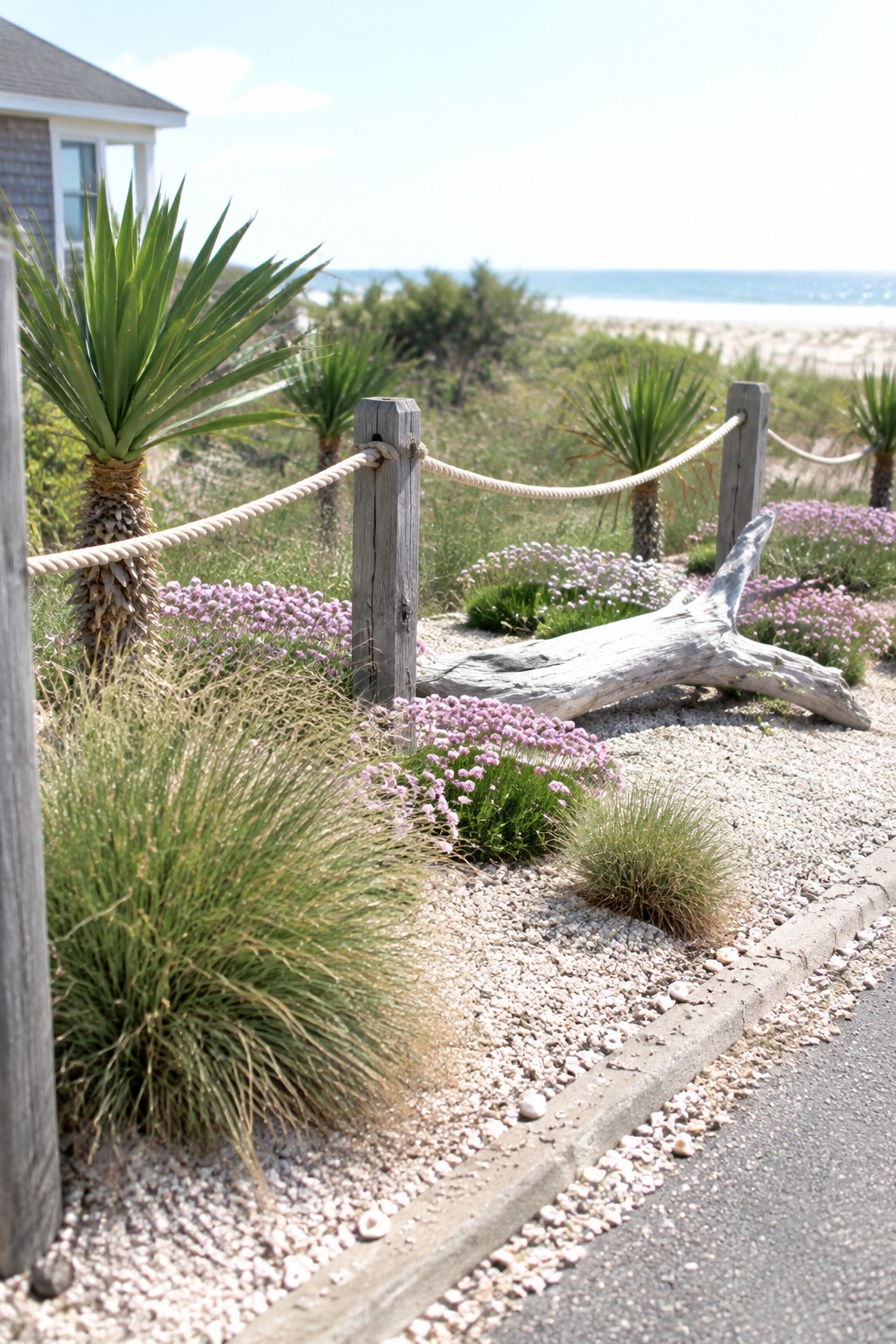
A low rope fence gives a driveway border garden a clear edge without blocking the plants from view. It suits a relaxed coastal yard, where a simple boundary feels more at home than a tall, formal fence.
Set sturdy posts along the bed and keep the rope low enough to see over easily. It can help keep foot traffic out of delicate plantings, but leave enough room for grasses and flowers to grow without spilling onto the path.
Layer Flowers Along the Driveway Edge
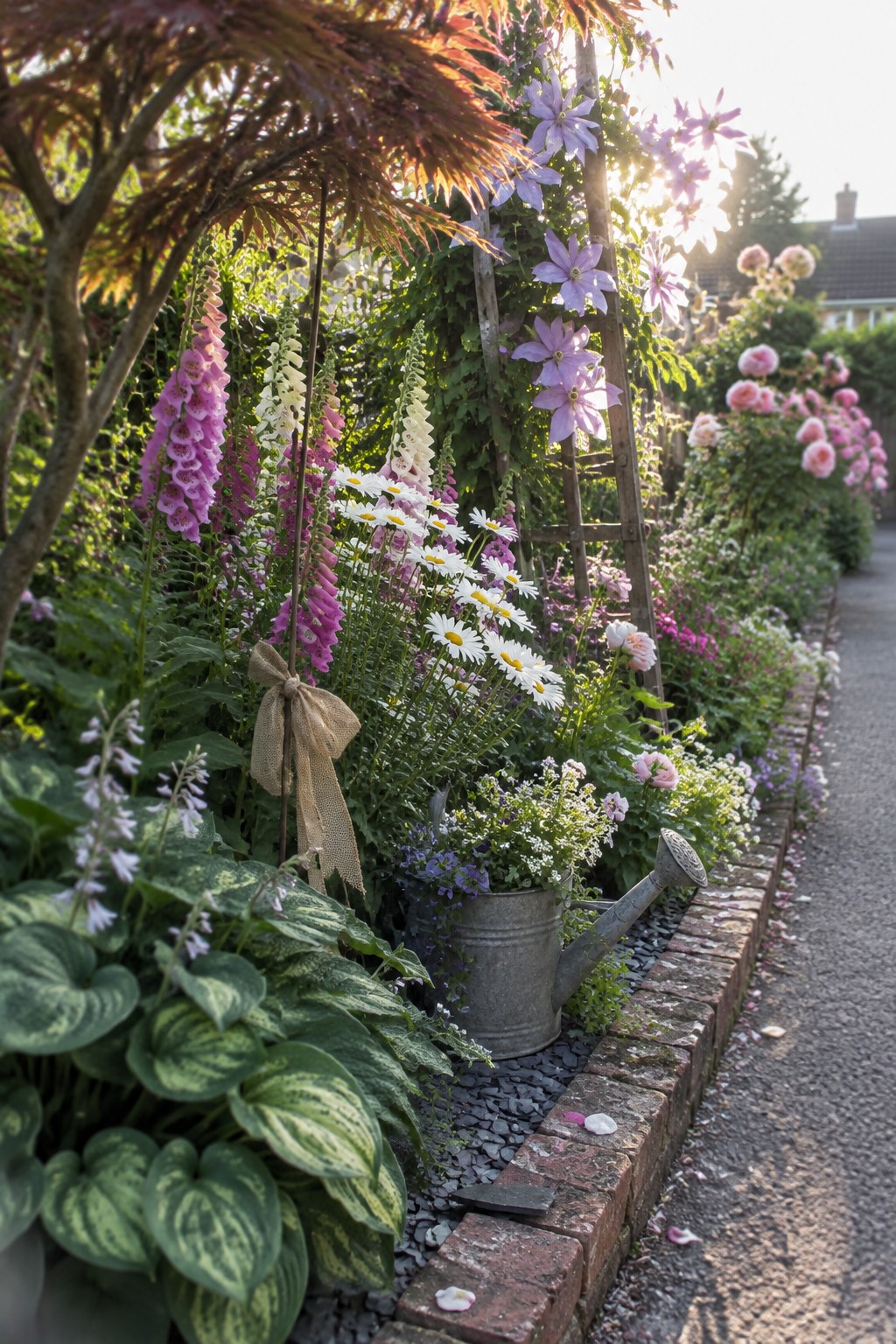
A layered flower border makes a driveway feel like part of the garden rather than a plain strip of pavement. Taller blooms at the back and lower plants near the edge give the planting bed a natural shape without blocking the path.
For a similar effect, mix a few tall flowering plants with shorter, spreading varieties, and leave enough room for the border to fill in over time. A brick edge can help keep soil and plants off the driveway.
Use Steel Edging to Keep a Driveway Border Neat

A narrow strip of steel edging gives a driveway garden a clear boundary and helps keep gravel from spilling into the path. The straight, rust-colored edge also suits a simple planting plan without calling for a bulky border.
Use it to separate gravel or stone from a planted bed, especially where the driveway runs alongside the garden. Set the edging firmly and keep it low enough that it does not become a trip hazard.
Plant a Layered Border Along the Driveway

A layered planting bed makes a driveway edge feel more like part of the garden. Taller flowers can sit toward the back, while shorter blooms and grasses fill the front, giving the border a relaxed, full look without blocking the route.
Choose plants that suit the sun and soil, and leave enough room for them to spread. A mix of heights, like the coneflowers and low purple flowers here, works well beside a simple paved driveway.
Use Stepping Stones to Guide a Gravel Garden Path
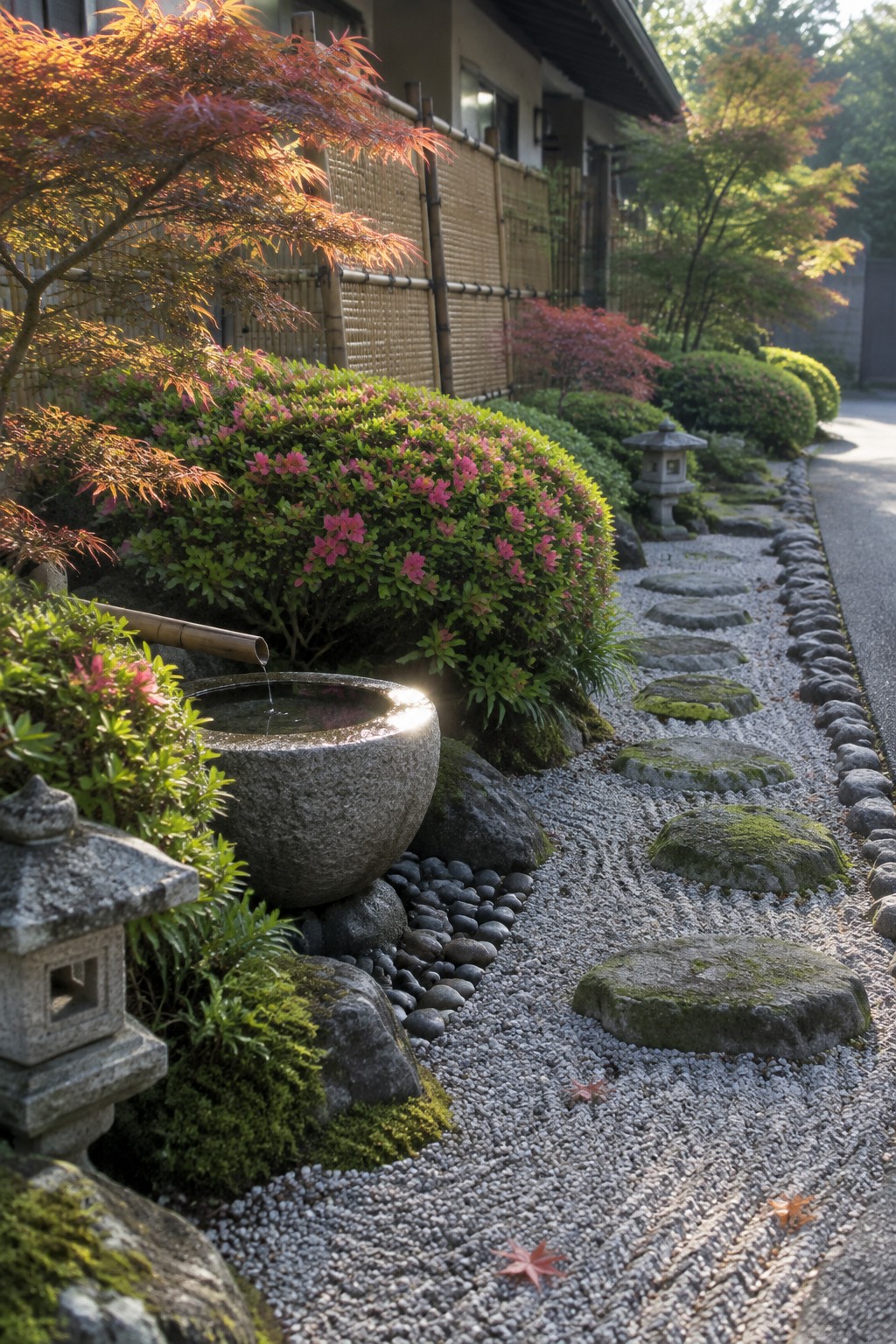
Stepping stones make a gravel path easier to follow while keeping the garden edge informal. Set into the gravel, they provide a firm walking surface and give the route a clear rhythm.
This idea works well in a narrow side garden or along a driveway border. Choose stones with a fairly even surface, and leave enough room between them for comfortable steps.
Plant a Flower Border Along a Gravel Drive

A flowering border can make a gravel drive feel like part of the garden instead of a plain route to the house. Here, a low timber edge keeps the planting neatly beside the path, while taller foxgloves add height behind the hydrangeas.
Use this layered approach where a drive meets a garden path or gate. Keep plants from spilling onto the gravel, and leave enough room for them to grow without narrowing the route.
Use Raised Planters to Define a Narrow Garden Border

Raised wooden planters make good use of a slim strip along a driveway or walkway. They give flowers a clear boundary and lift the planting above the path, so the garden feels organized without needing a wide bed.
Choose sturdy, weather-resistant wood and keep the planters narrow enough to leave room to pass comfortably. A mix of upright flowers and trailing plants can fill them out, but avoid letting foliage spill too far over the edge.
Use Lighting to Mark a Flowering Driveway Border

Small path lights can make a flower border easier to follow after dark. Set low fixtures along the edge of a driveway or garden path, where they show the route without competing with the planting.
Leave enough room between lights so the border still feels natural, and choose fixtures that suit the scale of the path. Here, a square lantern sits among flowers beside a cobbled walkway.
Use a Narrow Stream to Shape the Driveway Border

A shallow, rock-lined stream can give a flowering driveway border a clear shape without relying on a solid wall or fence. The water adds a practical feature to the planting, while clumps of ornamental grass and iris help the edge feel connected to the rest of the garden.
This idea works best where runoff can be directed safely and the stream can be kept clear of leaves and debris. A simple stone channel or dry creek bed can suggest the same effect if maintaining moving water is not practical.
Use Large Stepping Stones Along the Driveway Border

Large, spaced stepping stones make a garden edge easier to walk along without turning it into a full paved path. They leave room for flowers and groundcover between the stones, so the border still feels planted.
This approach works well beside a narrow driveway or garden bed. Choose stones wide enough for a steady step, and keep them level and spaced comfortably. Small white flowers spill around the slate stones in this border.
Use Stone Slabs to Break Up a Garden Path

Large stone slabs make a garden path feel settled into the planting rather than separate from it. Spacing them along a simple soil or leaf-covered route also leaves room for flowers and foliage to grow close by.
This works well in a shaded border where a solid paved walkway might feel too formal. Set the stones level and leave enough space between them for a comfortable step, especially if the path gets regular use.
Frequently Asked Questions
Q: What flowers work best along a driveway that gets hot afternoon sun?
A: Choose sun-loving flowers such as salvia, coreopsis, or coneflowers. They handle bright light well and add color without needing constant attention.
Q: How much space should I leave between a flower border and the driveway?
A: Leave enough room for plants to grow without spilling into the driving or walking area. A narrow strip of gravel or mulch between the flowers and pavement can also make edging and cleanup easier.
Q: How do I keep driveway flowers from getting crushed by car doors?
A: Set taller or wider plants farther from the parking area, and use low-growing flowers near where doors open. A simple row of sturdy edging can help keep the planting bed in place.
Q: Can I plant flowers along a driveway with poor soil?
A: Yes. Mix compost into the planting strip before you plant, and choose flowers suited to your sun and drainage. A layer of mulch helps the soil hold moisture and keeps weeds down.
