

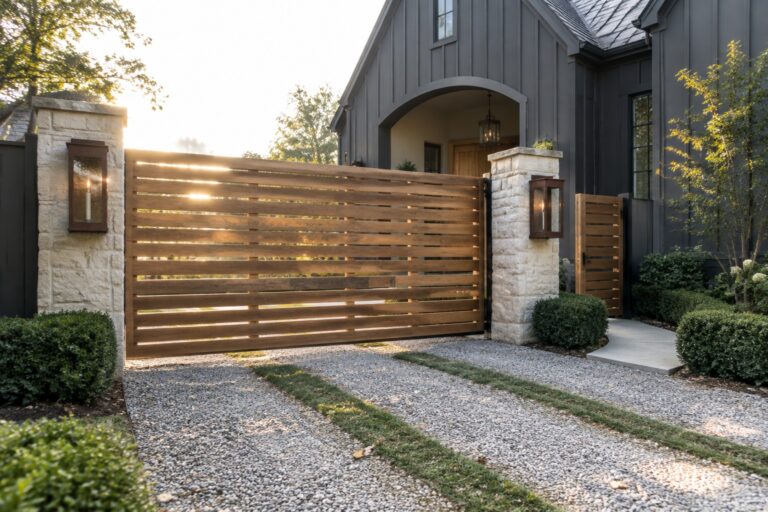
I often notice that the first thing people see when they approach a house is how the driveway meets the street.
A gate that screens the entrance can tie the whole front together if the proportions feel right for the home.
Proportions come first.
I would try matching the gate style to the roofline or entry door before anything else.
In real yards the best versions still allow some view through so the space does not close in completely.
Horizontal Wood Slats For Driveway Screening
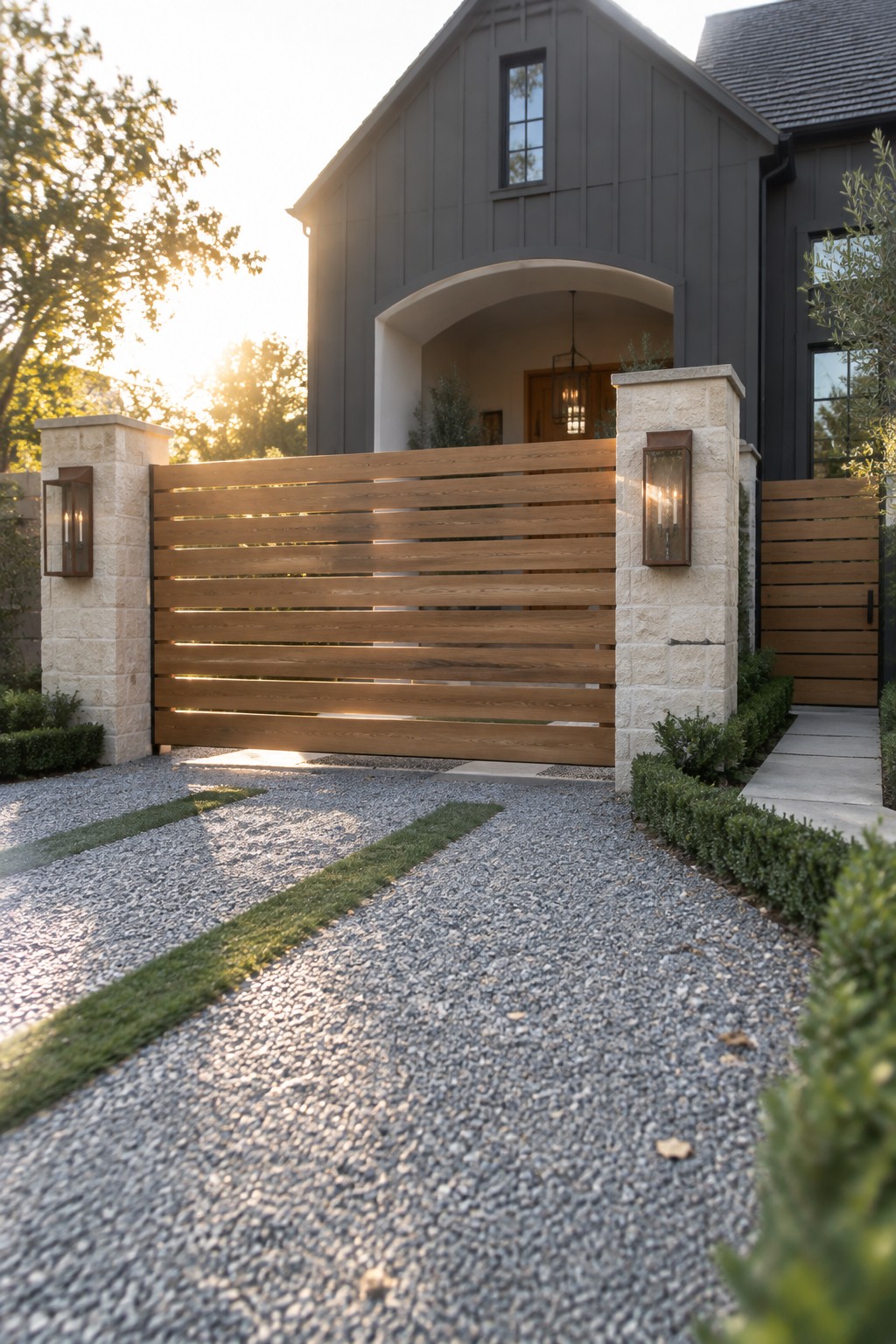
Horizontal wood slats give a driveway gate a clean screen without making the whole entrance feel boxed in. The gaps let light and air through while still hiding the front of the house from the street, which keeps the property feeling private but not shut off.
This approach works best on homes with simple architecture and natural materials like stone or gravel. Keep the wood tone warm so it softens the look of the gate, and make sure the slats sit level so the whole thing reads as one steady line rather than a busy pattern.
Vertical Slat Gates for Driveway Privacy
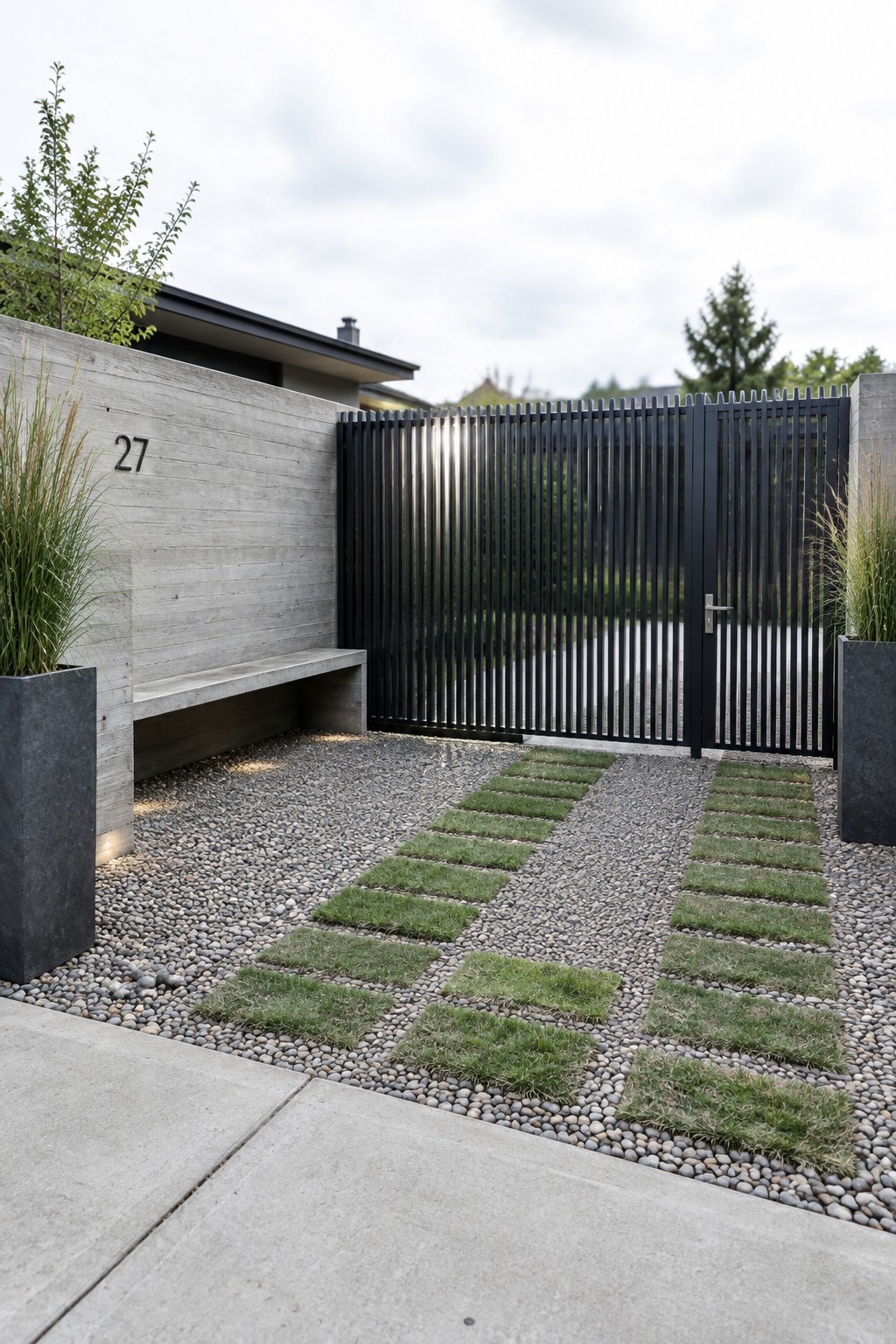
A tall vertical slat gate gives solid screening without making the whole front feel shut in. The narrow spacing blocks most of the view from the street while still letting light and air through, which keeps the entrance from feeling heavy.
This approach suits modern homes with clean lines and simple materials. It works especially well with gravel and low planting because the gate becomes the main feature without needing extra decoration or constant upkeep.
Wrought Iron Gates Between Stone Pillars
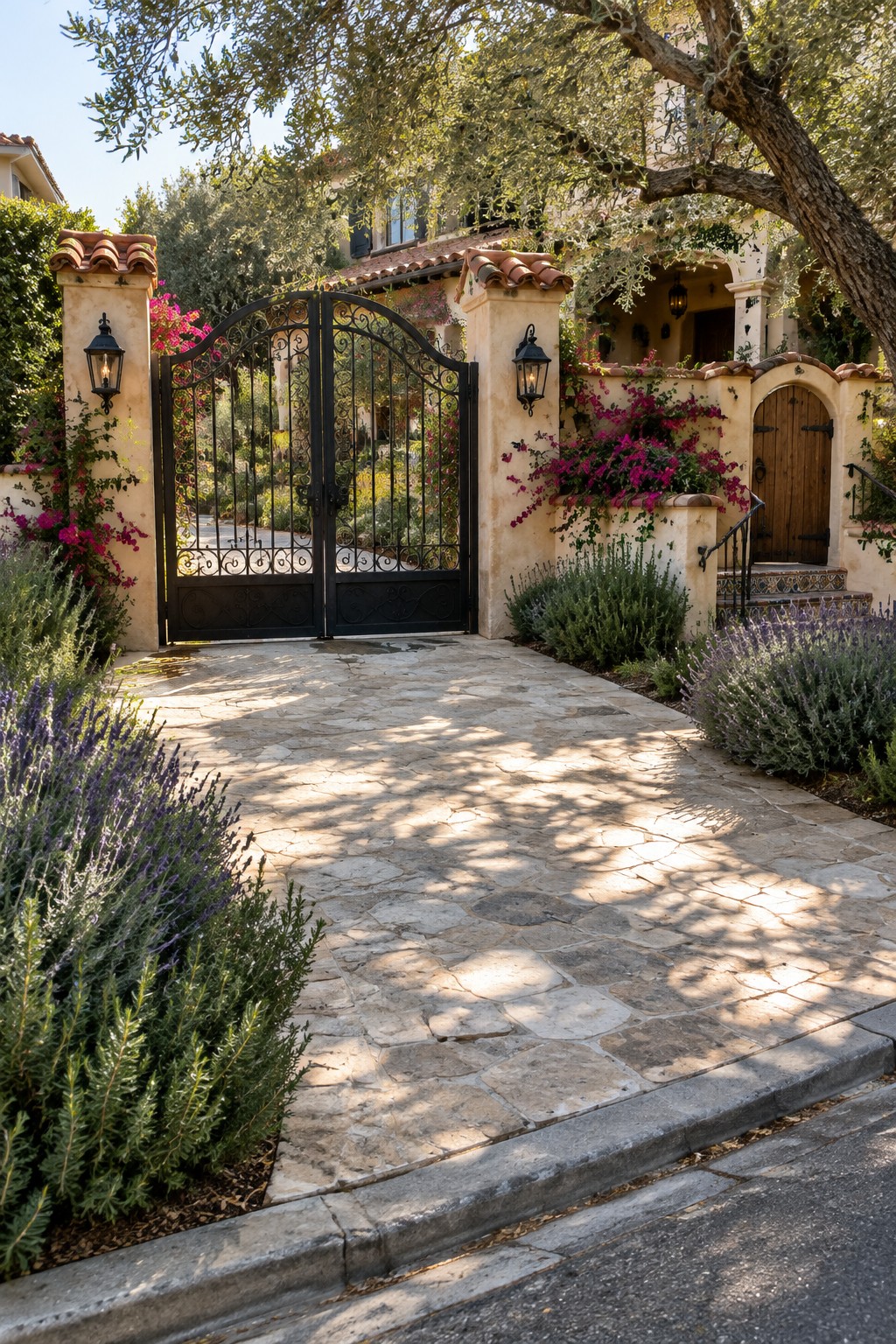
A wrought iron gate set between matching pillars gives a clear boundary at the driveway without blocking the view completely. The open metalwork lets light and sightlines through while the solid pillars add weight and presence. This setup works especially well on homes that already use stucco or stone, since the materials tie together easily.
It suits traditional or Mediterranean style houses best, where the gate can match the roof tiles or wall finishes. Keep the design simple on the pillars so the gate itself stays the main feature. Too much extra detail on both can start to feel busy.
Stone Pillars With a Simple Wooden Gate
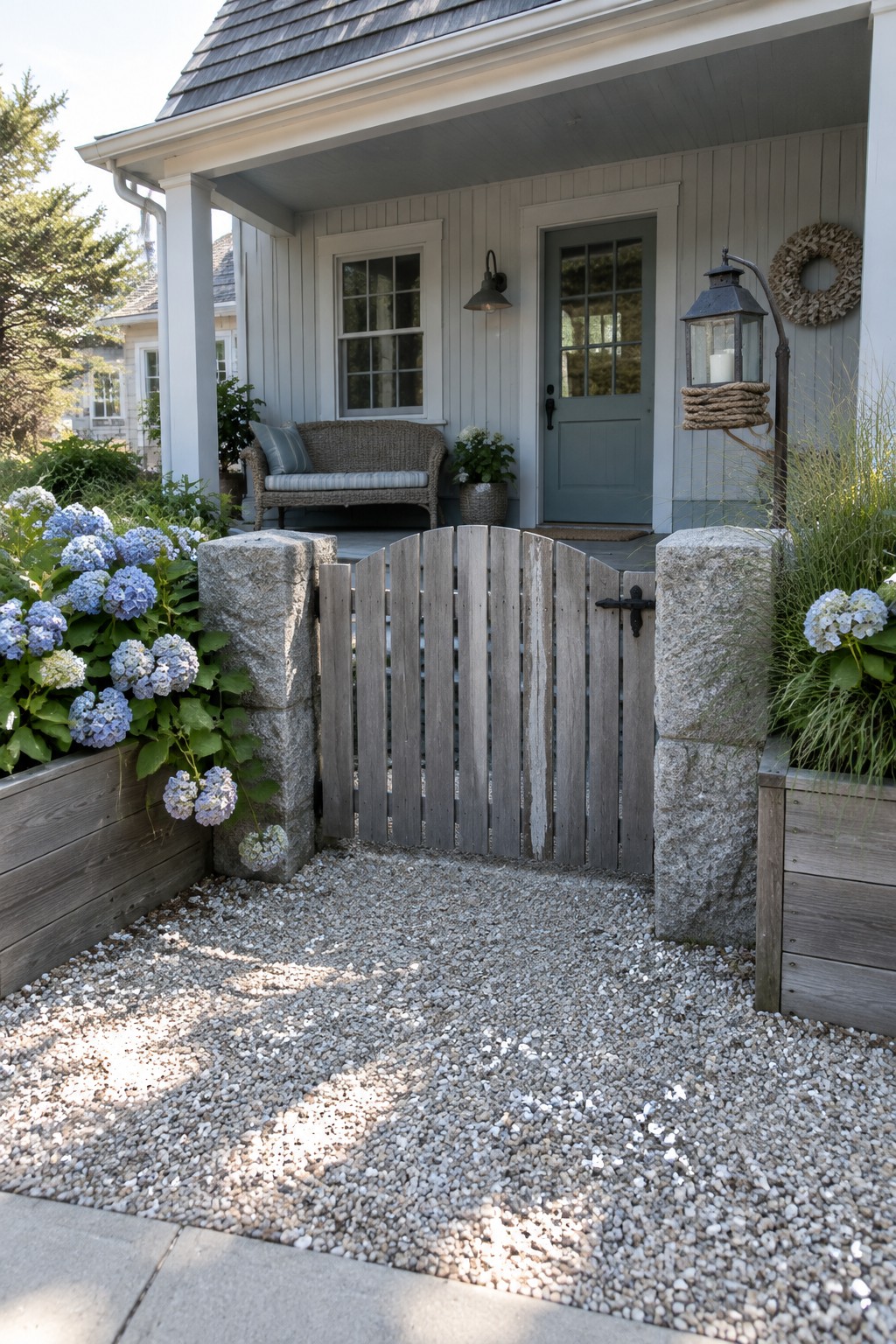
A low wooden gate placed between stone pillars gives the front entrance a clear boundary without making the space feel closed in. The gate sits just high enough to mark the transition from the gravel path to the house, and the stone posts add weight that makes the whole entry feel grounded.
This setup works best on smaller lots or homes with a cottage or coastal look. It screens the door enough to create privacy while still letting light and views through, and the natural materials age well together over time.
Rusted Metal Gates With Cutouts
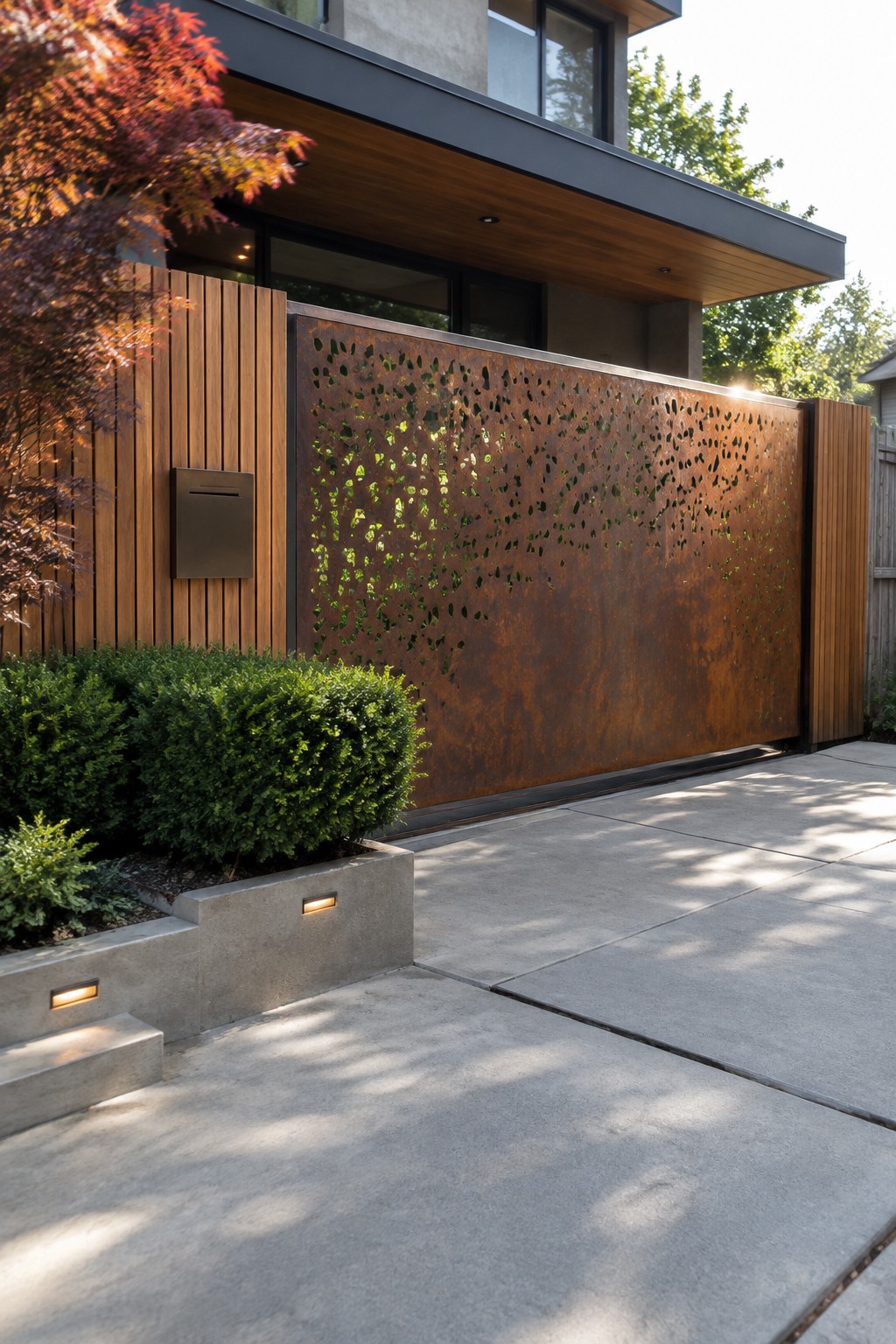
Many homeowners choose a rusted metal gate because it gives privacy without making the entrance feel completely closed off. The irregular cutouts let light and bits of greenery come through, which softens the barrier and keeps the space from looking too heavy.
This style works best on modern or contemporary homes where the driveway runs close to the house. It pairs well with simple landscaping since the openings let plants show through rather than hiding them completely. Just make sure the pattern is dense enough near the bottom for real screening where it matters most.
Wooden Gates Between Stone Pillars
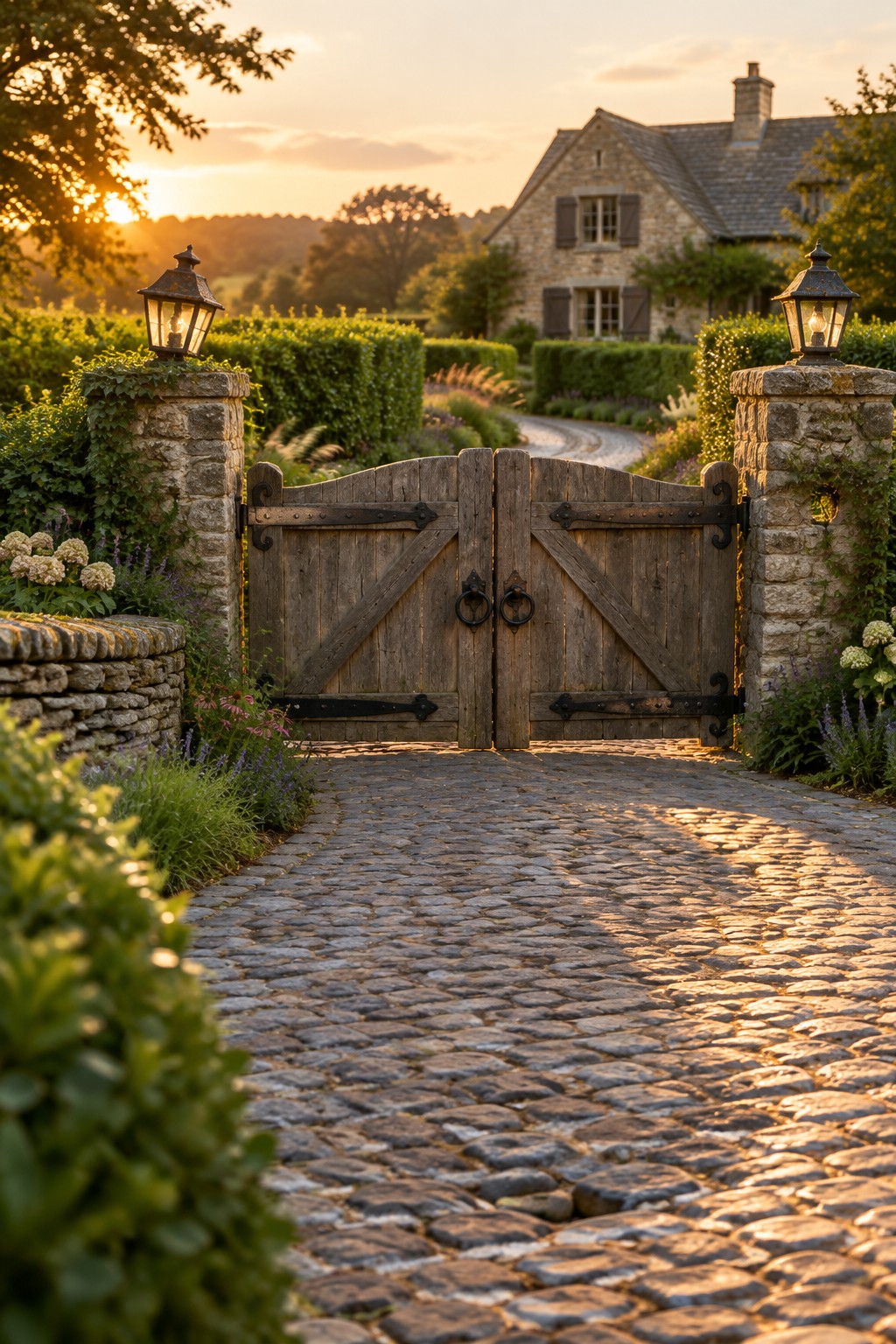
A wooden gate like this one gives a clear boundary without making the entrance feel closed off. The simple plank design and dark metal hardware hold up well over time, and the stone pillars add weight so the whole thing feels like part of the property rather than something added later.
This approach works best on homes that already use stone or have a natural, settled look. Keep the wood unfinished so it weathers with the surroundings, and place the pillars just wide enough for cars while still slowing visitors down as they arrive.
Horizontal Slat Gates For Driveway Privacy
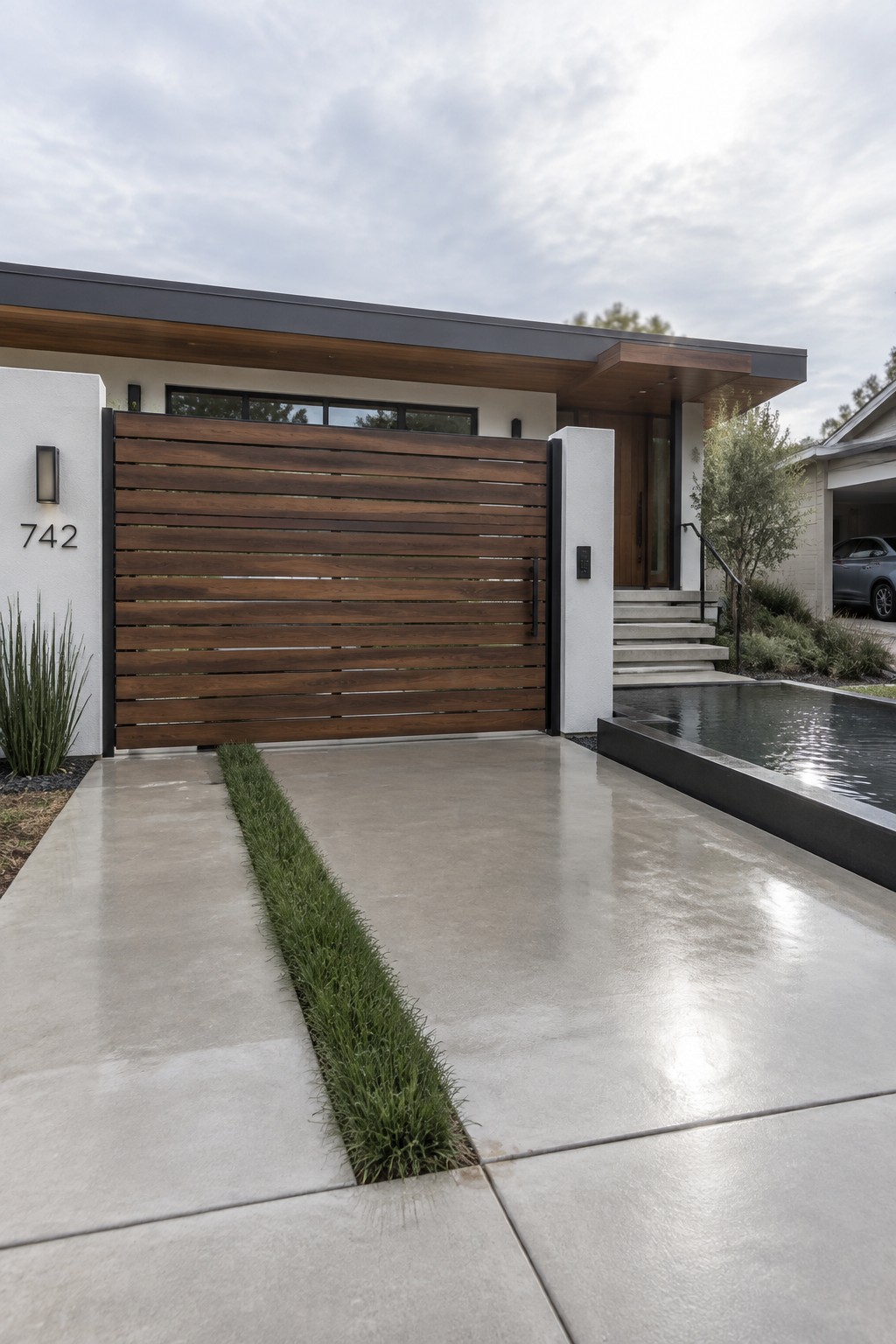
A gate built with wide horizontal wood slats gives you solid screening without turning the front into a solid wall. The spacing lets in light and air while still hiding the driveway and entry from the street, which makes the whole front feel more private and a bit calmer.
This approach works best on modern or mid-century homes where the lines are clean and simple. It pairs well with concrete or gravel paving and holds up better if you choose a durable wood or a composite that won’t warp or fade quickly. Just make sure the slats are close enough to block the main view but still allow some airflow.
Grow Climbing Roses Over a Gate Arch
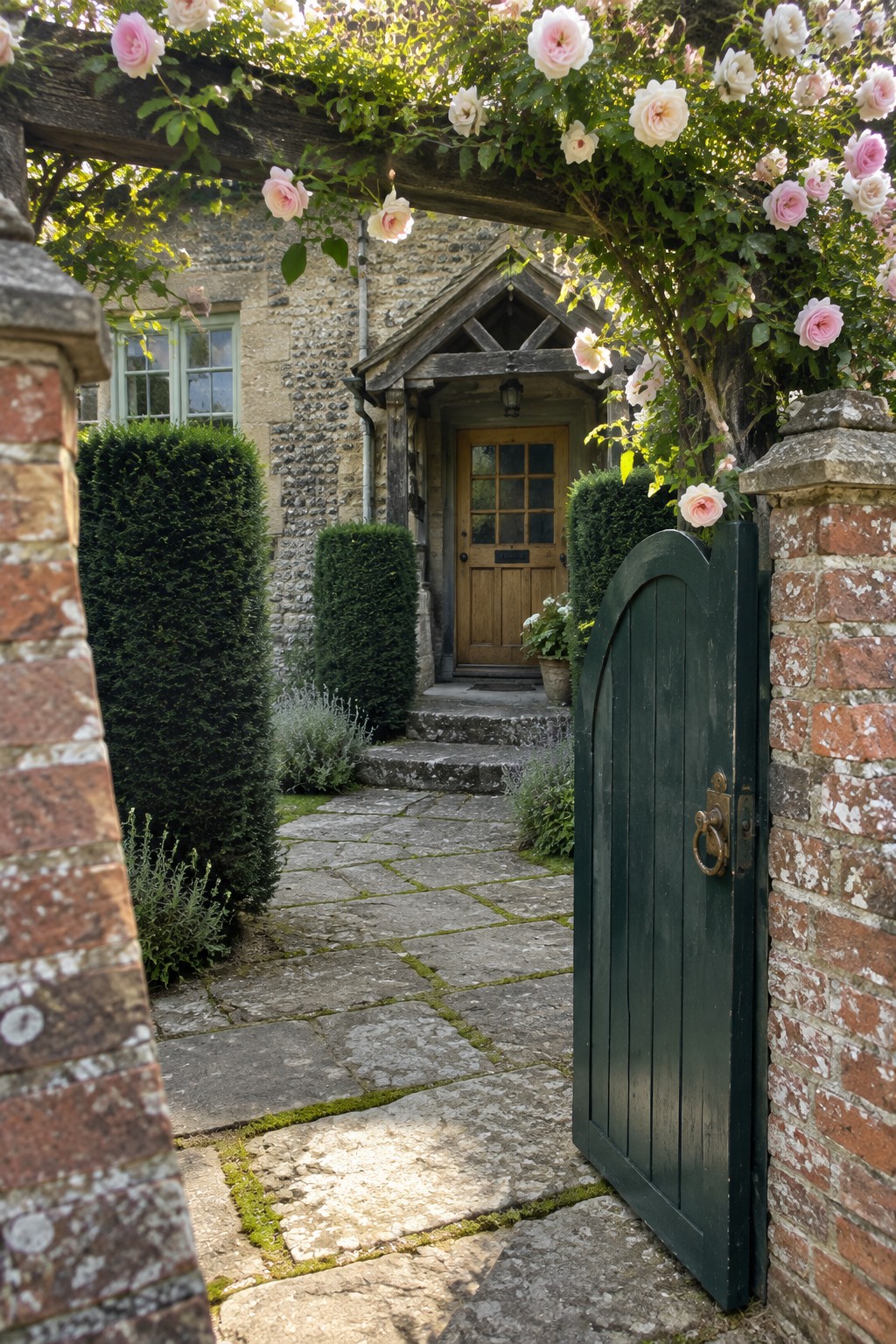
A simple arch above the gate gives climbing roses a place to grow and creates a natural screen that softens the entrance. The flowers add color and the structure itself helps block part of the view from the street without needing a taller fence.
This approach works best on cottage style homes or smaller front yards where you want some privacy but still like an open feel. Make sure the arch is strong and set back a bit so the gate can swing freely as the plants fill in.
Creating Privacy with a Gate and Border Plantings
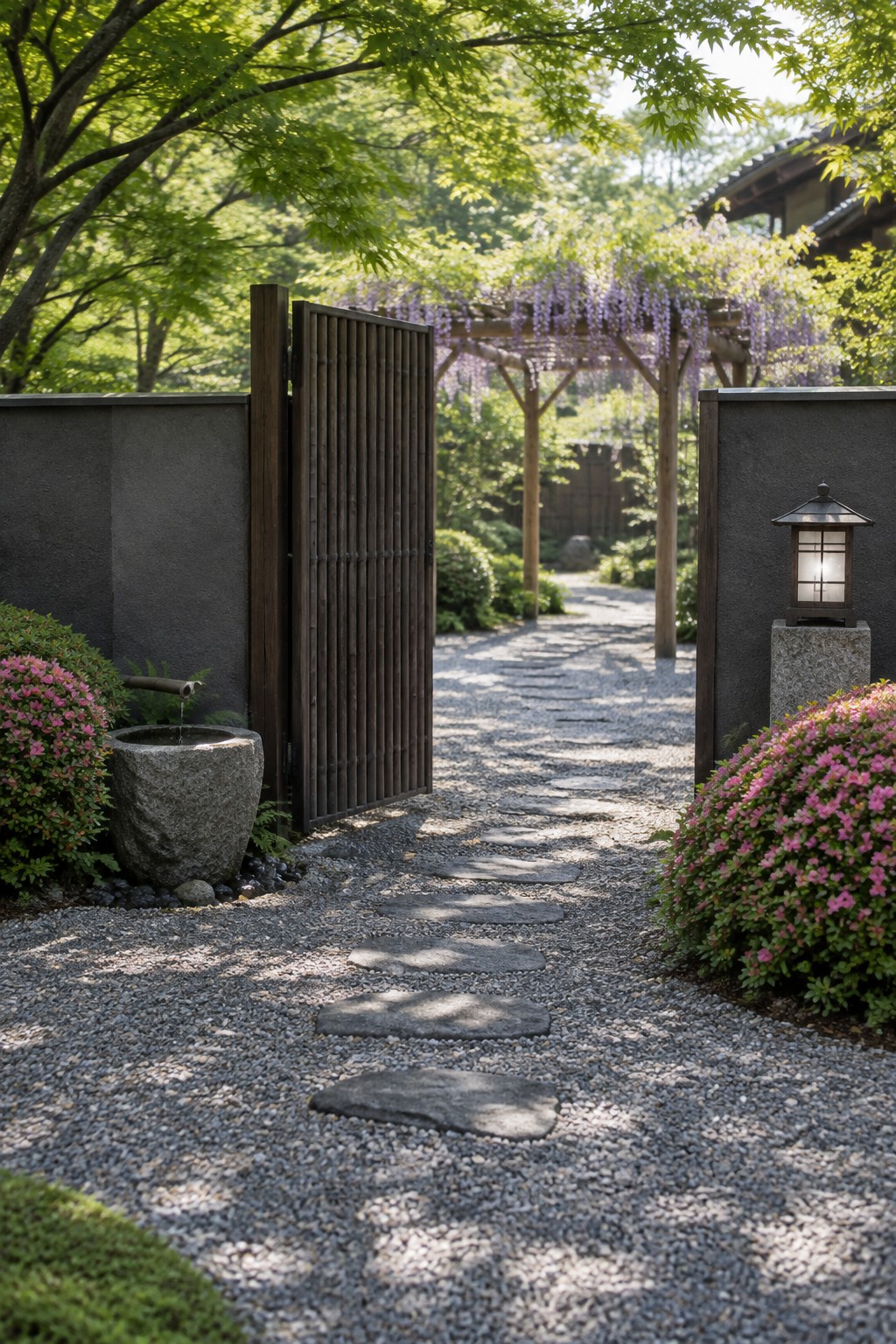
A wooden gate set between sections of wall can do a lot to screen the entrance when you add dense plantings on both sides. The shrubs create a natural barrier that softens the structure and keeps the view from the street limited without needing a tall fence all the way around.
This setup works best on homes with a short driveway or side entry where you want some seclusion but still like an open garden feel. Keep the plants low enough near the path so they do not crowd the gate itself, and choose varieties that stay full through the seasons.
Screening a Gate with Tall Hedges
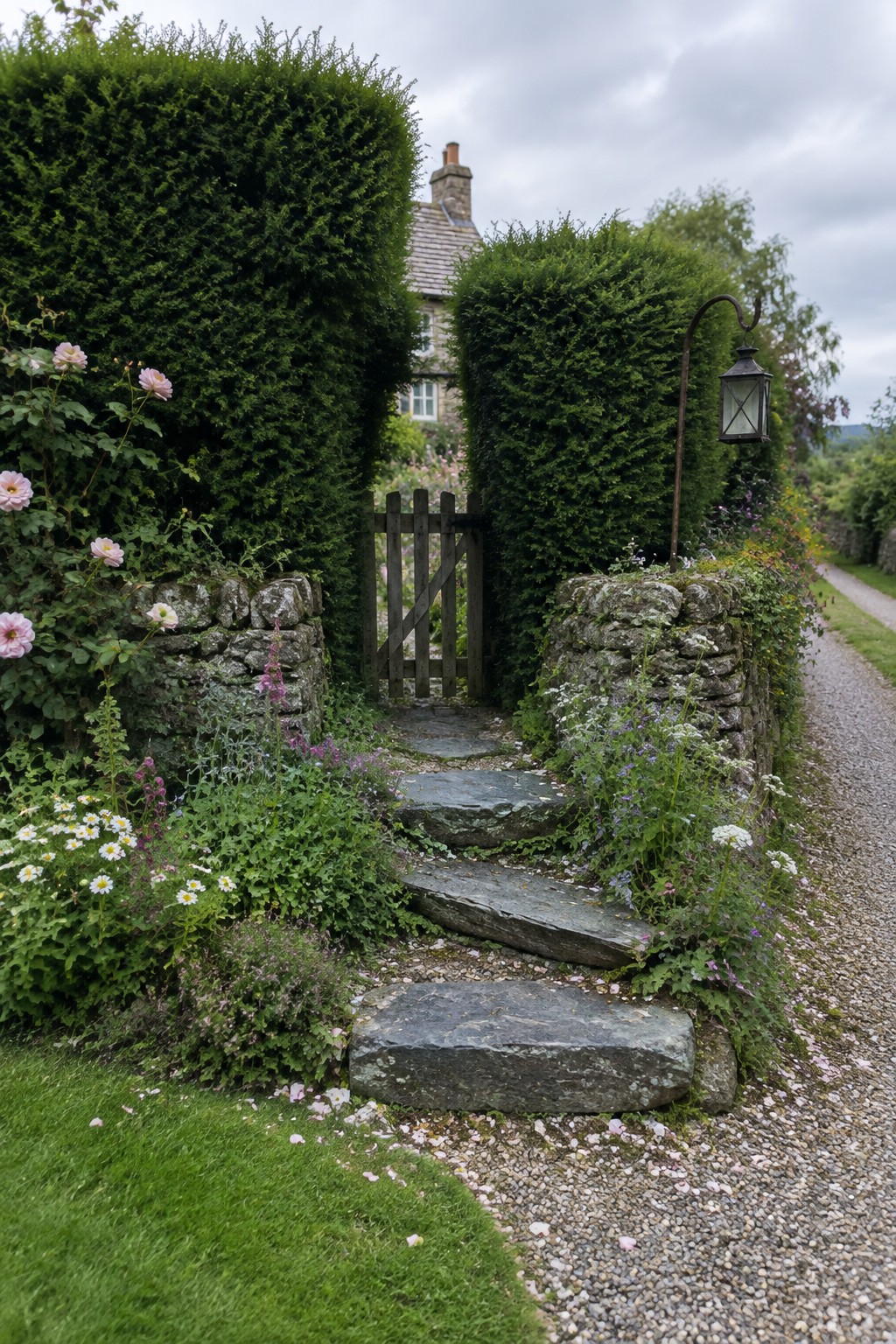
Tall hedges work well for screening a gate because they give privacy without the need for a solid wall or fence right at the entrance. In this setup the hedges are kept dense and even, so the gate stays visible but the view beyond stays mostly hidden from the road or path.
This approach suits homes with a bit of garden space where you want a softer look than full fencing. Keep the hedge height consistent and trim it regularly so the gate does not end up lost behind overgrowth. Stone bases or low walls at the bottom can help keep the planting neat over time.
Horizontal Wood Slats for Driveway Privacy
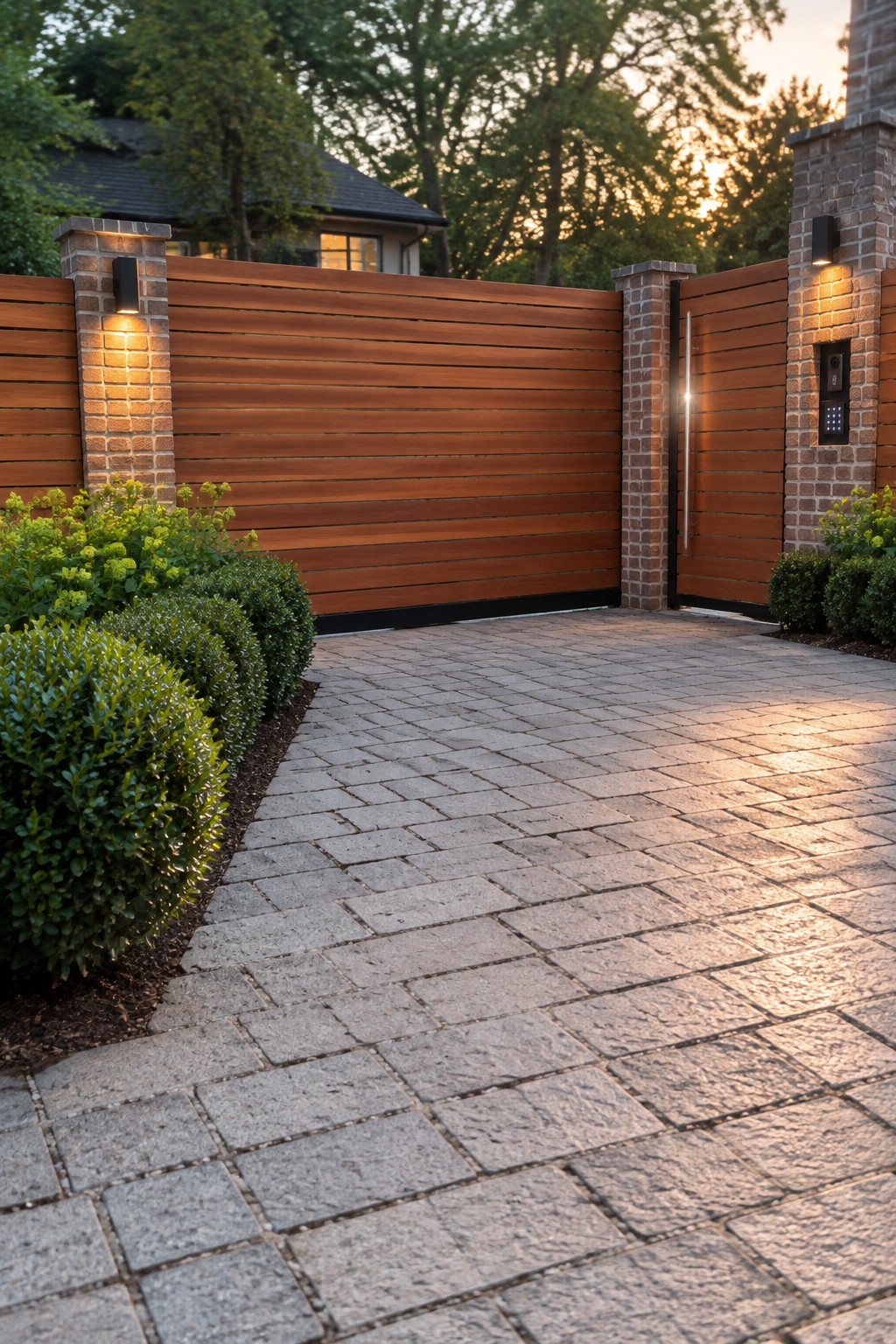
Horizontal wood slats give a clean way to screen a front entrance without making the whole gate feel like a solid wall. The lines run straight across and let a bit of light filter through, so the driveway does not end up in deep shadow. Many homes use this style because it feels current but still pairs with older brick or stone details.
This approach works best on properties where the gate sits between brick or masonry columns. The wood needs a good exterior finish if the climate brings heavy rain or sun. Keep the spacing tight enough to block the main view from the street while avoiding a fully closed look.
Hedge Arches Over Driveway Gates
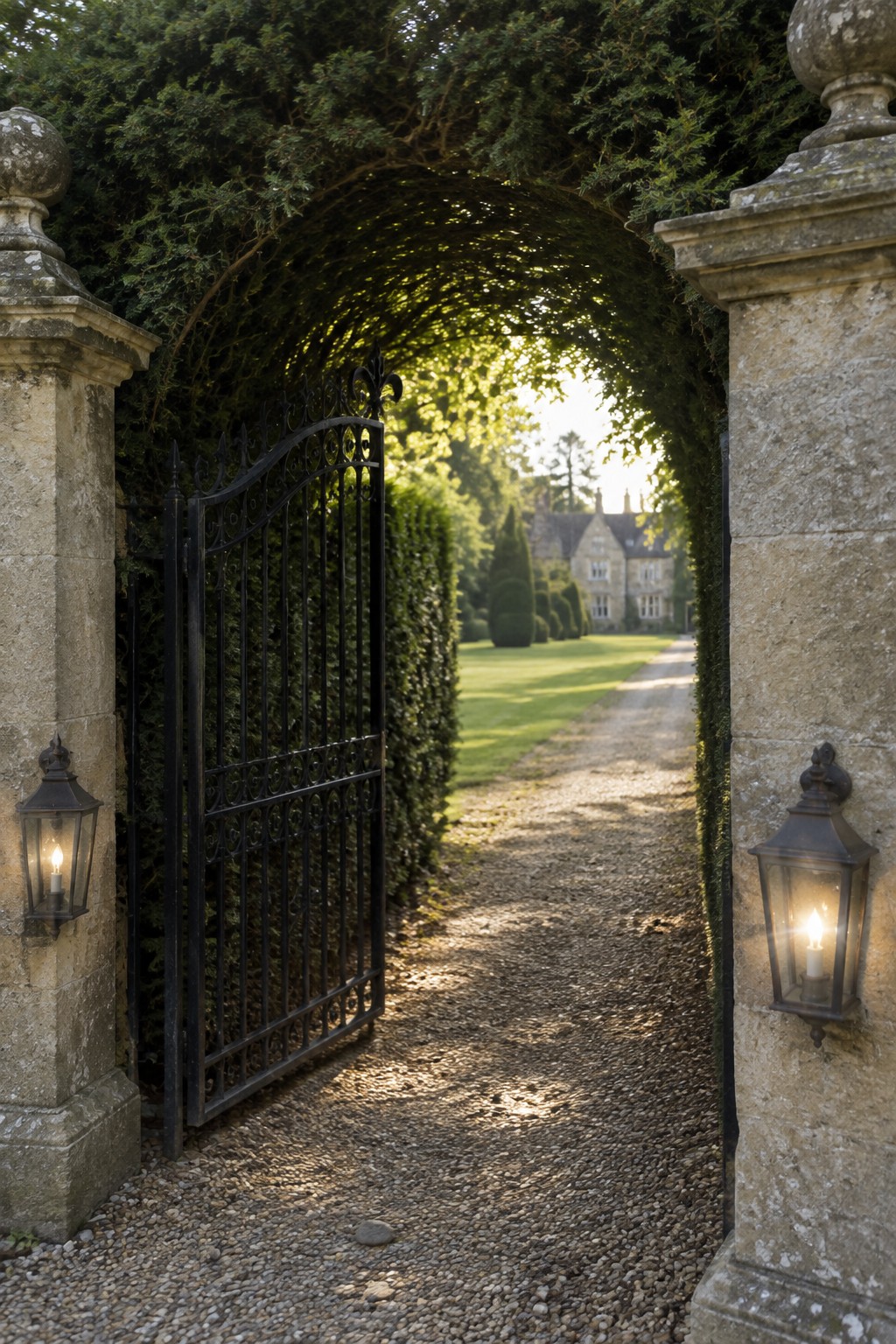
A clipped hedge trained into an arch over the gate adds a layer of living screening that a metal gate alone cannot provide. It keeps the entrance private while softening the hard lines of the stone and iron, and the tunnel effect makes the driveway feel more sheltered from the road.
This approach works best on properties where the hedge has room to grow thick and wide without crowding the path. Choose a dense evergreen variety that holds its shape, and keep the gate simple so the planting does most of the screening work.
Wrought Iron Gates With Climbing Vines
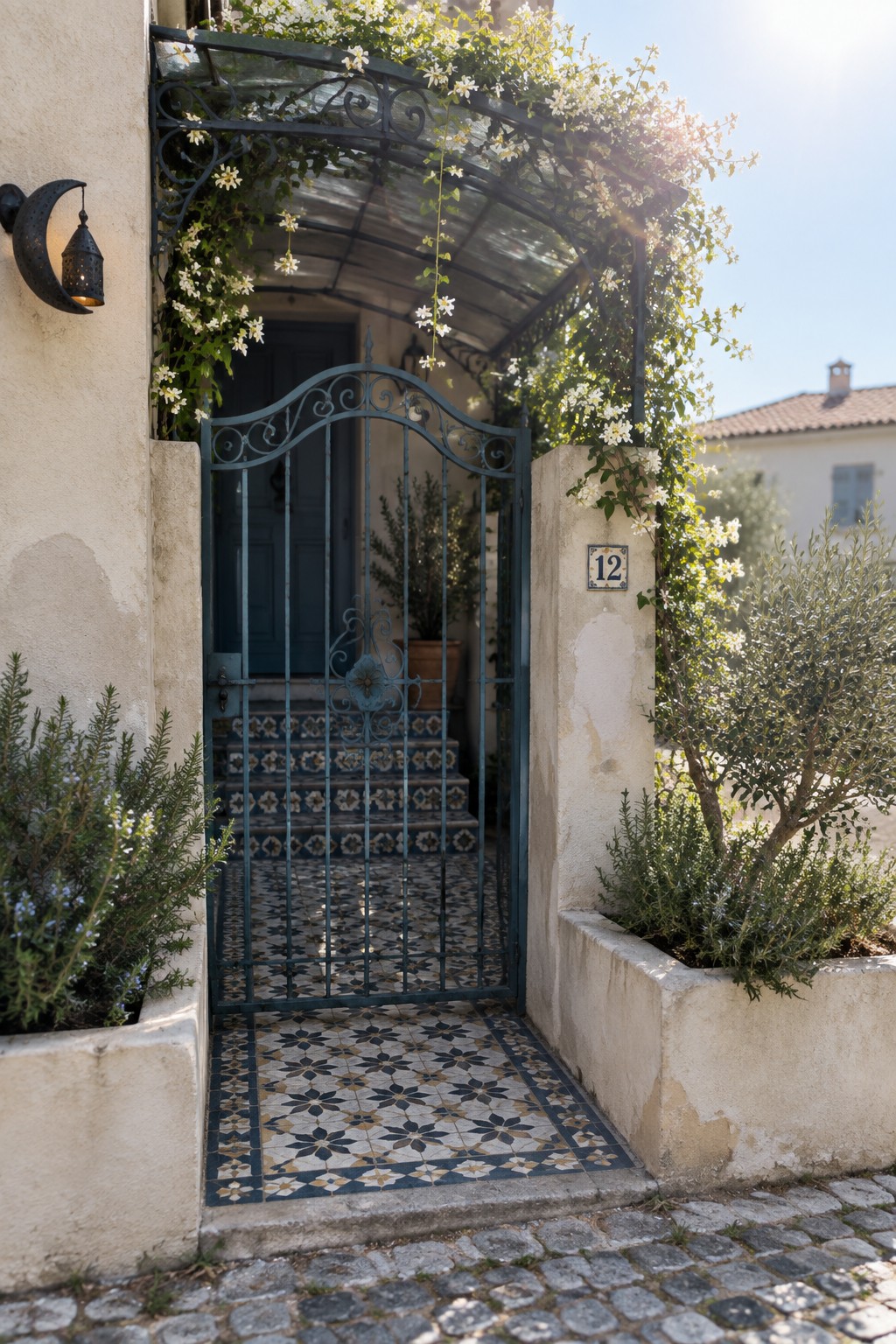
A simple metal gate can feel much more private when you let climbing vines grow over the top. The plants add softness and a bit of screening while still letting light and air through, which keeps the entrance from feeling closed off.
This works best on homes with some architectural detail already in place, like stucco walls or stone. Choose vines that stay manageable and use a gate with enough scrollwork for the plants to grab onto without weighing it down.
Wooden Gates Between Stone Pillars
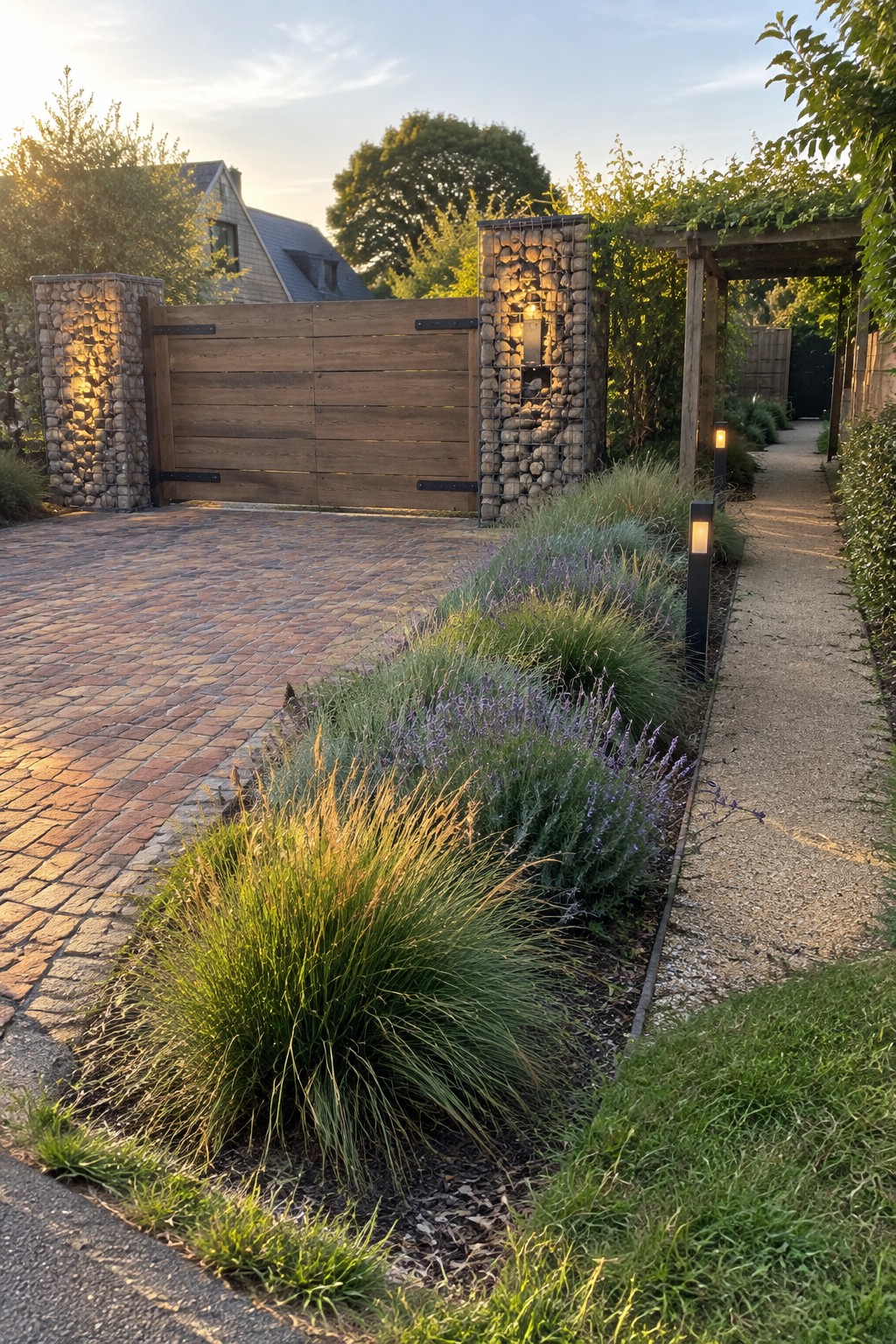
A wooden gate set between stone pillars gives a driveway a clear sense of privacy without making the entrance feel shut off. The natural materials help the gate blend into the surrounding garden instead of standing out as a hard barrier.
This approach suits homes where the driveway passes garden beds or a side path. The stone gives the structure weight and presence while the wood keeps the look softer. Just check that the pillars are built solid enough to hold the gate long term, especially on uneven ground.
Horizontal Slat Gates With Built-In Planters
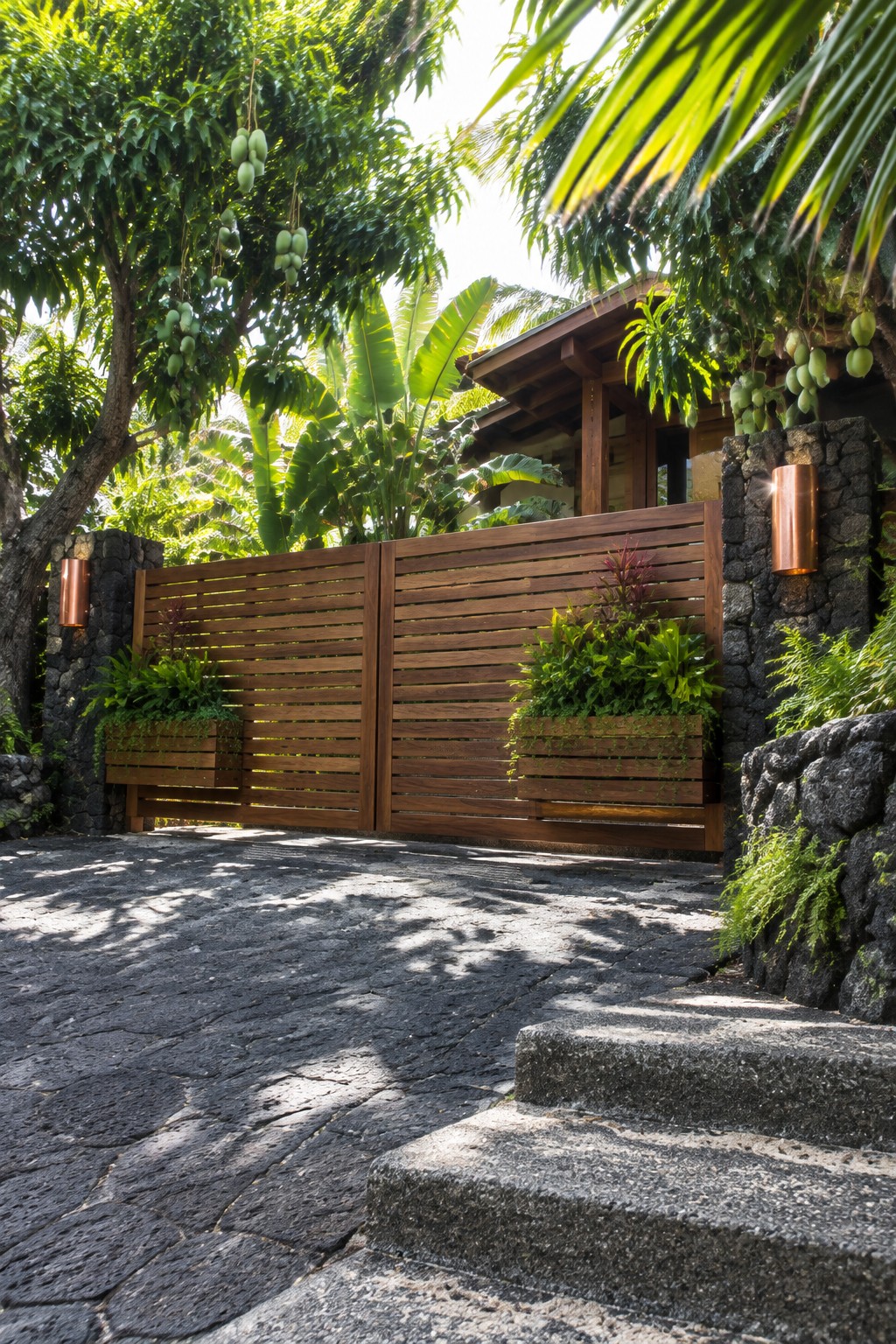
A horizontal slat gate gives you privacy without making the entrance feel shut off. The open spacing lets air and light move through while still blocking a direct view from the street, and the wood grain keeps it from looking too stark against a natural setting.
This approach works best on homes where the gate sits between stone or masonry pillars. Adding low planters along the base helps the structure blend into the surrounding greenery instead of standing out as a separate wall. Keep the slat gaps consistent so the look stays clean over time.
Concrete Wall Gates For Driveway Privacy
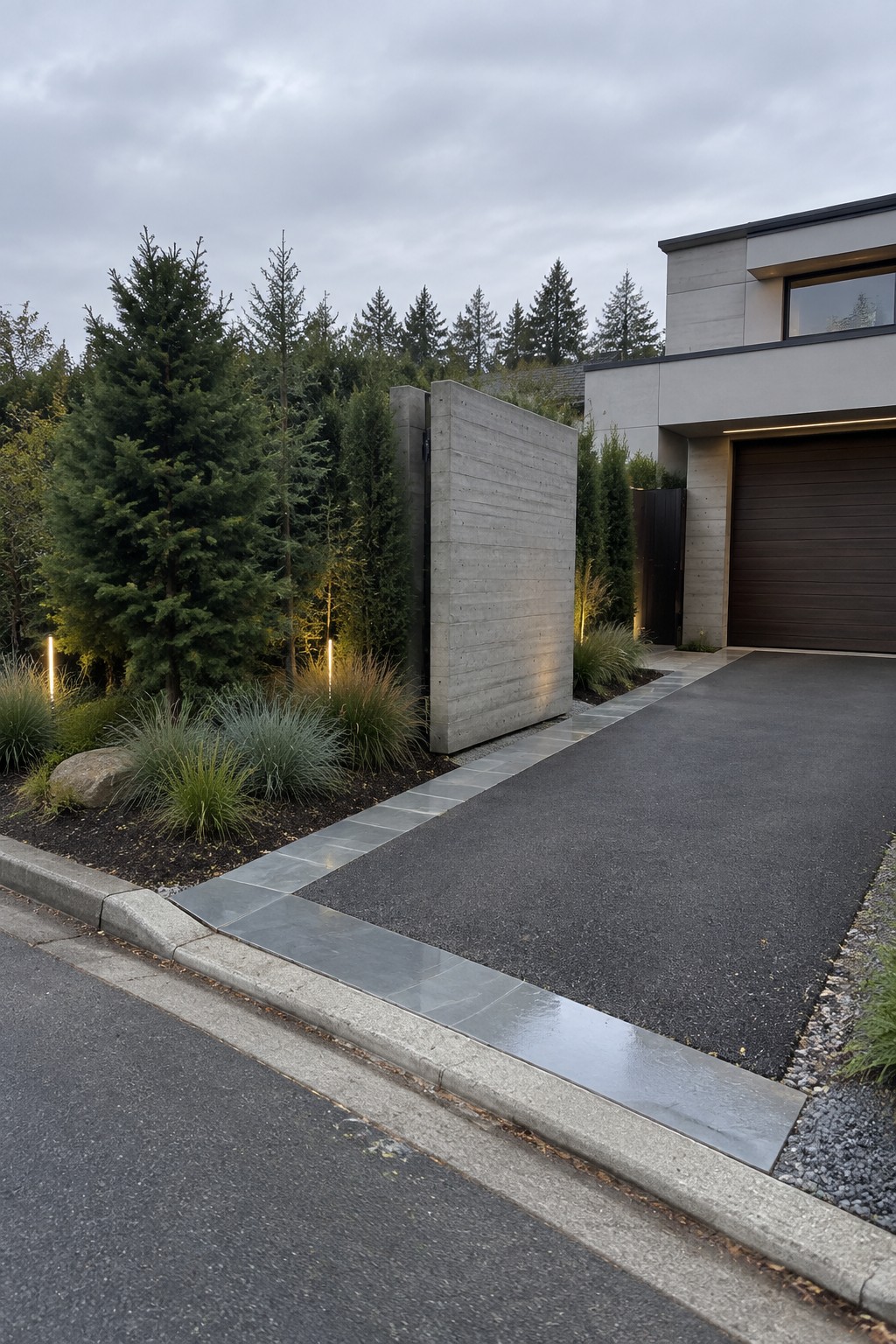
A tall concrete panel gate gives you full screening without needing extra fencing or hedges. It works because the solid mass blocks the view from the street while the material itself feels like part of the house rather than an add-on.
This idea suits modern homes that already use concrete or clean lines. Keep the planting low and simple so the gate stays the main feature, and add a couple of path lights if you want the entrance to feel less closed off at night.
Classic Metal Gates Between Stone Pillars
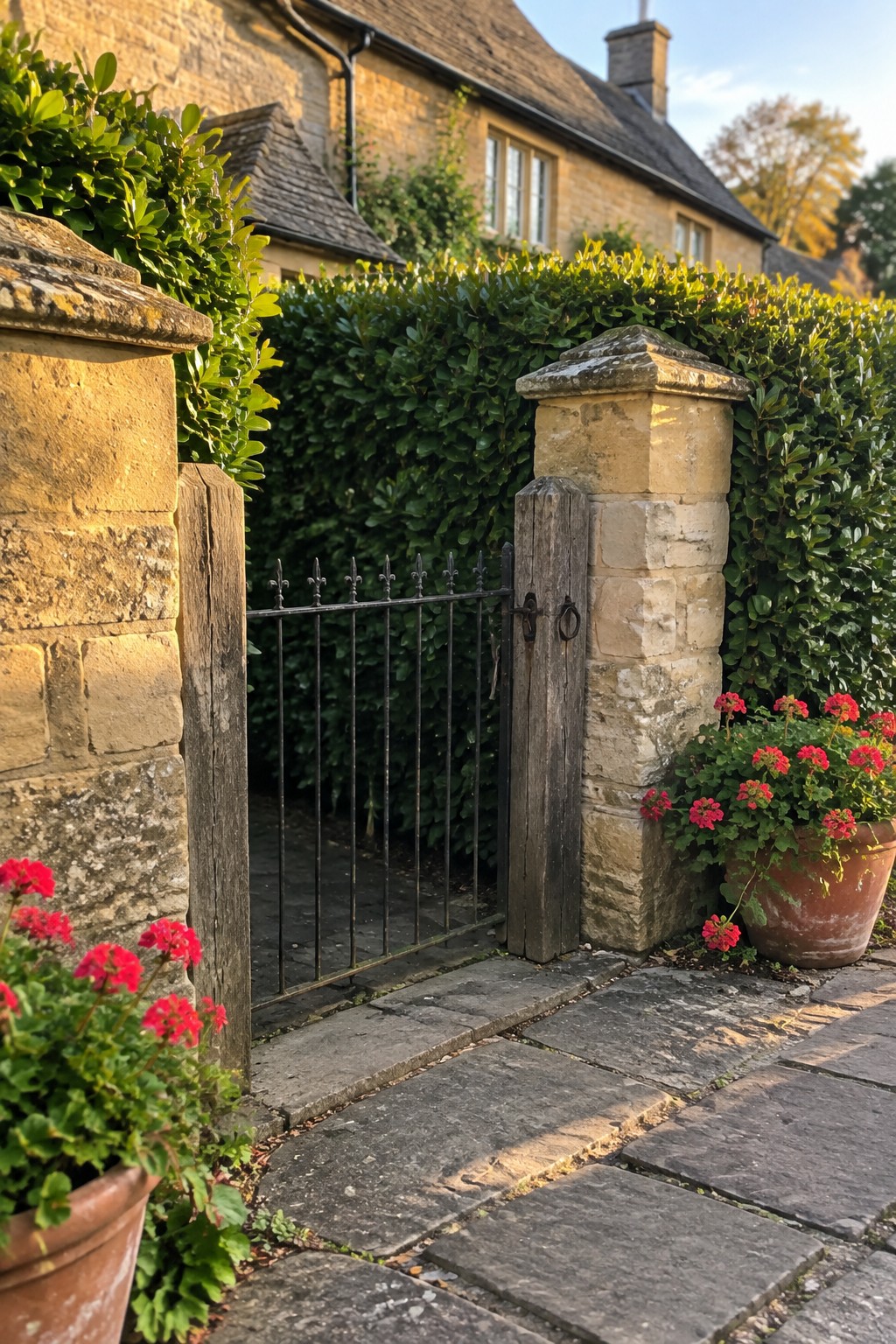
A simple black metal gate set between stone pillars gives a clear boundary without making the entrance feel closed off. The gate stays low enough to keep sight lines open while the pillars and nearby hedging add real screening from the road. This approach works especially well on older homes where you want to keep some of the original character.
It suits homes with stone or brick facades and pairs best with a straight paved path leading to the door. Keep the gate style plain so it does not compete with the house, and let the hedging grow a bit taller behind it for extra privacy. Avoid overly ornate gates if your goal is a quiet, understated look.
Frequently Asked Questions
Q: How high should the gate go to screen my front door from the road? A: Aim for at least six feet if your driveway sits level with the street. Taller works better on hills where cars pass by. Check local rules first though.
Q: Should I add an automatic opener to keep things private? A: It helps when you want to open the gate without getting out of the car. Manual gates can leave you exposed while you fiddle with the latch.
Q: Can I train vines over the gate for more cover? A: Pick a sturdy frame that handles the extra weight. Let the vines grow along the top and sides so they fill gaps without stopping the swing.
