


When you pull up to a house the gate at the end of the driveway sets the tone for everything that follows along the front.
It needs to match the scale of the facade while standing up to weather and daily use without constant fixes.
I have watched simple gate builds that looked fine in sketches turn awkward once the posts settled and the swing no longer cleared the ground.
Practical builds often focus on hinges and latches that stay reliable rather than adding extra trim that will peel or sag.
The right choice keeps the entrance looking settled instead of temporary.
Vertical Wood Slats With Built-In Lighting

A vertical slat gate gives a driveway a clean, straightforward look that still feels substantial. The even spacing of the boards creates rhythm without any extra trim or detail, and the lighting tucked along the top edge adds a soft glow at night without needing separate fixtures on the posts.
This style works best on homes with gravel drives or simple landscaping, where you want the gate to blend in rather than stand out. Use pressure-treated or cedar boards, keep the gaps narrow enough for privacy, and run a simple LED strip or low-voltage lights along the upper rail so the gate stays visible after dark.
Rustic Wooden Gates With Stone Pillars
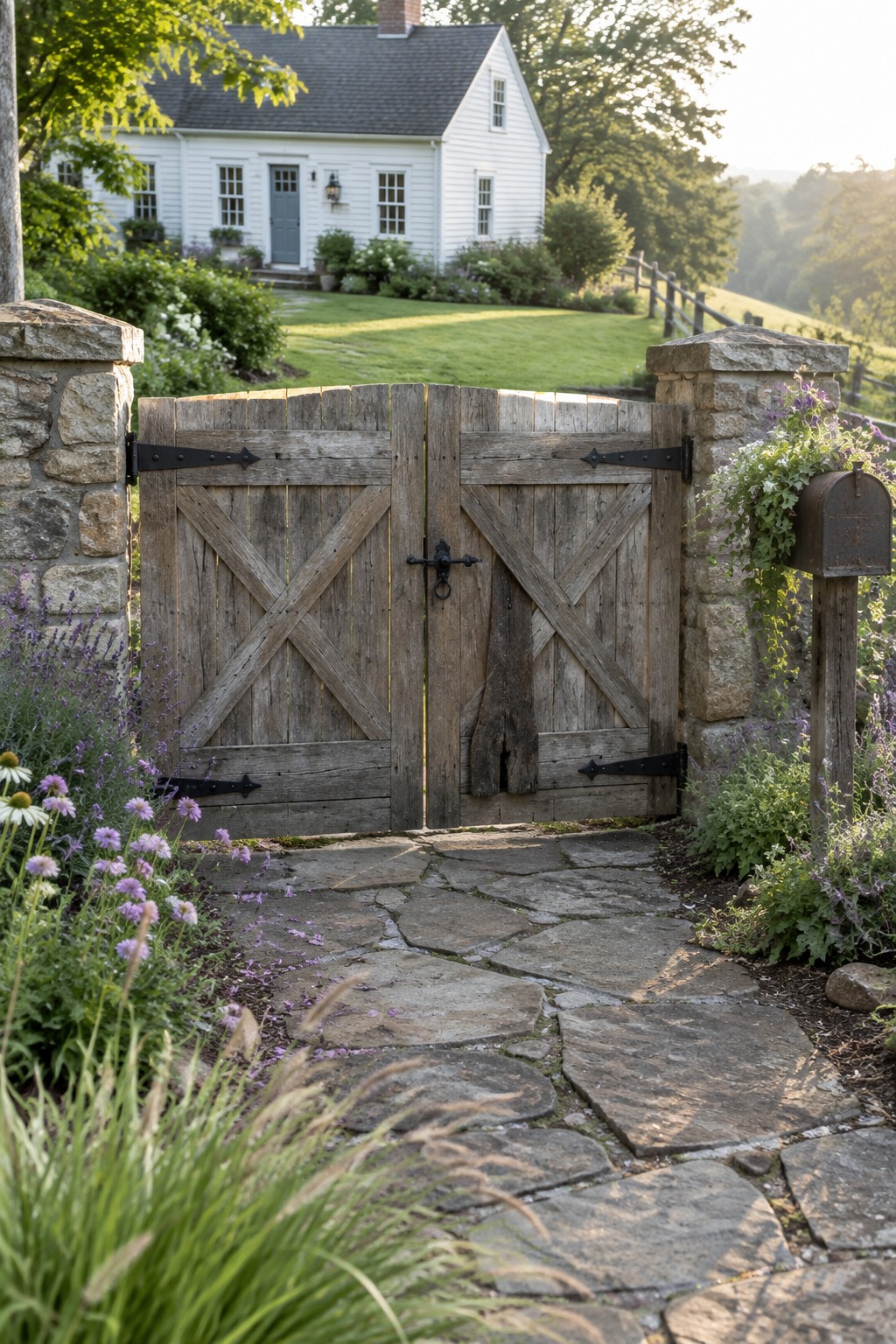
A wooden gate set between stone pillars gives a driveway entrance real staying power. The simple cross-brace design keeps the wood from sagging, while the heavy posts handle daily use without shifting. Many homeowners choose this style because it looks at home on country properties and needs little upkeep once built.
This gate works best on homes with gravel or stone drives and some garden space around the entrance. Use pressure-treated lumber for the gate itself and set the stone pillars on solid footings so they last through freeze and thaw cycles. Keep the hardware basic and black so it matches the wood as it ages.
Geometric Patterns In Metal Gates
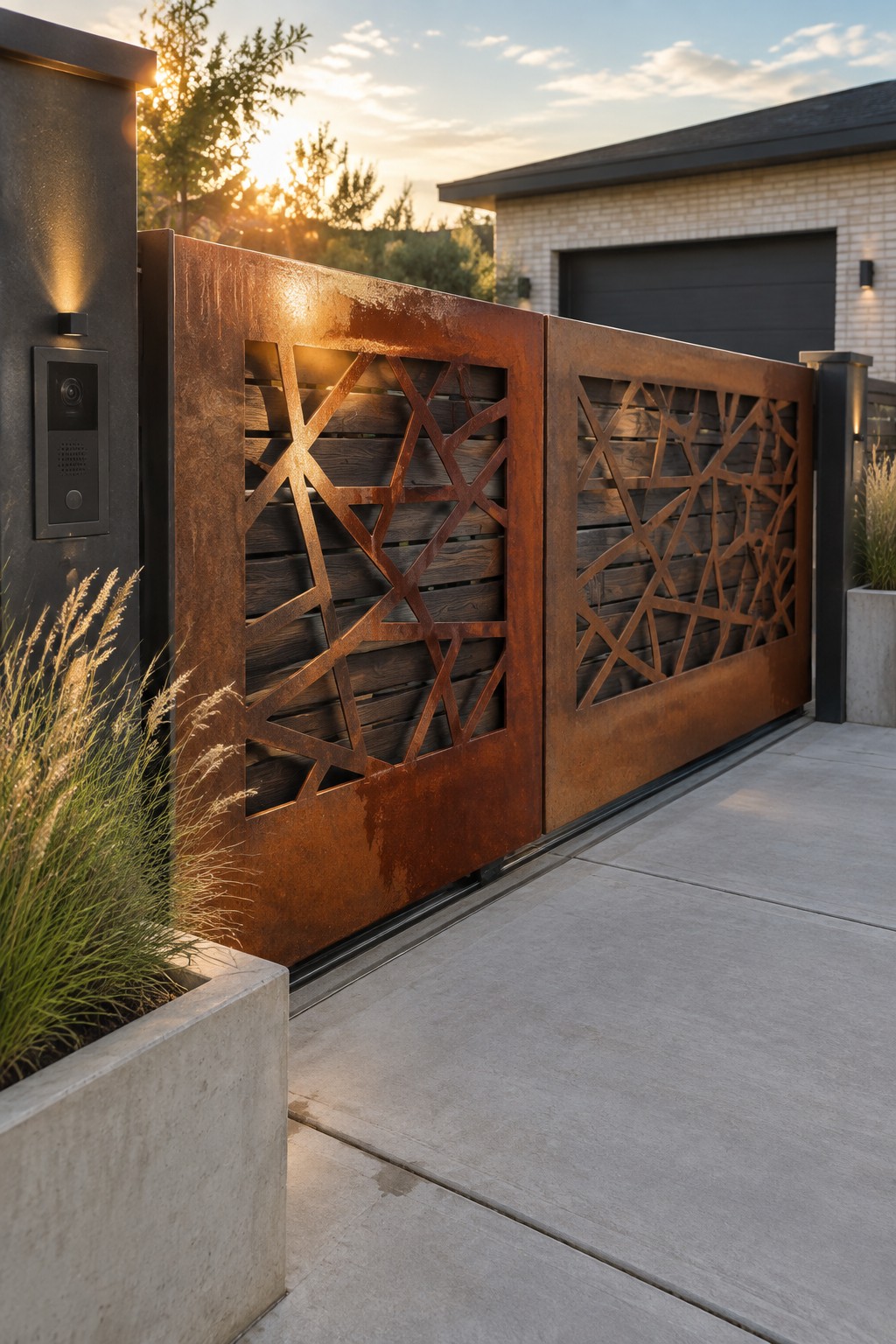
Many people like the look of metal gates that use cutout patterns because they let in some light and air while still blocking the view. The rusted steel with its sharp geometric shapes gives the entrance a modern feel without looking too cold or industrial, especially when set against the warmer wood tones behind it.
This style works best on homes with clean lines and simple landscaping. You can build something similar by having a metal fabricator cut the designs, then mounting the panel in front of a solid wood or steel frame. Just make sure the pattern size matches the scale of your driveway so it does not feel too busy or too sparse.
Rose Arches Over Picket Gates

A white picket gate with a simple arch overhead works well for a driveway entrance because it feels welcoming without looking fussy. The arch gives climbing roses a place to grow, which softens the gate and adds height without needing extra structures or big plantings on either side.
This setup suits older homes, cottages, or any place where you want a friendly boundary rather than a solid barrier. You can build the gate from standard lumber and add an inexpensive metal arch or make one from bent rebar. Just leave enough space on the sides so the roses do not crowd the path or make the gate hard to open.
Horizontal Slats For A Driveway Gate
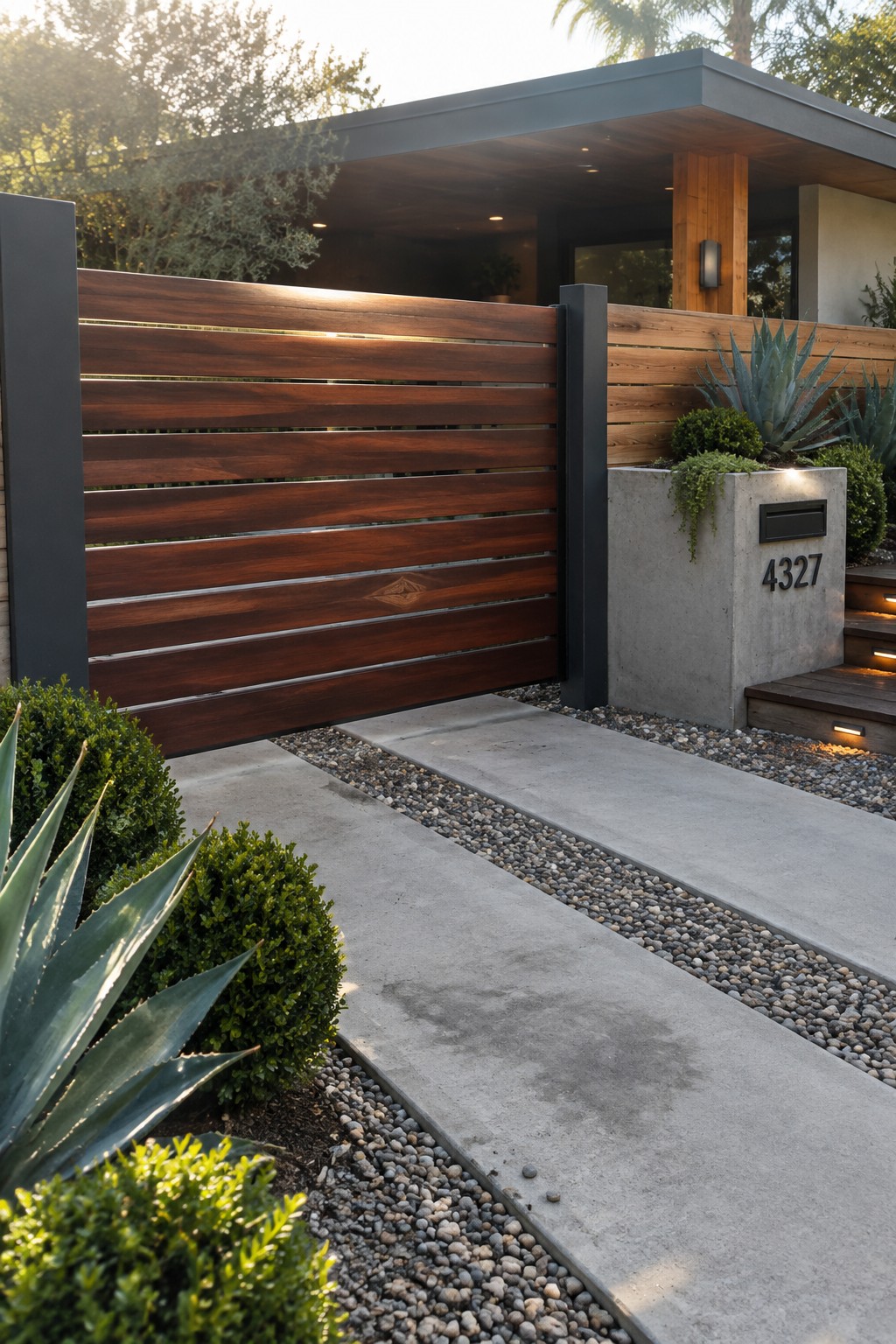
Horizontal slats give a gate a cleaner look than the usual vertical boards. The lines run straight across and keep the entrance feeling open while still blocking most of the view from the street.
This style works best on homes with simple shapes and modern details. Build the frame from metal so the wood stays straight over time, and space the slats evenly to avoid a sagging look once the gate is hung.
Wrought Iron Gates With Stone Pillars

A wrought iron gate with simple scrollwork gives a driveway a finished look without making the entrance feel closed off. The dark metal stands out nicely against lighter stone or stucco, and the open pattern keeps the view through to the house and garden.
This setup works best on homes that already use stone or brick on the exterior. Set the gate between two short pillars built from the same material as the house so everything matches. Keep the gate width practical for cars and add basic hinges and a latch that can be operated by hand.
Bamboo Slat Gate Fits Natural Garden Styles
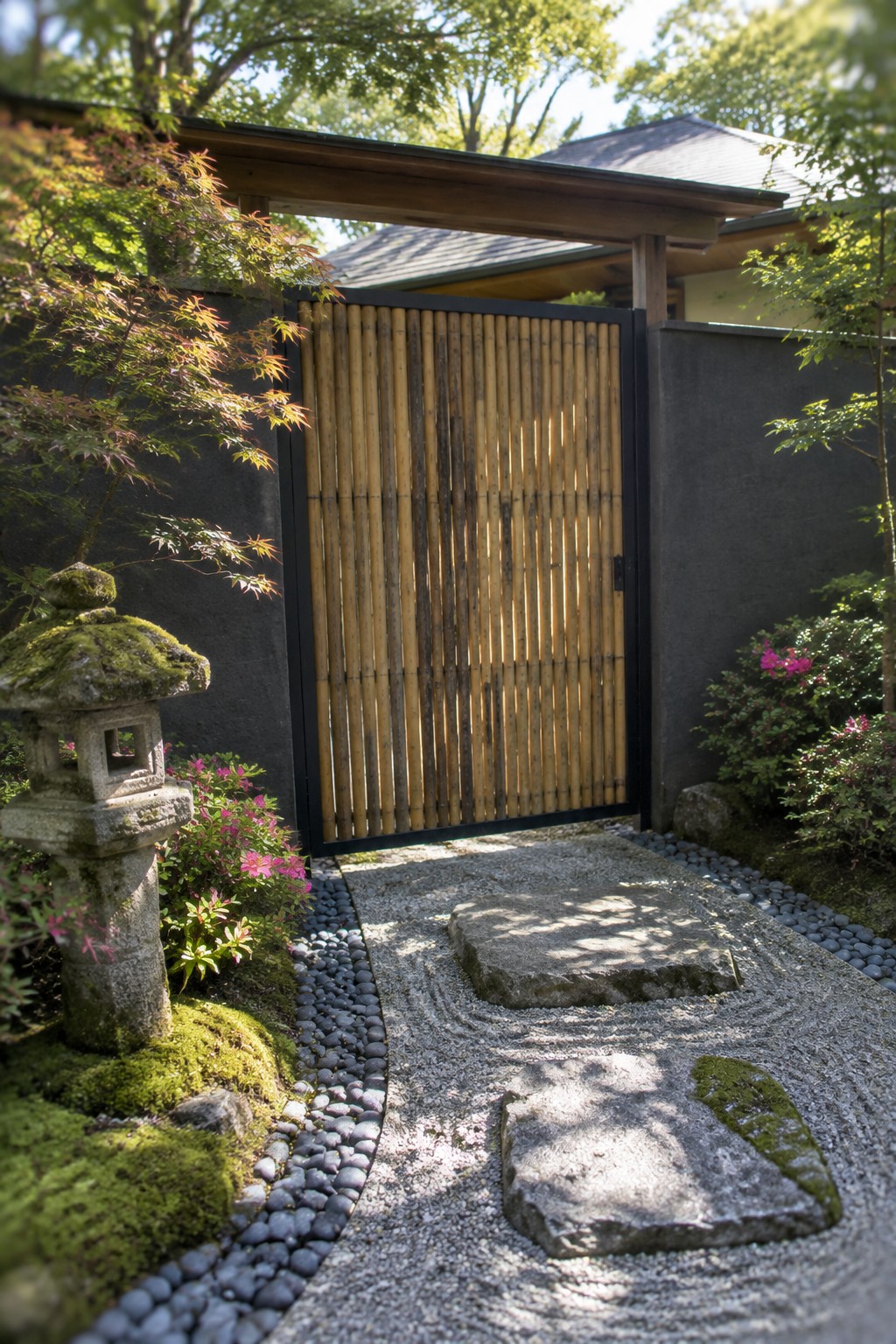
A vertical bamboo gate gives an entrance a light, organic feel without looking heavy or formal. The poles let some light through while still marking a clear boundary, and they pair easily with gravel paths and simple plantings that many people already have in their yards.
This approach works best on homes with a relaxed garden layout or a Japanese inspired corner. You can build the frame from basic lumber and lash or screw the bamboo in place, which keeps the project straightforward for a weekend. Just make sure the bamboo is sealed if your climate gets wet, since the material can split over time.
Wood and Cable Driveway Gates

Many homeowners want a gate that feels open but still marks the entrance clearly. Horizontal wood rails with thin cables between them give that balance. The wood adds warmth while the cables keep the whole thing from looking heavy or closed off.
This approach works best on homes with straight lines and simple landscaping. You can build the frame from standard lumber and run the cables yourself with basic hardware. Just check the tension every season so the lines stay tight and the gate keeps its clean look.
Wood And Corrugated Metal Driveway Gates

A wood frame with corrugated metal panels gives a driveway gate a clean, modern look without much fuss. The combination holds up well outdoors, and both materials are straightforward to cut and assemble at home. Many people like how the metal adds texture while the wood keeps the gate from feeling too industrial.
This style suits homes with gravel driveways or simple concrete paths. Keep the frame thick enough to stay straight over time, and use exterior screws or bolts so nothing loosens later. It also pairs nicely with low plantings along the edges if you want a bit of softness next to the hard materials.
Simple Crossbuck Gates for Gravel Drives
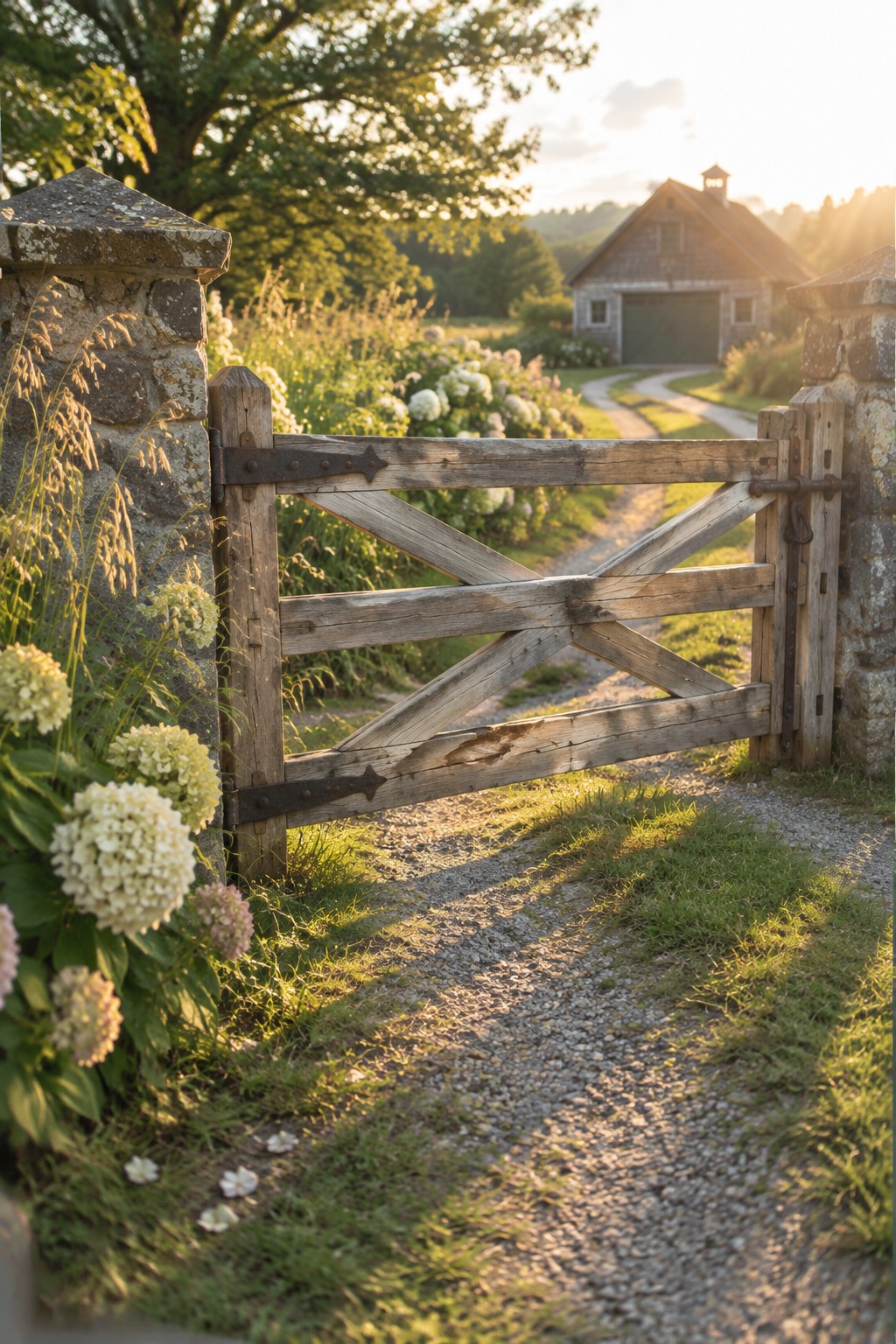
A wooden gate with crossed braces gives a driveway a clear boundary while staying easy to build and maintain. The style works because the bracing keeps the gate sturdy without adding weight or extra parts that can fail over time.
This approach fits homes with long gravel drives and open yards where you want something practical rather than ornate. Use pressure-treated lumber for the frame and basic metal hardware at the hinges and latch so the gate swings freely and lasts through seasons.
Horizontal Slat Driveway Gates
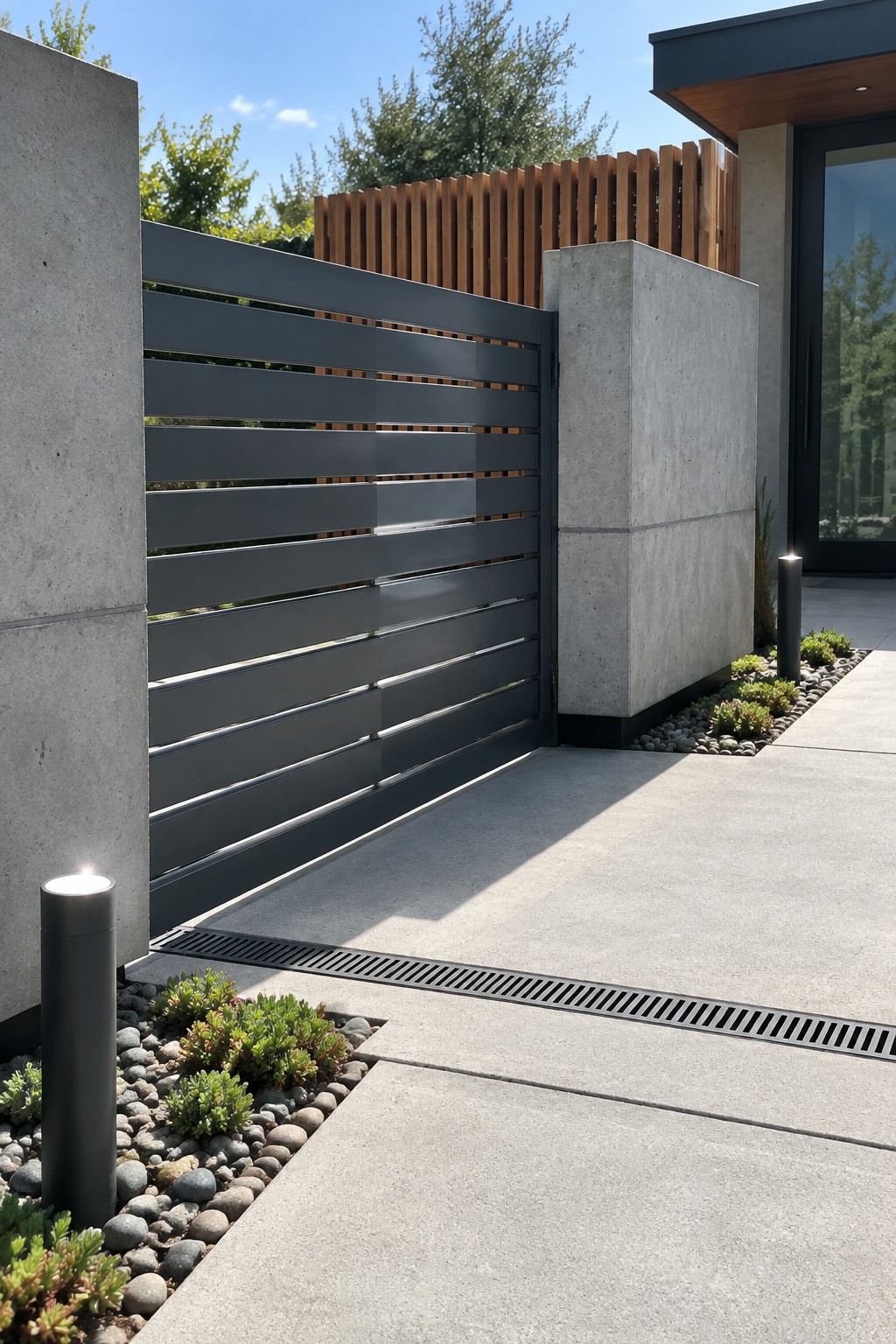
Horizontal slat gates give a driveway a clean, modern look while still letting some light and air through. The even spacing keeps the entrance from feeling too closed off, and the style pairs easily with concrete posts or simple wood fencing.
This approach works best on homes with straight lines and minimal ornament. You can build the gate from metal or wood, and the spacing can be adjusted depending on how much privacy you want. Just make sure the frame is sturdy enough to handle the weight of the slats over time.
Wooden Gates Between Stone Pillars

A painted wooden gate set between stone pillars creates a simple, sturdy entrance that feels welcoming without much fuss. The wood keeps things light and easy to maintain, while the stone gives it a solid base that holds up over time.
This approach works well on homes with gravel paths or smaller lots where a big metal gate would feel out of place. You can build the gate from standard lumber and use the same stone as your existing walls or borders. A tiled step at the base makes the crossing more comfortable and adds a small decorative touch.
Frame A Gate With Tall Hedges

A gate feels less like a hard barrier when you let tall hedges grow up around it. The greenery softens the edges and makes the entrance look like it belongs to the garden instead of cutting across it. This approach works especially well on properties where you want a clear boundary without making the whole thing feel closed off.
It suits homes with side or back entrances that already have some planting in place. Keep the hedge dense enough for privacy but leave the gate wood visible so people still know where to go. Just watch that the plants do not crowd the path or push against the gate over time.
Perforated Metal Panels For Driveway Gates

Perforated metal gives a gate a solid presence without blocking everything off. The holes let light through and keep the whole entrance from feeling too heavy, while the wood posts add a simple, grounded frame that works with most styles of home.
This setup suits gravel drives and places where you want a bit of screening but not total privacy. Just be sure the posts are set deep and the metal is mounted securely, since the panels can add more weight than they look like they will.
A Wooden Gate With Stone Pillars
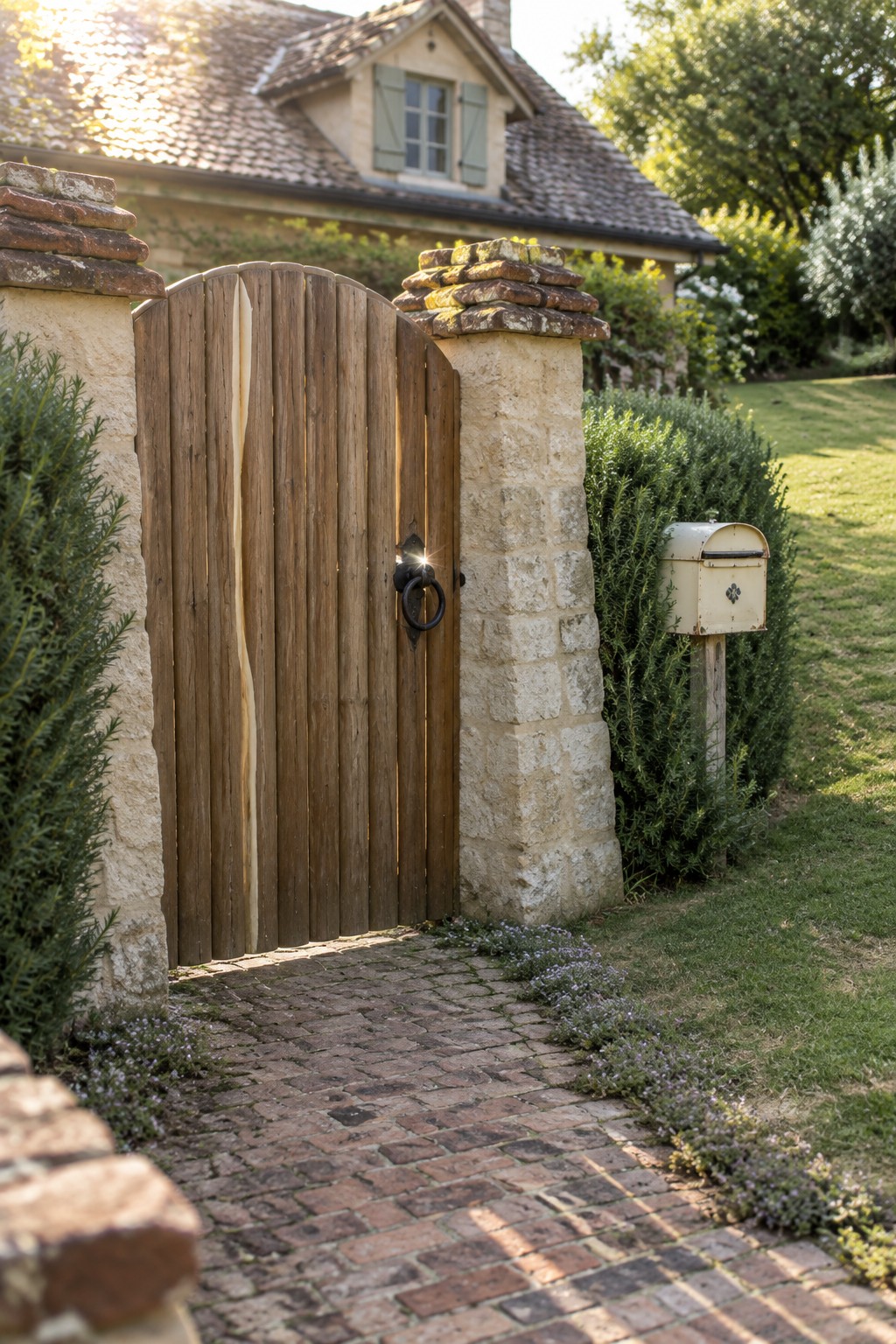
A wooden gate set between stone pillars makes a driveway entrance feel sturdy and straightforward. The natural materials age well together and give the front of the property a settled look that does not require much upkeep once it is built.
This approach works best on homes with a bit of land or a rural feel, where a simple gate can handle daily use without looking too formal. Use pressure-treated lumber for the gate and local stone or a stone veneer on concrete blocks for the pillars so the whole thing stays practical and easy to repair over time.
Simple Horizontal Plank Gates

A basic horizontal plank gate stands out because it is easy to build and still gives a clean look at the end of a driveway. The flat boards create a simple line that works well with gravel paths and low plantings on either side.
This gate style suits homes with natural landscaping and a casual entrance. Use standard lumber for the planks, set the gate between solid posts, and keep the design low so it does not block the view beyond the driveway.
Vertical Plank Wooden Gates
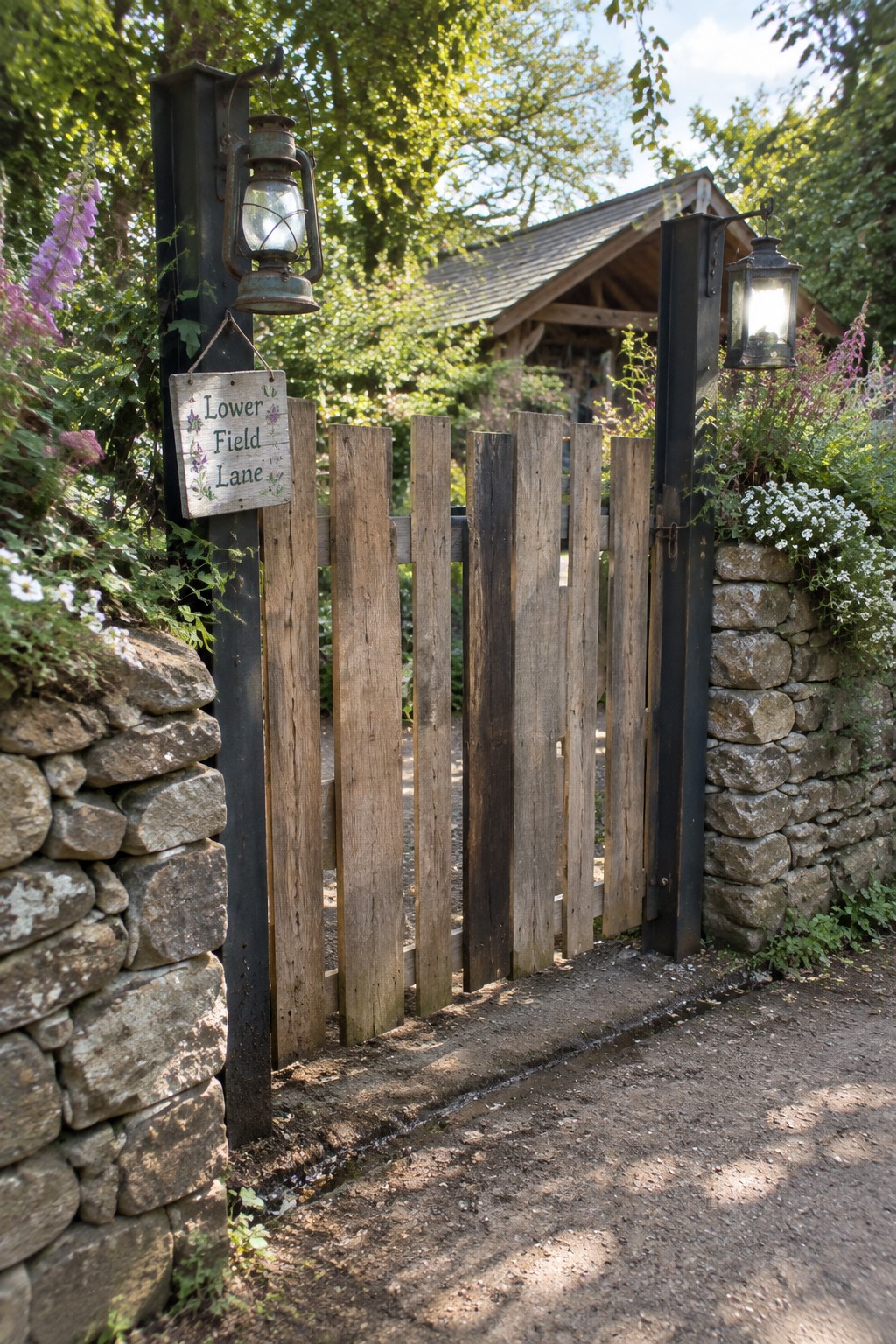
A gate built from simple vertical wood planks gives a driveway entrance a straightforward, natural look that works well with stone walls and garden planting. The boards sit in a dark frame that holds up over time, and the whole thing feels at home on gravel paths or country lanes without needing much extra trim or hardware.
This style suits homes with existing stonework or older garden walls, and it is easy to build in sections if you want to match the width of your drive. Keep the wood untreated or lightly sealed so it weathers evenly, and add basic post lights if the gate sits away from other outdoor lighting.
Frequently Asked Questions
Q: What size posts work best for holding up a wooden gate?
A: Use 4×4 posts set at least two feet in the ground with concrete. That gives enough strength for most driveway gates without overdoing it. Check the level often while the concrete sets so the gate hangs straight later.
Q: How do I stop a metal gate from rusting fast?
A: Paint it with a rust-proof primer first then add a couple coats of outdoor paint. Touch up any scratches right away after installation. This keeps the gate looking good for years even in wet weather.
Q: Do I need special hinges for a heavy driveway gate?
A: But heavy duty strap hinges hold up better than basic ones. Bolt them through the post and gate frame for a solid connection.
Q: What if my driveway slopes a bit?
A: Build the gate a little shorter on the low side so it clears the ground. You can add a slight angle to the bottom edge. This avoids dragging without needing to level the whole driveway.
