

When I drive up to a house the gate at the end of the driveway is usually the first clear signal of how the rest of the exterior was put together.
Matching the swing style to the roof pitch and entry columns keeps the whole front from feeling like separate pieces added over time.
I have seen gates throw off the balance when the scale was off by even a small amount.
Thinking through the hinge placement and the way the frame lines up with the fence helps avoid the common problem of a gate that looks tacked on.
A few of the material choices here seem worth sketching against my own front elevation before making any changes.
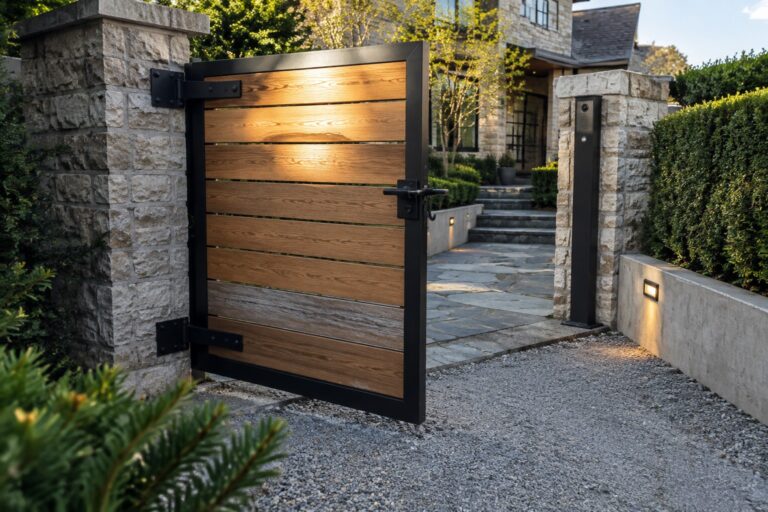
Horizontal Wood Slats With Black Metal Framing

This gate uses wide horizontal wood boards set inside a black metal frame. The simple lines give the entrance a clean, modern feel without looking cold, and the wood adds enough warmth to keep the whole thing grounded. It stands out because the contrast between the two materials makes both the gate and the stone pillars around it look more intentional.
This approach works best on homes that already use black window frames or metal accents elsewhere. It suits gravel driveways and low landscaping, and it gives a clear sense of entry without needing extra ornament. Just make sure the wood gets proper sealing so it ages evenly.
Wrought Iron Gates Between Brick Pillars
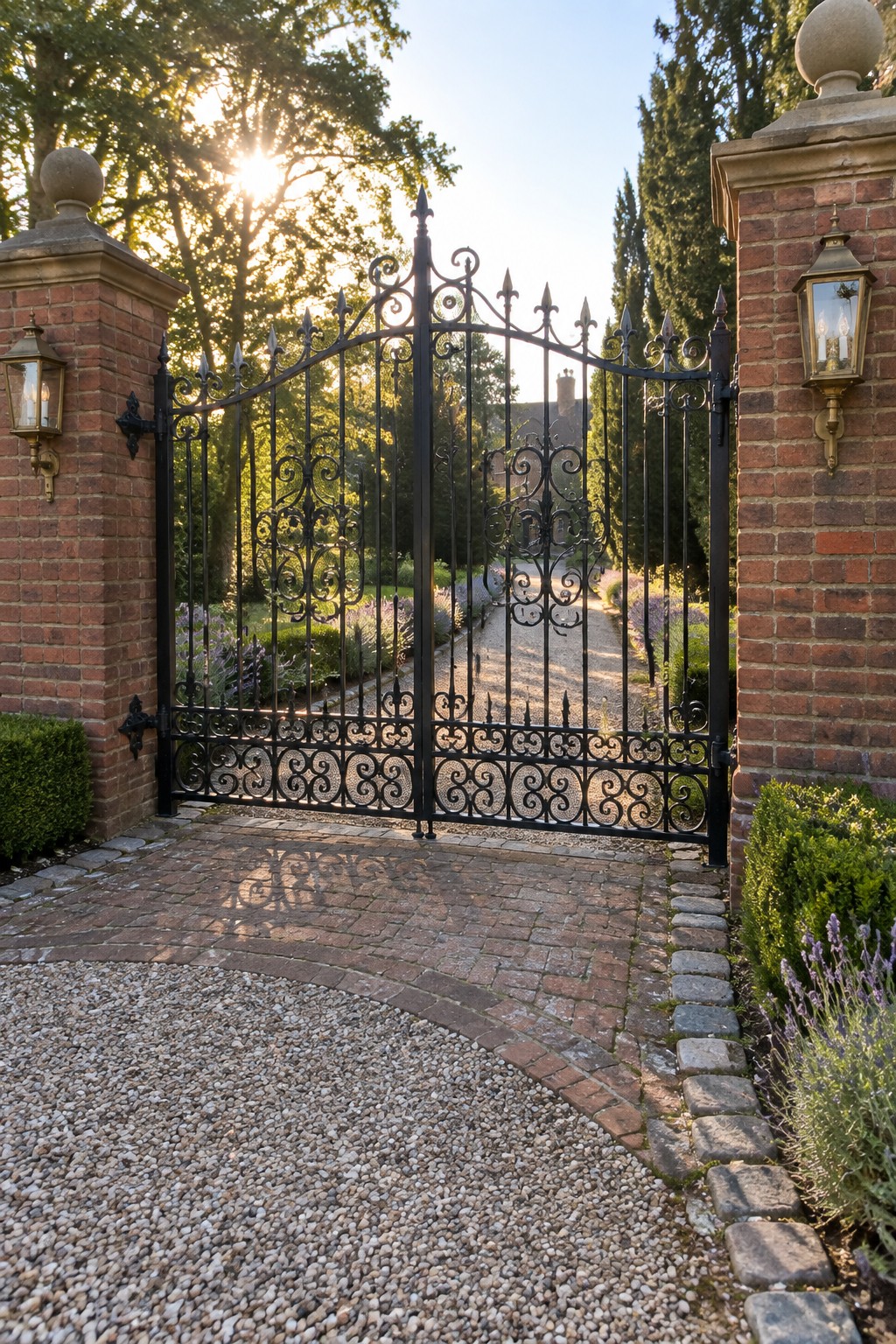
A heavy wrought iron gate set between brick piers gives a driveway entrance real weight and structure. The dark metal and open scrollwork let light and views through while still marking the boundary clearly, and the brick base keeps the whole thing grounded.
This works well on larger lots or homes with traditional details. Match the brick to any existing walls or chimneys on the property, and keep the iron pattern from getting too busy so the gate ages gracefully without needing constant upkeep.
Weathered Steel Swing Gates

Weathered steel gates give modern homes a grounded, textured entry without needing extra ornament. The material develops a rich patina over time that softens the clean lines of concrete and stucco while still feeling substantial.
This approach works especially well on homes with simple facades and flat rooflines. Keep the gate proportions in scale with the driveway opening and limit the number of vertical slats so light and views still pass through.
Arched Entries With Wooden Swing Gates

An arch gives swing driveway gates a more finished and architectural look. Instead of just hanging a gate on posts, the curved opening creates a clear transition between the street and the property, and the wood doors feel more intentional when they sit inside that frame.
This approach works especially well on homes with stucco or masonry exteriors. The contrast between the smooth arch and the heavy wood adds presence without needing extra ornament, though it does ask for enough width so the gates can swing fully open.
Simple White Swing Gates For Cottage Driveways

A basic white swing gate with black hardware gives a driveway a clean, defined edge without making the entrance feel heavy. The horizontal boards and simple frame keep the look light, which works well when the house itself has a relaxed shape and the driveway runs straight toward the water or open land.
This gate style suits gravel surfaces and pairs best with wood posts and minimal lighting. Avoid adding too many details or decorative pieces, since the strength comes from keeping the whole entry straightforward and easy to maintain.
Swing Gates With Geometric Detail Strengthen The Entry
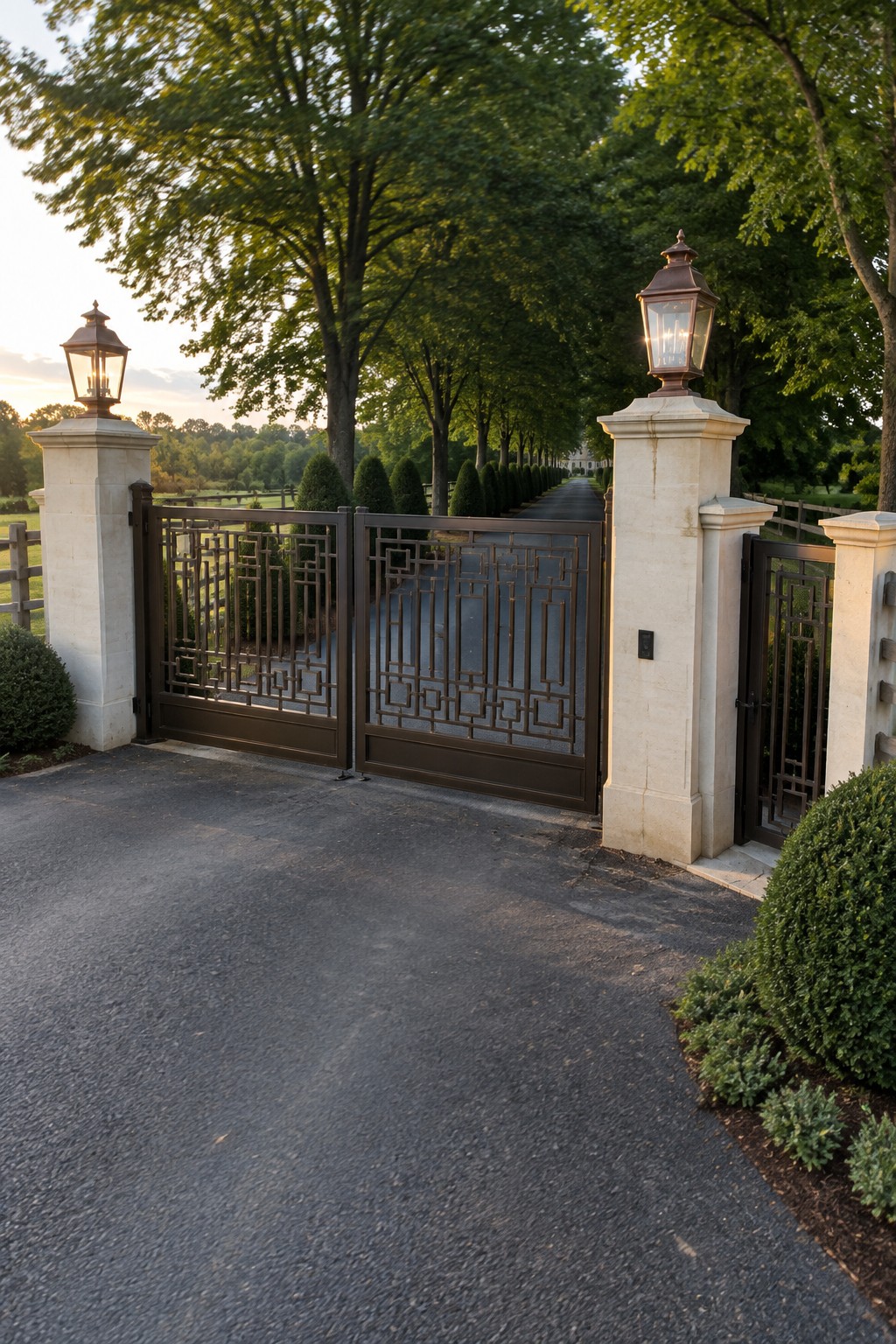
These gates stand out because the dark metal pattern gives them real visual weight without needing extra decoration. The repeating shapes catch the light and make the whole entrance feel more intentional, especially when set between simple stone pillars.
They work best on properties with a long drive or a formal approach where the gates can be seen from a distance. Keep the design simple and let the pattern do the work rather than adding too many extras around them.
Wooden Swing Gates With Stone Pillars
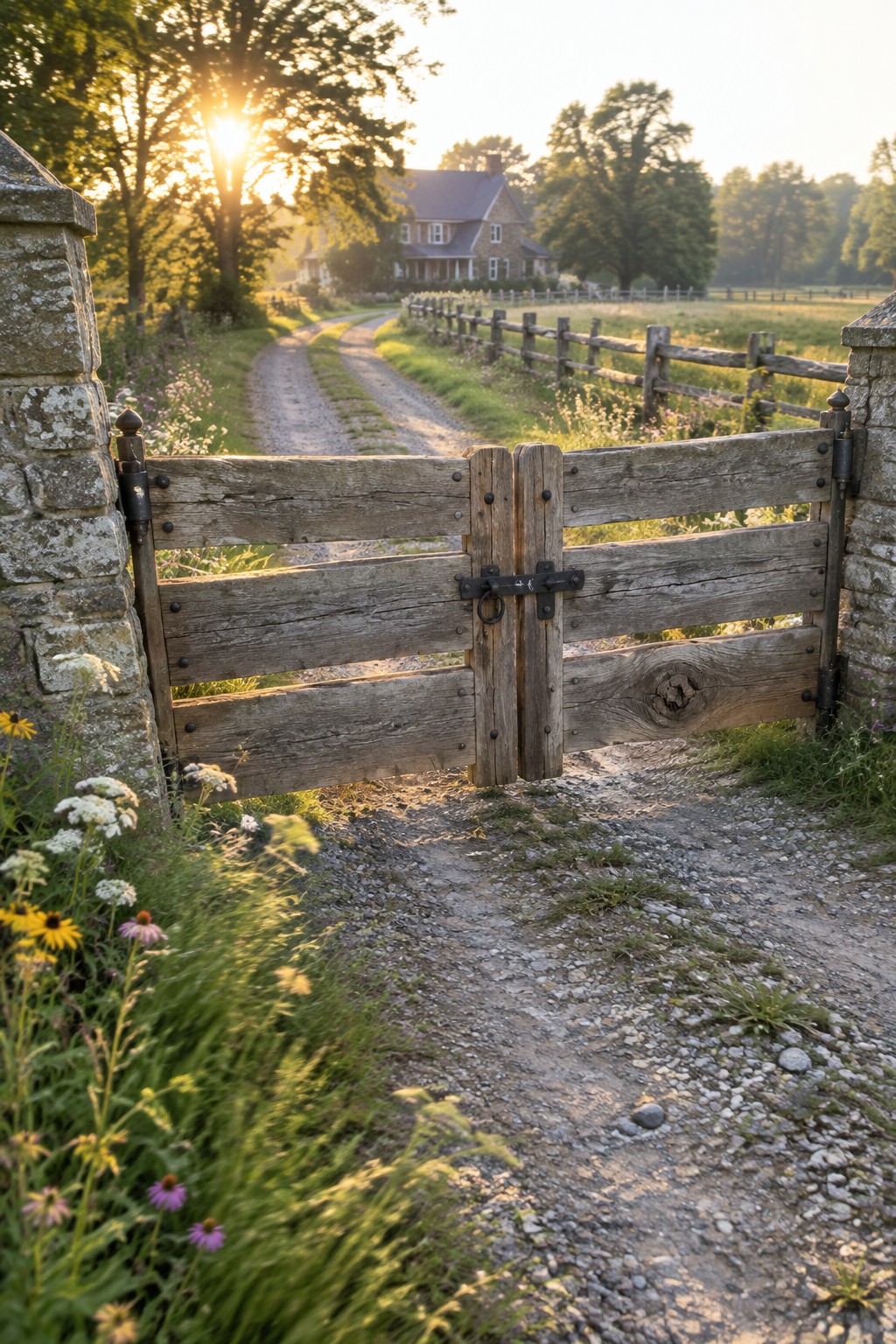
A wooden swing gate set between stone pillars gives a driveway entrance real presence without trying too hard. The wood feels warm and approachable while the stone adds weight and permanence that holds up over time.
This works especially well on gravel drives or homes with a bit of land around them. It suits older houses or any place where you want the entry to feel solid and tied to the landscape. Just keep the gate proportions simple and use good hinges so it stays easy to open and close.
Horizontal Wood Slats For Driveway Gates

Horizontal wood slats give a driveway gate a clean architectural presence that feels modern without trying too hard. The lines break up the surface and let the material do the work, especially when the wood sits against concrete or a dark frame. It keeps the gate from looking like a solid wall while still marking the entry clearly.
This style works best on homes with simple lines and minimal ornament. Match the wood tone to other exterior details if you can, and use a dark frame to sharpen the contrast. It suits properties where the gate needs to feel built in rather than added on later.
Matching Swing Gates to the House Style

Gates that pick up on the same stone and column details already on the house tend to feel more intentional. The black metal here lines up with the light pillars and the formal entry beyond, so the whole approach reads as one connected design rather than separate pieces added over time.
This approach works best on larger properties with classical or transitional architecture. Keep the gate pattern straightforward and the scale substantial so it holds its own against the house instead of competing with it.
Swing Gates With Frosted Panels

A swing driveway gate with frosted glass panels gives you privacy without making the entry feel completely closed off. The black frame keeps the whole thing looking clean and structured, while the panels let light through and soften the solid look that metal gates often have.
This approach works best on homes with straightforward modern lines or low landscaping. The pillars on either side add weight so the gate does not look too light, but you want to keep the surrounding planting simple so the panels stay the main feature.
Adding Climbing Vines To Wooden Gates
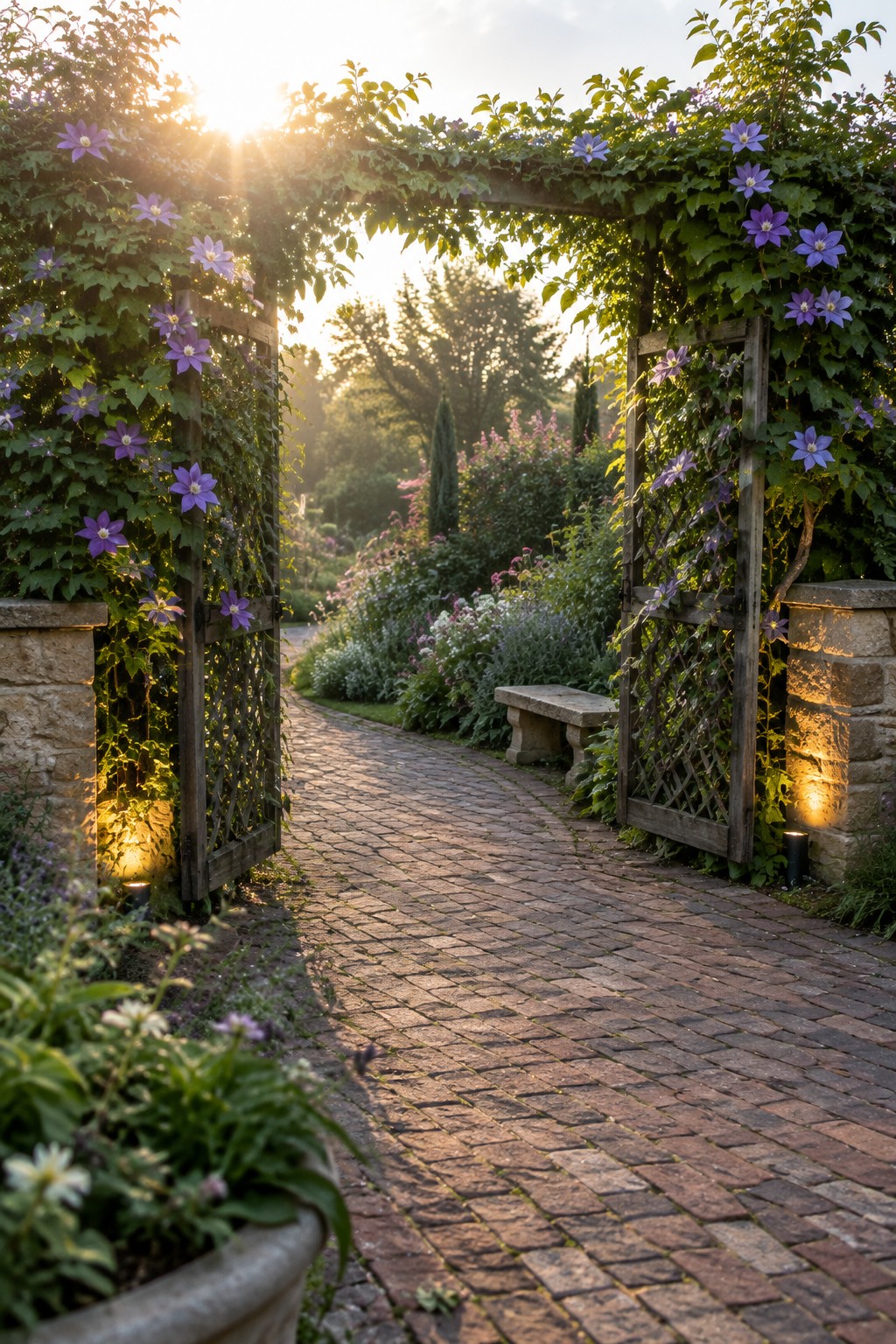
Many people like the way climbing vines turn a gate into part of the garden instead of a separate barrier. The plants soften the wood and make the whole entry feel more natural over time.
This approach works best on gates with lattice or open sections that give vines room to attach. It suits homes with cottage or traditional gardens where the goal is to blend the driveway entrance with the surrounding planting. Just check that the wood can handle occasional dampness from the leaves and flowers.
Perforated Metal Swing Gates

A perforated metal swing gate brings a solid presence to the driveway while still letting light and air through. The pattern of holes keeps the gate from feeling like a heavy barrier and instead turns it into something that plays with shadow and view.
This works best on homes that lean modern or minimalist, especially when the gate sits between simple concrete posts and meets a gravel drive. The material holds up well outdoors and gives the entry a clean architectural line without needing extra ornament.
Dark Wood Gates With Vertical Boards

A solid dark wood gate like this one gives the entry real weight without needing extra decoration. The vertical boards and simple iron hardware create a clean, strong shape that reads clearly from the road and holds up visually next to stone or masonry. Many people like this look because it feels sturdy and traditional while still staying plain.
This approach works best on homes with some natural stone or brick already in place, or on properties where the driveway sits a little below the house. Keep the gate height consistent with the pillars and choose matte black or deep charcoal so it contrasts without looking shiny. Avoid anything too ornate if the rest of the house stays simple.
Wooden Swing Gates With Iron Details

These gates stand out because the thick wood planks feel solid and lasting while the iron scrollwork adds just enough detail. The mix keeps the entrance from looking plain or overly ornate, and it works especially well when the rest of the property uses stone and natural tones.
They suit homes with stucco or masonry walls and gravel or stone driveways. Keep the wood finish simple and let the iron do the talking. Too much carving or bright paint can make the gates feel busy instead of strong.
Black Swing Gates With Brass Accents

A dark gate gives an entry real presence without needing extra ornament. The solid black paint reads strong and clean, while the thin brass band at the base and matching ring pulls add just enough contrast to keep it from feeling heavy or dull.
This approach works especially well on homes with stone or light masonry pillars. Keep the gate height substantial and the hardware simple so the shape and color do the main work. It suits both traditional and transitional styles, and it holds up visually even when the surrounding planting is minimal.
Horizontal Slats With Integrated Lighting
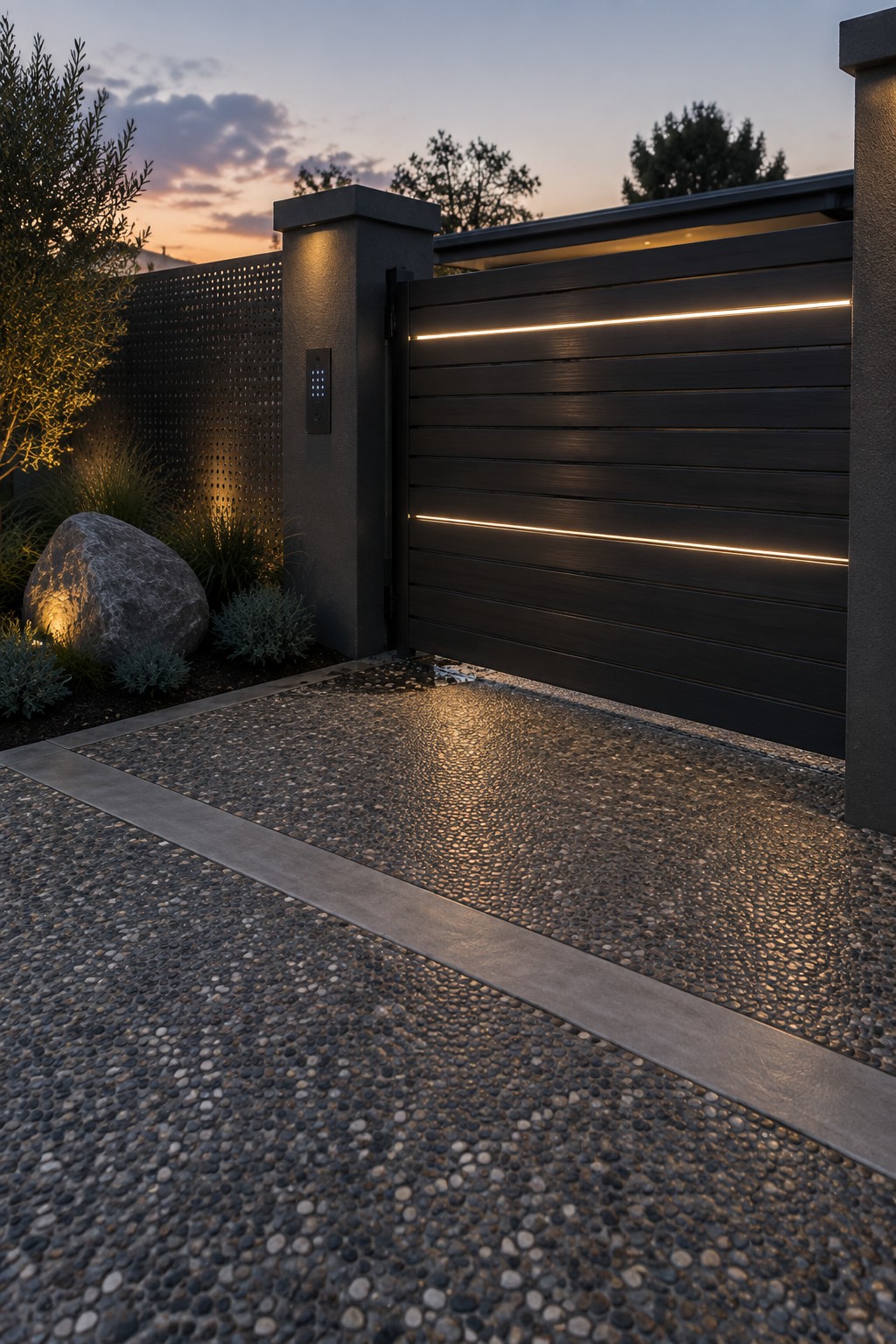
Horizontal slats give a gate a clean, modern look that feels more architectural than traditional vertical designs. When the lighting runs inside the slats themselves, it creates a steady line of light that marks the entrance without needing extra fixtures or obvious hardware.
This works well on homes that already lean contemporary, especially when the gate material matches the fence or house trim. It suits properties where the driveway sits close to the street, since the built-in lights help drivers see the opening at night without adding separate posts or overhead fixtures.
Wrought Iron Gates Between Stone Pillars
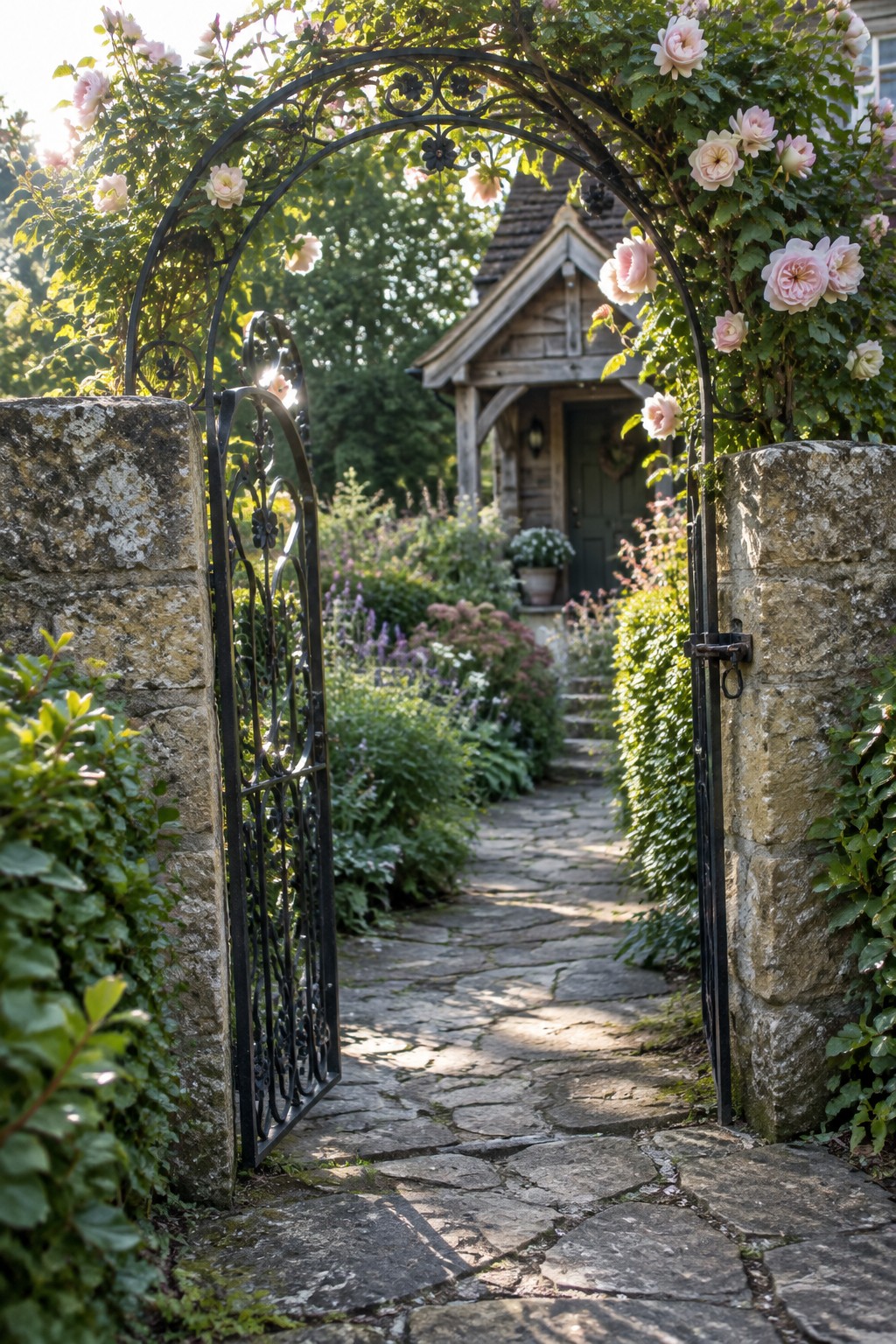
An ornate wrought iron gate set between stone pillars gives an entrance real weight without feeling heavy. The dark metal contrasts nicely with the lighter stone, and the curved top keeps the whole thing from looking too formal. When roses climb up the sides, the gate starts to feel like part of the garden instead of just a barrier.
This works best on homes with cottage or traditional character. Keep the pillars fairly plain so the gate stays the focus, and let the planting soften the edges over time. It suits properties where you want the entry to feel established rather than stark.
Metal Gates with Bold Cutouts

A swing gate with large open shapes cut into the metal gives the entrance real presence without making the whole thing feel heavy or closed off. The patterns let light and views pass through, so the gate becomes part of the landscape instead of just a barrier. It works especially well when the rest of the entry stays simple.
This approach suits modern or contemporary homes where you want the gate to feel like an architectural piece rather than just a functional door. Keep the surrounding hardscape quiet with gravel and stone so the cutouts stay the focus. Avoid overcrowding the area with too many plants or ornaments right next to the gate.
Frequently Asked Questions
Q: How do I pick a gate style that fits my house without it looking out of place? A: Walk around your driveway and note the shapes already in your walls or rooflines. Match those angles in the gate panels or posts so everything feels connected.
Q: What if my driveway slopes a bit? A: Measure the angle first and test a mock swing with string or tape on the ground. You can adjust the hinge height or pick a lighter panel so the gate clears without scraping.
Q: How do I keep a wood gate looking good over time? A: Seal it once a year and check the hardware for rust before it spreads. That simple step stops most warping before it starts.
