

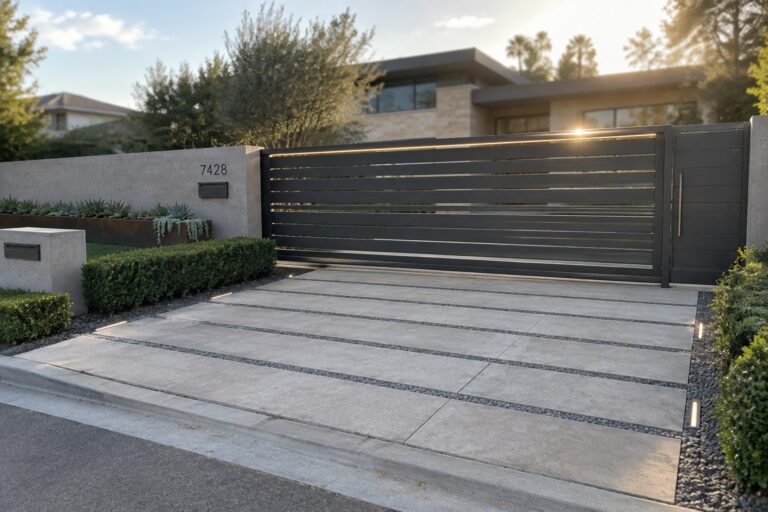
I have always noticed that the gate at the end of the driveway sets the tone for the whole property before you even reach the house.
When I look at modern designs with clean lines, it strikes me how much the choice of shape and material can either blend with the facade or stand out in a way that feels off balance.
Some gates end up looking sharper in photos than they do when you drive up to them in person.
The ones that work best seem to tie into the rooflines and entry points without trying too hard.
I usually test a couple of these geometric approaches on paper first to see how they would sit with the rest of the front.
Horizontal Slats Keep The Gate Simple
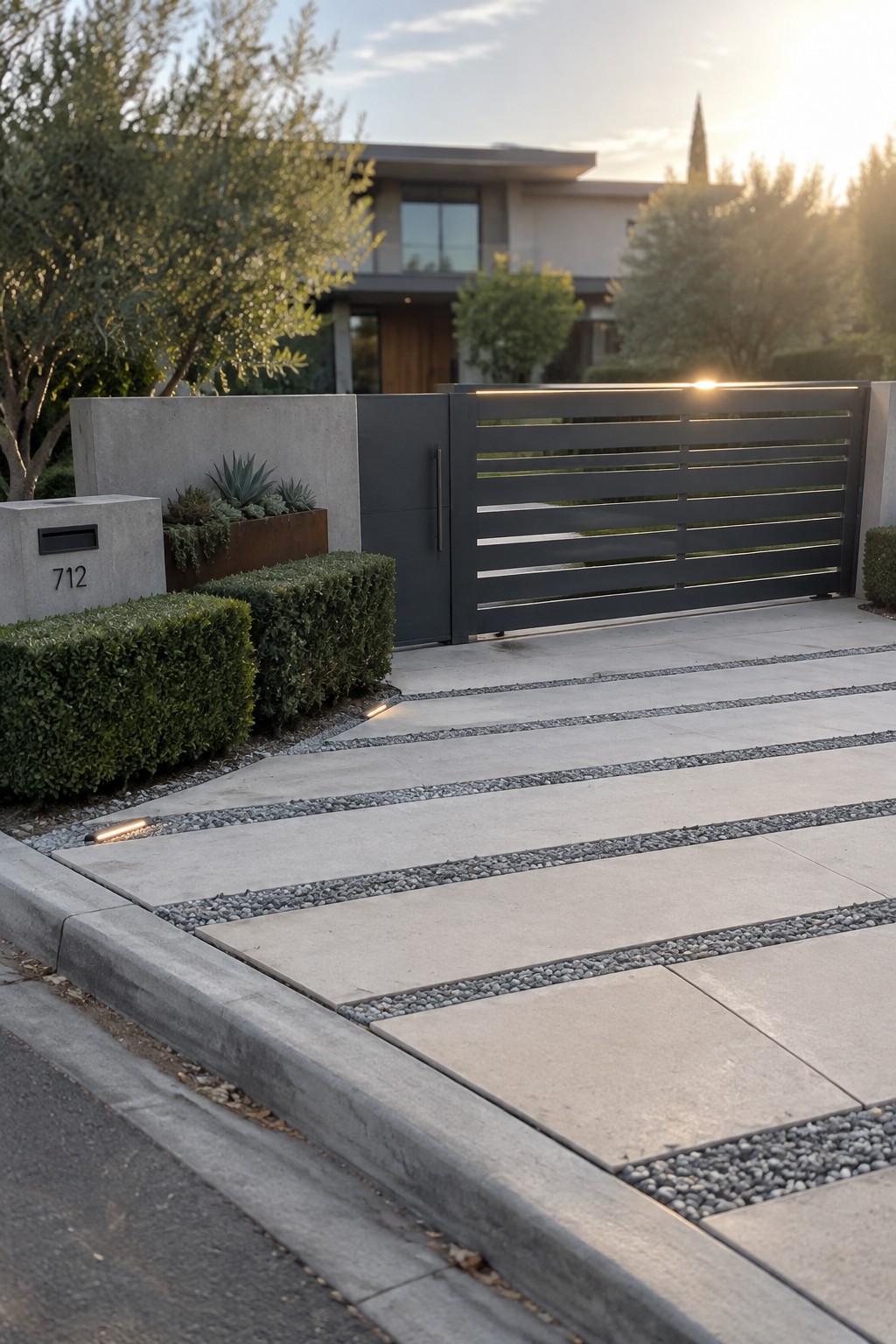
Horizontal slats give a driveway gate a clean look without adding extra detail. The pattern creates steady lines that match the flat planes of the house and the concrete wall beside it. This approach feels lighter than a solid panel while still giving a clear boundary.
It works best on homes that already use straight lines in the architecture. Keep the color dark or neutral so the slats read as part of the structure rather than a separate feature. Avoid mixing in curves or ornate hardware that would break the simple rhythm.
Geometric Rusted Metal Gates
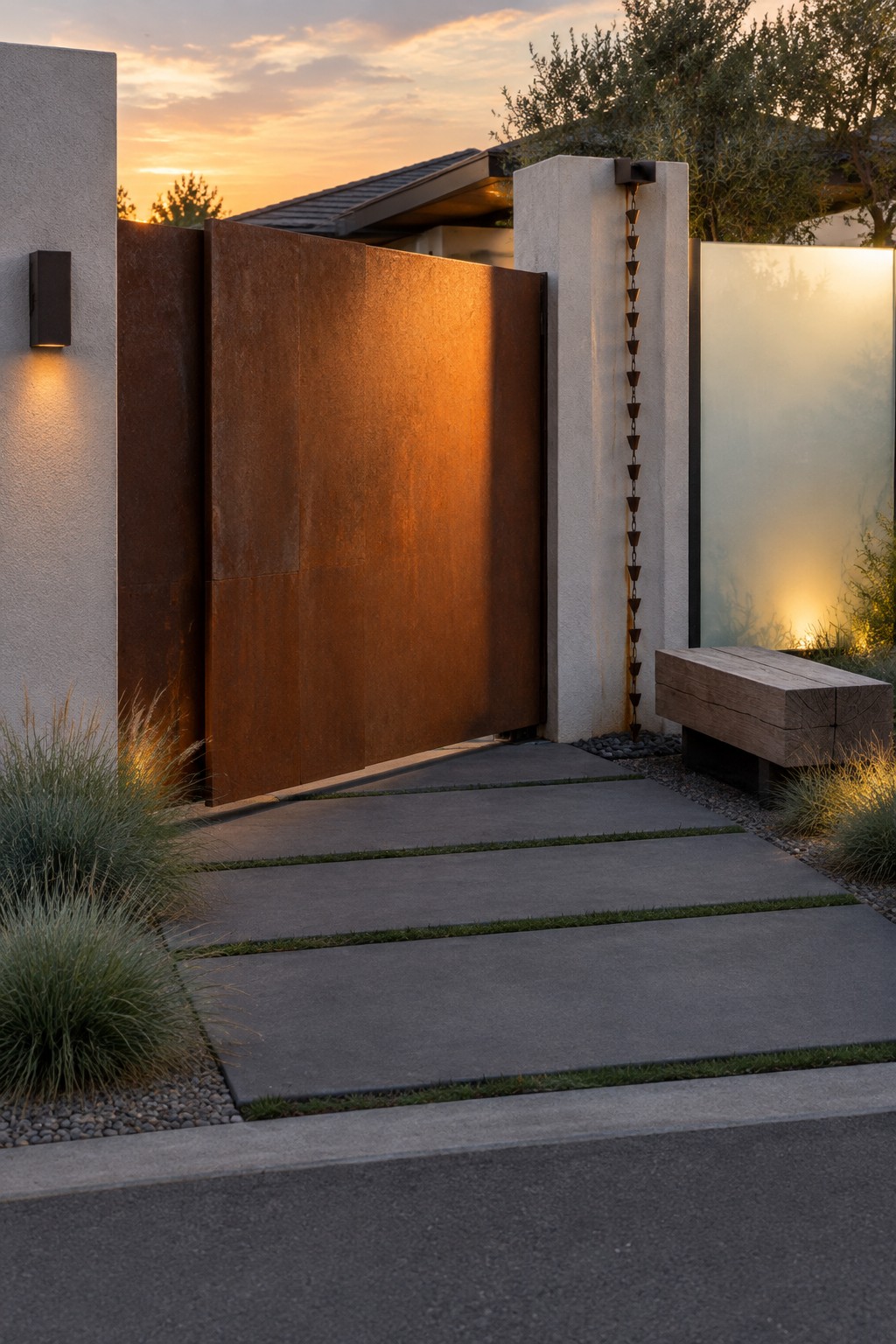
A driveway gate made from large rusted metal panels gives a modern entry real weight without extra detail. The flat surfaces and straight seams create a clean shape that feels solid next to concrete and gravel.
This works best on homes that already lean modern or minimalist. Keep the gate height and width generous, limit any extra hardware, and let the metal color play off the surrounding hardscape and plants.
Vertical Wood Slats On Concrete Posts
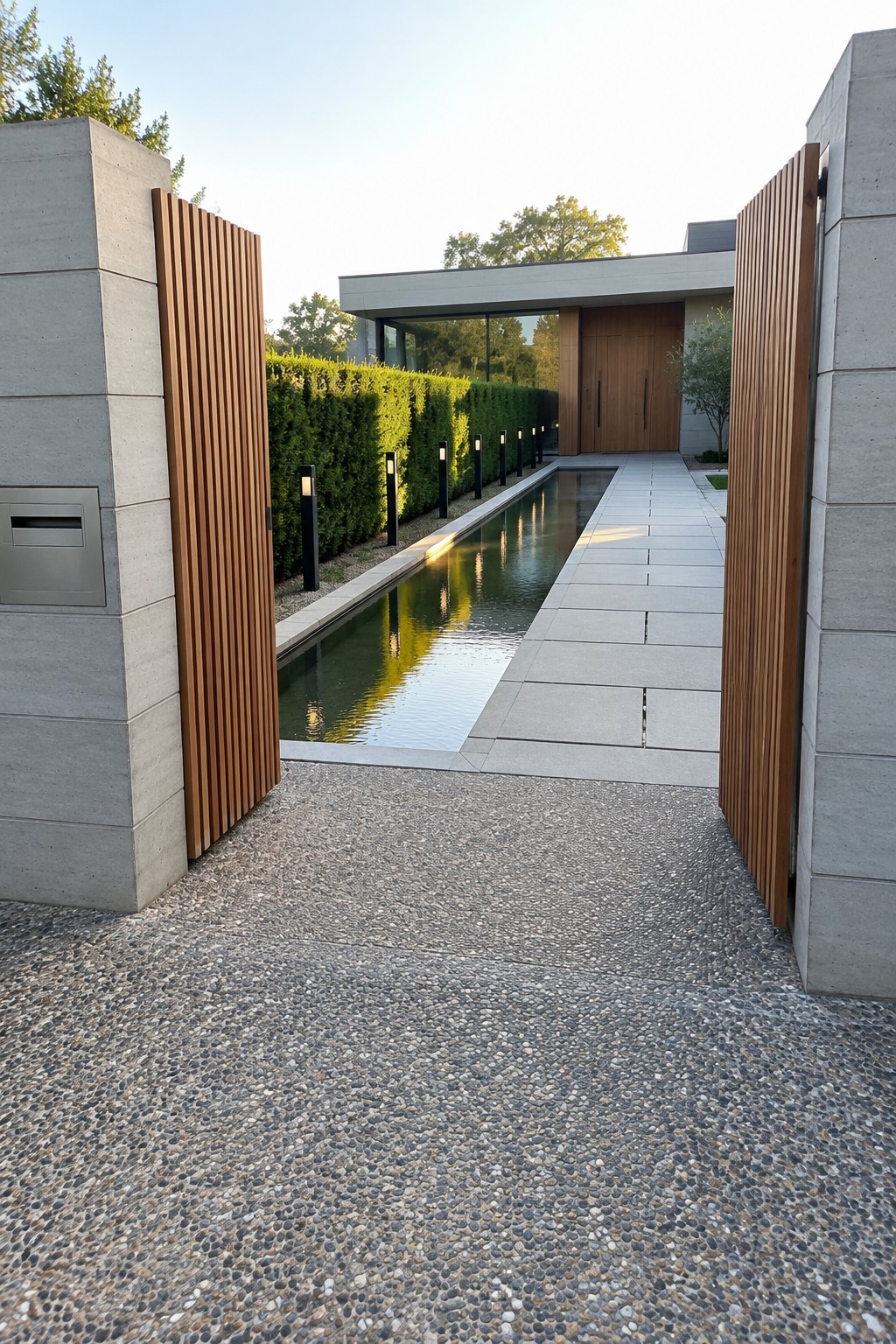
This gate style stands out because the vertical wood slats bring a clear rhythm and height that feels modern without trying too hard. The concrete anchors everything and gives the entrance a solid, grounded base that pairs well with the straight lines of the path and pool.
It works best on homes with simple architecture where you want the gate to guide the eye forward rather than block the view. Match the wood tone to other exterior details and keep the spacing tight so the slats read as one clean plane instead of a fence.
Perforated Panels For Modern Driveway Gates
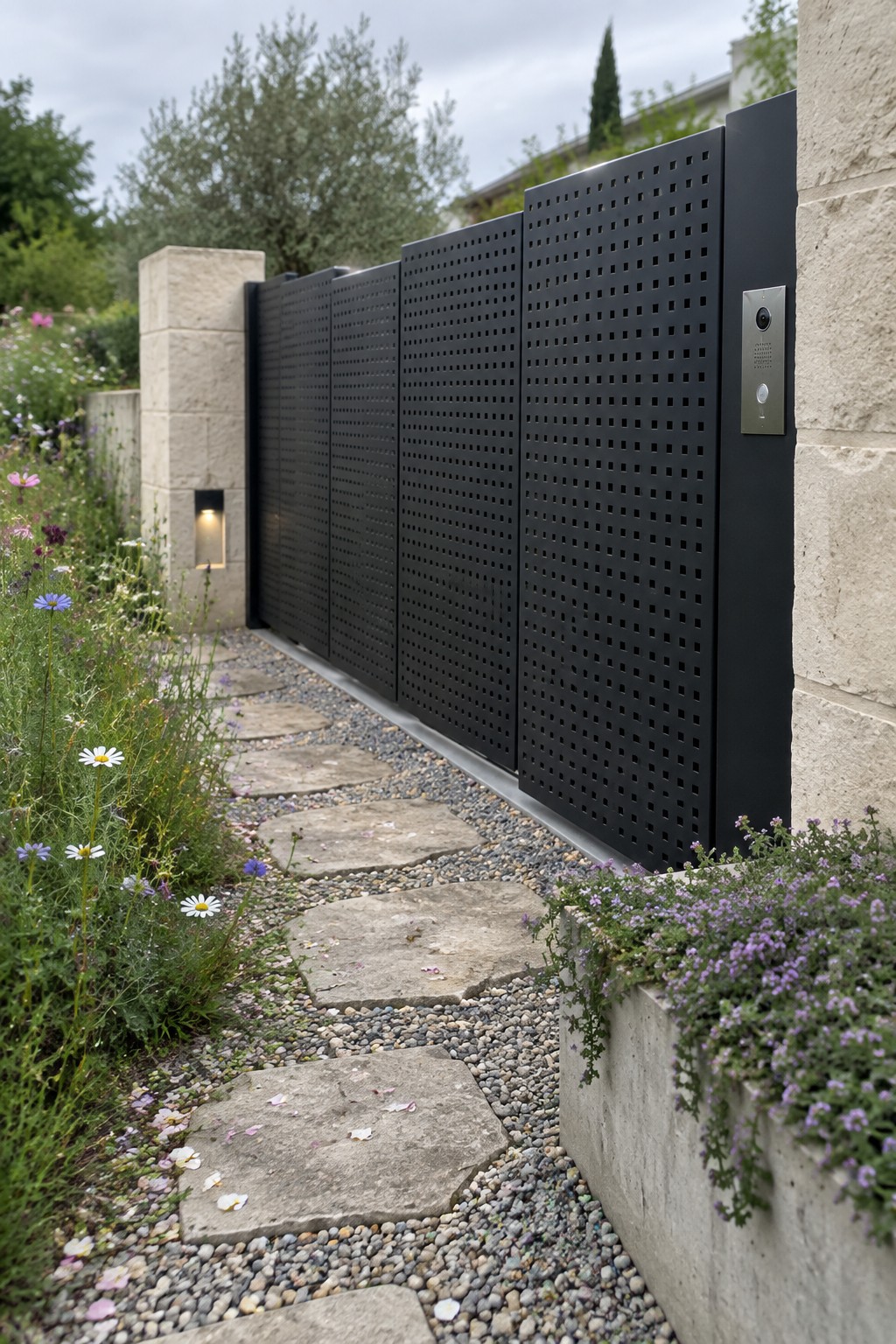
A perforated gate with a steady square grid gives the entrance a clean modern look without feeling heavy or closed off. The pattern adds visual rhythm while still keeping the property private from the street. It pairs especially well with stone pillars and simple hardscaping.
This style suits contemporary homes that already use straight lines and minimal details. Keep the hole size consistent across the full width so the pattern stays readable even from a distance. Avoid mixing too many materials around the gate itself.
Frosted Glass Panels On Modern Gates
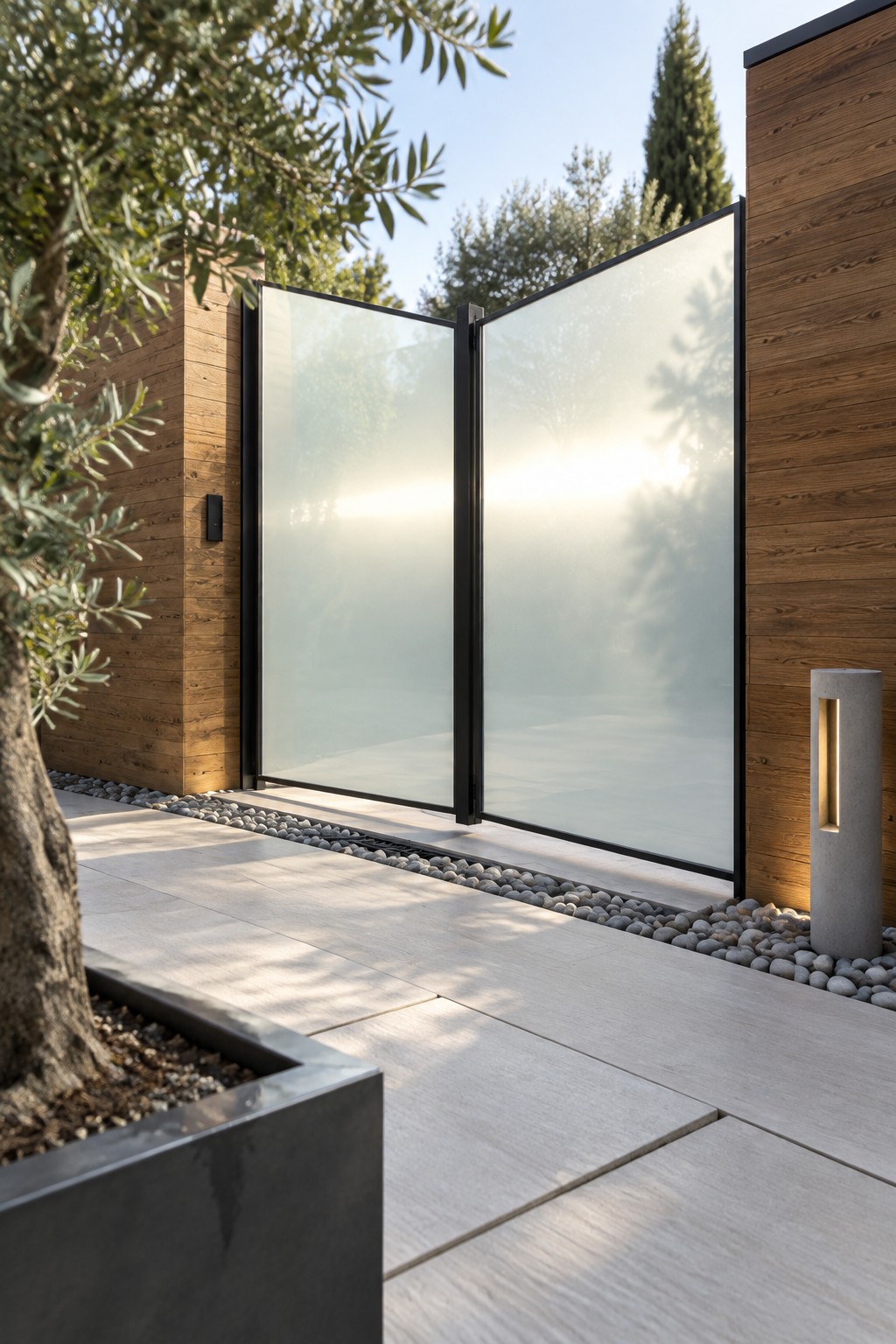
Frosted glass works well in driveway gates because it gives privacy without making the entrance feel heavy or closed in. The panels let light pass through while keeping the view blocked, which helps the whole front stay bright and open.
This approach suits homes with simple architecture and straight lines. Keep the frames dark and minimal so the glass stays the main feature, and choose thicker panels if security matters for your street.
Horizontal Metal Bands On Stone Walls
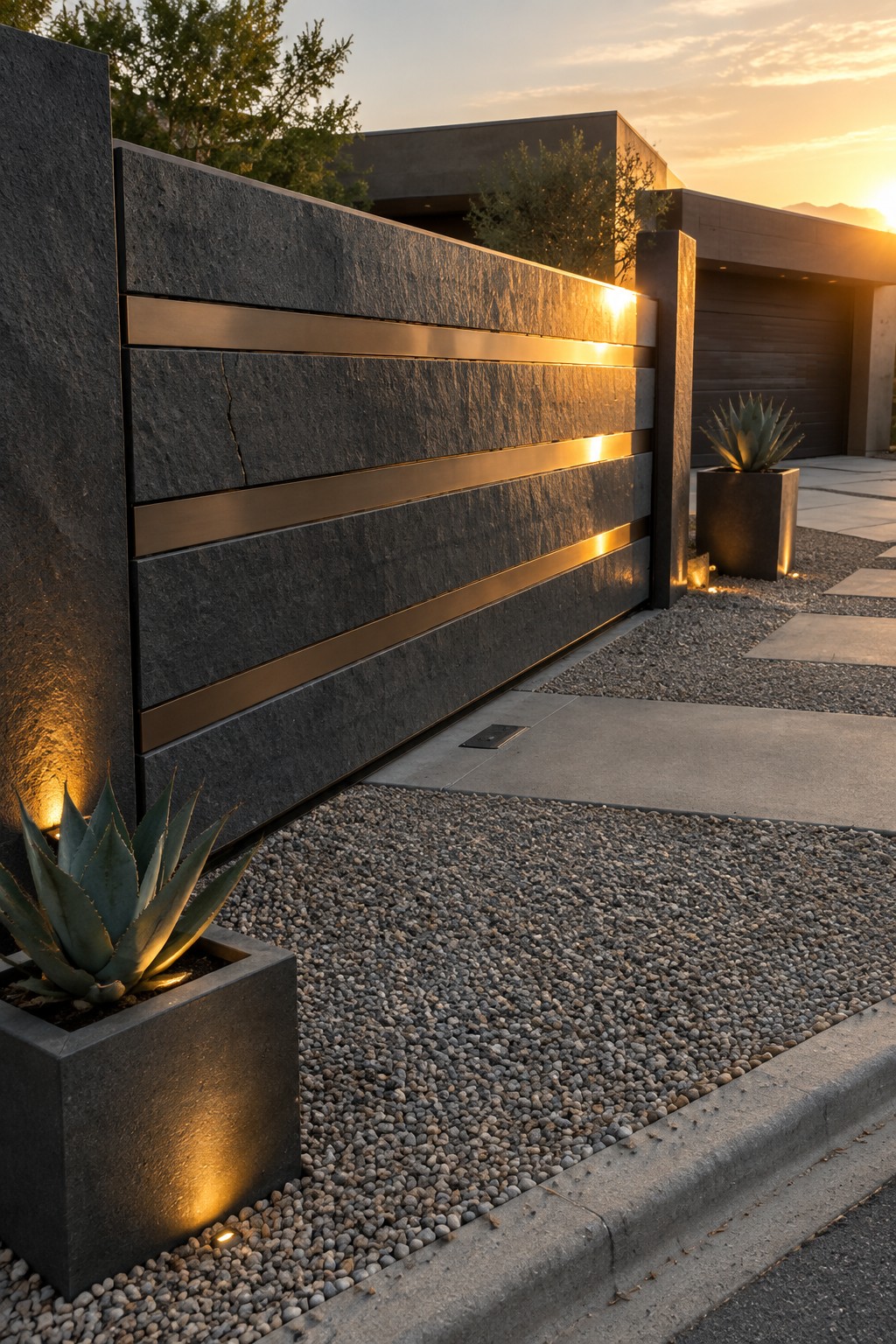
Many modern gates use this simple trick of setting thin metal strips into a thicker stone face. The bands break up the wall height and give the eye a clean line to follow, which keeps the whole entrance feeling sharp and organized rather than heavy.
This works best on homes that already lean modern, where the stone is dark and the metal has some warmth. Keep the bands evenly spaced and match their finish to any nearby lighting or hardware so the pattern reads as one deliberate choice instead of scattered details.
Glass Block Grids in Modern Gates
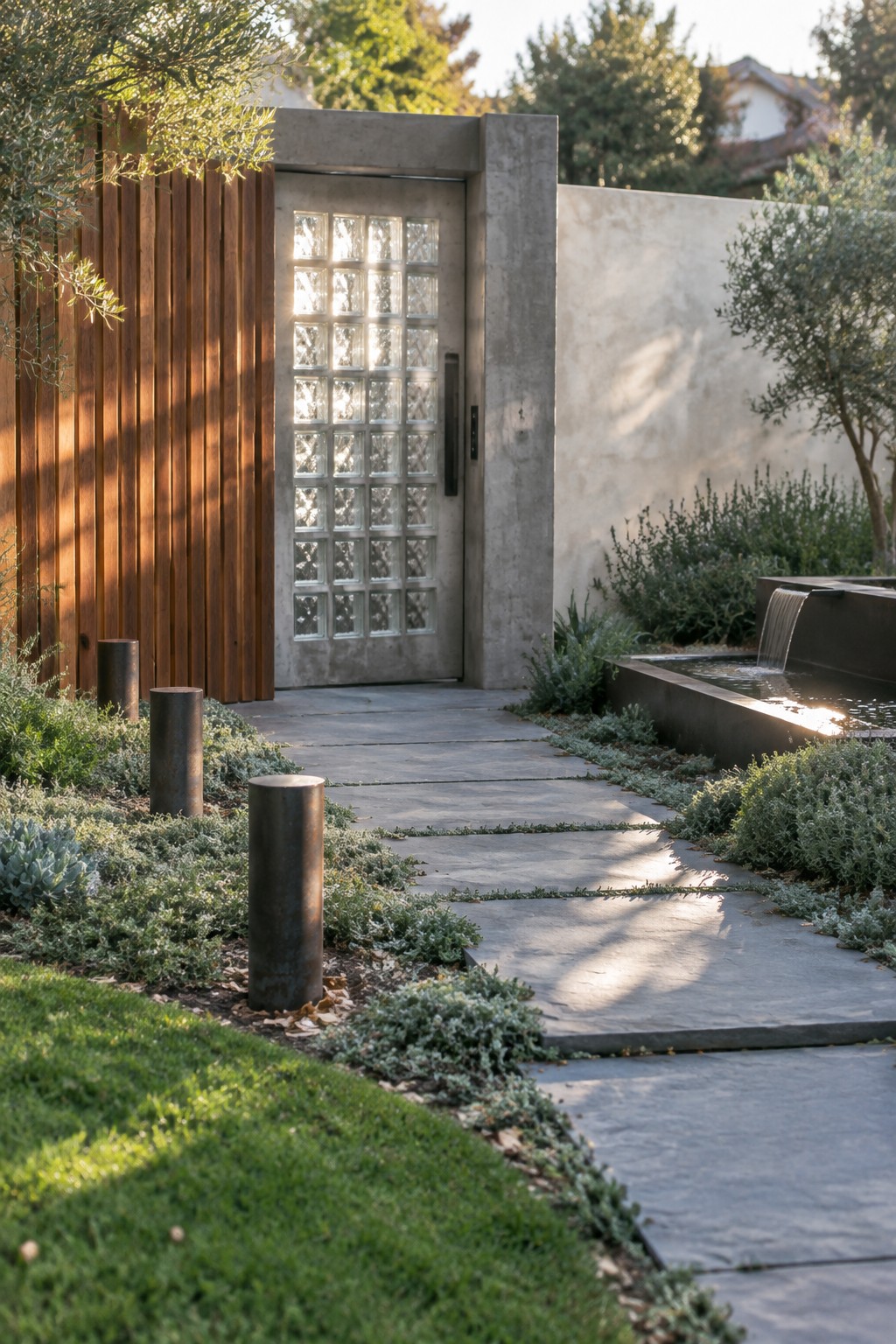
A glass block panel set into a gate gives you a clean geometric pattern that still feels solid. The repeating squares break up the surface without adding extra ornament, and they let some light reach the path on the other side while keeping the entry private.
This approach suits homes that already use concrete, stone, or simple wood siding. It works best when the block section stays modest in size so the gate keeps its strong rectangular shape. Make sure the frame around the blocks is sturdy, since the weight can add up over time.
Geometric Patterns in Driveway Gates
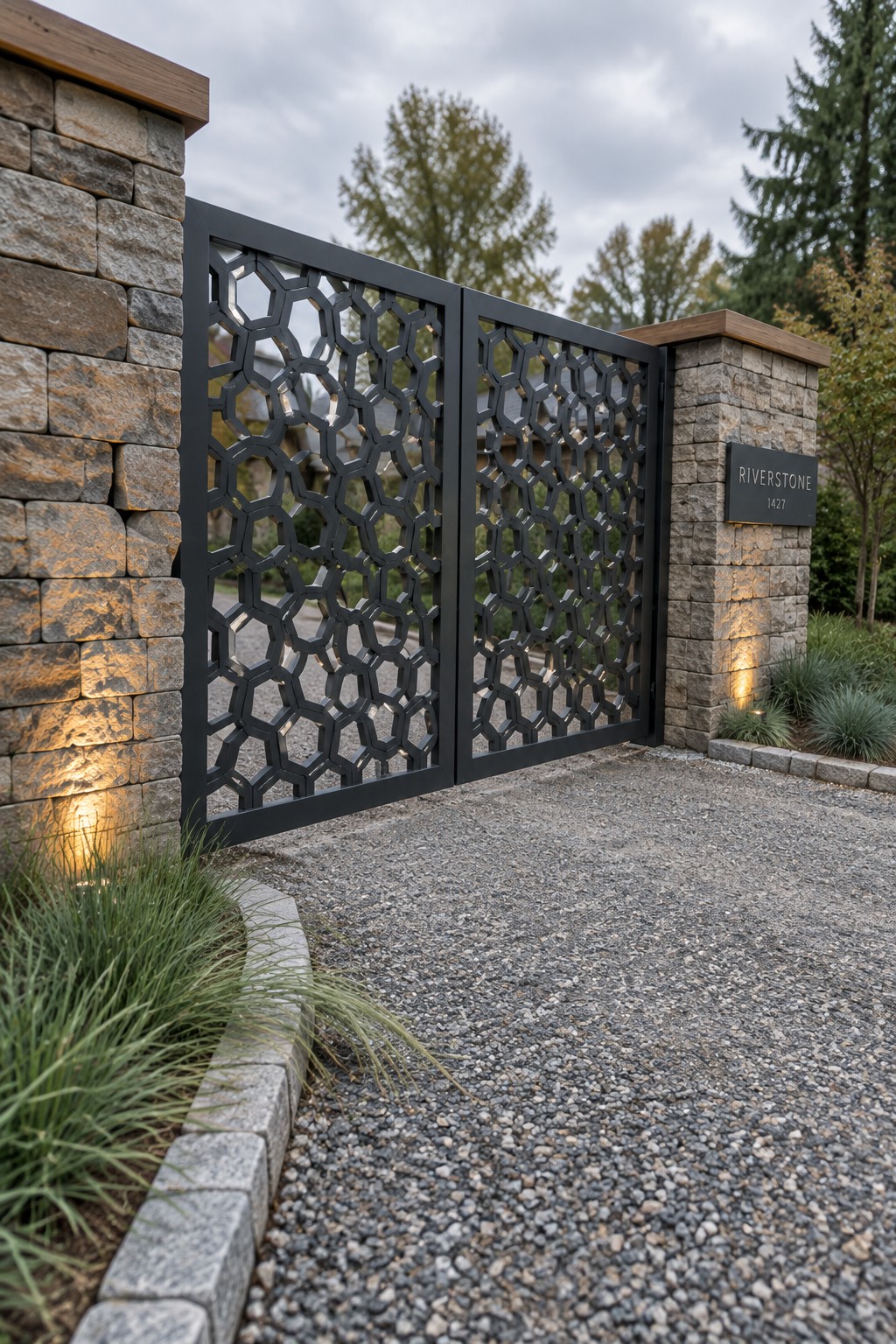
A metal gate with a repeating geometric cutout pattern gives a modern entry without looking heavy or closed in. The design keeps the gate functional for security while letting light and views pass through, which helps the whole front feel more open.
This works best on homes with simple lines and materials like stone or wood. Keep the gate color dark so the pattern stands out, and make sure the scale of the shapes matches the size of the gate itself.
Geometric Patterns On Driveway Gates
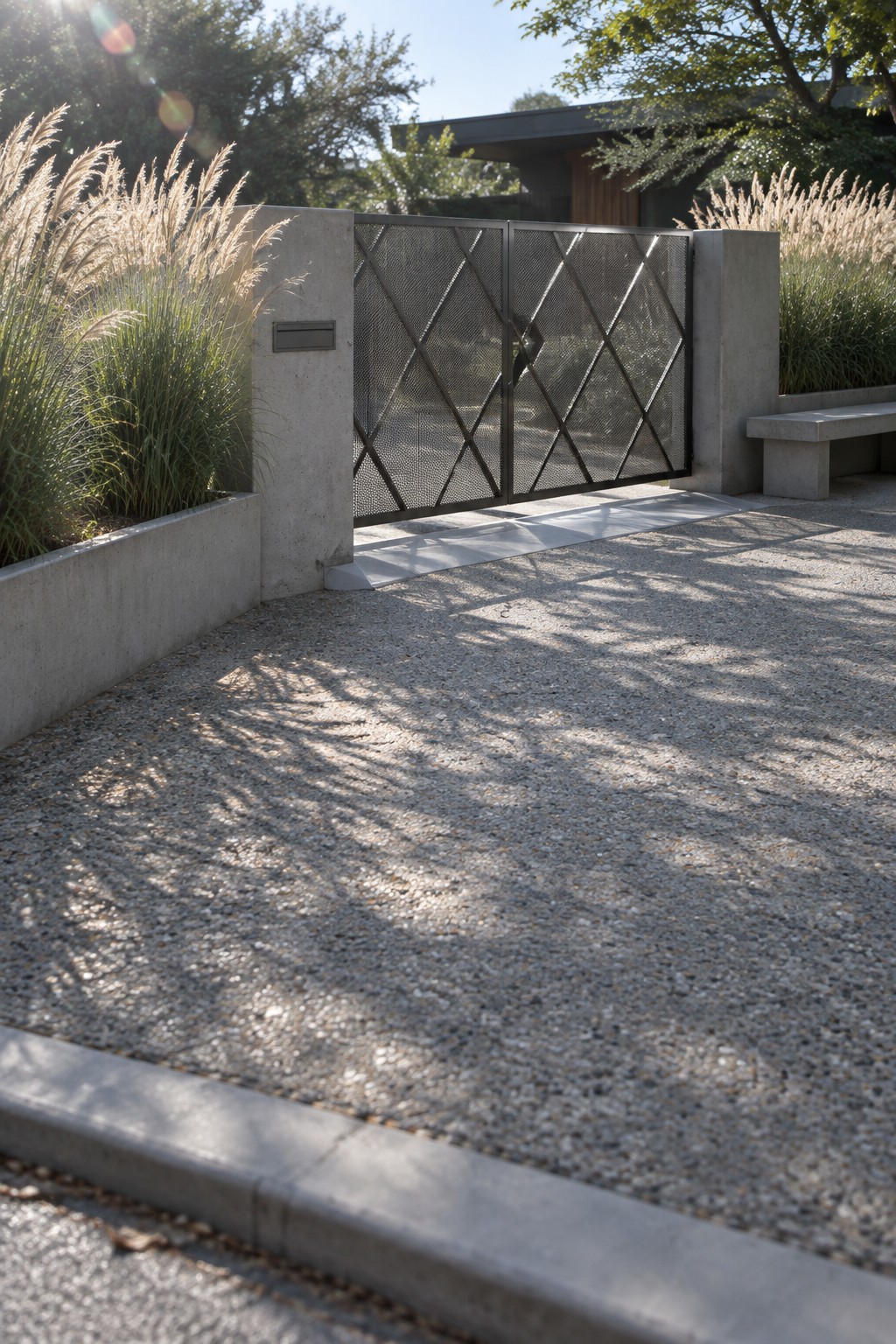
A metal gate with a clear diamond pattern gives the entrance a modern look without making the space feel closed in. The mesh lets light pass through and keeps the view open, which works especially well on gravel driveways that already have a simple, low-key surface.
This kind of gate suits homes with straight concrete walls and minimal planting. It adds structure at the entry while staying light enough not to compete with the rest of the facade. Just make sure the pattern scale matches the width of the opening so it does not look too busy up close.
Geometric Patterns on Entry Gates
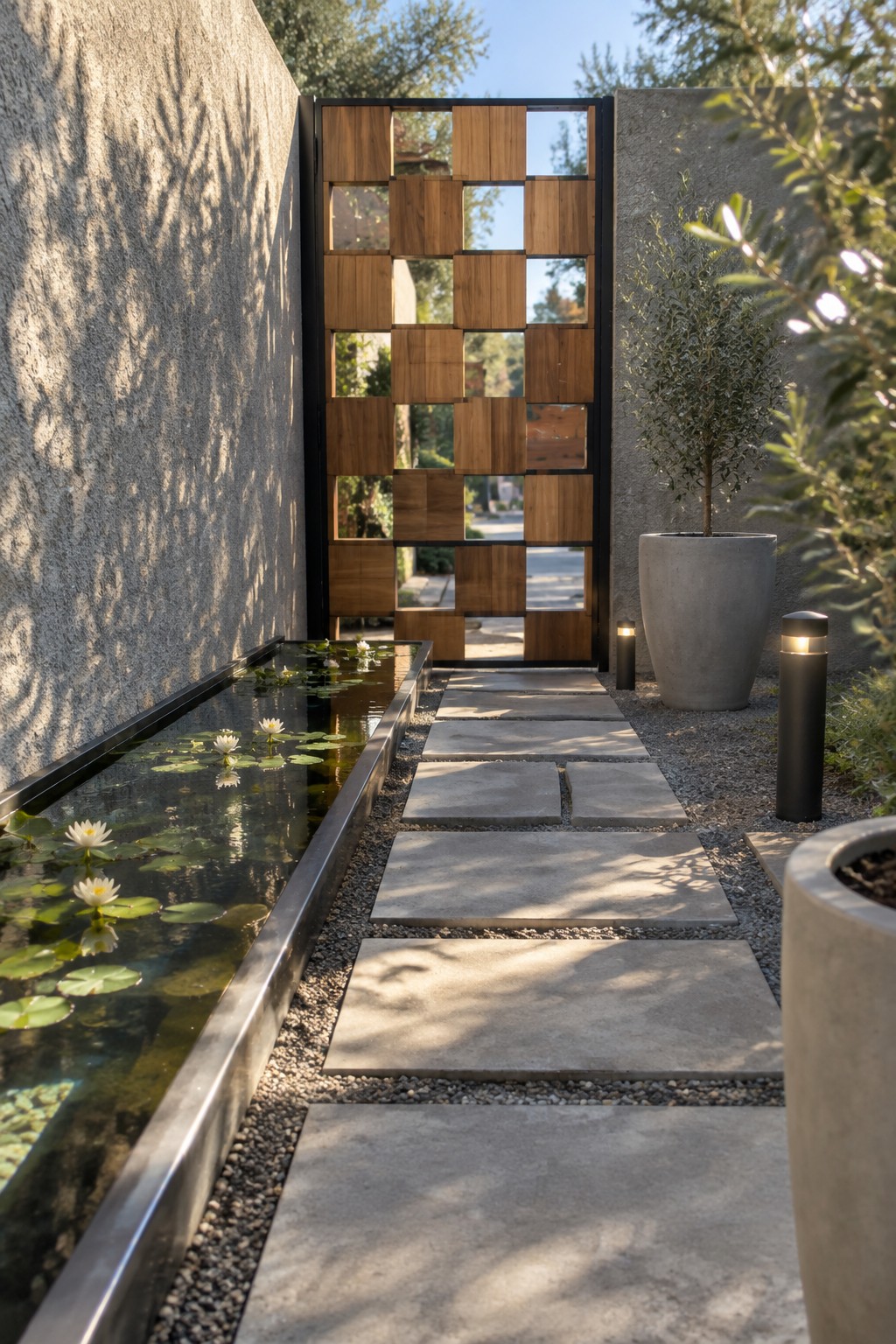
A gate built with a simple grid of wood squares inside a dark frame creates a strong but open look at the garden entry. The pattern adds visual rhythm without blocking light or views, which keeps the whole space feeling connected rather than closed off.
This approach suits modern homes with clean lines and works especially well when paired with a straight stone path. Keep the grid size large enough to read from a distance, and avoid placing it too close to heavy planting that might hide the pattern.
Vertical Glass Strips in Dark Metal Gates
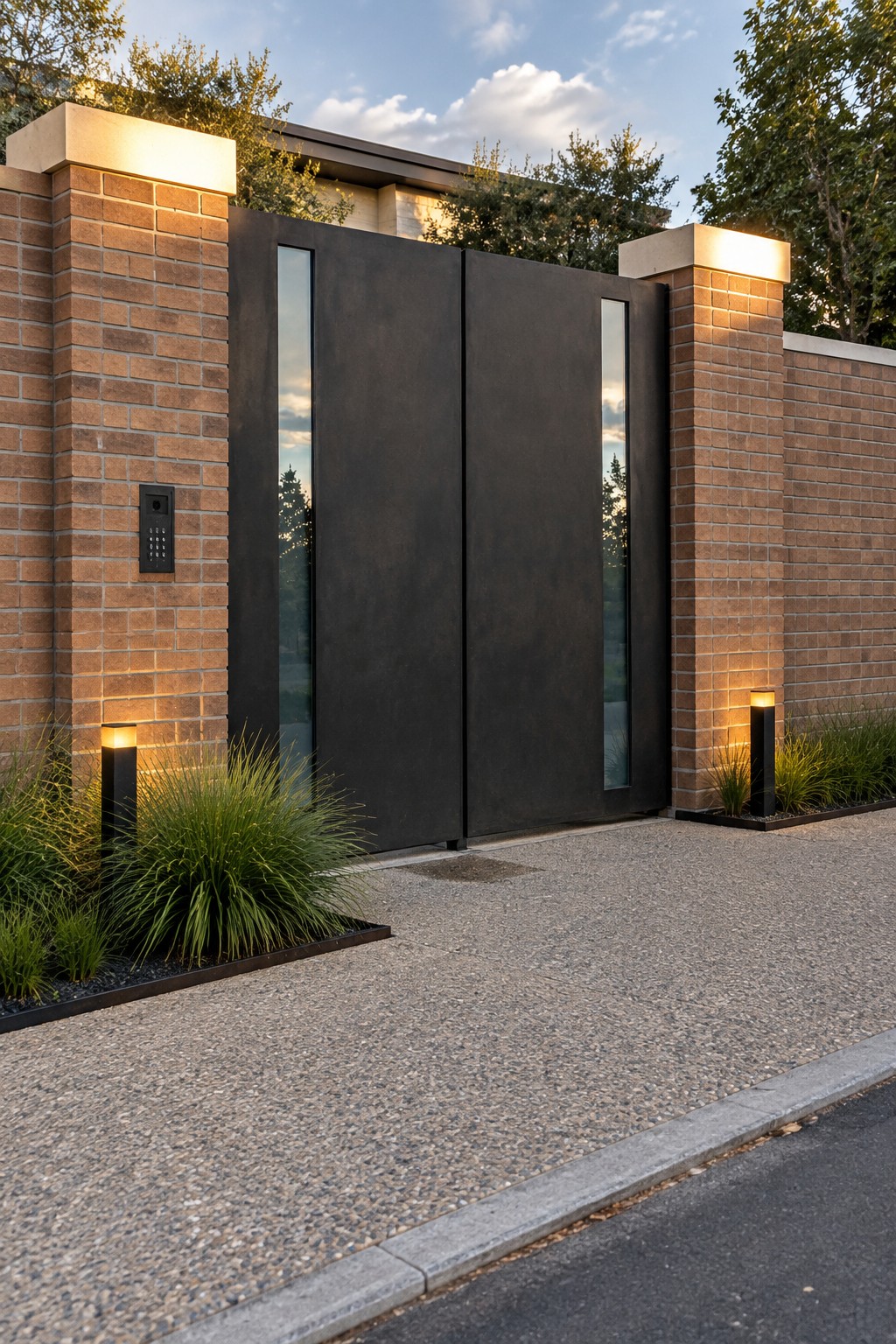
A solid driveway gate can still feel open when you add a pair of tall, narrow glass inserts. The vertical lines keep the form strong and geometric while letting the gate pick up reflections from the sky and trees nearby.
This approach works best on homes that already use simple materials like brick or concrete. The dark metal finish makes the glass stand out without adding extra detail, and the result stays easy to maintain over time.
Horizontal Corten Panels for a Simple Gate
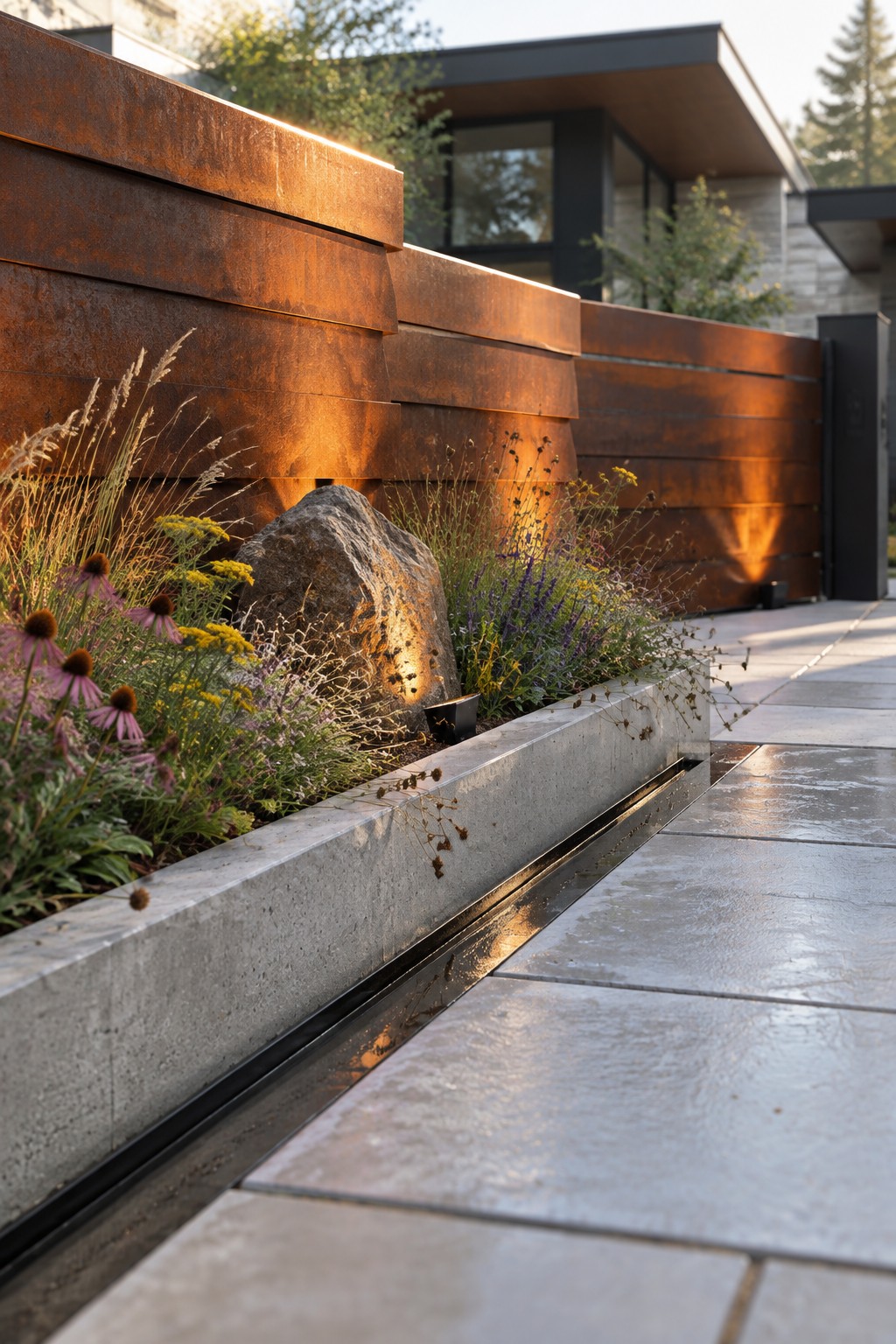
Many people like corten steel because it gives a driveway gate a strong shape without looking fussy. The horizontal panels keep the lines clean and let the material develop its own color over time.
This works best on homes that already use concrete or stone. Match the panel height to nearby walls and leave a bit of space at the bottom so planting can soften the base without hiding the geometry.
Geometric Metal Gates For Modern Entries
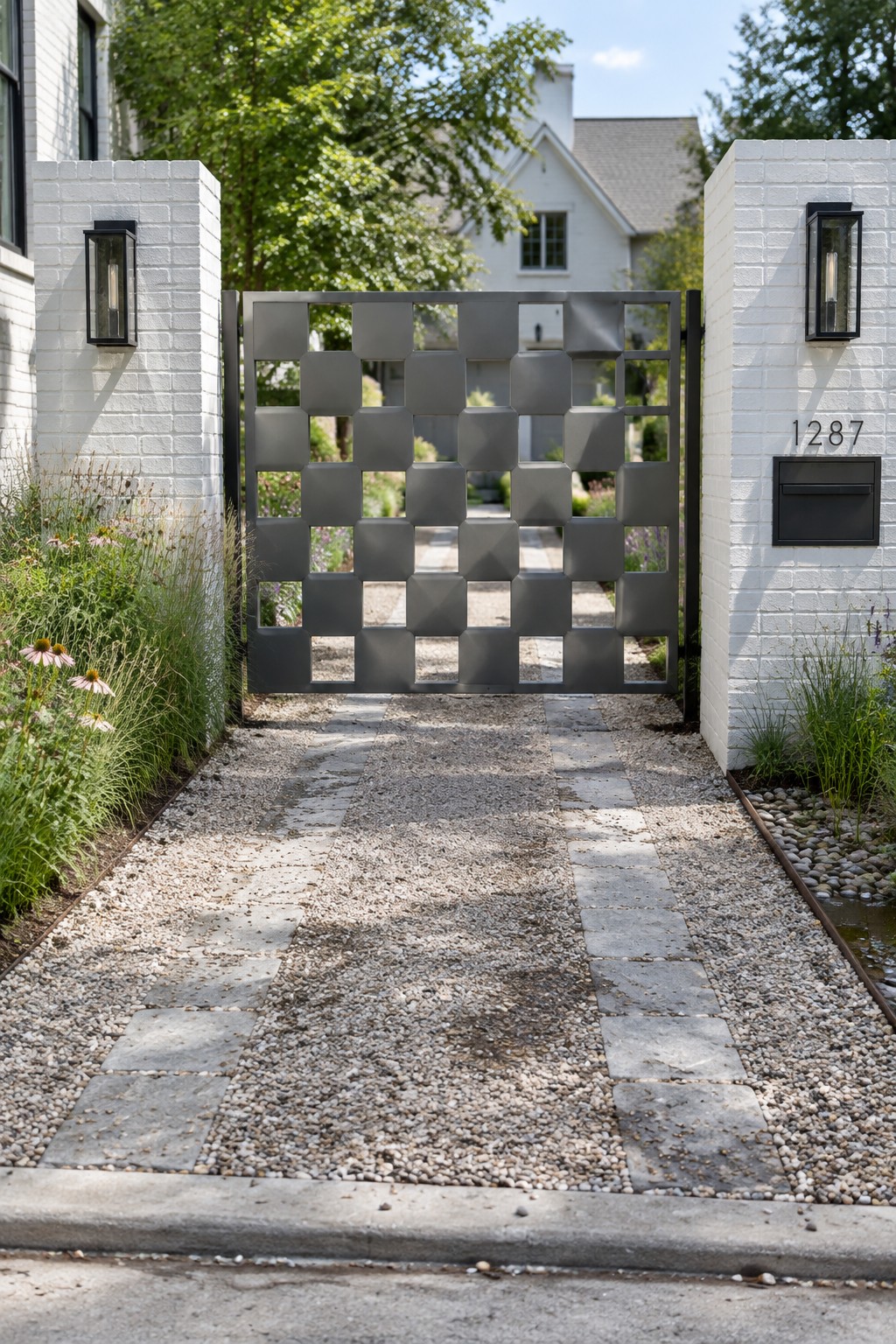
A driveway gate made from a repeating grid of squares gives the entrance a crisp modern feel while still letting light and sightlines pass through. The pattern keeps the gate from looking solid or closed off, which helps the whole front feel more open even with a clear boundary in place.
This style works best on homes with simple lines and minimal trim. Pair it with plain pillars or low walls so the gate itself stays the main focal point rather than competing with extra detail.
Vertical Lines And Low Lighting On A Metal Gate
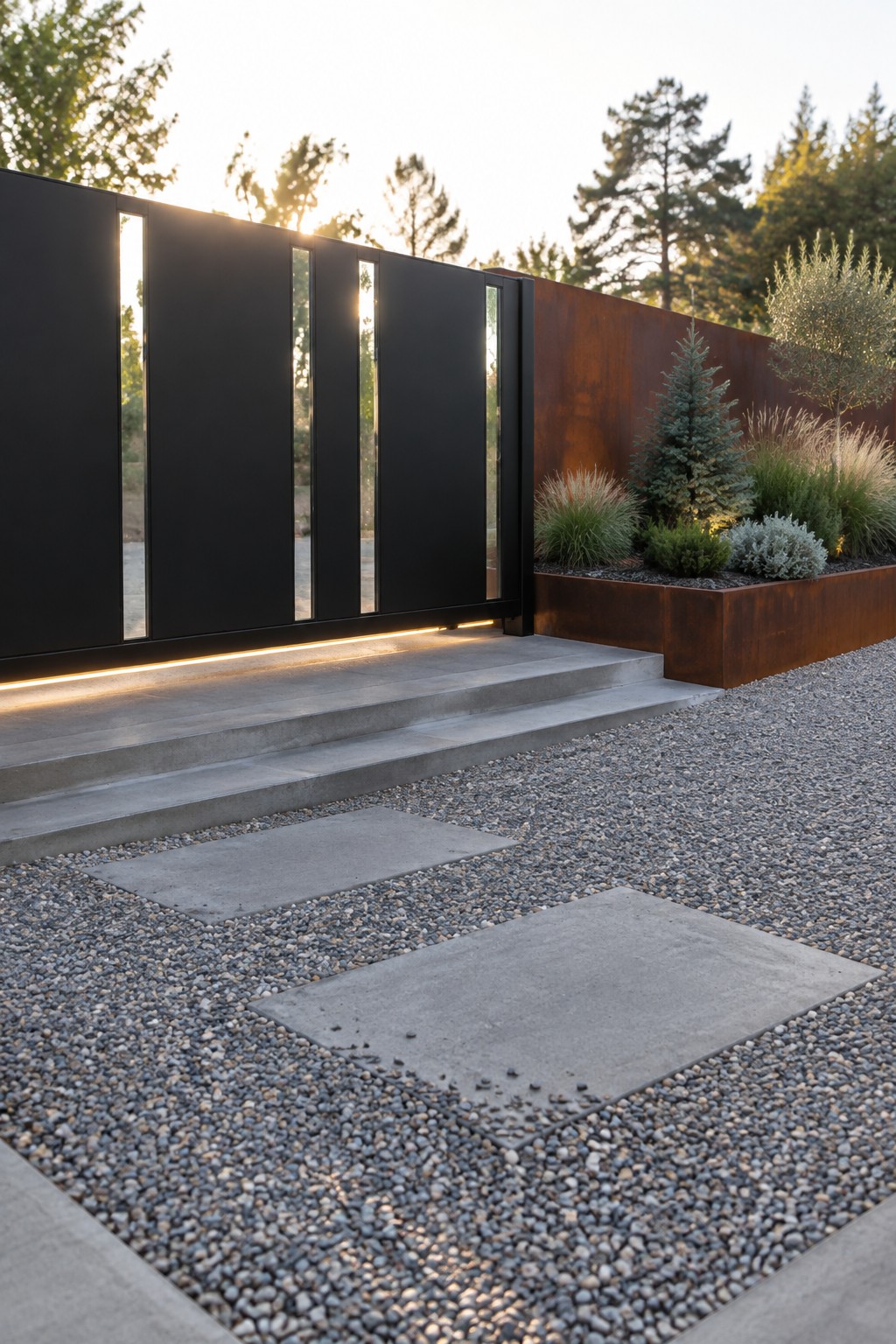
A gate built with tall vertical openings gives a modern entrance without looking too solid or closed off. The light strip along the base makes the path easy to see at night and keeps the whole thing feeling lighter.
This kind of gate works best on homes that already use simple materials like concrete, gravel, and steel. It gives privacy while still letting some view through, and the low light helps mark the entry without needing extra fixtures.
Soften Hardscape With Low Planting Beds
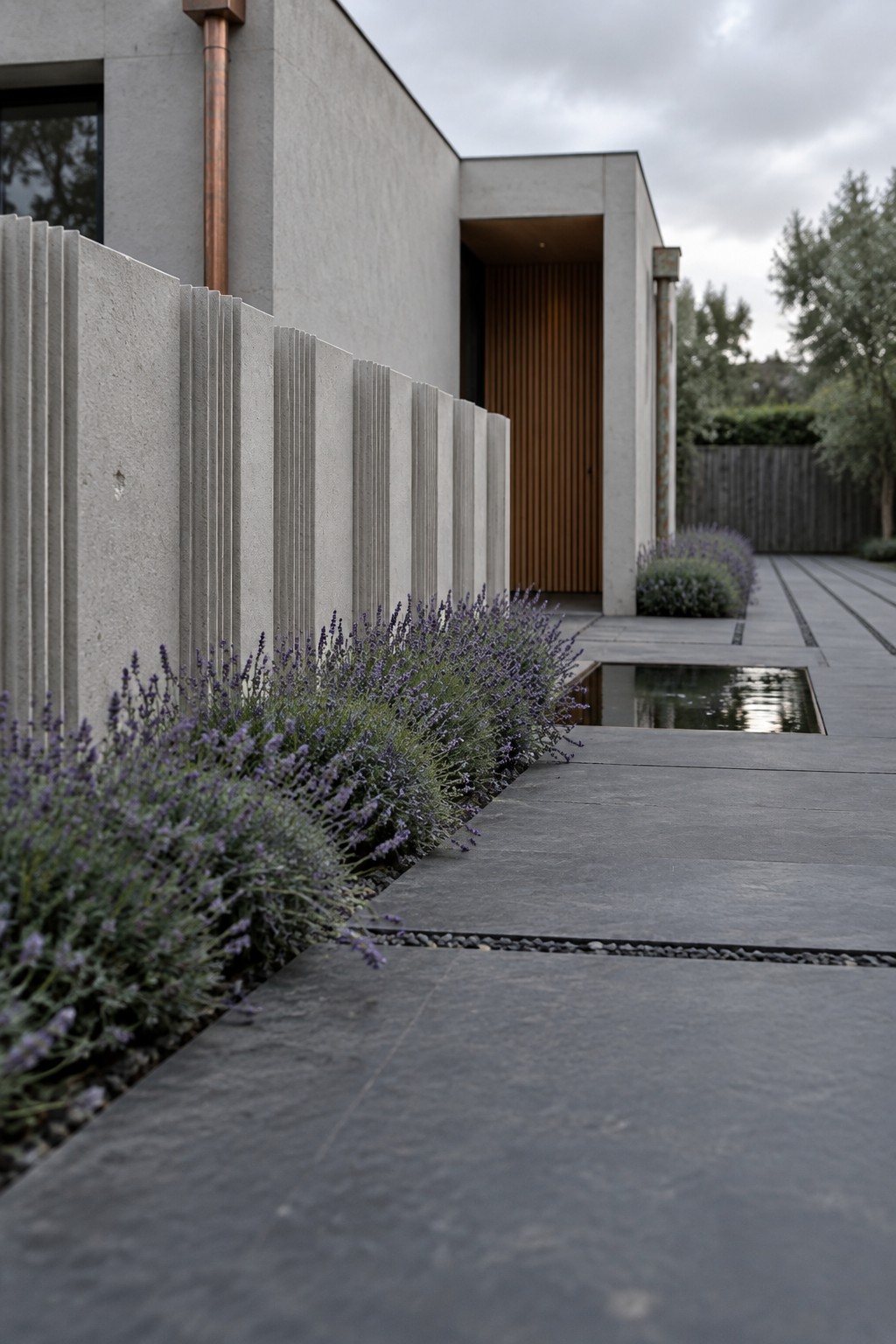
Lavender works well along modern concrete walls because the soft mounds break up the straight lines without fighting the geometry. The plants stay low enough to keep the vertical details visible while adding color and movement that changes with the seasons.
This approach suits homes with clean concrete or stone boundaries where you want some life along the edges. Keep the bed narrow and the plants dense so the line stays crisp. Watch the drainage near paving to avoid water pooling on the path.
Mix Materials in Clean Horizontal Lines
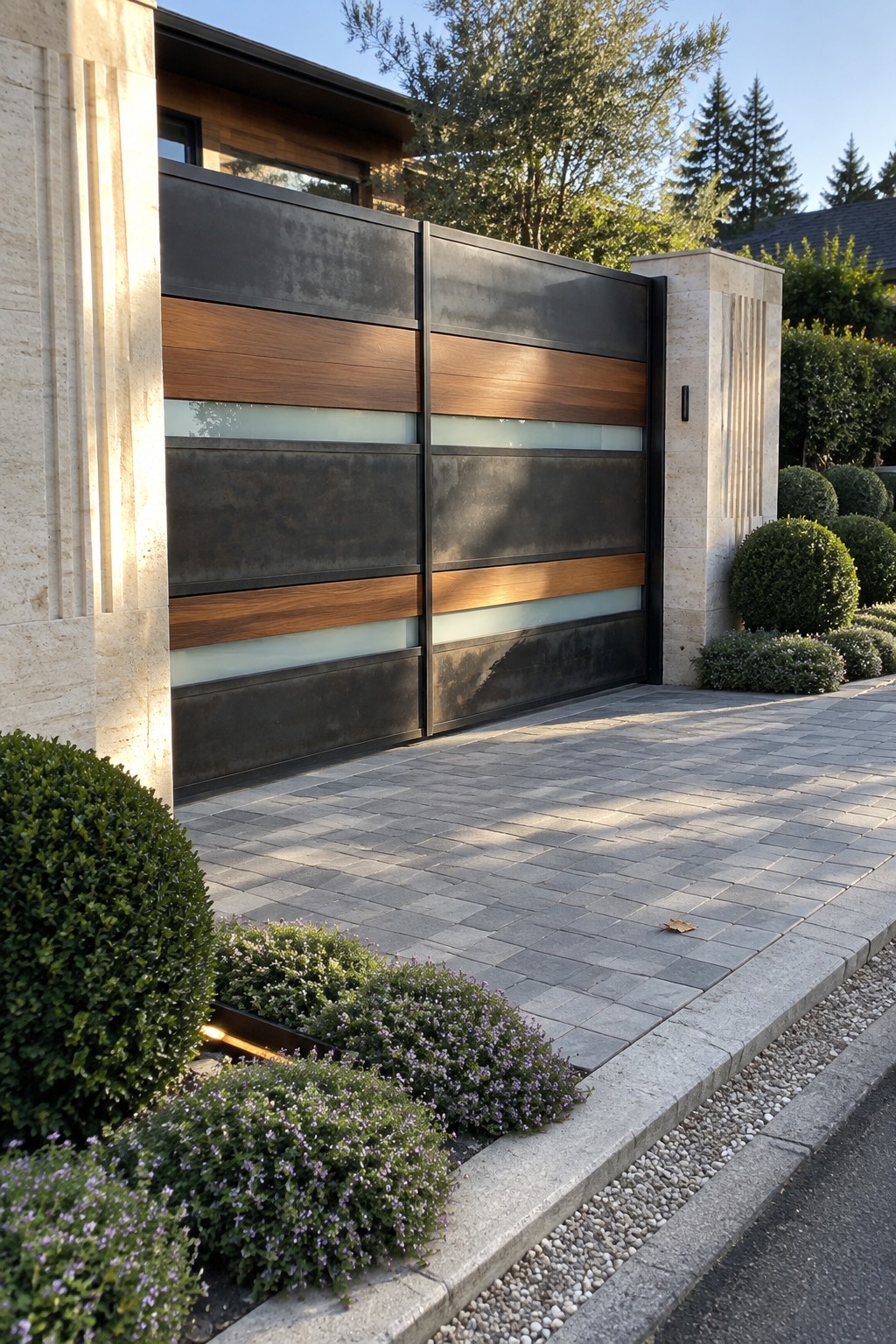
Running different materials across a driveway gate in straight horizontal bands gives the whole entry a modern feel without making it look complicated. The dark metal sections ground the design, while the wood and lighter panels add just enough contrast to keep the surface from feeling flat or heavy.
This works best on homes with simple architecture where you want the gate to stand out but still feel orderly. Keep the bands even in width and line them up across both sides so the pattern stays consistent. It suits newer builds or updated facades where clean geometry matters more than ornament.
Frequently Asked Questions
Q: How do I keep the geometric shapes from looking off balance once the gate sits in my driveway? A: Measure the full width of your opening before you order anything. Center the main panels so the vertical and horizontal lines hit the posts at equal distances on both sides.
Q: What simple step helps these gates last longer in wet weather? A: Choose a metal that already has a baked on finish. Wipe it down twice a year to stop dirt from settling into the corners and dulling the clean edges.
Q: Can the gate still look modern if my driveway curves a little right after the entrance? A: Set the gate itself on a straight section and let the fence or wall pick up the curve a few feet back. The straight geometric forms stay front and center while the rest of the layout adjusts.
