


I often find that the entrance to a driveway gets overlooked until visitors start commenting on how the whole place feels when they pull up.
Gates add structure but they also create edges where plants either soften the look or fight with the mechanics.
Clearance matters more than most people expect.
I tend to sketch out the mature size of anything I plant near moving parts before committing to a design.
Over time that approach keeps the entrance looking intentional instead of overgrown or awkward.
Frame Your Gate With Oversized Potted Plants

Large pots placed beside a gate give you height and color without the work of building permanent beds right at the entrance. They sit nicely on gravel or paving and let the gate remain the main feature while still softening the hard lines of stone and metal.
This approach works best on driveways where you want flexibility. You can move the pots for maintenance, change the plants with the seasons, and avoid roots interfering with the gate hardware or gravel surface.
Paver Paths In Gravel Suit Gate Entrances

A straight run of large pavers set into gravel gives the entry a clean line that leads right to the gate without extra planting beds crowding the space. The gravel keeps the look simple and helps with drainage, while the pavers create a stable surface that feels intentional rather than just a filler material.
This setup works best on modern homes where the gate is the main feature. Keep the side beds narrow, use low planters with grasses, and add a thin line of lighting along the edges so the path stays easy to follow after dark.
Stone Gate Posts with Lanterns
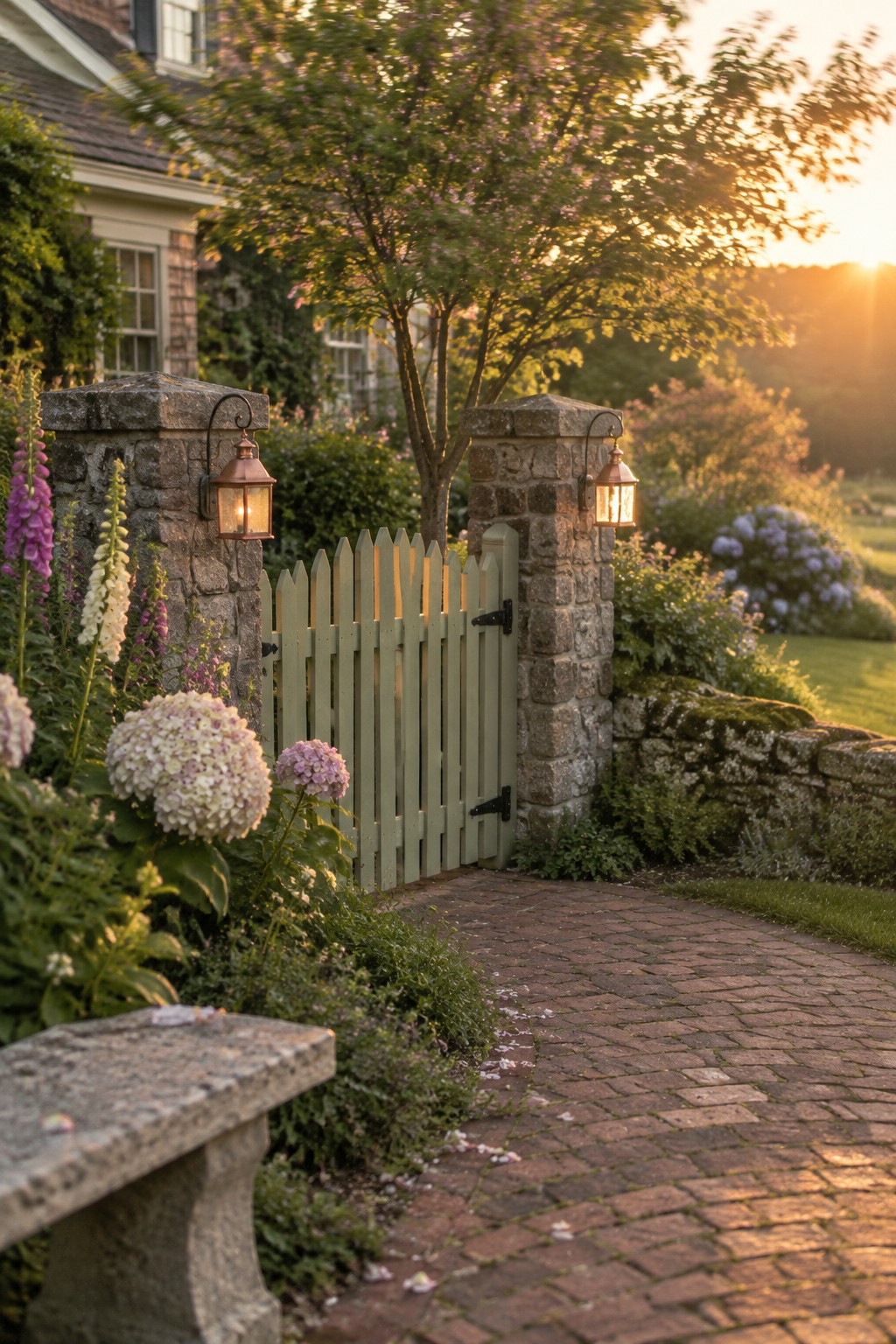
Stone posts topped with lanterns give a driveway gate a settled, traditional look that feels complete on its own. The solid base holds the eye at the entrance while the lights add a simple evening welcome without needing much else.
This setup suits older homes or cottage styles where the gate sits along a path or drive. Set the posts at the same width as the gate opening and match the lantern finish to the gate hardware. Keep plantings low and layered nearby so the posts remain the main feature.
Stone Pillars And Urns Around A Gate

One straightforward way to give a driveway entrance more presence is to set the gate between solid stone pillars and place matching urns at the base of each one. The pillars give the gate structure and weight, while the urns add a planted detail that softens the metalwork without cluttering the view.
This setup suits homes with formal or traditional architecture where the gate already has some ornamentation. Use urns in a similar tone to the stone and keep the planting simple so the gate remains the main focus. It works best on properties where the driveway has room for the pillars to sit comfortably on either side.
Stepping Stone Paths That Guide Visitors To The Gate
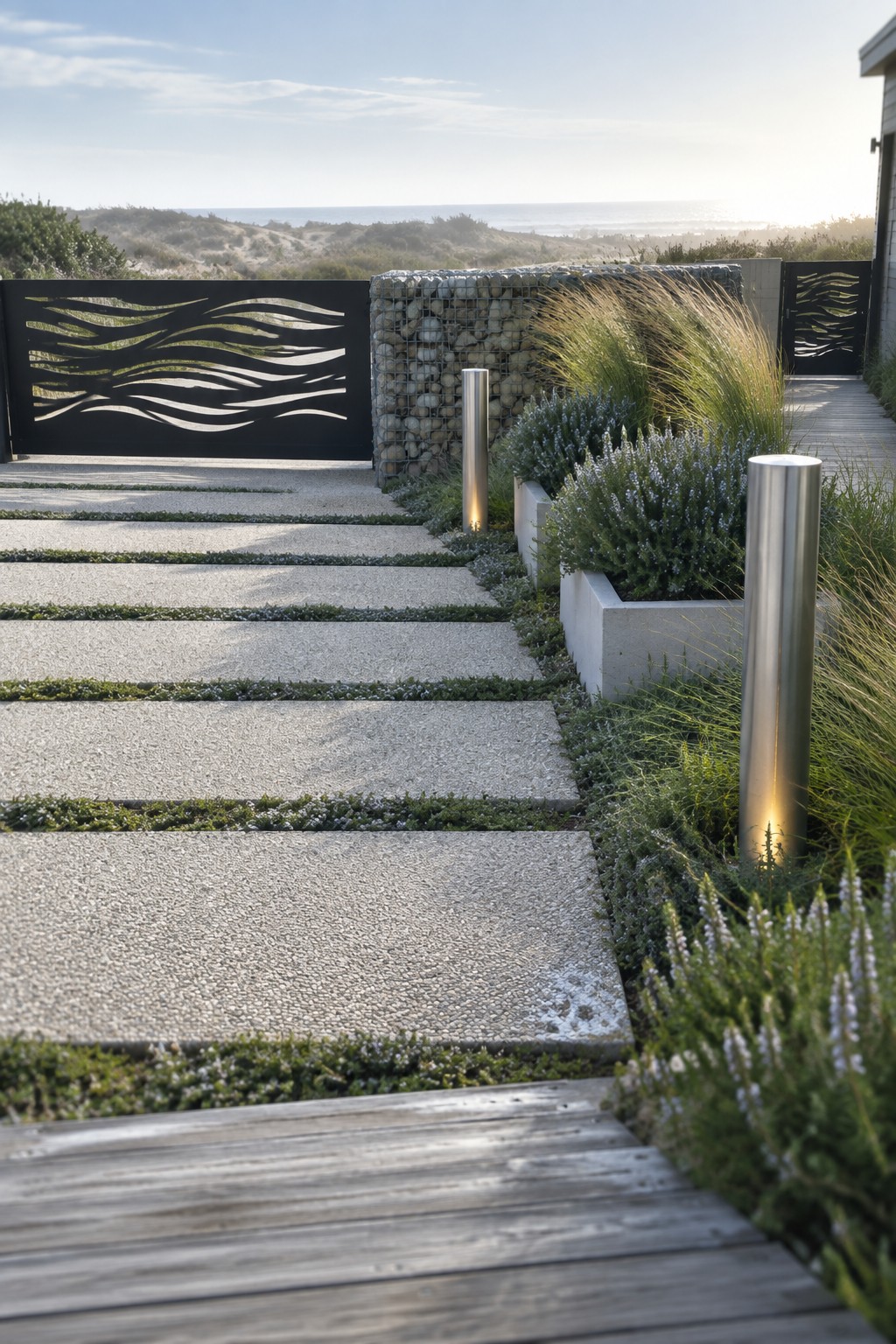
Stepping stone paths made from large concrete pavers with grass between them create a relaxed approach that still feels intentional. The gaps let planting soften the hard surface and give the whole entrance a lighter look than a solid slab of concrete would.
This setup works best on properties with a modern or coastal style where you want the gate to stand out as the main feature. Keep the plants low and simple between the pavers so they do not compete with the gate design, and add a couple of low lights along the edge if the path will be used after dark.
Stepping Stones Set In Gravel

Stepping stones laid into gravel give a path a relaxed, natural feel that still feels intentional. The look works because it keeps the surface simple while the stones break up the expanse and make walking easy. It also pairs well with a gate since the path leads the eye straight through without competing with the structure itself.
This approach suits homes with side or rear gates where a full paved driveway would feel too heavy. Keep the gravel contained with edging and choose stones that are large enough to feel stable underfoot. Low shrubs planted along the sides help tie everything together without crowding the walkway.
Curved Paths With Mixed Hardscaping Around Gate Entrances

A curved brick path set against dark gravel softens the approach to a gate and keeps the entrance from feeling too rigid. The mix of materials adds texture underfoot and gives the planting room to spill over the edges without looking messy.
This layout works best on properties where the gate sits back from the street. Keep the gravel band fairly narrow so it reads as an accent, and place a couple of large pots near the gate to mark the transition without blocking the path.
Perforated Metal Gates Add Texture to Driveway Entrances

A perforated metal gate gives an entrance real presence without shutting everything off. The pattern lets light filter through and offers just enough of a view to the other side, which keeps the whole approach from feeling heavy or closed in. Paired with simple concrete posts, it creates a clean modern frame that still feels grounded.
This works best on homes that already lean modern or minimalist, especially in drier climates where you can keep the planting low and tough. Try matching the gate finish to any rusted accents you already have, and keep the surrounding beds simple with gravel and succulents so the gate stays the main feature.
Framing Driveway Entrances With Matched Gates And Pillars

Gates set into brick pillars give a driveway a clear starting point. The solid base makes lighter gates feel more substantial, and the whole entrance reads as intentional rather than just an opening in a hedge or fence.
This approach suits homes with straight or gently curving drives where you want the entry to feel defined. Keep the pillars simple in material and scale, then add low planting at the base so the structure does not overpower the gates themselves.
Framing Your Gate with a Hedge Arch

A hedge grown into an arch over the gate turns a simple entrance into something more enclosed and welcoming. The stone path reinforces that feeling by pulling you forward through the opening rather than leaving the gate sitting alone against the planting.
This approach works best on properties where the driveway or front path already has some width. It suits older homes and gardens that can support slow-growing hedges like boxwood or privet. Keep the planting dense on both sides so the arch feels intentional instead of accidental.
Gabion Pillars With Lighting Frame The Gate

Gabion columns filled with river rock give a gate a solid base without making the whole entrance feel heavy. The built-in lights turn on at dusk and highlight the texture of the stone while keeping the path easy to follow.
This setup suits homes with modern or minimalist gates and works best on gravel or decomposed granite driveways. Keep the planting low and layered on either side so the columns stay the main feature instead of getting lost in tall shrubs.
Picket Gates With Rope Wrapped Posts

A white picket gate looks softer when the posts are wrapped in thick rope instead of left plain. The rope adds a casual, almost nautical touch that keeps the entrance from feeling too formal or stiff. It works especially well with gravel underfoot and a simple wooden walkway beyond the gate.
This approach suits beach houses or any home that wants a relaxed driveway entrance without spending much. Just make sure the rope is sturdy and the posts are set deep so everything holds up over time.
Pair a Cutout Gate with Layered Plantings

A gate with leaf cutouts can help tie the hard structure of the entrance to the soft plantings on either side. The pattern gives the eye something to follow from the metal into the beds, so the whole entry feels more connected instead of split between built and grown elements.
This works best on homes where the landscaping already has strong foliage shapes. Keep the pillars simple and let the gate pattern guide what you plant nearby, such as shrubs with similar leaf forms. It suits wooded or mature lots more than sparse new builds.
Layer Succulents and Shrubs Around a Gate

One way to make a gate feel more settled is to build planting right up against it. Low succulents in the foreground and denser shrubs behind create a simple frame that softens the metal without hiding the pattern. The tiled steps and planters add color that ties the whole entrance together.
This approach works well on homes with warm stucco or similar walls where the gate needs a little weight at the base. Keep the plants low enough that they do not block the view through the gate, and choose drought tolerant varieties if the spot gets full sun. It stays neat with minimal trimming and still looks full most of the year.
Climbing Roses Frame The Gate Entrance

Letting climbing roses grow up the posts around a gate turns a simple entry into something softer and more inviting. The vertical growth adds height and color right where you want the eye to land, and it works without crowding the path or needing a lot of extra planting space.
This approach suits homes with wooden gates and a cottage or informal garden style. Choose a strong climber that can handle some sun, and give the posts a sturdy frame so the vines have room to spread as they fill in over the years.
Frequently Asked Questions
Q: Will vines take over my gate if I plant them nearby?
A: Choose slower vines like climbing hydrangea instead of ivy. Trim them back a couple times a year to keep control. This way they add softness without becoming a problem.
Q: How can I stop the soil from washing away near the driveway?
A: Build a low border with stones or bricks along the edge. Plant ground covers that hold the dirt in place. Water gently until the roots settle in.
Q: Do I need to match the gate color with my plant choices?
A: Not really. Focus on textures and shapes that contrast nicely. Dark gates pop against bright flowers while wood gates blend with greens.
