

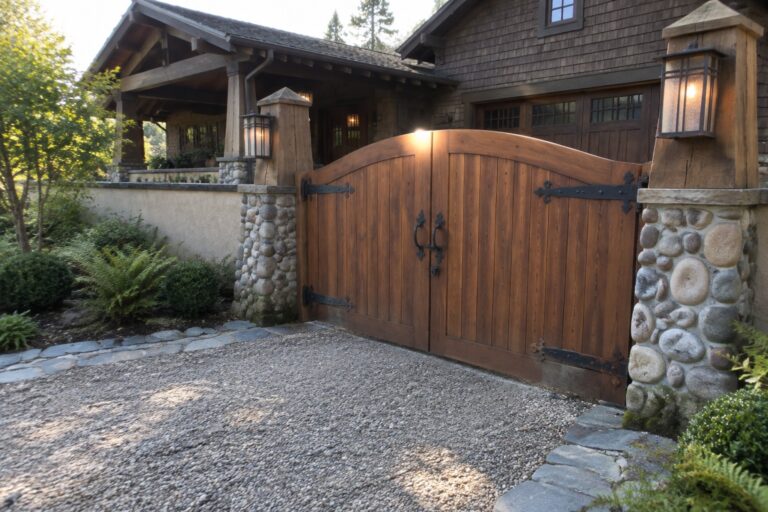
The driveway gate is often the first architectural element people notice when they approach a home.
Craftsman detailing with its emphasis on joinery and sturdy materials can turn a simple entry into something that feels intentional and lasting.
I have found that gates which pick up on the same trim profiles as the house itself tend to make the facade read as more unified.
Proportion plays a bigger role than most realize when the gate has to work with existing fencing or plantings.
Adapting these concepts requires looking at how the design holds up from the actual viewing angle on the street.
Wood Gates That Match the Home’s Materials
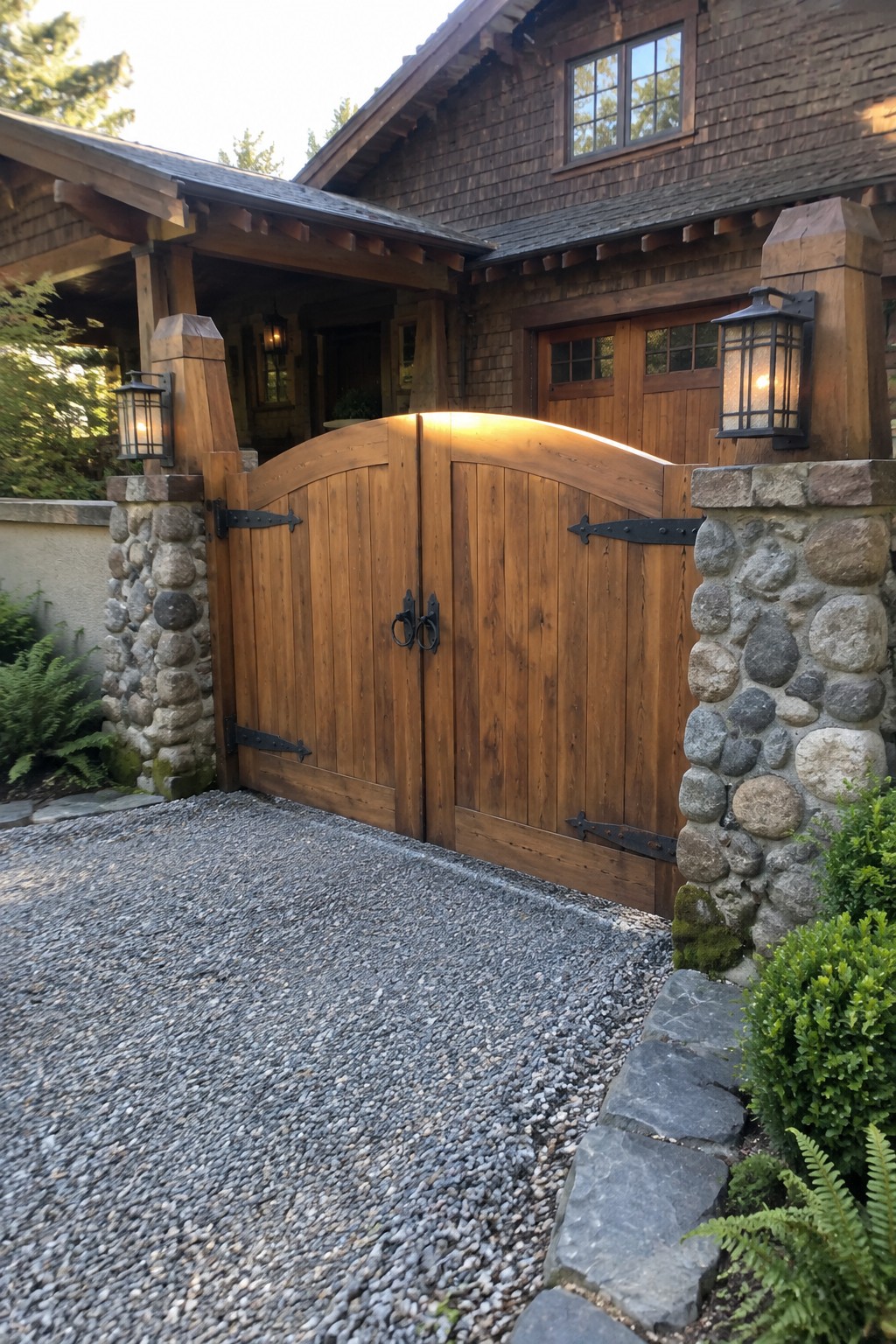
A wooden driveway gate stands out when it uses the same wood tones and simple lines already present on the house. The arched shape and dark metal straps help the gate feel like a natural extension of the siding and trim rather than an added piece.
This approach works best on Craftsman homes that already mix wood with stone. Keep the gate design straightforward so the materials do the work, and match the hardware color to any other exterior metal details on the property.
Vertical Wood Slats Give a Gate Real Presence
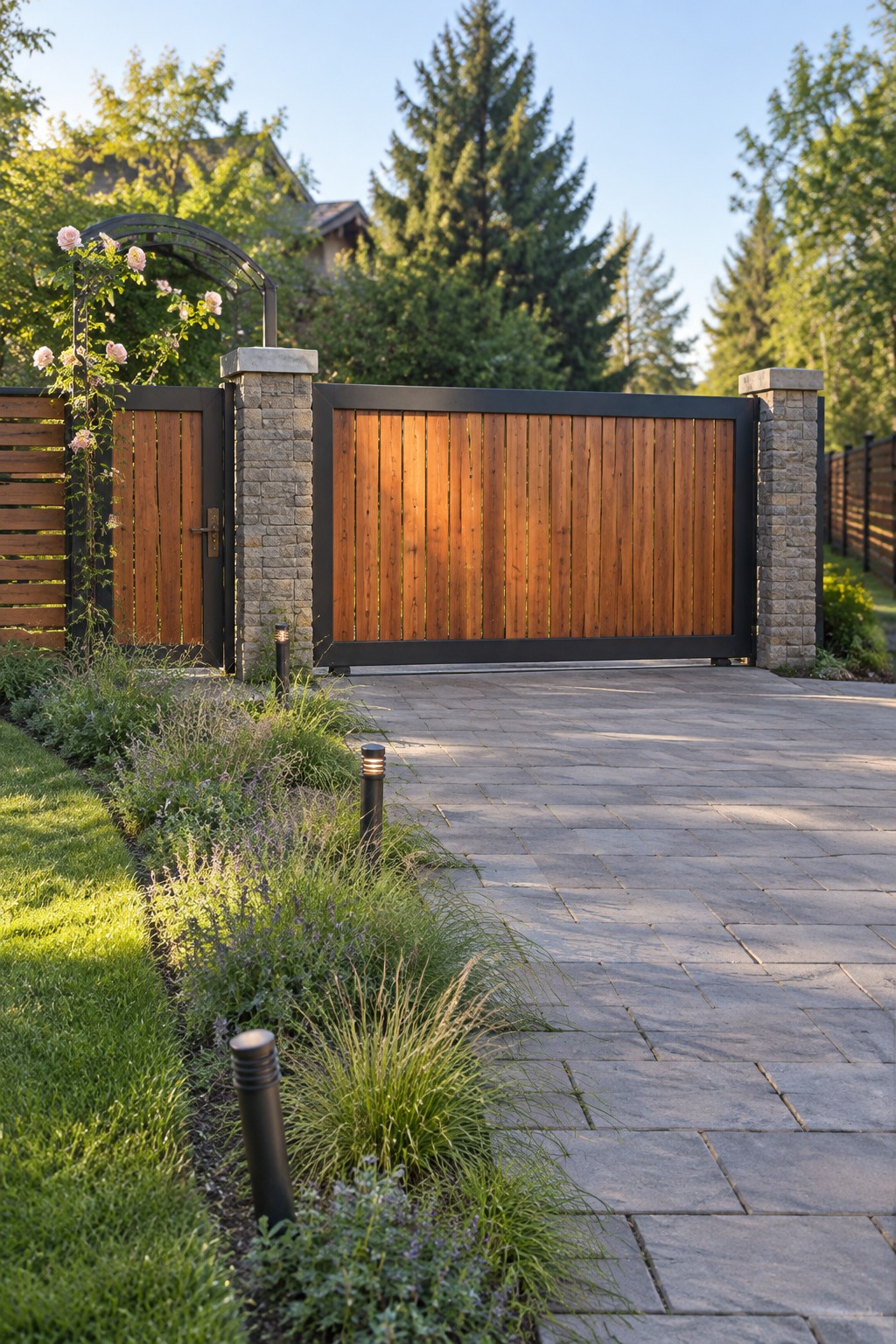
A gate made with vertical wood slats set inside a dark frame stands out because the lines feel solid and orderly. The wood brings warmth while the frame keeps everything crisp and defined. Stone pillars on either side add weight so the whole entry feels grounded instead of light or flimsy.
This approach works best on Craftsman homes or any house that already uses natural materials. Keep the wood tone consistent with other exterior woodwork and let the stone match your foundation if possible. Just make sure the gate sits level with the pillars so the proportions stay balanced.
Painting the Gate to Match the Trim
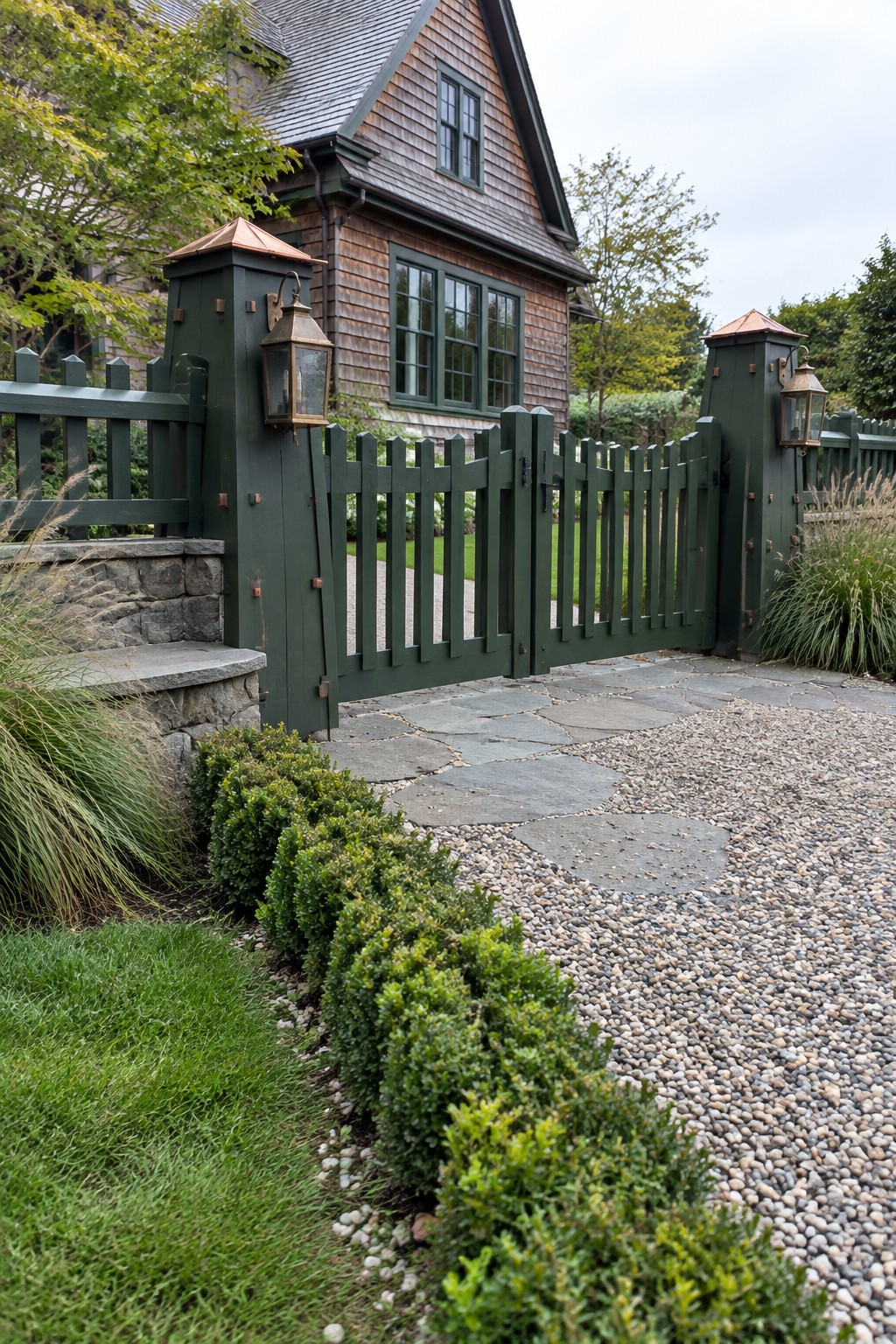
A dark painted gate that lines up with the house trim is one of those small choices that makes the whole front look finished. It keeps the entry from feeling like an afterthought and lets the gate blend into the architecture instead of standing out as a separate piece.
This approach works best on homes that already have strong trim color, like many Craftsman styles. Just check that the paint you pick holds up on a gate that gets opened and closed often, and consider adding simple metal caps on the posts if you want a little contrast without breaking the match.
Wood Gates Between Stone Pillars
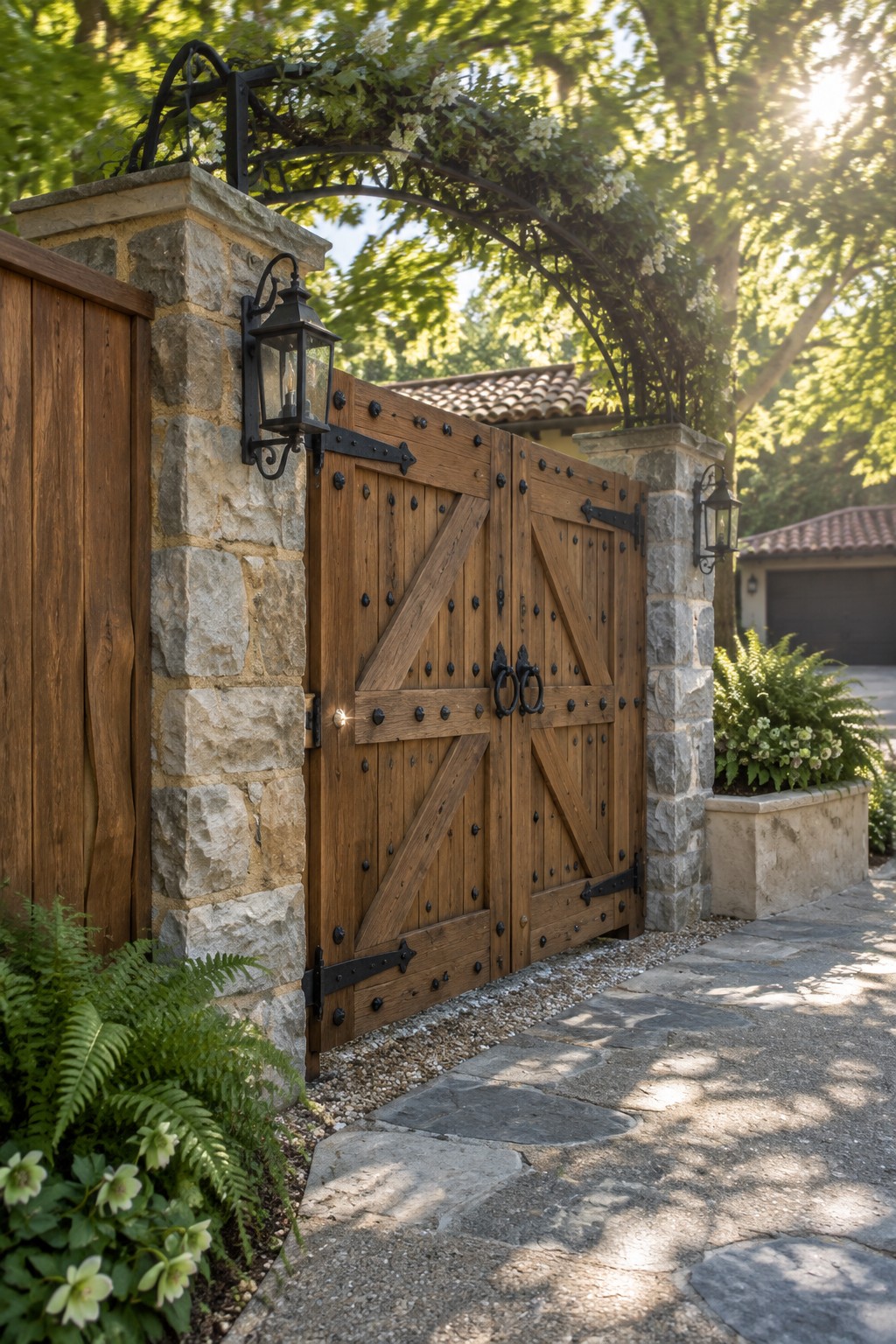
A wood gate set between stone pillars gives a driveway entrance real weight without feeling closed off. The thick planks, simple diagonal bracing, and dark iron hardware create a clear boundary that still feels tied to the house rather than added on later.
This setup works best on homes that already use stone or natural wood somewhere on the exterior. Keep the gate color close to your siding or trim so the whole entry reads as one deliberate choice instead of separate pieces.
A Wooden Driveway Gate That Matches The House
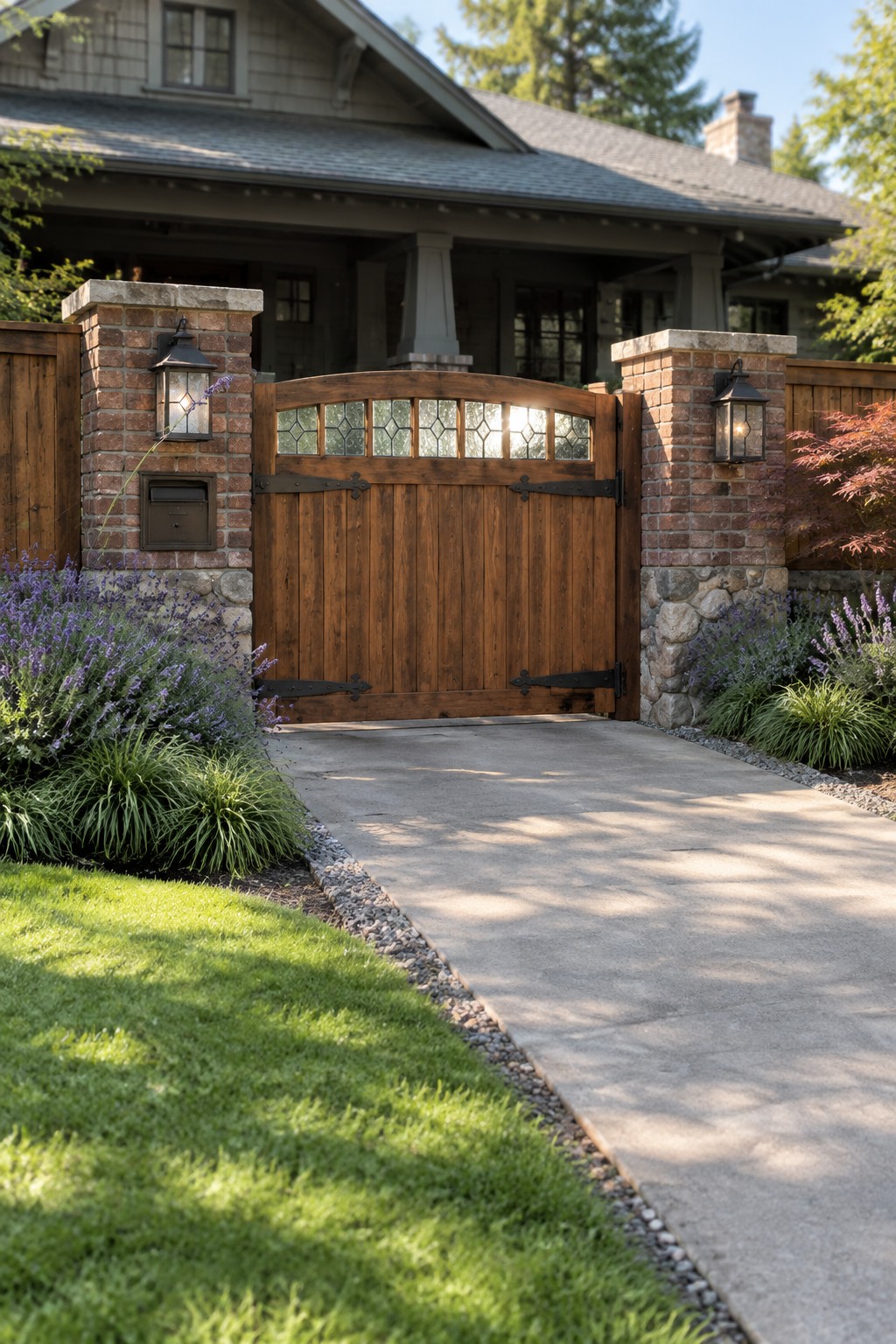
A solid wood gate with an arched top and a row of glass panels across the upper section gives the whole front a more finished and intentional look. It turns what could feel like a plain opening into something that actually belongs with the rest of the house.
This works best on Craftsman homes that already use wood siding and stone or brick details. Match the gate color to the trim or siding, keep the hardware dark and simple, and make sure the supporting pillars have enough visual weight so the gate does not look stuck on.
Horizontal Slats On Craftsman Driveway Gates
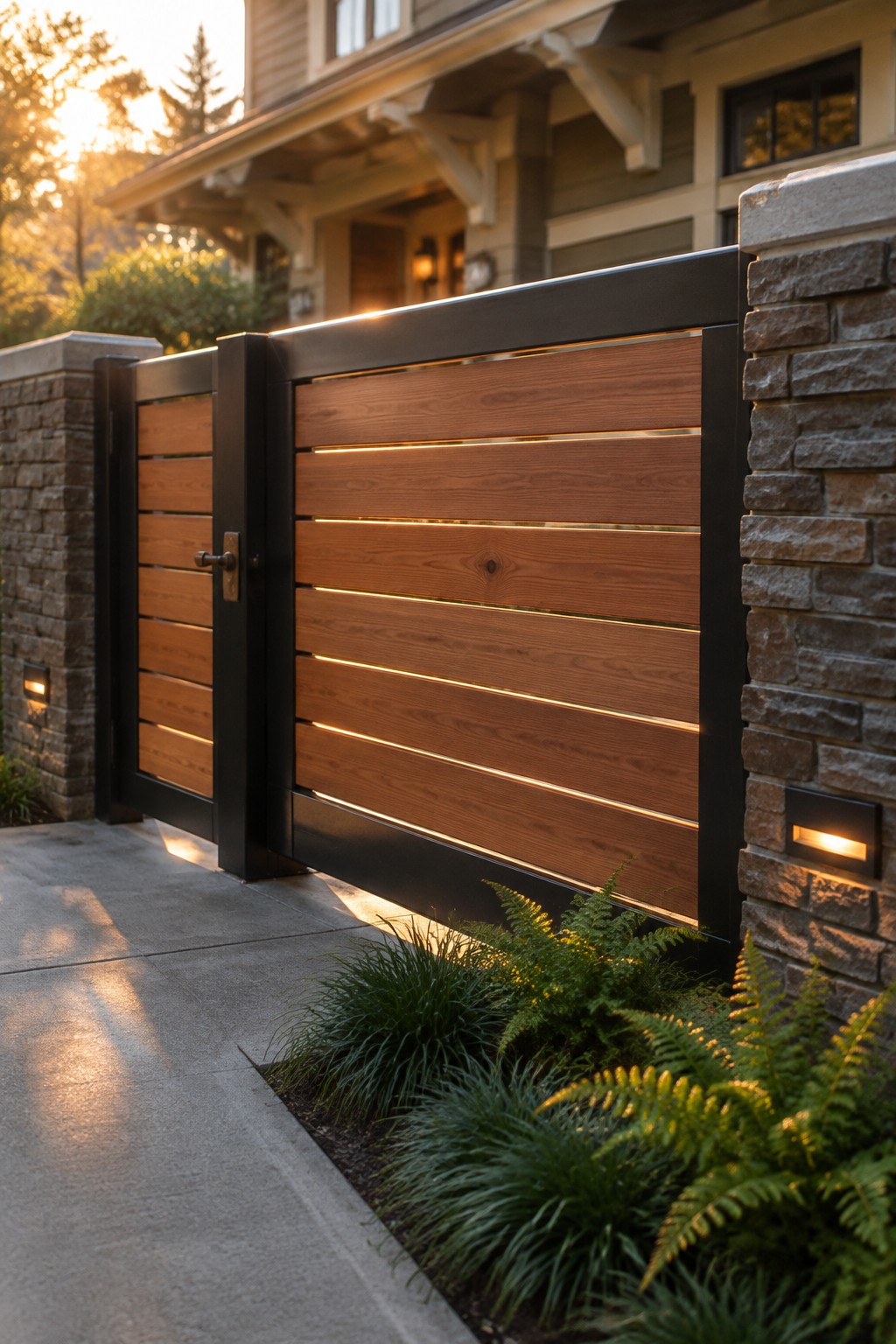
Many people like horizontal wood slats on a driveway gate because the lines feel steady and simple. They give the gate a clear structure that fits the Craftsman look without adding extra trim or decoration.
This style works best on homes that already use wood and dark metal together. Place the gate between stone pillars if you want a bit more weight at the edges, and consider running a thin light strip along a few slats so the entrance stays visible after dark.
Timber Frame Over a Driveway Gate Adds Weight and Welcome
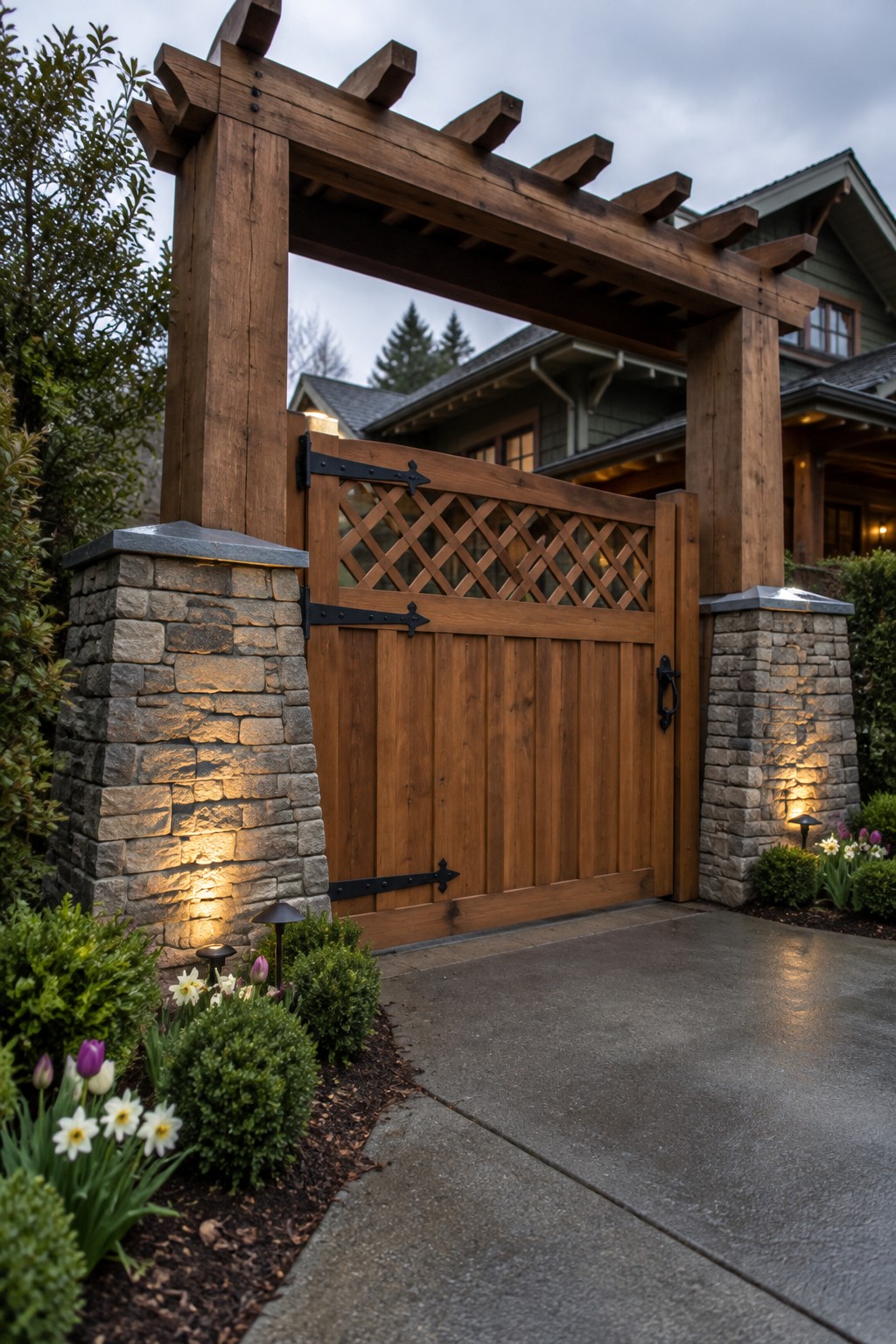
A simple gate can feel thin on its own, but setting it under a timber frame changes the whole entry. The overhead beams and side posts give the gate real presence and help it read as part of the house rather than just a barrier at the sidewalk.
This setup works best on Craftsman homes or any style that already uses exposed wood and stone. Match the gate wood to your exterior trim and keep the stone pillars at a similar scale to the gate so the whole thing feels built in rather than added on later.
Wood Gates Between Stone Pillars
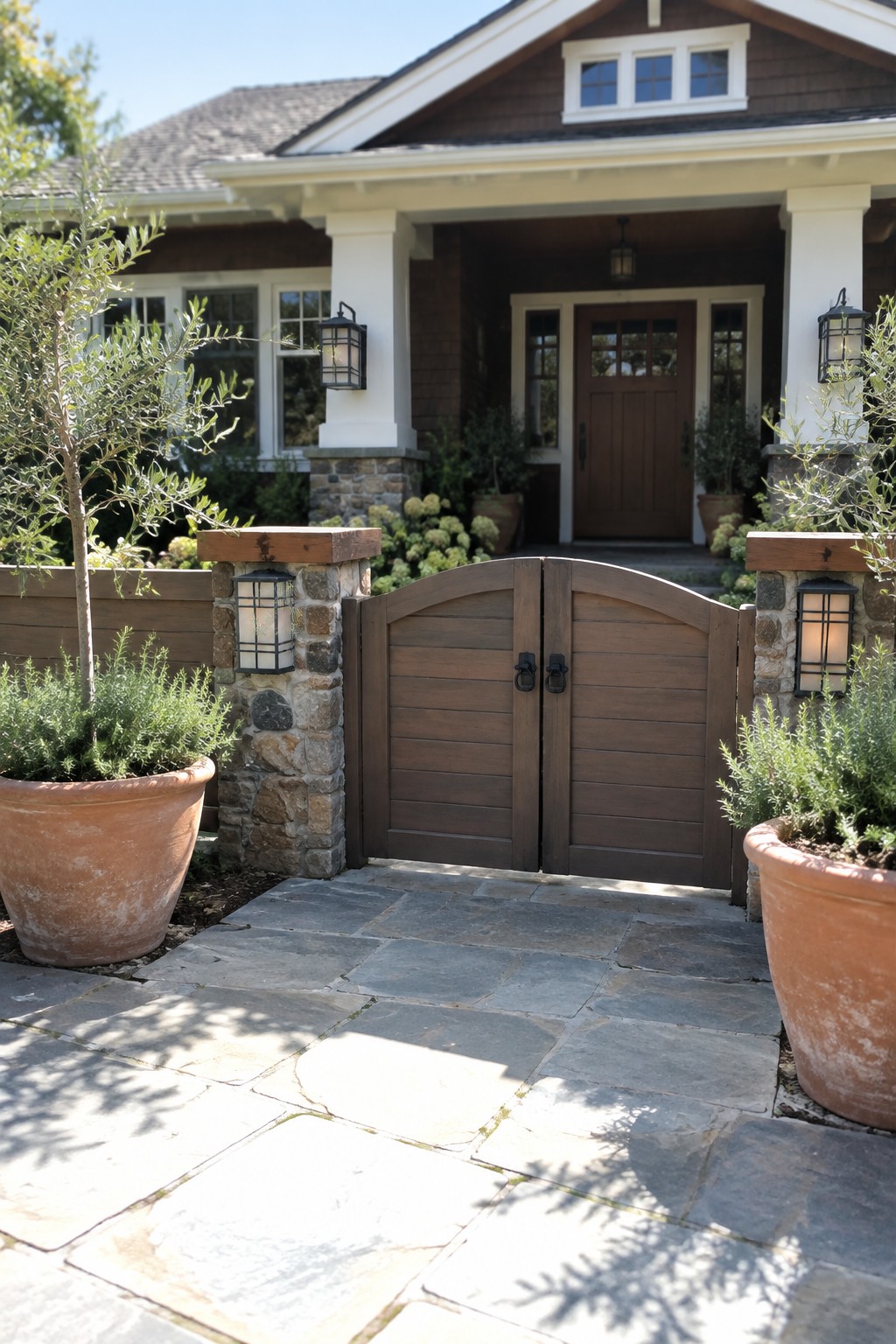
A wood gate set between stone pillars gives the front entry a clear boundary without blocking the view of the house. The simple horizontal boards and slight arch keep the gate from feeling heavy, while the stone adds weight and texture that matches the foundation and porch columns.
This approach works best on Craftsman homes that already use wood and stone together. Match the gate color to the trim or door, and keep the pillars low enough that they do not overpower the walkway. The lanterns on the posts are optional but help mark the entrance after dark.
Match The Gate Frame And Wood To The House
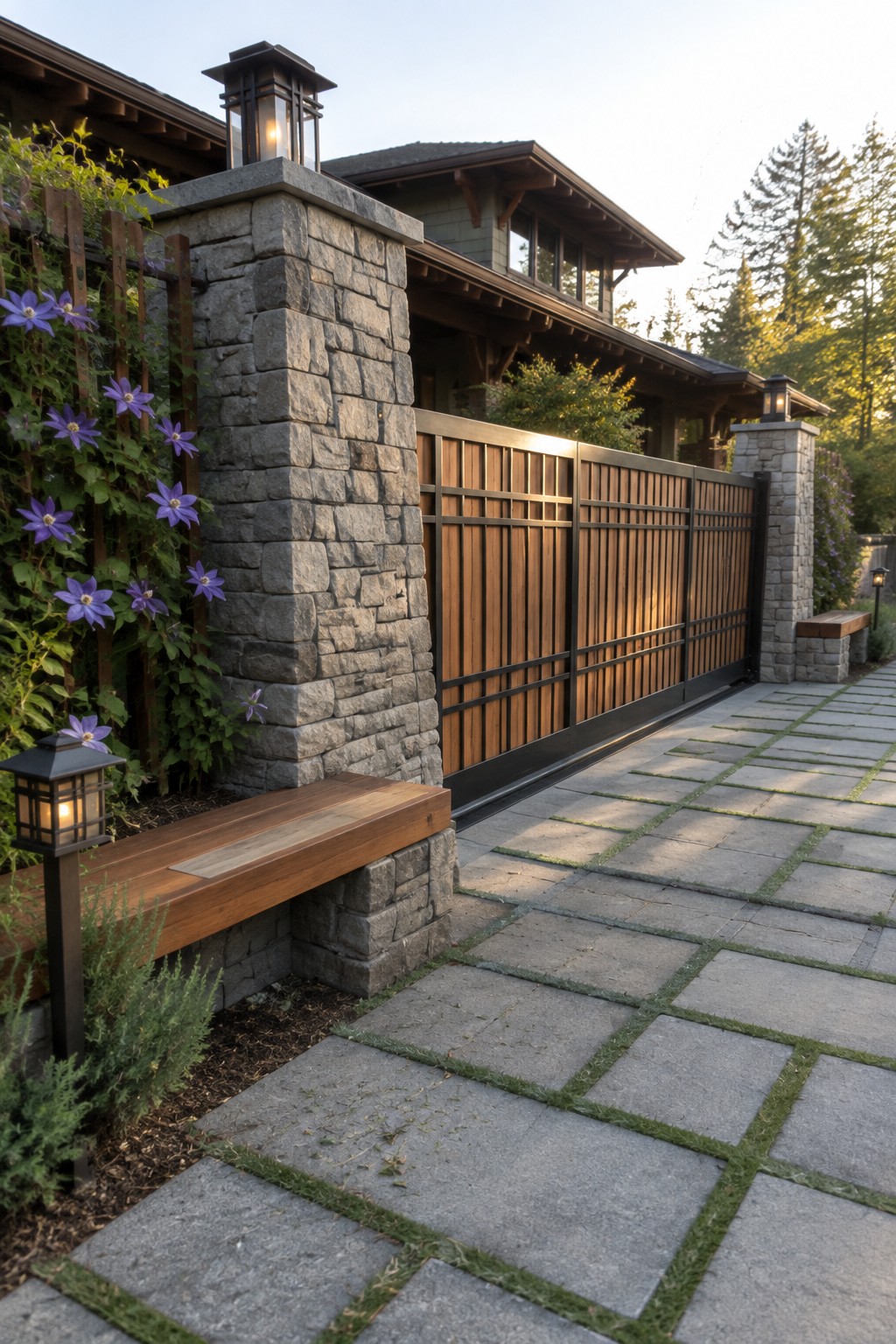
A driveway gate stands out more when it uses the same wood tones and dark metal accents already on the house. The slatted wood panels and simple metal grid here line up with the trim and beams on the home, so the whole entry feels like one planned piece instead of an afterthought.
This approach works best on Craftsman or bungalow homes where wood and stone already show up on the facade. Keep the gate height modest, use the same finish on the metal, and let the stone pillars carry the weight so the gate does not fight the architecture.
Wooden Driveway Gates With Stone Pillars
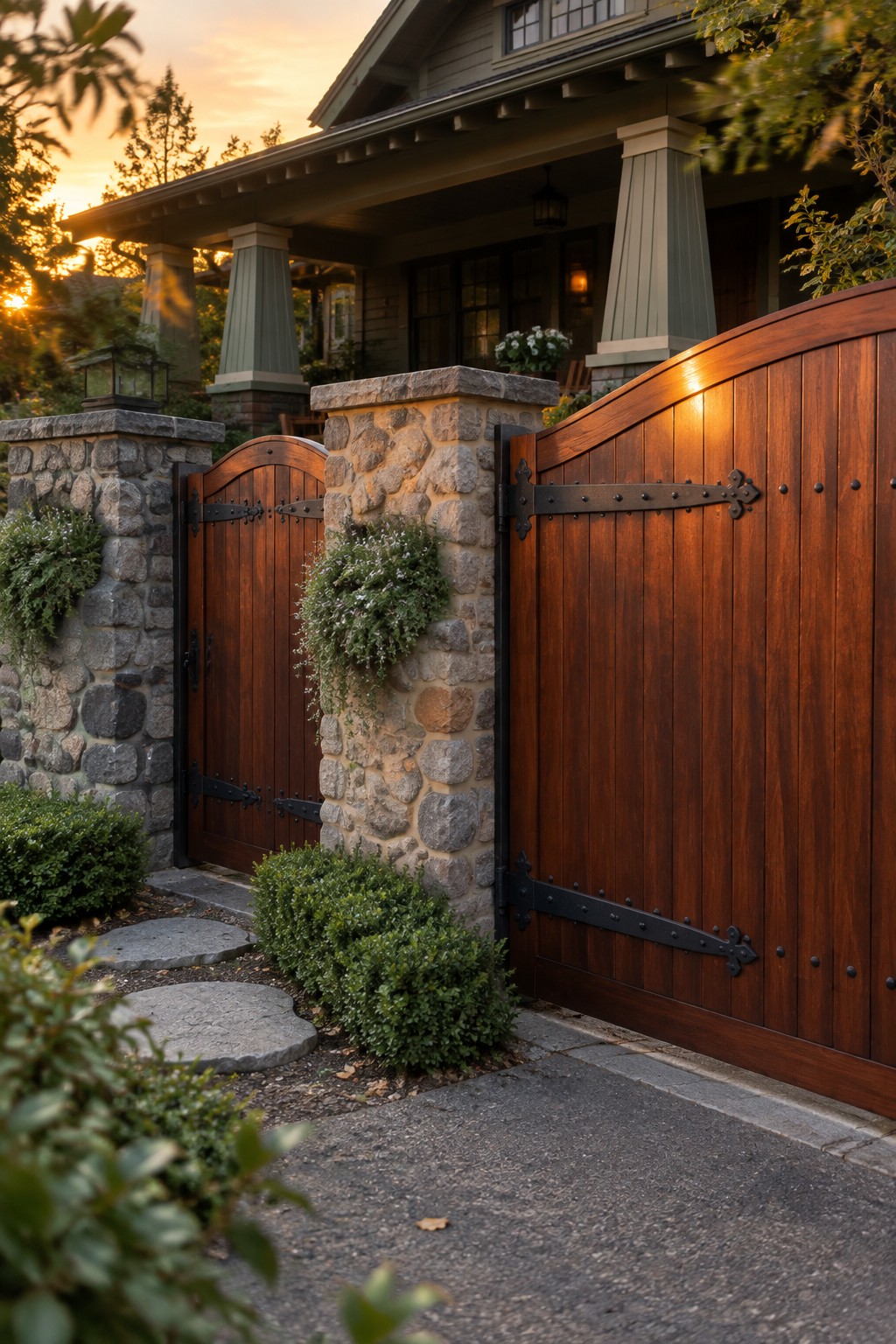
A wooden driveway gate adds real presence to a Craftsman home. The solid wood feels substantial next to stone pillars, and the dark metal straps keep the look grounded rather than fussy. It creates a clear boundary without shutting the house off from the street.
This works best on homes that already use natural materials like wood siding and stone. Keep the gate height modest so it does not overpower the house, and choose hardware that stays simple and dark. Too much ornament on the gate can start to feel busy next to the stone.
Double Wood Gates With Metal Hardware
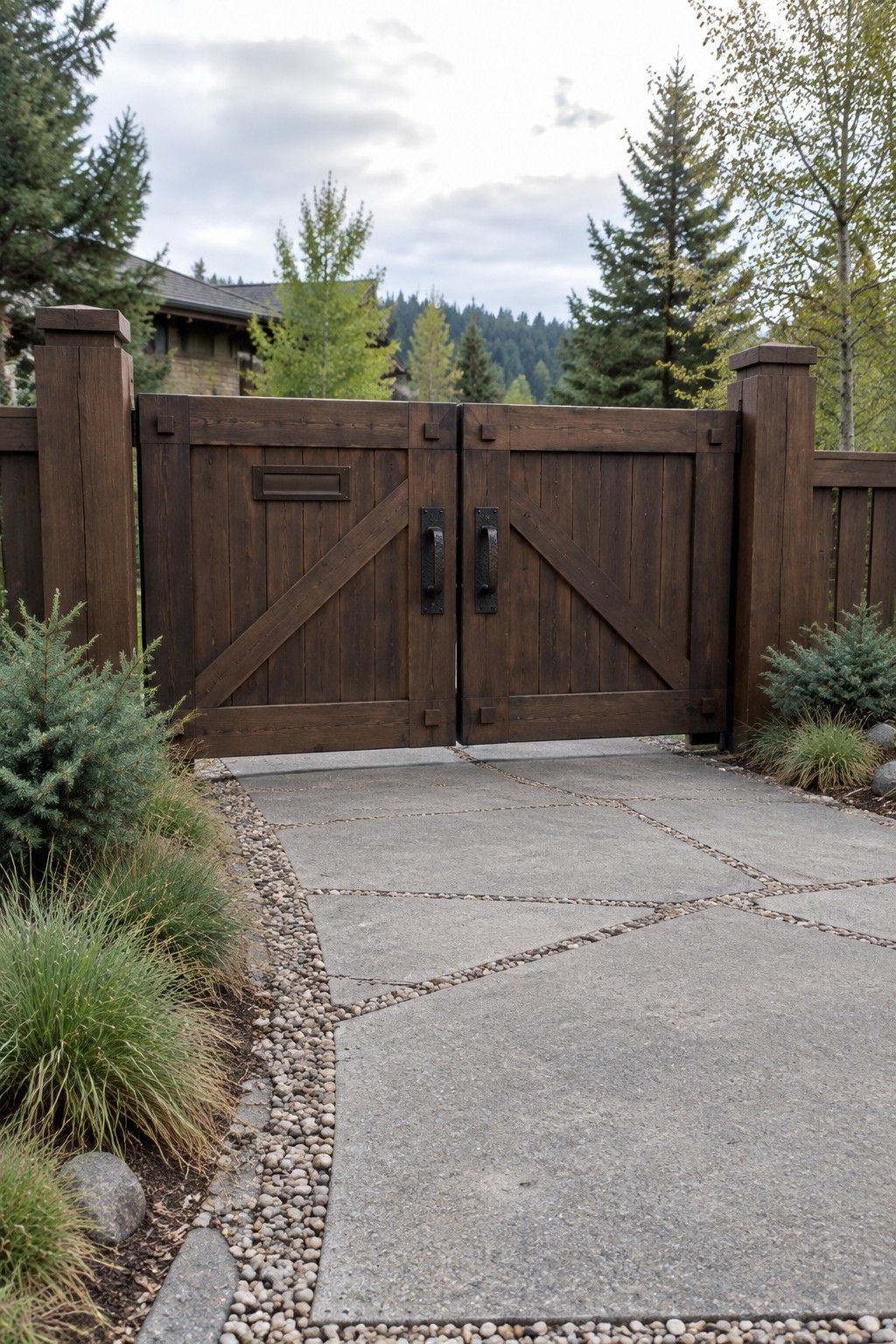
A pair of solid wood driveway gates gives the whole front a more finished and substantial look. The dark stain and simple metal handles keep things straightforward while the diagonal bracing adds just enough structure to make the gates feel built to last.
This approach works especially well on Craftsman homes or any place where you want the entry to feel connected to a wood fence. Keep the gates the same width as the driveway opening and match the finish to nearby fencing so the whole front reads as one piece rather than separate elements.
Adding an Arched Wood Gate for Entry Character
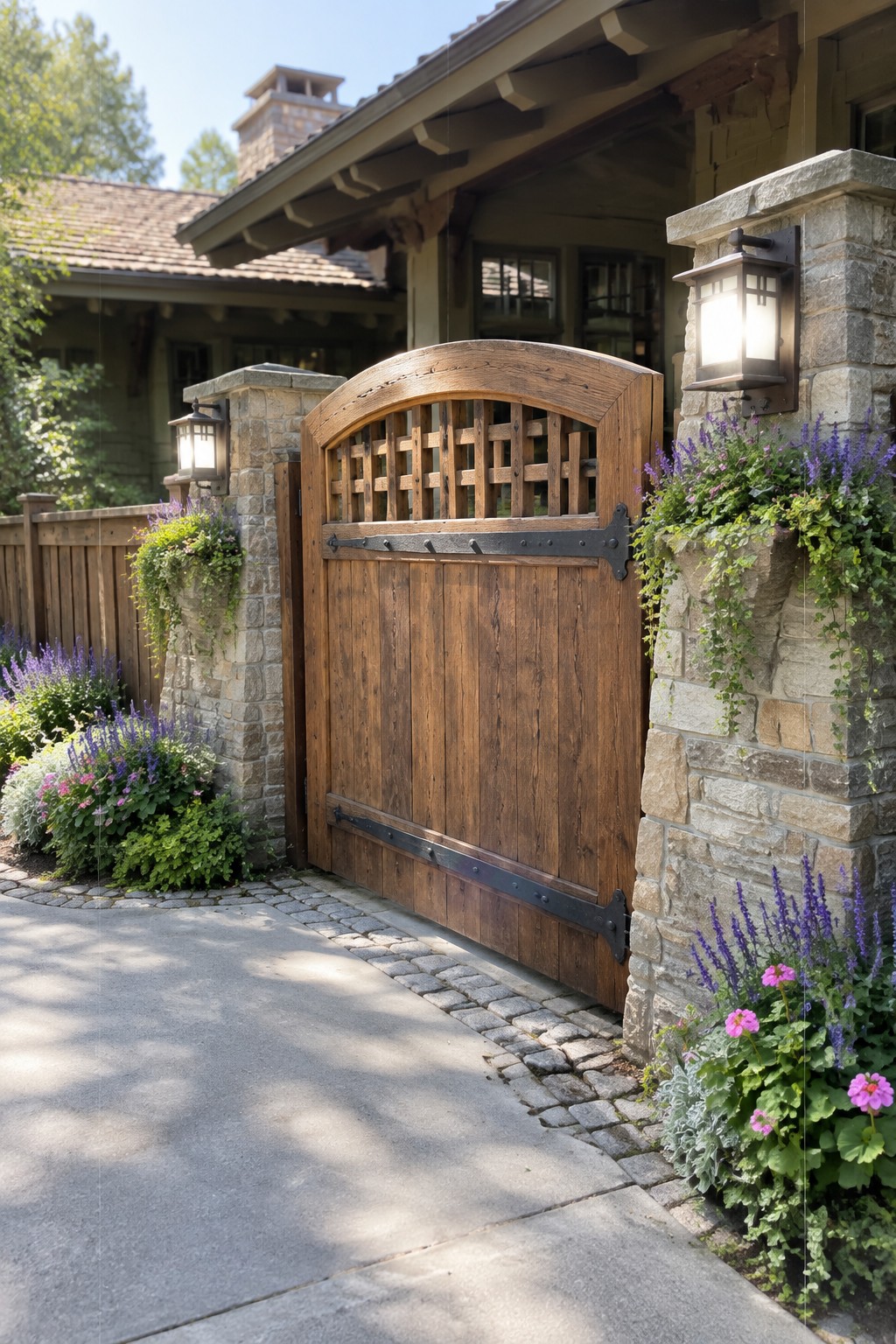
An arched wood gate with a lattice panel at the top gives a Craftsman home a clear point of interest at the street. The curve softens the look of the solid wood below while the metal straps and bolts add just enough structure. This kind of gate feels like a natural extension of the house rather than something added later.
It works best on homes that already use wood and stone together. Keep the finish simple so the gate ages with the rest of the exterior, and match the hardware color to other dark accents like light fixtures or window trim. Avoid overly ornate patterns if the house itself stays fairly plain.
Wood Driveway Gates With Angled Slats
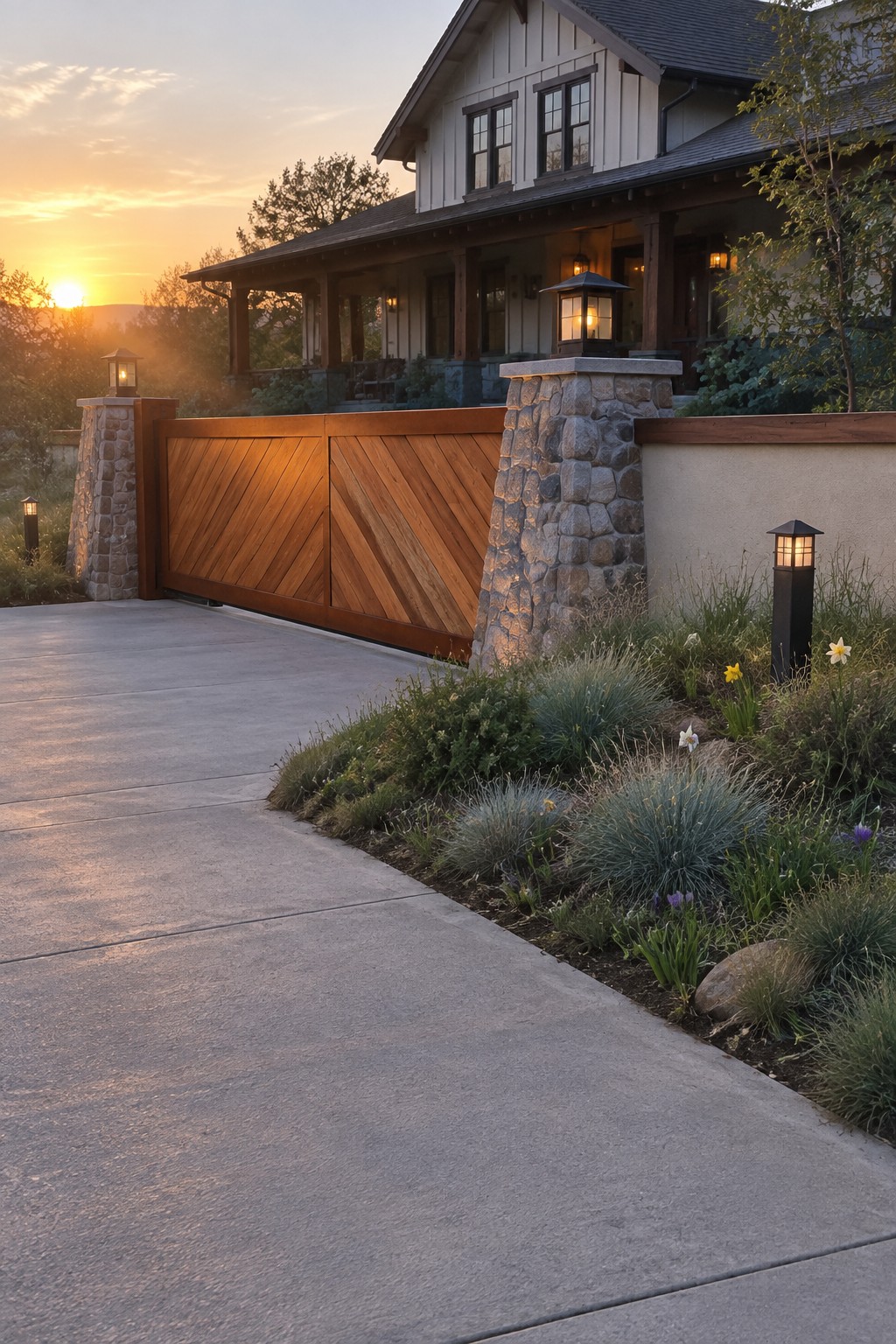
Many Craftsman homes already use wood in their trim and beams, so carrying that same material out to the driveway gate keeps everything feeling connected. The angled slats add a bit of pattern and movement that flat boards just do not give. It turns the gate into more than a barrier.
This works best on homes that already have stone or wood accents near the street. Keep the gate height in line with your pillars so the whole entry stays balanced, and choose a finish that will weather the same way as your porch posts or beams.
Angled Tops on Driveway Gates
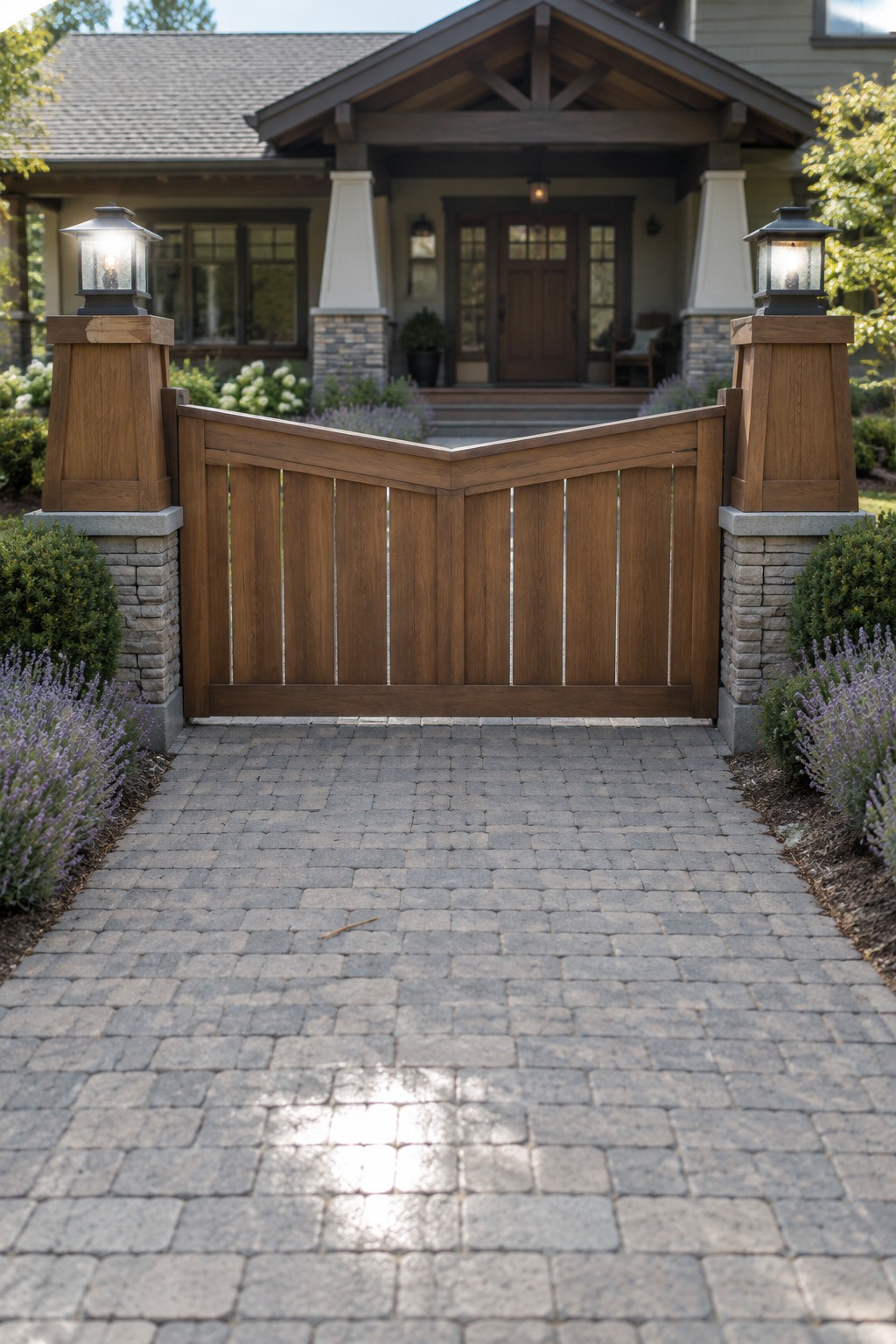
Craftsman homes often gain a stronger entry presence when the driveway gate picks up the same angled lines found in the roof. The V-shaped top on this gate creates that connection without adding extra ornament.
This works best on homes where the gate sits between solid pillars that can carry matching wood tones. Keep the rest of the gate simple so the angle reads clearly, and make sure the scale feels substantial enough to match the house rather than looking like an afterthought.
Install a Craftsman Gate with Vertical Detailing
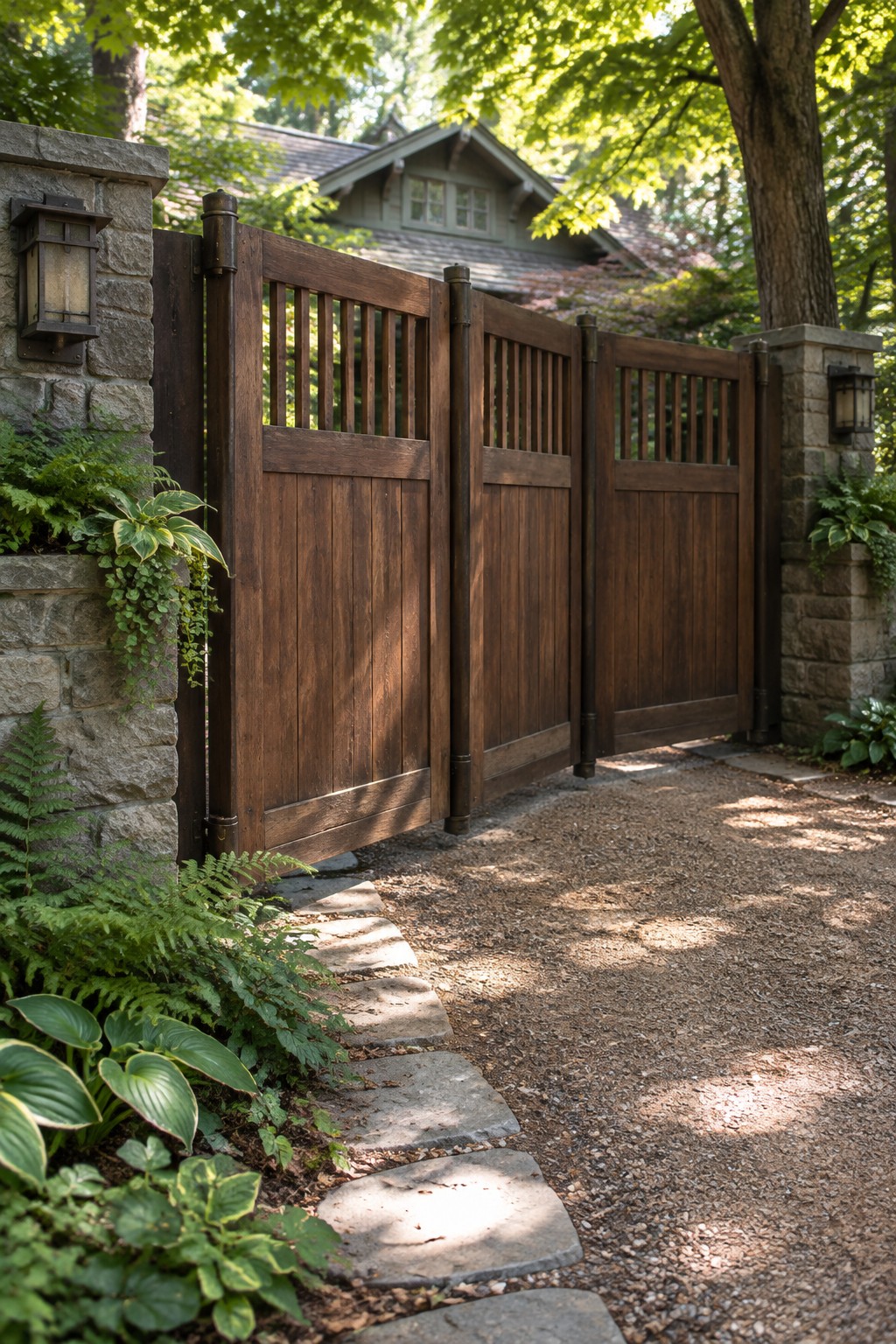
A wooden gate that mixes solid lower panels with vertical slats above gives a driveway entrance clear definition without blocking everything from view. The style fits Craftsman homes because the lines echo the trim work often seen on porches and gables.
Place the gate between stone or masonry pillars so the wood reads as a deliberate accent rather than an afterthought. Keep the finish in a natural brown tone that matches other exterior wood, and avoid overly ornate hardware that can fight the simple vertical pattern.
Frequently Asked Questions
Q: Which wood holds up best in wet weather? A: Cedar resists rot better than pine so it lasts longer without warping. You can stain it every couple years to keep the color fresh. Avoid pressure treated lumber if you want that clean Craftsman look.
Q: How wide should the gate be for a standard driveway? A: Measure your driveway opening first and add a couple inches for swing clearance. Most Craftsman designs look balanced at eight to ten feet across. Wider gates need extra bracing so they do not sag over time.
Q: Do I need a permit for a new gate? A: Check your local rules before you build. Many areas require approval for anything facing the street.
Q: Can I add lights to the gate posts? A: Solar fixtures mount easily on the tops without wiring hassles. They highlight the details at night and add a welcoming feel.
