

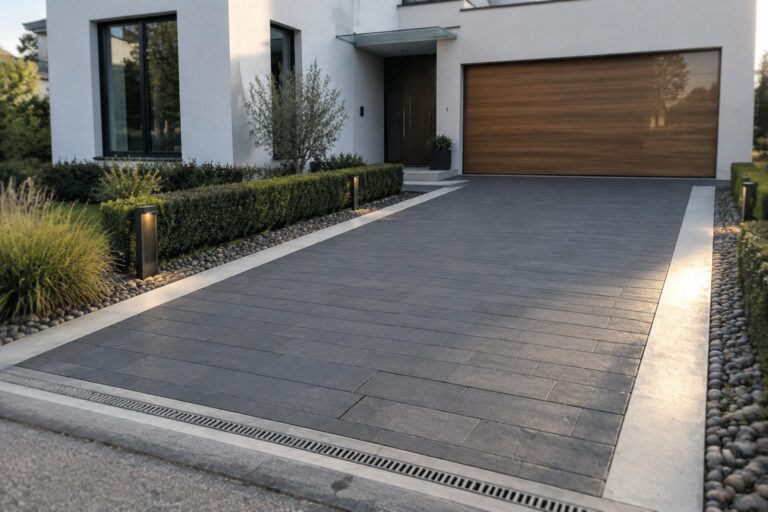
I have always noticed that the driveway is one of the first things people register when they approach a house.
Choosing the right surface can shift how the entire front reads, especially when the materials echo the tones already present in the siding or trim.
When I looked at options for my own home I realized some patterns only hold up once you see how they handle daily wear and changing light.
Contemporary facades tend to benefit from simpler layouts that keep the focus on clean entry lines rather than busy details.
Small adjustments in edging or color often make more difference than expected once everything is installed.
Large Pavers For a Cleaner Driveway Look

Large rectangular pavers give a driveway a more solid and quiet appearance than smaller units. The wide slabs reduce visual clutter and create a smooth surface that feels intentional rather than busy.
This style works best on contemporary homes where the architecture already leans simple. Pair the pavers with narrow gravel edges and low plantings so the driveway reads as part of the overall structure instead of an afterthought. A good compacted base helps keep the surface level through freeze and thaw cycles.
Alternate Pavers With Grass Squares
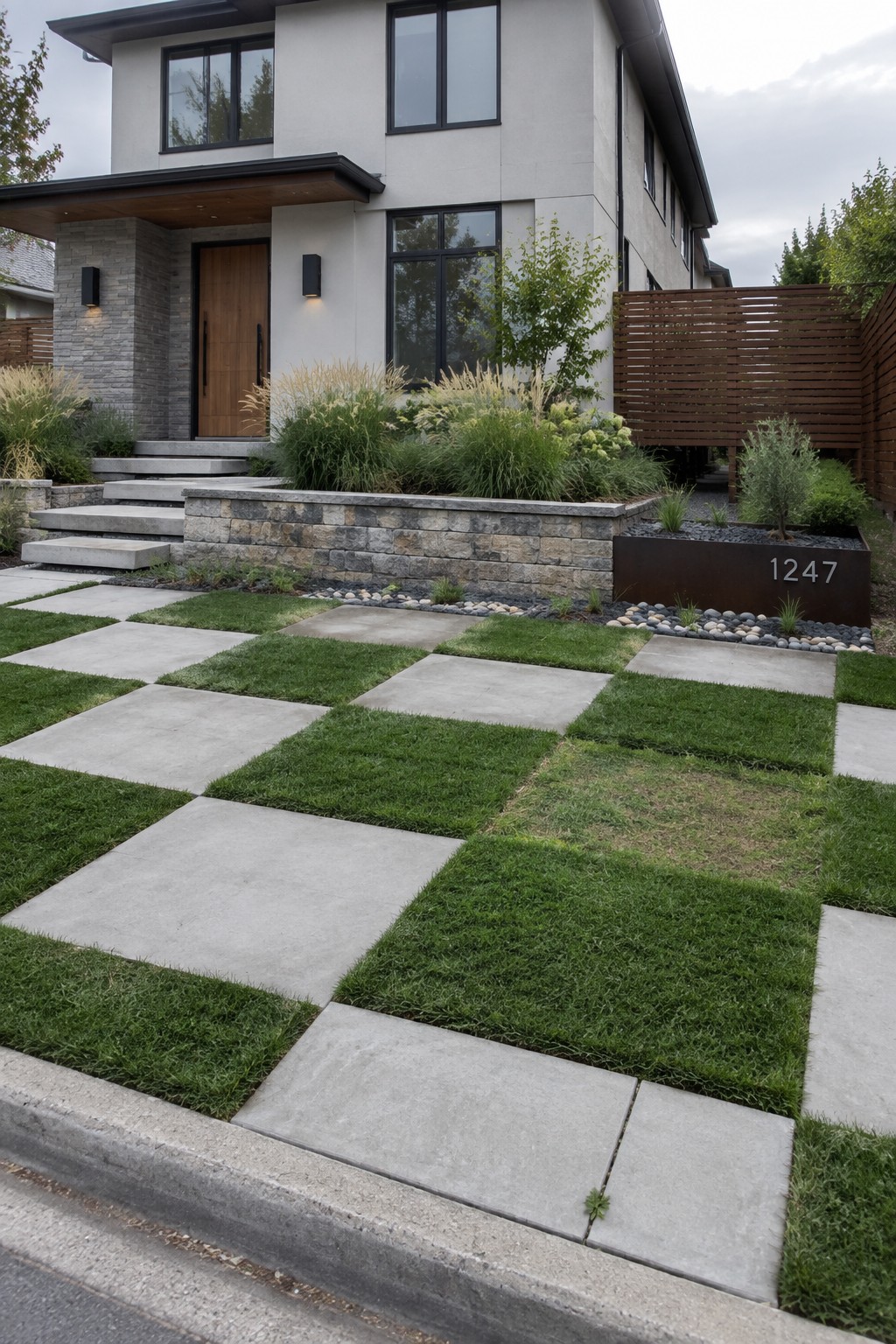
A grid of large concrete pavers set into the lawn gives the driveway a lighter feel than a full slab of pavement. The pattern lets grass grow right up to the edges, so the hard surface blends into the yard instead of taking over the whole front area. It works especially well on homes where the driveway sits right in front of the house and you want to keep some green visible.
This layout suits contemporary homes with flat or gently sloped front yards. Keep the paver size consistent and make sure the grass sections are wide enough for regular mowing. The main thing to watch is drainage, since grass between pavers can stay wet longer after heavy rain.
Large Pavers Set In Gravel With Edge Lighting

This layout uses big rectangular concrete pavers dropped into a gravel bed with thin light strips running along the edges. It keeps the path looking open and simple while still guiding people clearly to the door at night. The gravel softens the hard lines of the pavers and cuts down on the need for a solid slab of concrete.
It works best on contemporary homes where you want the walkway to feel like part of the landscape rather than a separate driveway surface. Keep the paver spacing even and use warm lighting so the glow stays low and useful. Avoid packing too many plants right against the edges if you want the clean look to stay that way over time.
Paver Paths With Simple Borders
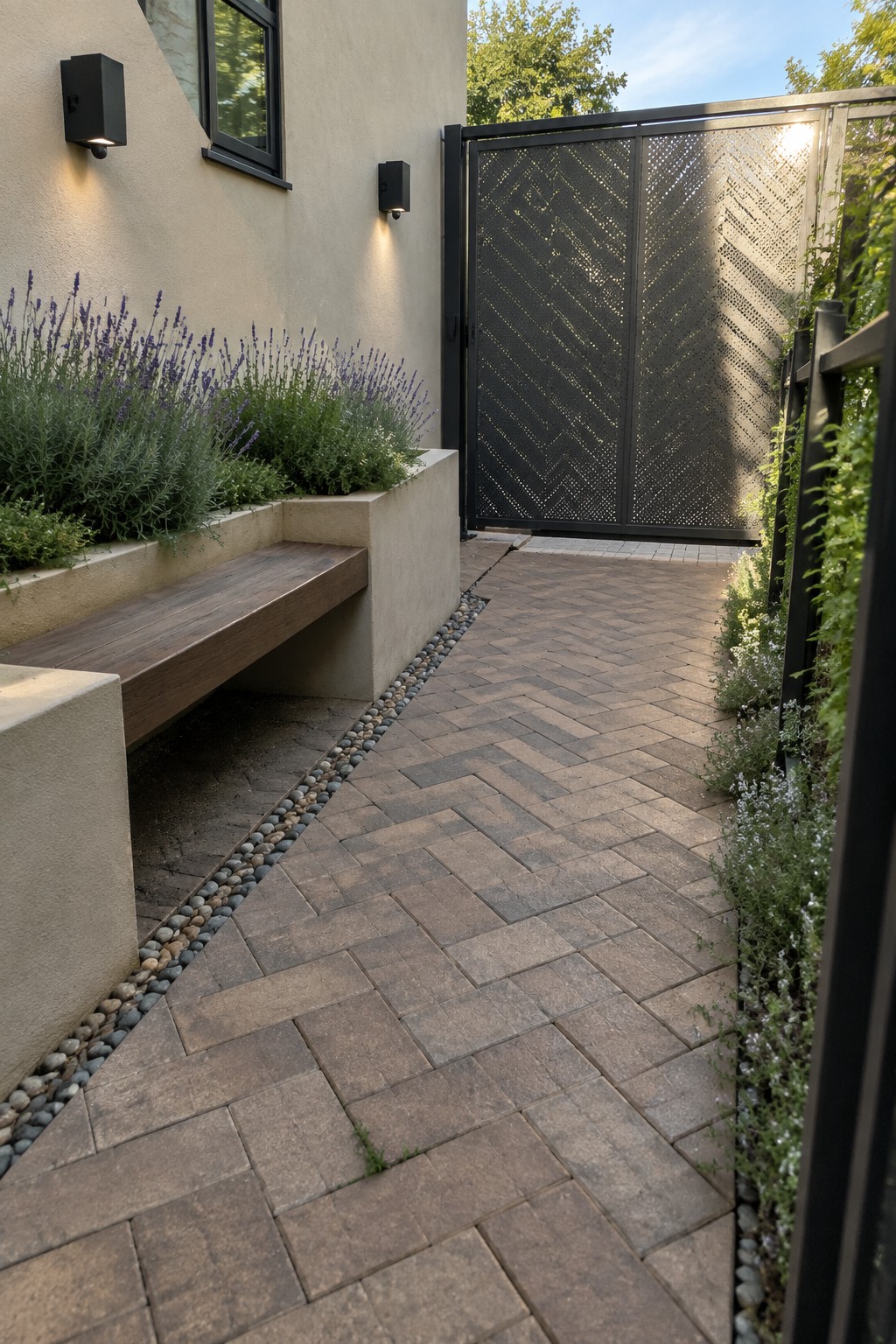
Paver paths stand out when they use a steady pattern and a clear edge. The rectangular layout here keeps the walkway easy to follow while the small stone border stops the pavers from looking loose next to the planting beds.
This approach works well on contemporary homes that already have clean walls and metal details. Keep the paver color close to the house tones and let the border do the separating work so the path feels like part of the architecture rather than an afterthought.
Circular Paver Driveways Around a Central Tree
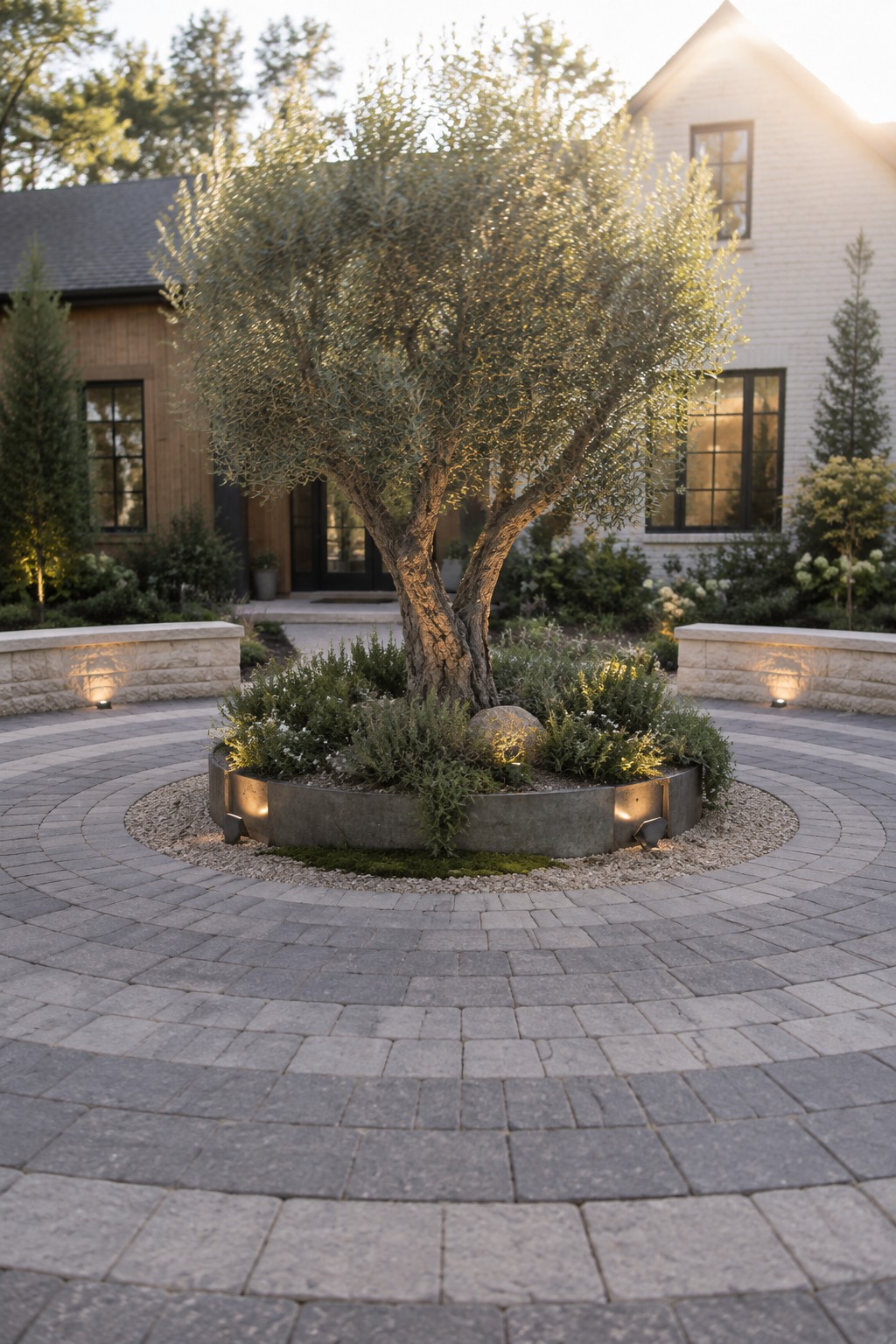
Laying pavers in a circular pattern around a single tree turns a plain driveway into something more interesting without adding extra materials. The layout keeps the surface practical for cars while giving the front yard a clear focal point that feels settled rather than stark.
This works best on smaller or mid-sized lots where you want to keep an existing tree or plant one that can handle some root disturbance. Make sure the raised ring is deep enough for healthy soil and that the pavers sit on a compacted base so the circle stays even under regular use.
Wood Tone Pavers for Driveways
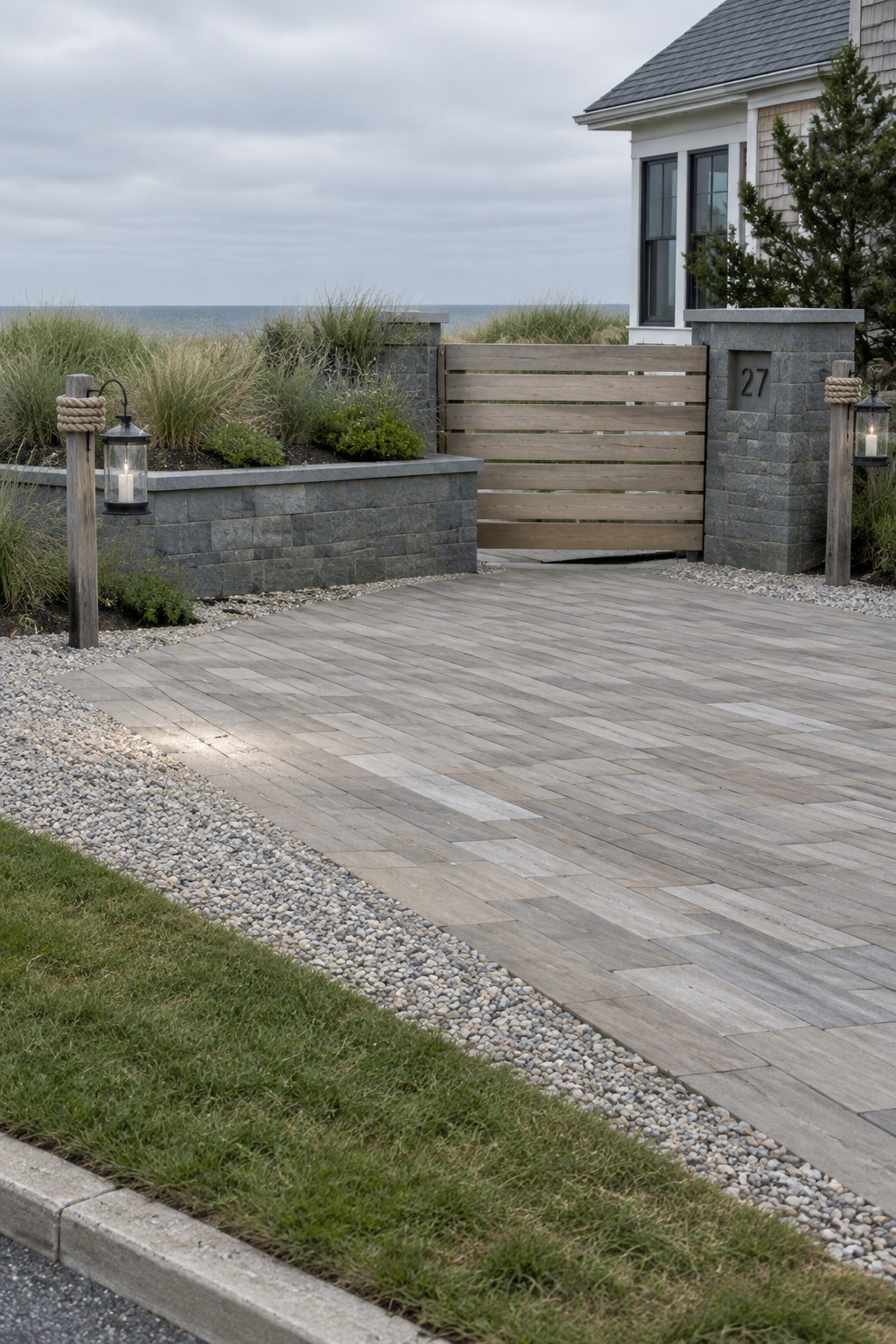
Wood tone pavers give a driveway a warmer feel than plain concrete or asphalt. They work especially well when you want the hard surface to blend into a coastal or natural setting without looking too stark or industrial.
They suit homes with stone walls and gravel edges because the linear pattern adds some movement while the color keeps things grounded. Just make sure the pavers are rated for vehicle weight and that you plan drainage carefully along the sides.
Stepping Stones Set In Gravel
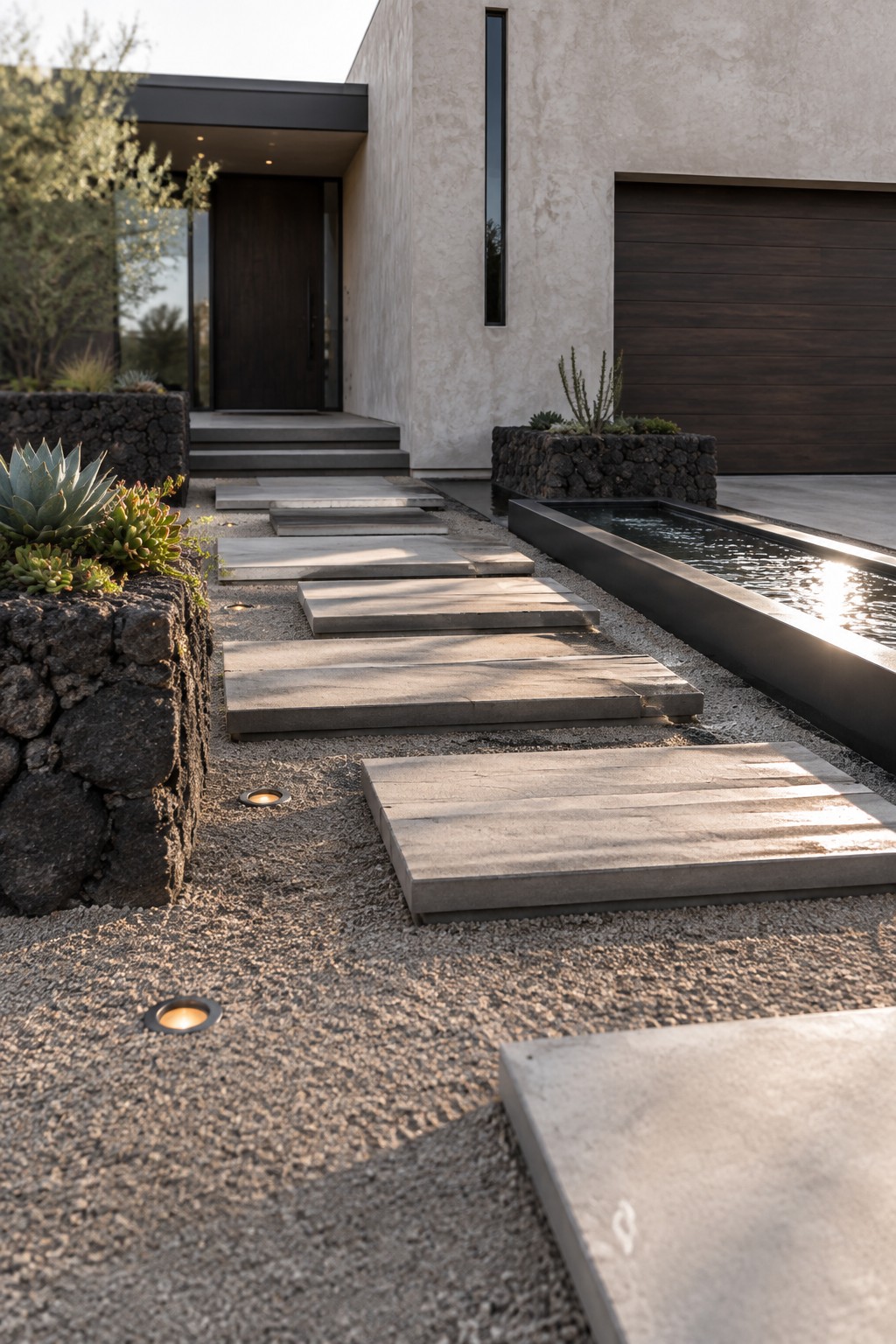
Stepping stones placed in gravel give an entry a lighter feel than a solid paved surface. The gaps let water drain straight through and keep the path from looking heavy against the house.
This layout suits contemporary homes with clean lines and low-water gardens. Space the pavers evenly and choose sizes big enough for steady footing, especially if the path sees daily use.
Alternating Paver Bands On The Driveway
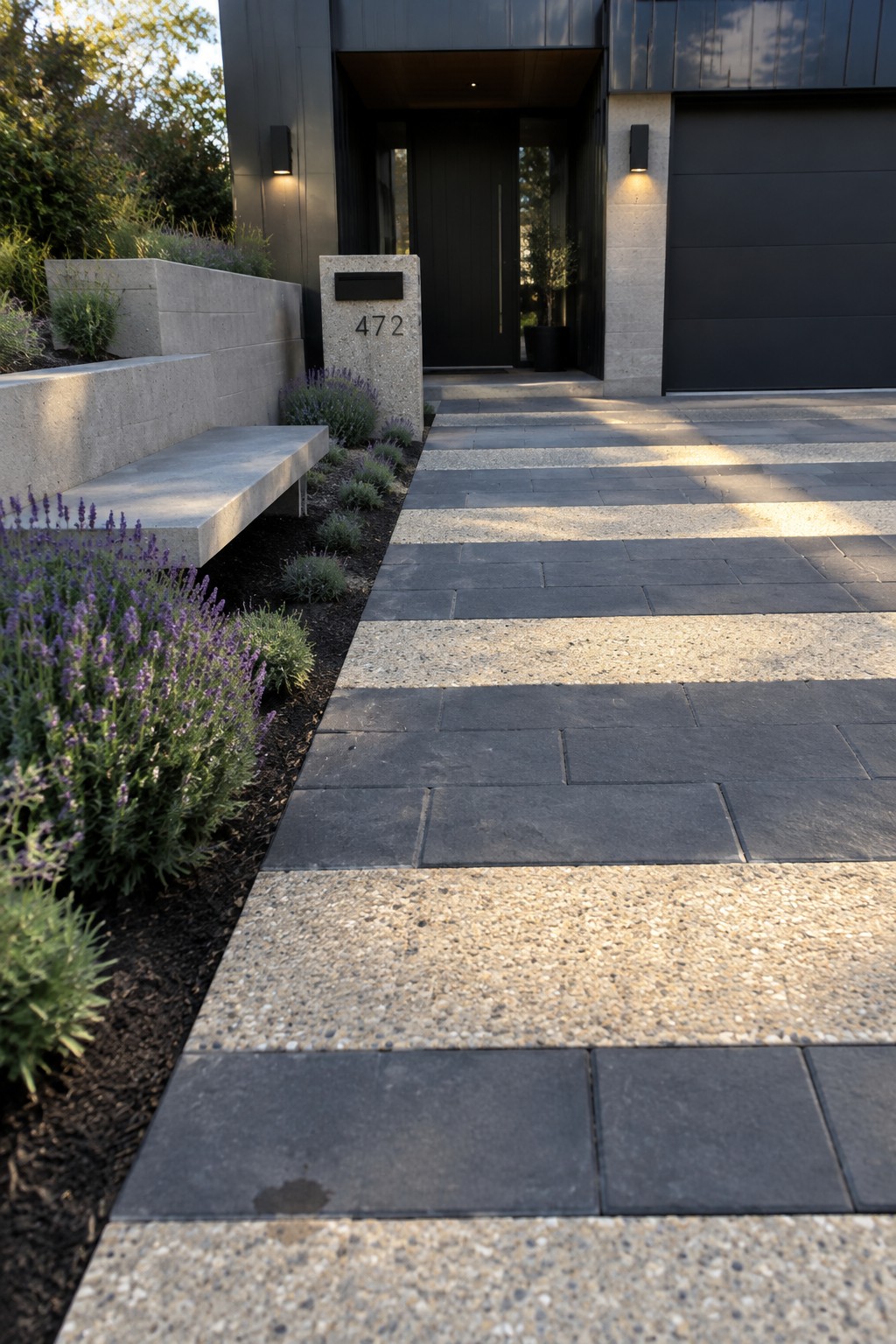
Alternating strips of dark stone and light concrete pavers give a driveway a clear sense of direction. The pattern leads the eye straight to the house and keeps the whole approach feeling orderly rather than just functional.
This works best on contemporary homes with clean architecture. Run the bands toward the entrance, keep side plantings low, and avoid busy edging so the material change stays the main feature.
Grass Strips Between Pavers
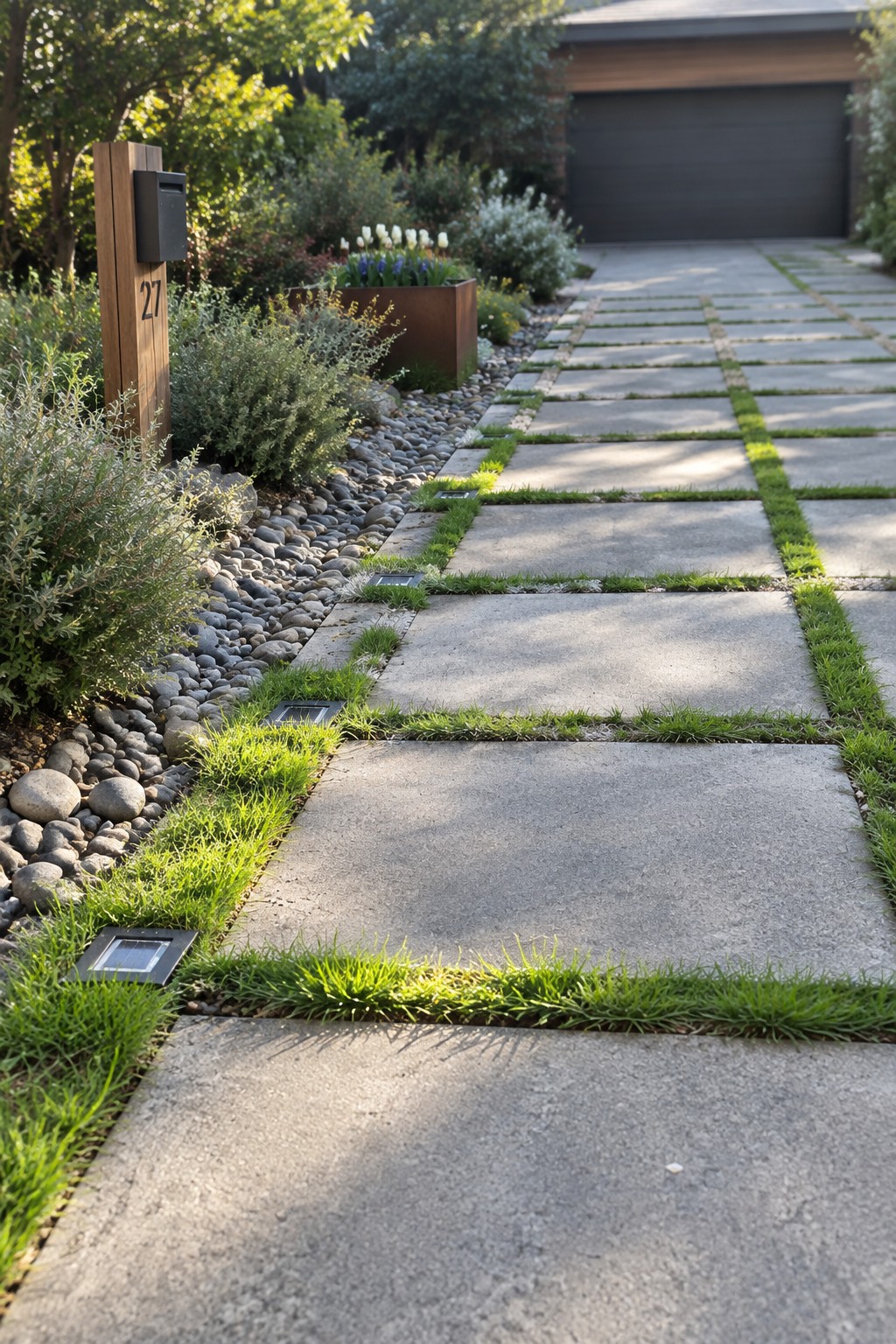
Many homeowners want a driveway that feels less like a slab of concrete and more like part of the yard. Running grass between large pavers breaks up the hard surface and gives the entrance a softer, greener look without losing the durability you need for cars.
This approach works best on contemporary homes where the goal is clean geometry with some natural texture. Set the pavers on a solid base with proper spacing so the grass stays healthy and the surface stays level over time. The pebble edges shown here help keep everything contained.
Large Pavers With Gravel Borders
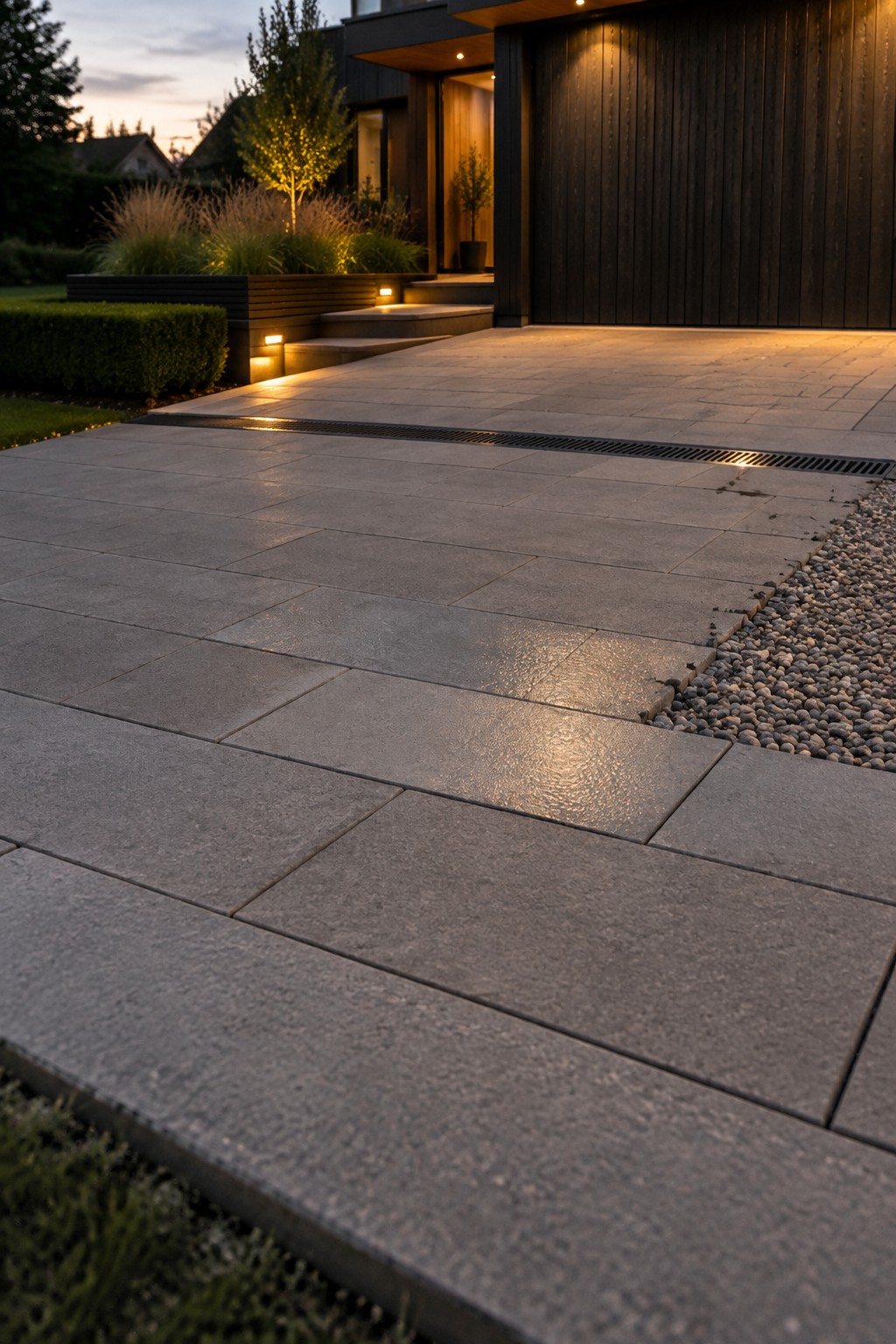
Large pavers give a driveway a simple, solid look that works well with modern homes. The wide slabs cut down on the number of joints, so the surface feels smoother and more intentional than smaller units. A narrow gravel strip along one edge adds a bit of contrast and helps with drainage.
This approach suits contemporary houses that already use clean lines and darker materials. It works best when the pavers sit on a solid base and the gravel is contained so it does not scatter onto the driving surface. Keep the layout straightforward and let the material do the work.
Flagstone Paths With Gravel Joints
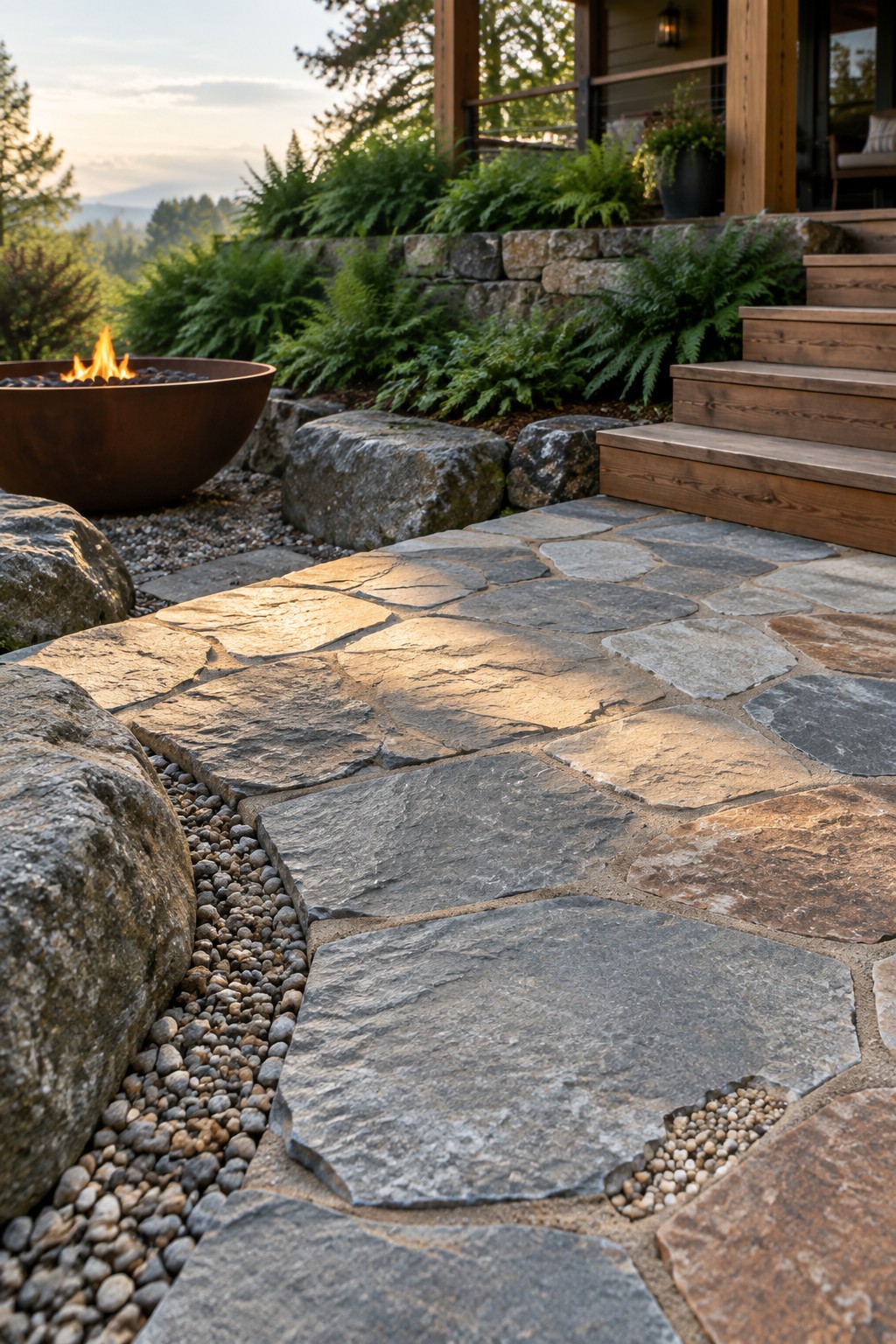
Large irregular stone pavers paired with gravel create a walkway that feels grounded and natural without looking overly designed. The mix of slab sizes and the loose gravel between them softens the hard surface while still giving a clear route from the driveway area up to the house. This approach works especially well on gentle slopes or in spaces where you want the path to sit comfortably among boulders and plantings rather than stand apart from them.
It suits contemporary homes that already use wood siding and natural stone in the architecture. Keep the paver colors in a similar gray and brown range so the whole path reads as one material. Avoid making the gravel too bright or the slabs too uniform, or the look shifts from organic to overly patterned.
Linear Drains Keep Paver Driveways Looking Clean
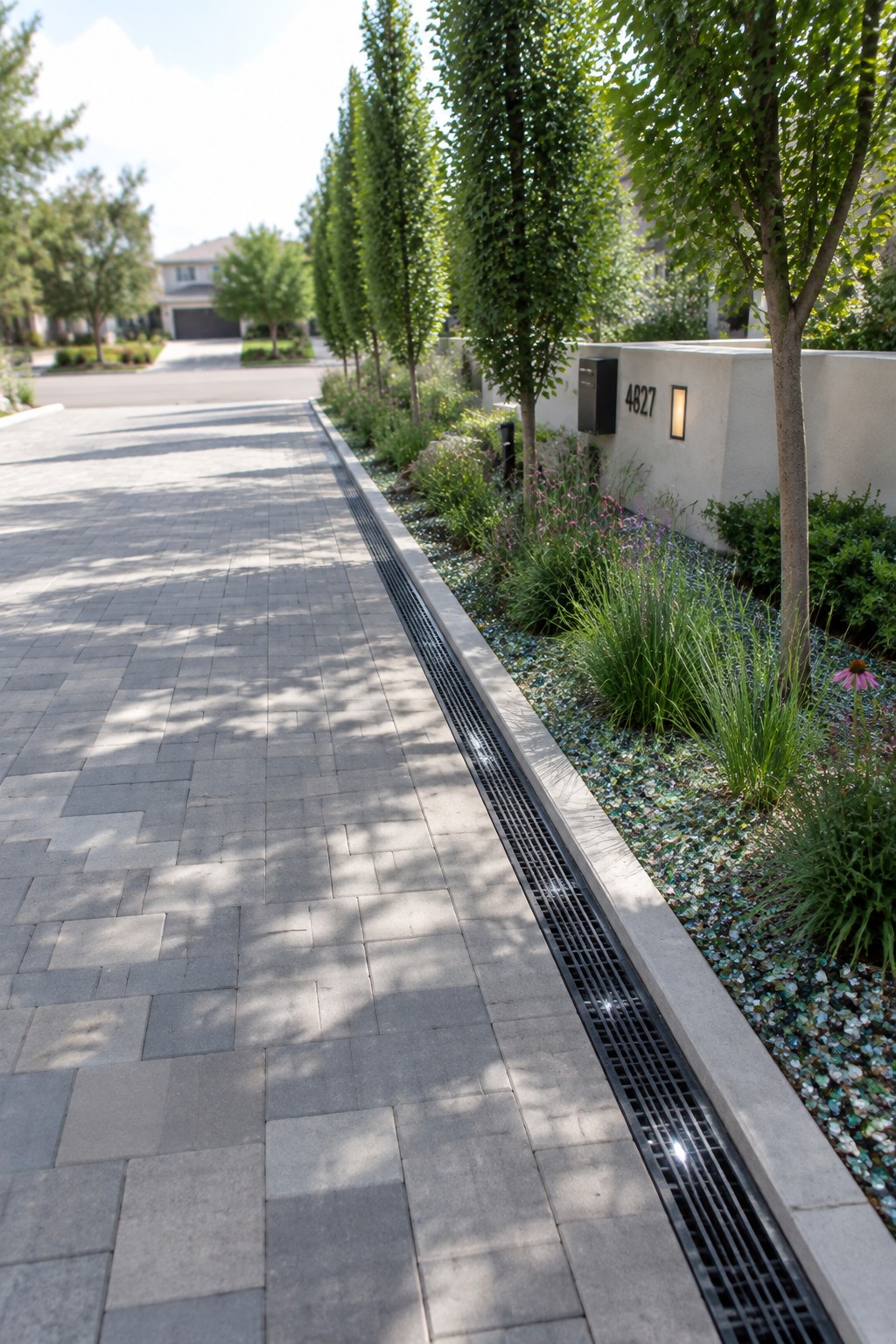
A linear drain set into the edge of a paver driveway handles water without forcing the whole surface to slope. It creates a straight, finished line that separates the driving area from the planting bed right beside it.
This approach works best on homes where the driveway runs close to garden beds and you want to avoid scattered surface drains. Just size the drain for your local rainfall and make sure the pavers sit level on both sides so the grate stays flush.
Warm Stone Pavers for Front Walks
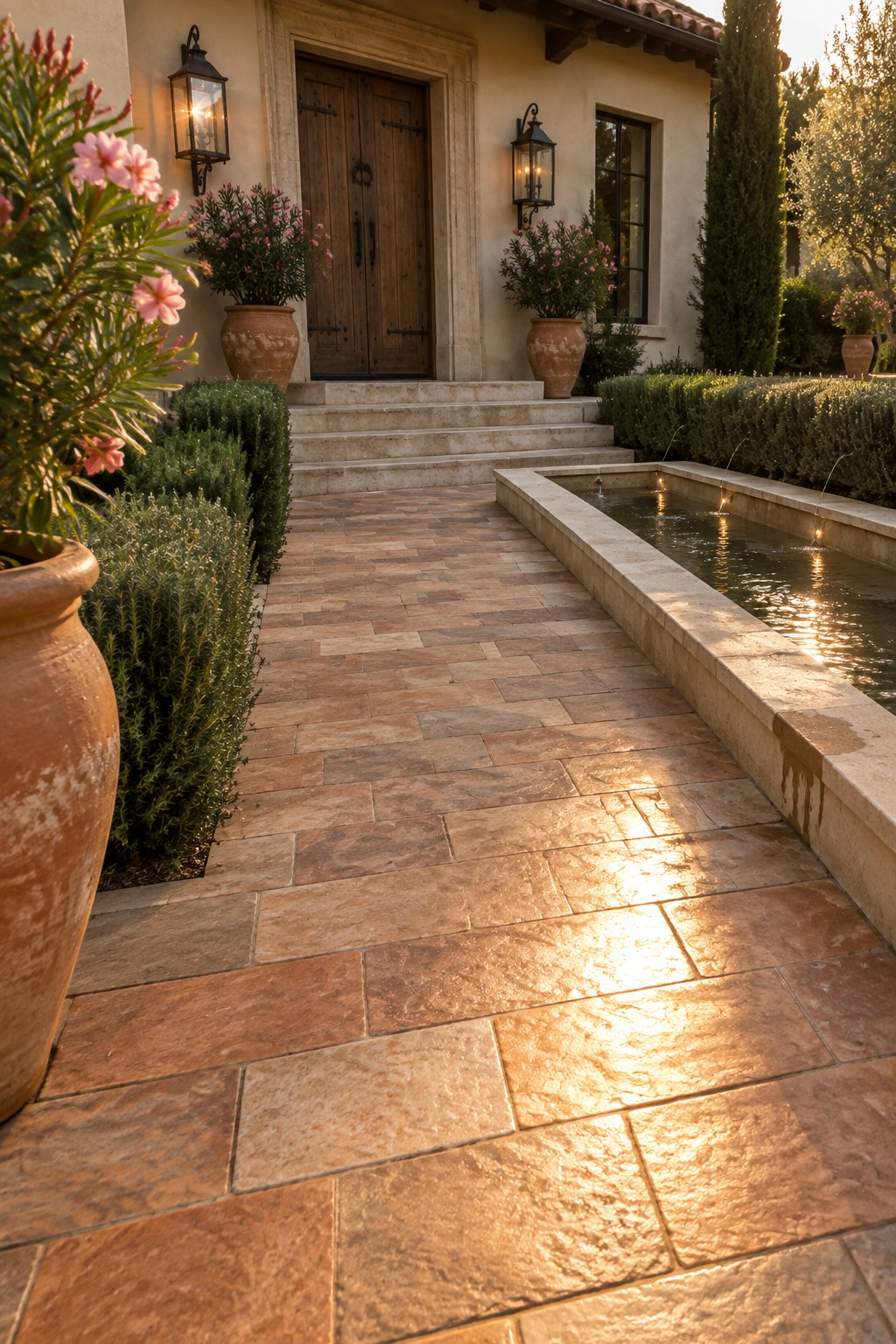
Stone pavers in soft earth tones give an entry path a relaxed, grounded feel that works with many home styles. The irregular shapes and natural color shifts keep the surface interesting without needing extra patterns or borders.
This approach suits homes with stucco walls or wood doors and looks especially good when the same pavers continue into a driveway or side path. Just make sure the stones are large enough to avoid a choppy look underfoot.
Embed Lighting Into Driveway Paver Joints
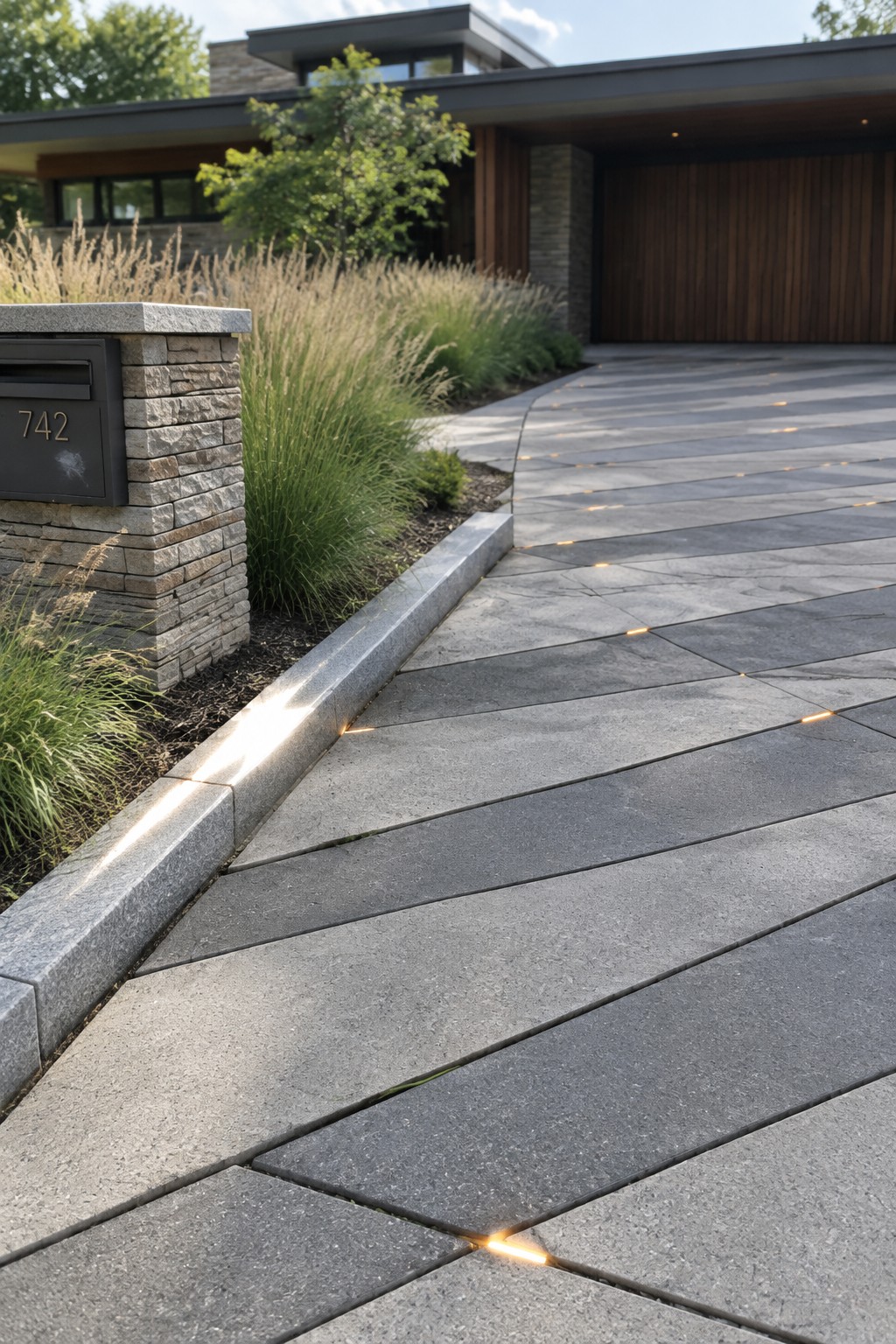
Many homeowners like the look of small lights set right into the joints of a paver driveway. It gives a quiet glow at night without adding poles or extra fixtures that can clutter the entrance.
This works best on contemporary homes where the driveway sits close to the house. Keep the lights low and evenly spaced, and choose pavers thick enough to handle regular car traffic without shifting.
Gravel Strips Between Concrete Pavers
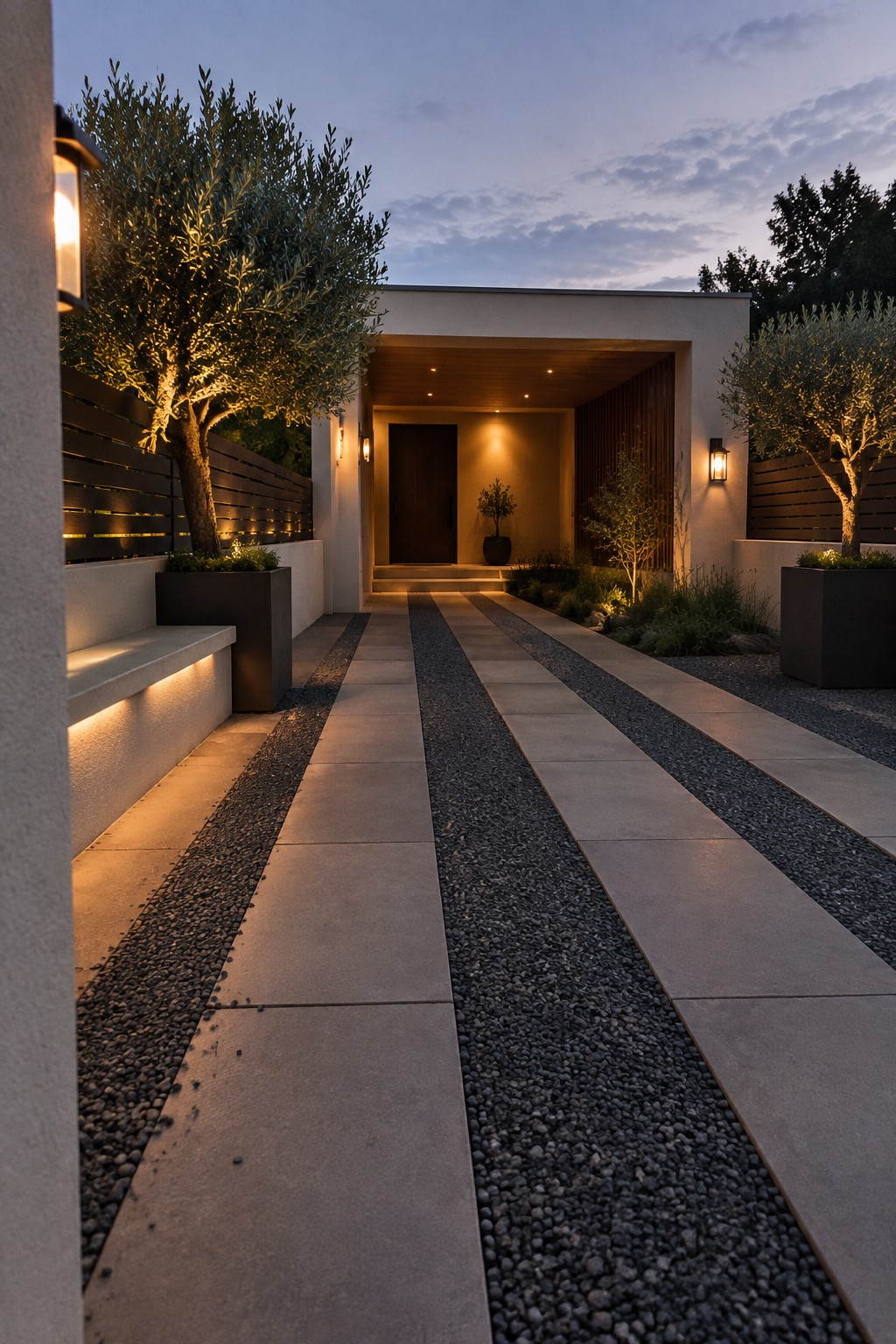
This layout uses wide concrete slabs with narrow gravel channels running between them. The pattern breaks up the surface without adding extra materials or patterns, which keeps the driveway looking clean and structured. It also helps the drive feel a bit narrower and more intentional than a solid slab of paving.
The approach works best on straight or gently curved approaches in front of modern homes. Keep the gravel low and contained so it stays neat, and pair it with simple planting along the edges rather than trying to fill every gap with color.
Linear Drains Keep Paver Driveways Looking Clean
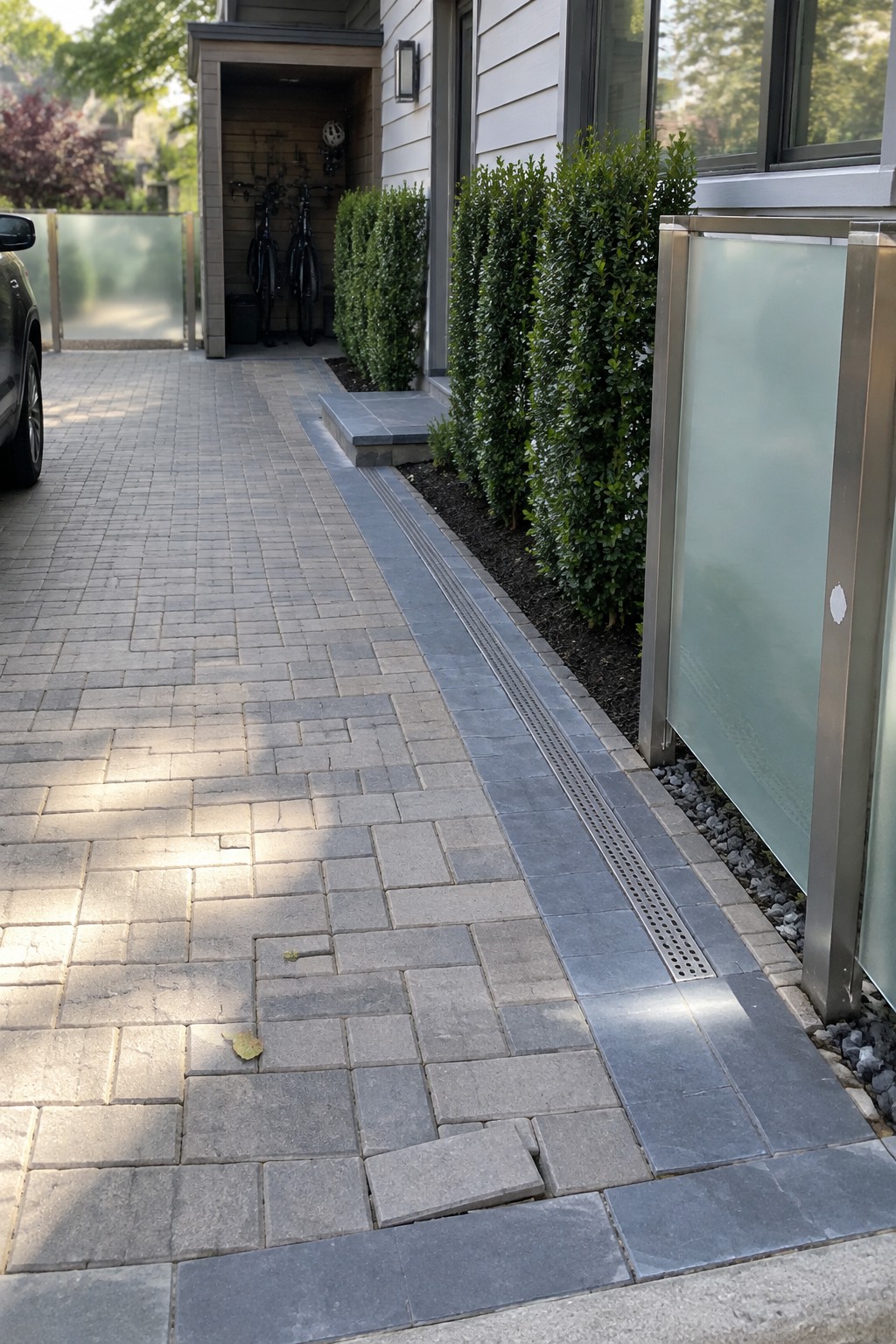
A linear drain set into the pavers handles runoff without breaking up the surface or forcing you to use bulky grates. It keeps the driveway looking like one continuous plane while still moving water away from the house during storms.
This setup works best on homes with simple, modern lines where you want the paving to stay flat and uncluttered. Make sure the pavers slope gently toward the channel and that the surrounding beds are edged so soil does not wash in over time.
Large Concrete Slabs for a Simple Modern Driveway
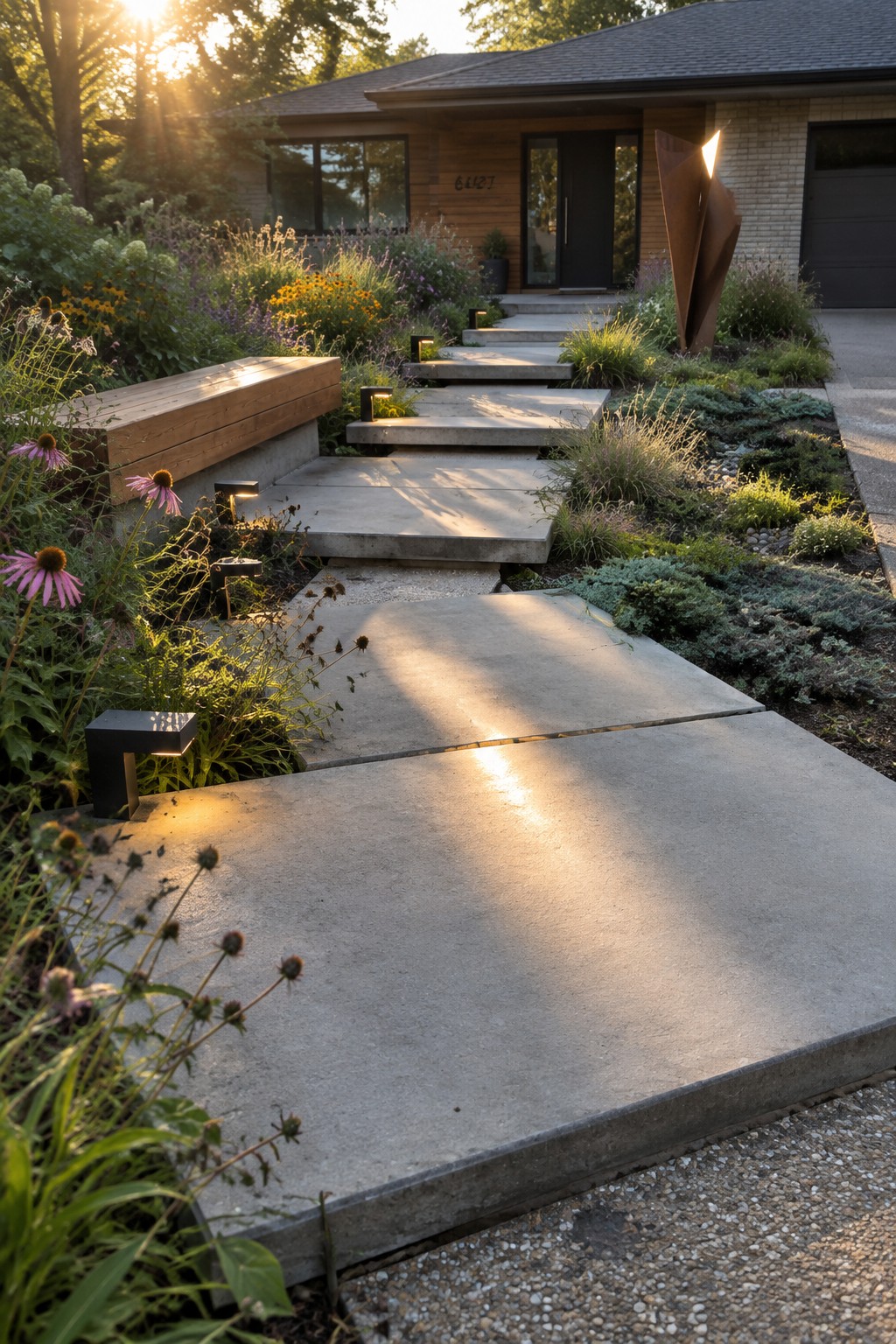
Large concrete slabs work well when you want a driveway that feels clean and understated. They create a steady path without adding extra lines or patterns, which lets the surrounding plants and lighting stand out instead. The slabs also handle daily use without showing wear quickly.
This approach suits contemporary homes that already have simple architecture. Keep the slabs wide and space them so a bit of gravel or low ground cover can fill the edges. It helps the whole entry feel connected to the garden rather than separate from it.
Frequently Asked Questions
Q: How do I keep grass from creeping into the edges of a Techo-Bloc driveway? A: Lay a solid gravel base that extends a few inches past the pavers. This stops roots from finding easy soil. Edge the whole thing with metal or concrete strips so the lawn stays where it belongs.
Q: Will these pavers shift if I park heavy trucks on them regularly? A: A compacted base with the right depth keeps everything locked in place. Techo-Bloc makes thicker units meant for vehicles so choose those if trucks show up often. Check the base every couple of years and add gravel where it dips.
Q: What if my yard slopes and water runs toward the house? A: Slope the pavers slightly away from the foundation during install. This moves runoff to the street or a drain without extra work. One good rain will show if you got the angle right.
