

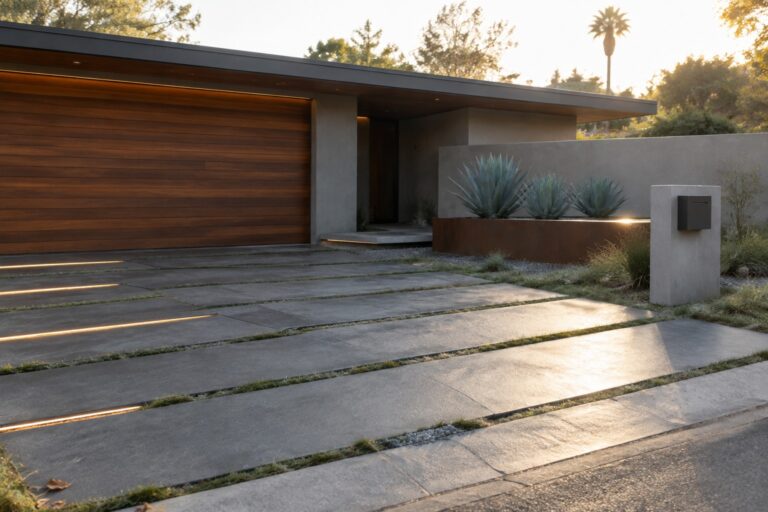
I tend to notice the driveway first when driving up to a low-profile mid-century home because it shapes how the facade presents itself right away.
Choosing materials that echo the house’s simple lines keeps the whole exterior feeling balanced rather than disjointed.
Scale matters more than people expect.
In practice I would test how the edging meets the lawn before committing to a full layout.
Adapting one or two details like that often makes the approach feel more intentional without adding much extra work.
Embed Lighting Strips in the Driveway
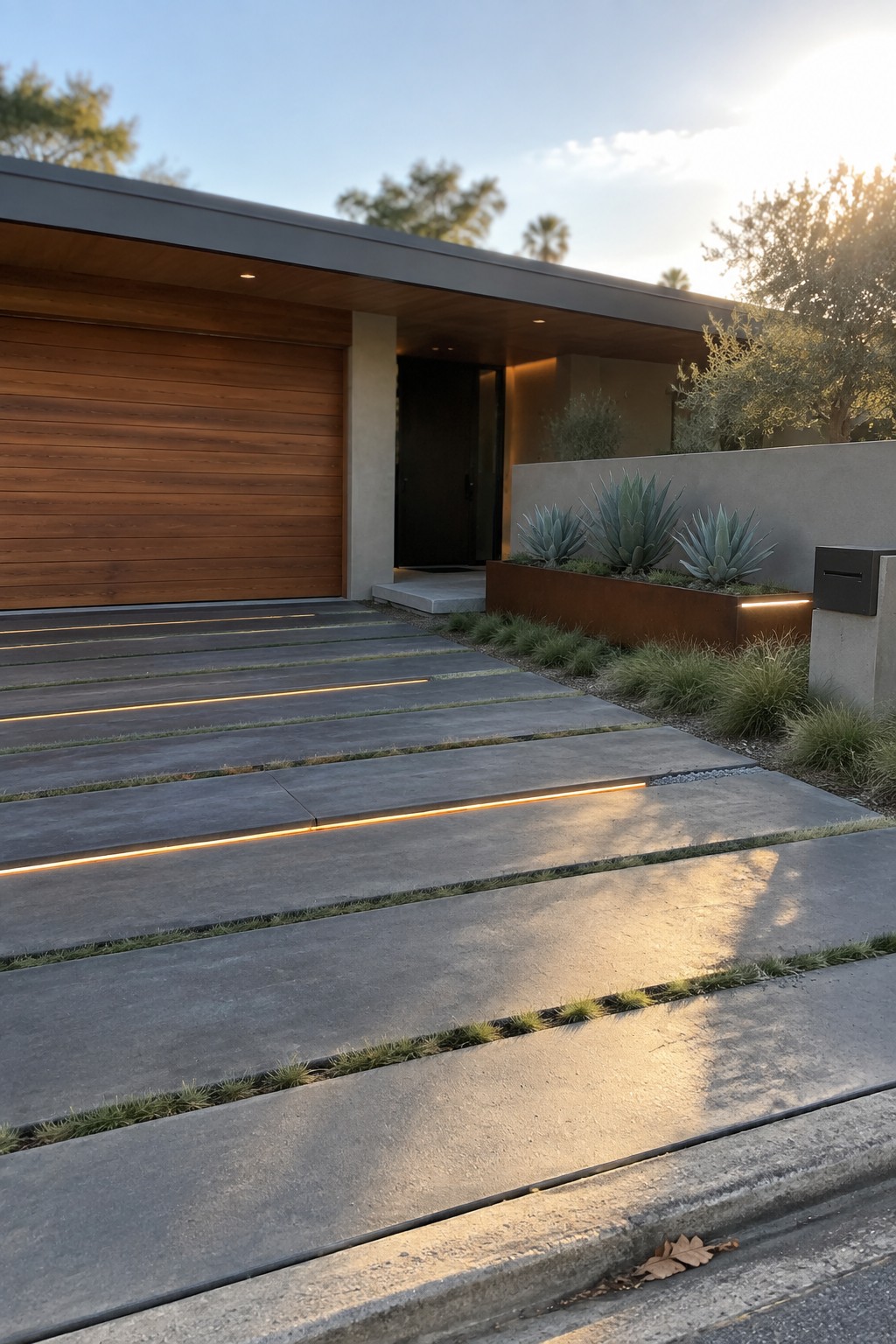
One simple way to keep a mid-century modern driveway from looking flat at night is to run thin lighting strips right into the steps. The glow stays low and even, guiding you toward the door without any extra poles or fixtures in the way.
This approach suits low-profile homes that already lean on clean lines and simple materials. Just space the strips evenly, pick a warm tone, and make sure the edges sit flush so the surface stays smooth underfoot.
Gravel Driveways with a Pebble Mosaic Accent
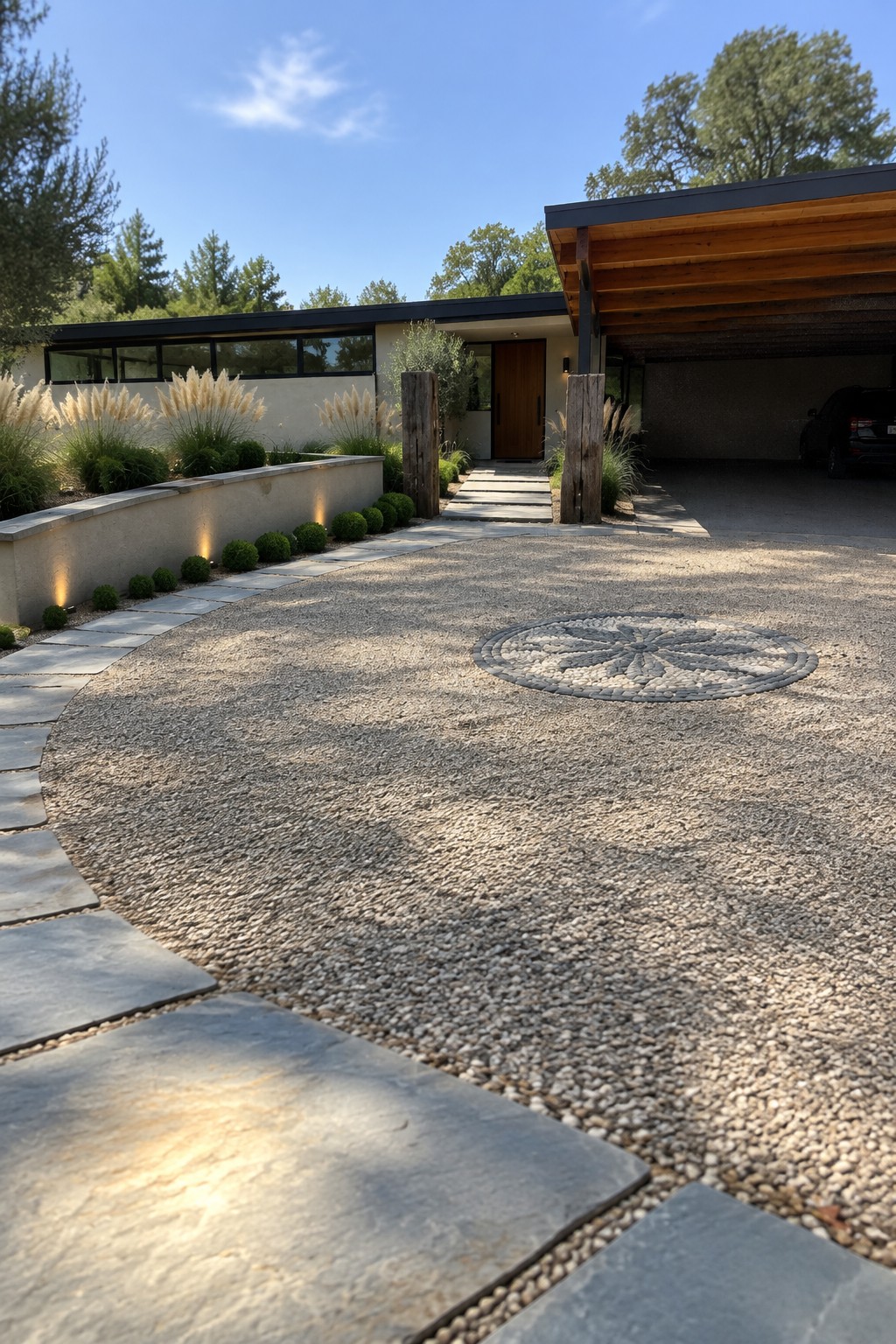
A gravel driveway can feel a little plain on its own, especially next to a low-profile mid-century house. Adding one circular pebble mosaic gives the surface a quiet focal point without adding height or clutter.
This works best when the rest of the driveway stays open and simple. Keep the mosaic centered in a wider section of gravel, and let the surrounding stone pavers handle the main path so the pattern reads as a single thoughtful detail rather than a busy design.
Grass Between The Pavers On The Driveway

A grid of square pavers with grass growing in the spaces gives the driveway a lighter feel than a solid slab. The pattern breaks up the hard surface and lets the planting run right up to the edge without a sharp border. It suits low-profile homes that already use simple materials and clean lines.
This layout works best on flat or gently sloped driveways where foot traffic is light. Use a solid base and good drainage so the pavers stay even, and choose a grass variety that can handle some shade from the house. Keep the surrounding beds low and simple so the grid stays the main feature.
Stone Slabs Set In Gravel

Large stone slabs laid into gravel make a simple and practical path for low-profile homes. The wide pavers keep the surface level and easy to walk on while the gravel fills in around them to handle drainage and give the whole approach a relaxed look. This setup works especially well when you want the driveway or entry to feel connected to the landscape instead of sitting on top of it.
It suits mid-century homes with clean lines and flat lots. Keep the slabs in similar tones to the house materials and let the gravel run right up to planting beds so the path blends in. Avoid anything too ornate or tightly fitted if you want the same understated effect.
Wood Inlays in Concrete Driveways

Many mid century homes rely on concrete driveways because the material holds up well and keeps the look simple. Running narrow wood strips across the surface adds a bit of warmth and breaks up the gray without adding extra shapes or patterns.
This works best on low profile homes that already use wood on the garage door or exterior trim. Space the strips evenly and keep them narrow so the driveway stays easy to maintain and still reads as one clean plane.
Run a Grass Strip Down the Driveway

A grass strip running through the middle of a driveway keeps the hard surface from taking over the whole front approach. It softens the look, adds a bit of green, and gives the house a lower profile without needing a full lawn to maintain.
This works best on wider drives where you can set large concrete pavers on either side of the grass and fill the edges with gravel. It suits low, horizontal mid-century homes that already lean on clean lines and simple materials. Just make sure the grass variety can handle some foot traffic and occasional tires.
Use In-Ground Lights Along the Driveway
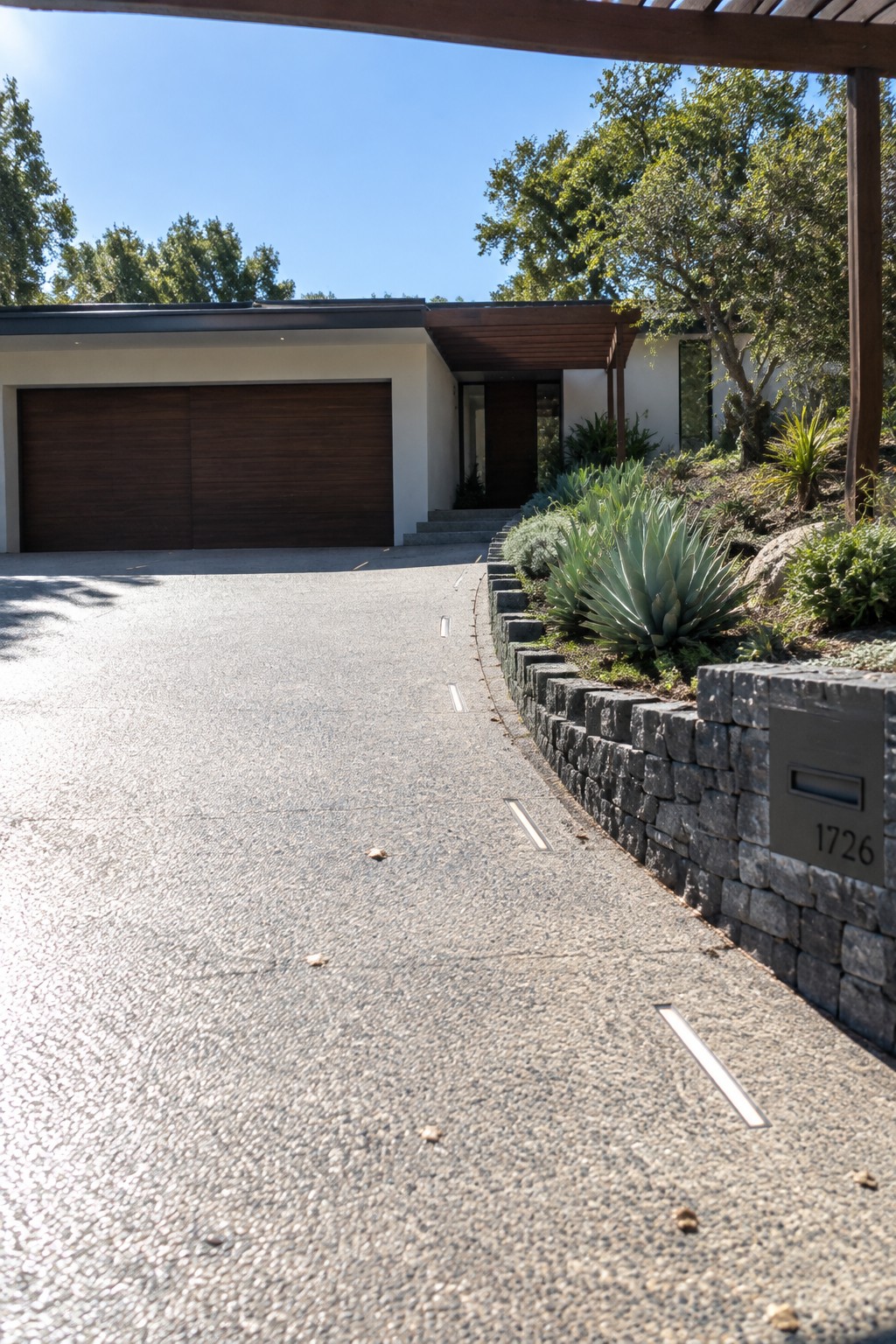
Mid-century modern homes often work best when nothing feels fussy or overdone. Embedding slim linear lights right into the concrete driveway keeps the surface clean while still giving drivers a clear path at night. The lights sit flush, so they do not add clutter or break the long, low lines that define this style.
This approach works especially well on flatter lots where the house sits close to the street. It suits homes with wide garages and simple facades because it reinforces the horizontal feel without competing with the architecture. Just space the lights evenly and keep the rest of the paving plain so the effect stays quiet rather than flashy.
Dark Speckled Pavers With Gravel Borders
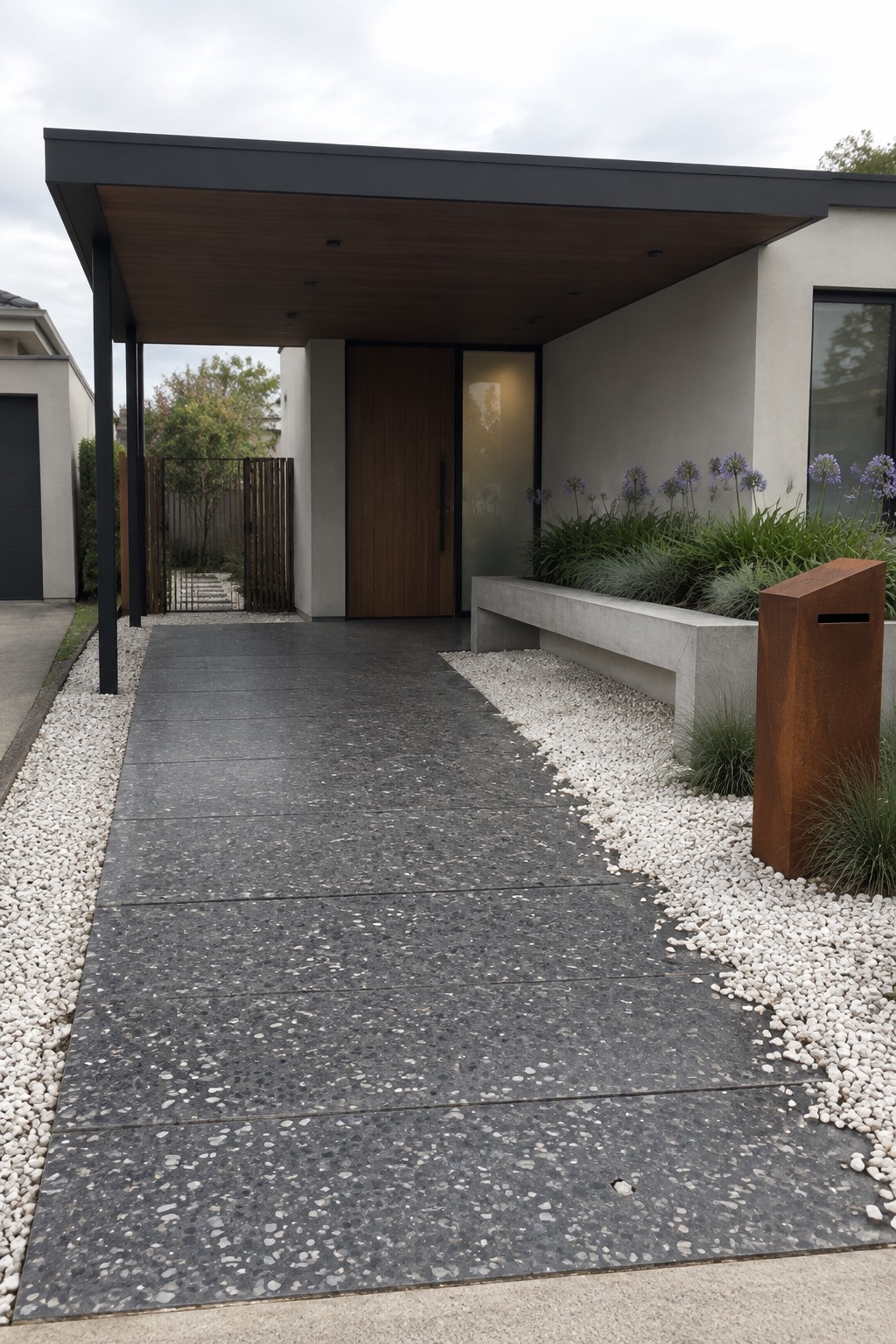
Dark speckled concrete pavers give a driveway a finished look without making it the main feature. The texture breaks up the surface just enough to feel intentional, and the dark tone sits quietly against the house. White gravel on either side keeps the edges clean and helps with drainage.
This approach works well on low-profile modern homes where the driveway should not compete with the architecture. It pairs best with simple planting and minimal edging so the whole entrance stays understated. Avoid using it on very wide drives, where the pattern can start to feel busy.
Large Pavers for a Low Driveway Look
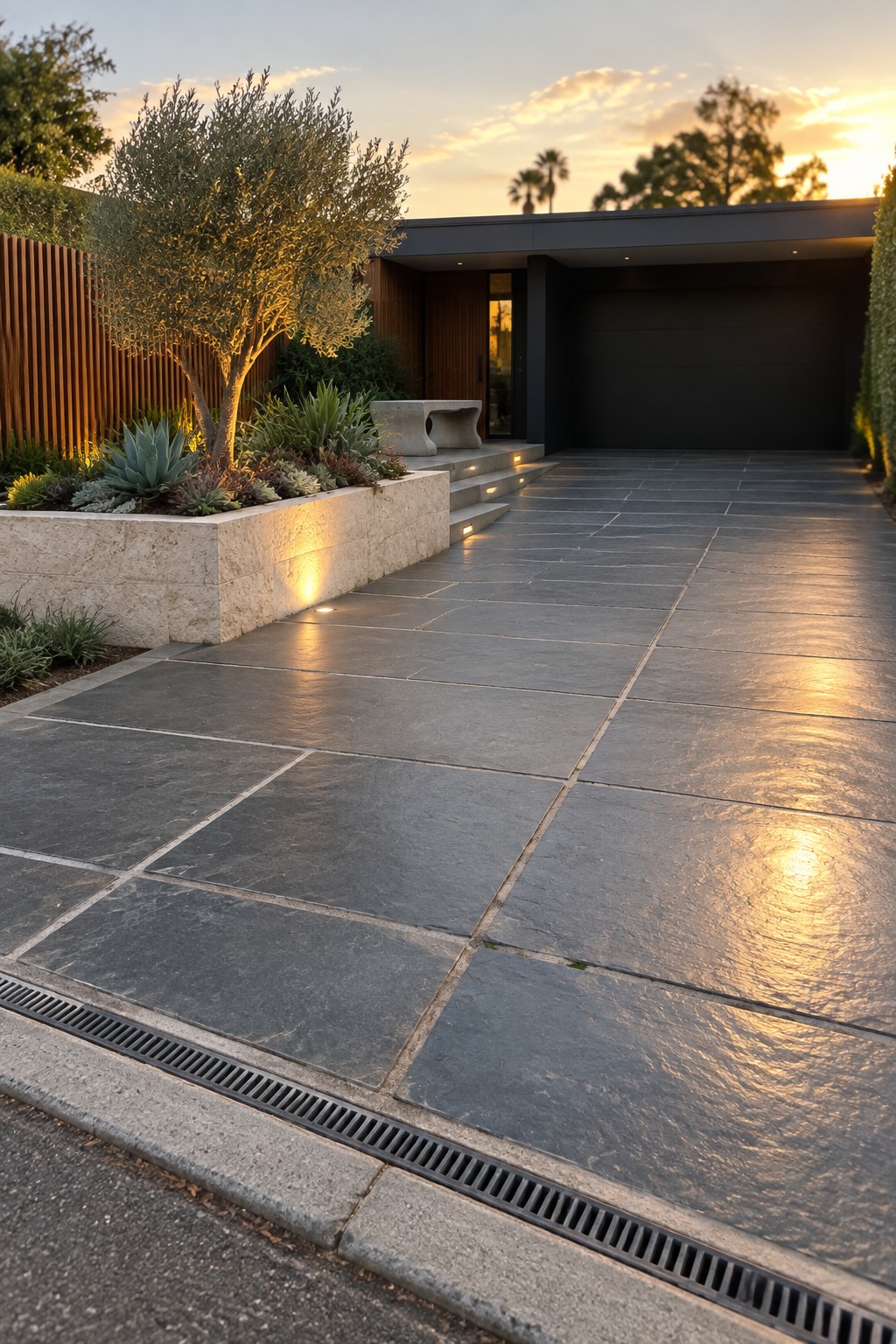
Large pavers give a driveway a more solid and connected feel instead of breaking it up with lots of small seams. They work especially well with low modern homes because the scale matches the clean lines of the architecture and keeps the whole front from feeling busy or scattered.
This approach suits homes that already use stone or concrete on the exterior. Keep the joints tight and the base well prepared so the surface stays flat. The dark tone also helps the driveway recede a bit, which is useful when you want the house itself to stay the main focus.
Space Concrete Pavers With Grass Between Them
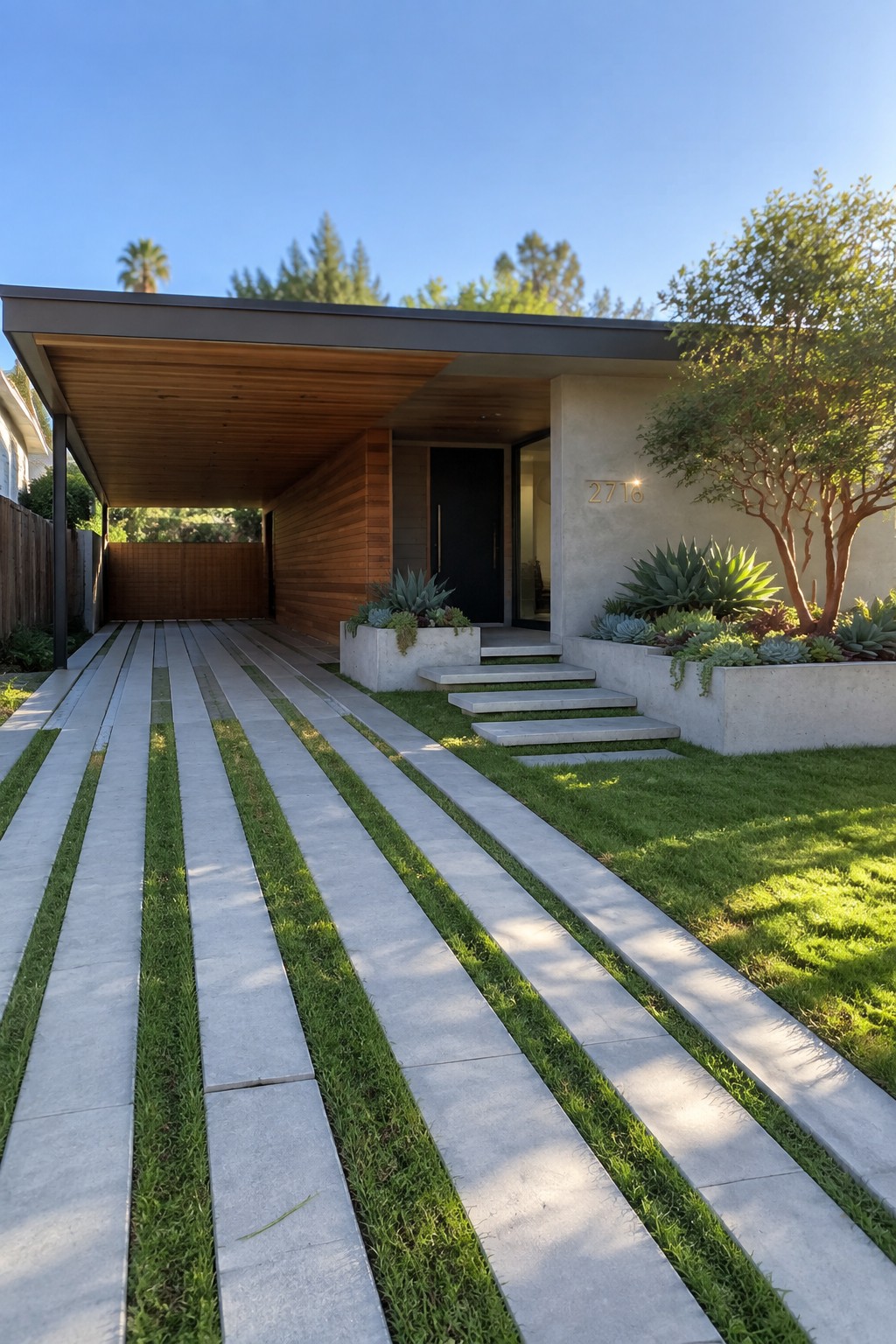
This layout keeps the driveway from reading as one heavy slab of pavement. The strips break up the surface, let grass run through, and help the whole approach feel lighter next to a low house.
It works best on flatter lots where you want the landscape to keep flowing instead of stopping at a solid edge. Make sure the bands sit wide enough for tires and that the grass gets enough sun to stay healthy.
Choose a Textured Concrete Driveway

A wide concrete driveway with visible aggregate gives the house a grounded, no-fuss look that fits right in with mid-century modern lines. It stays flat and simple, so the low profile of the home stays the main focus instead of getting broken up by pavers or fancy patterns.
This works best on homes that already have clean horizontal siding and a dark garage door like the one in the photo. Just make sure the edges are finished neatly and pair it with one strong planting bed so the surface does not feel too bare.
Brick Driveways With a Grass Center Strip
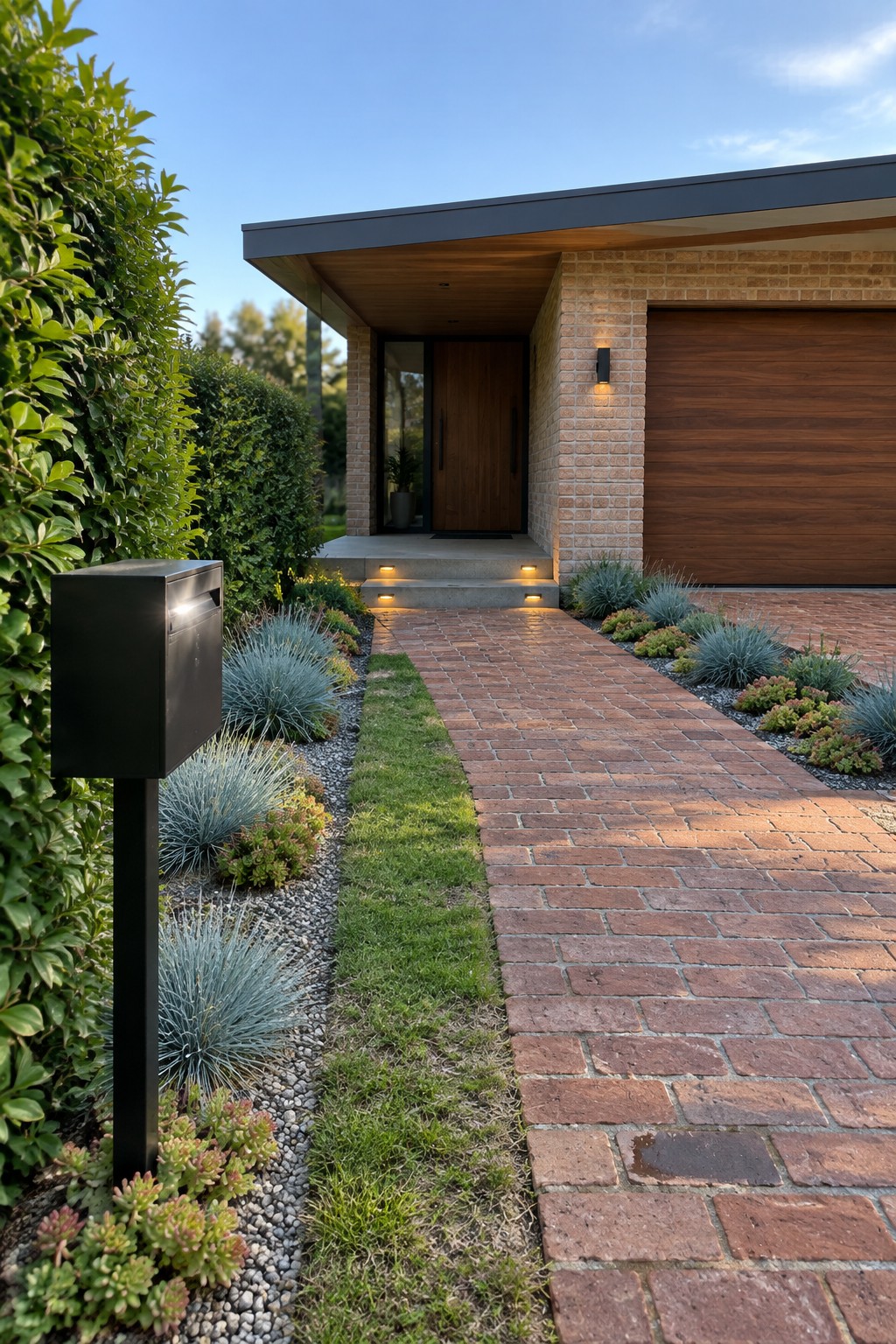
A grass strip running down the middle of a brick driveway softens the look without losing the clean lines that suit mid-century homes. It breaks up the hard surface, keeps the approach from feeling too wide or heavy, and works especially well on flatter lots where the house sits low to the ground. The brick itself adds texture and a bit of warmth that pairs nicely with wood and stone details on the house.
This layout works best on homes with a simple, horizontal feel and enough space on either side for low planting beds. Keep the strip narrow enough to mow easily, and use a consistent brick color so the whole driveway reads as one surface rather than two separate lanes. It is a practical choice if you want the durability of pavers but prefer something less stark than a solid expanse of hardscape.
Pavers Set in Gravel

Large rectangular pavers placed in a bed of gravel give a driveway a quiet, modern feel without drawing too much attention. This approach keeps the surface level and simple, which works especially well with low-profile homes that already have clean lines and minimal ornament. The spacing lets water drain easily and cuts down on the amount of hard paving needed.
This layout suits homes with a mid-century modern look or any house that wants a low-key entry. Keep the pavers wide enough for comfortable walking and car tires, and choose a gravel color that blends with the house materials. Avoid making the path too narrow or letting the gravel creep up over the edges.
Wood Inlays in Concrete Driveways

Many mid-century homes use wide concrete driveways that can feel a little flat. Adding thin wood strips set into the concrete breaks up the surface and adds a bit of warmth without making the whole thing look busy.
This works well on low, horizontal houses where the driveway runs right along the front. Keep the strips narrow and run them straight so the pattern stays simple. Just make sure the wood is properly sealed, since driveways take a lot of wear from cars and weather.
Banded Concrete and Gravel Driveways

This setup uses long runs of concrete separated by strips of gravel to shape the driveway. The pattern breaks up the surface so it feels lighter and more tied to the ground instead of one solid slab.
It suits low-profile homes that already lean modern, especially when the gravel color stays dark enough to keep the lines clear. Make sure the concrete sections sit wide enough for tires and that the gravel stays contained so it does not scatter onto the walkways.
Linear Drains Keep A Driveway Looking Simple
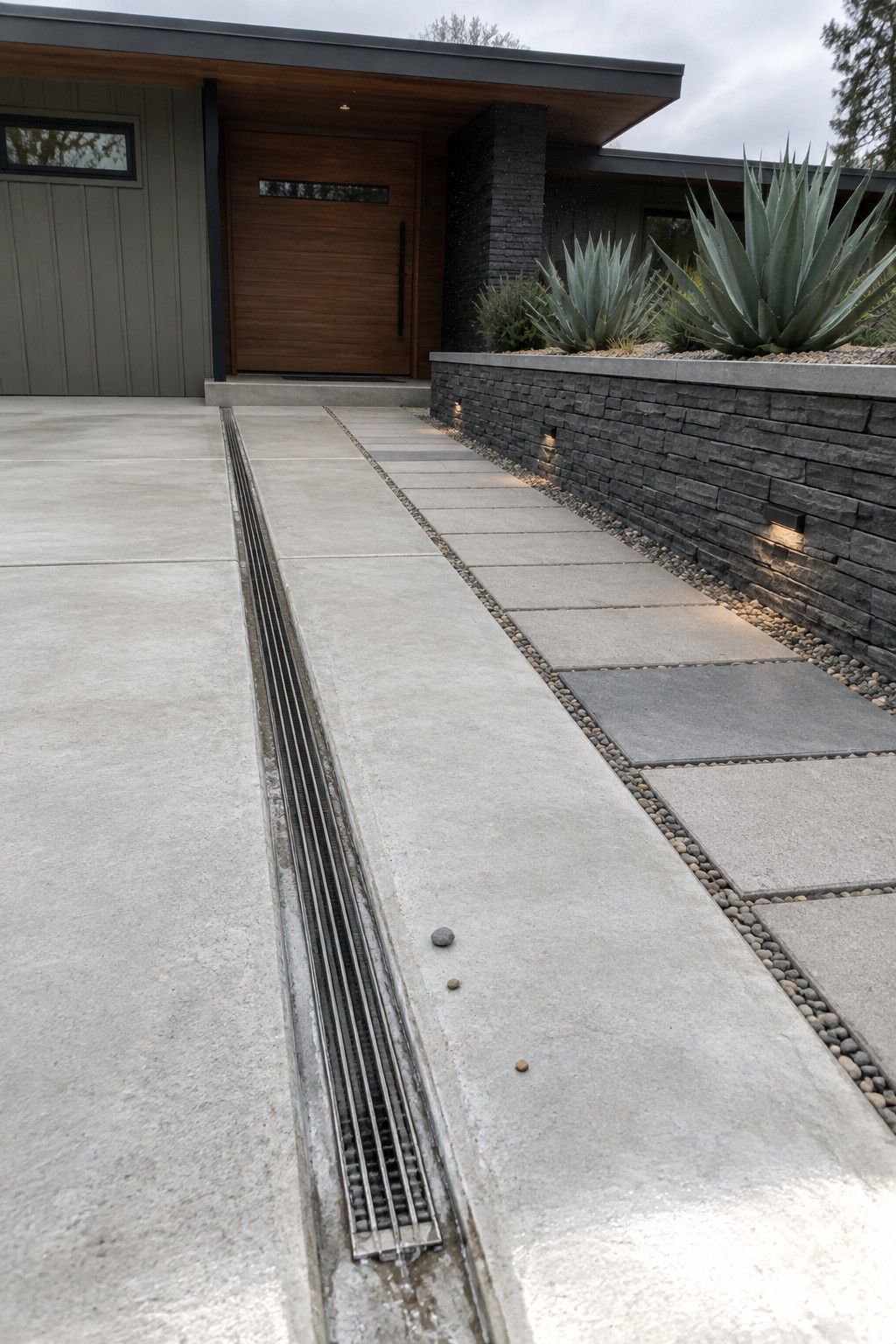
A linear drain lets you handle water without breaking up the surface with multiple grates or steep slopes. It keeps the concrete looking continuous and works especially well when you want the driveway to feel like part of the house rather than an afterthought.
This approach suits low-profile mid-century homes that already lean on clean lines and minimal detailing. Pair it with a simple metal grate that matches your other hardscape materials so it stays quiet in the overall look.
Run a Low Planter Along the Driveway

A long, low concrete planter set right next to the driveway gives the front a clean, finished look without adding much height or visual noise. It creates a simple border between the paving and the planting area while leaving room for a few low plants and some lighting tucked along the edge.
This works best on homes with wide, flat driveways where you want to keep the overall profile low. Match the planter material to the paving so the two read as one continuous surface, and keep the height under two feet so the house still feels open from the street.
Run a Narrow Water Channel Beside the Driveway

A slim water rill next to the driveway gives a low-profile house a quiet sense of movement. The reflections catch light and soften the hard surface without needing extra height or plantings that might compete with the architecture.
This setup works best on flat entries where the house sits close to the ground. Keep the channel narrow, use simple concrete pavers for the drive itself, and let the water do the work of adding interest.
Frequently Asked Questions
Q: My driveway slopes toward the house. What works best here?
A: Crown the center slightly so water runs to the edges. Run a shallow French drain along the low side to carry it away from the foundation.
Q: Do concrete pavers hold up in cold winters?
A: They hold up fine when you pick ones made for freeze thaw cycles. Sweep the joints each spring so moss never gets a foothold.
Q: Should I match the driveway color exactly to my house trim?
A: Skip the exact match. Go a shade lighter or darker so the two surfaces stay distinct.
Q: How do I keep weeds out of a gravel drive?
A: Put landscape fabric down first. Add a fresh layer of gravel every few years as the old stuff settles.
