

Narrow frontages force you to think carefully about how a driveway lines up with the house and whether it leaves any room for the entrance to feel like the main feature.
I have walked past plenty of modern homes where the side drive blends in because the paving matches the facade materials and the planting softens the edge.
The trick seems to be treating the drive as part of the overall exterior rather than an afterthought that just needs to reach the garage.
That balance is harder than it looks on plans.
A few of these ideas show how small shifts in layout or edging can keep the front looking clean and intentional even when space is limited.
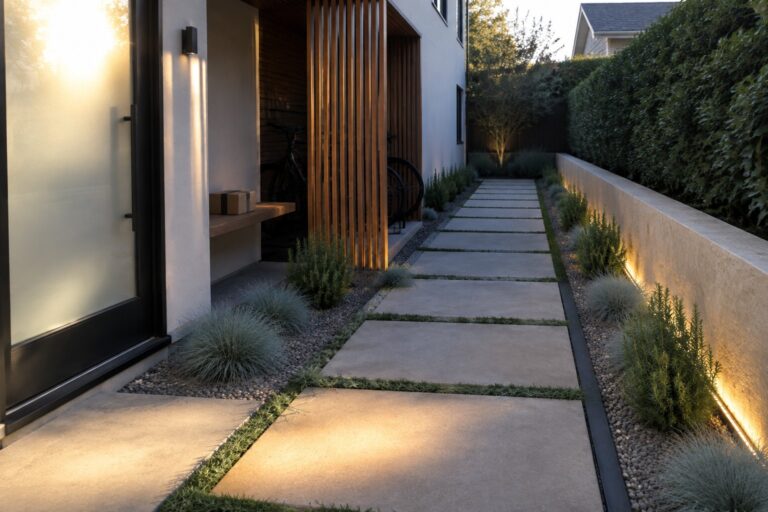
Use Spaced Pavers With Grass for a Narrow Side Path
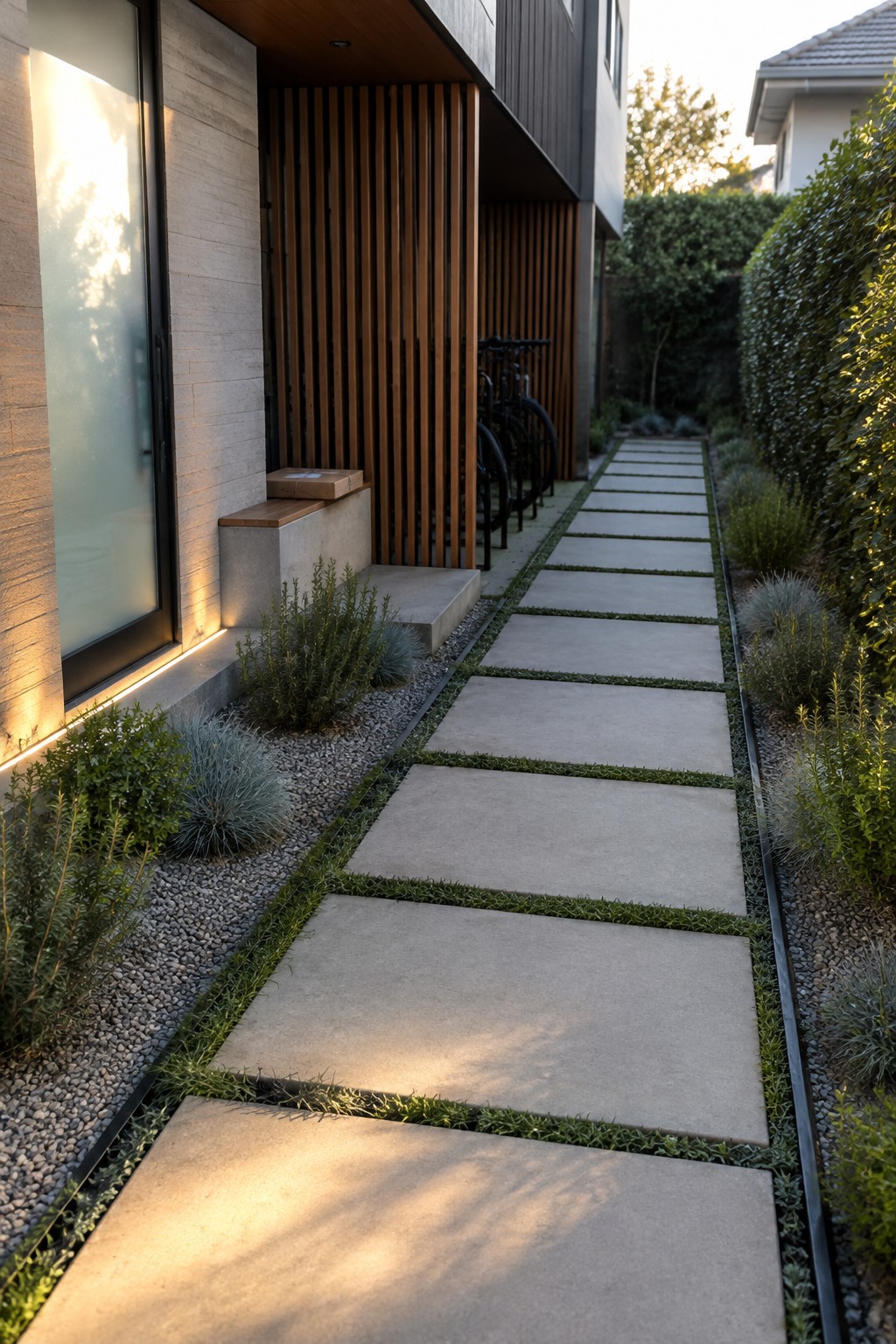
This layout turns a tight side strip into usable access without crowding the house. Large concrete pavers set in a straight line give solid footing, while the grass joints soften the look and keep the path from feeling like a solid slab of concrete.
It suits modern homes with limited frontage where every inch counts. Keep the surrounding gravel clean and choose tough, low plants along the edges so the whole thing stays neat with minimal upkeep.
Use Dark Pavers With A Linear Drain For Side Driveways

Dark pavers give a narrow side driveway a solid, finished look without needing much width. The material holds up well to cars and foot traffic while the linear drain keeps water from pooling along the edge. This setup works especially well on tight lots where a standard driveway would crowd the house.
Gravel on the outer side softens the look and helps with drainage too. It suits modern homes that already use concrete or stucco, and it keeps the path from feeling like an afterthought. Just make sure the pavers sit level and the drain has a slight slope so it actually works when it rains.
Concrete Pavers With Gravel Infill
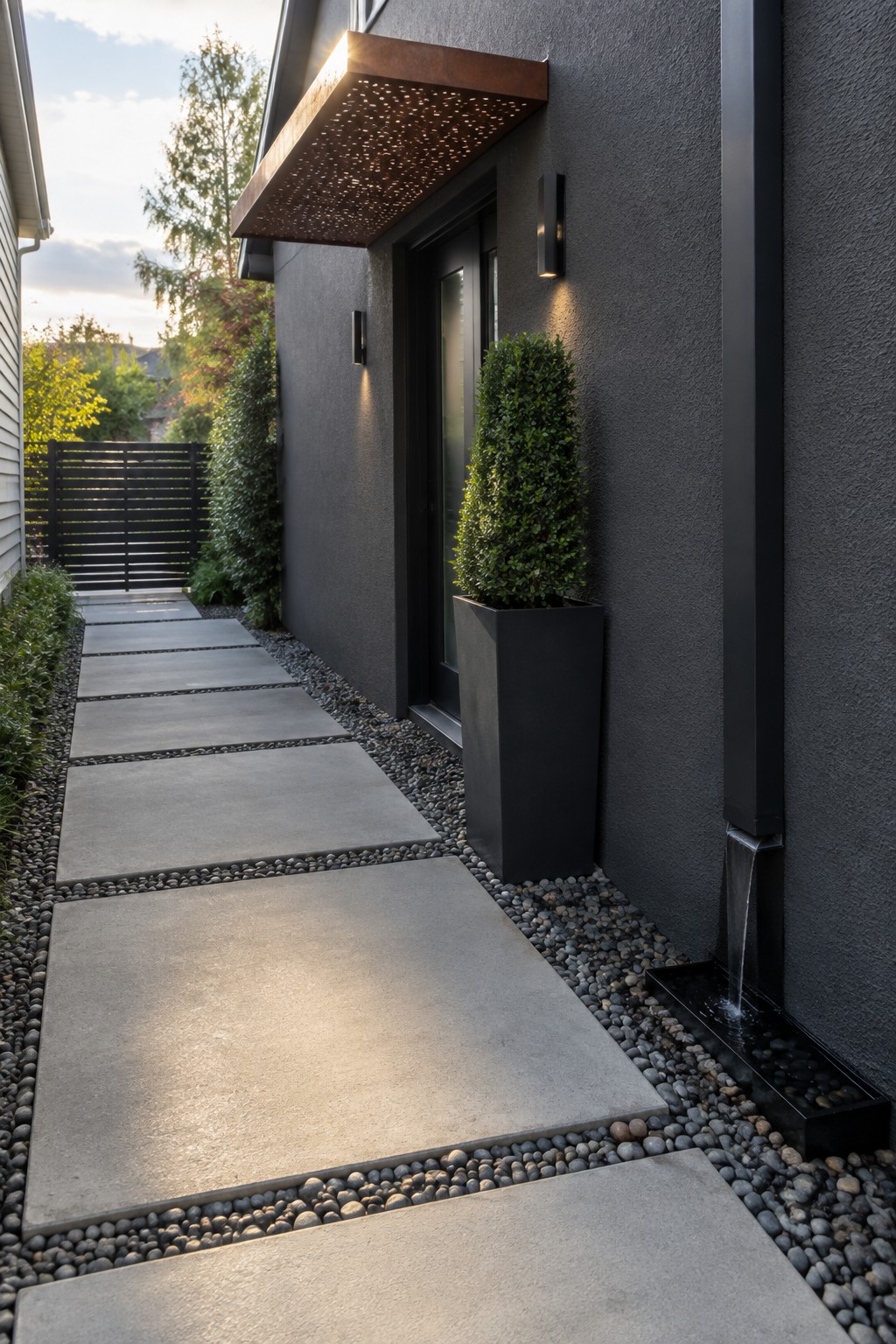
Large concrete pavers set with gravel between them give a side path a clean, structured look without making the space feel too hard or closed in. The gaps let water drain easily and keep the path from looking like a solid slab of concrete, which works especially well when the frontage is tight and you need the side access to stay open and simple.
This approach suits modern homes that already use darker materials or minimal planting. Keep the pavers large and the gravel consistent so the path reads as one clear line rather than a jumble of small pieces. It stays low maintenance and avoids the need for a full poured driveway in a narrow spot.
Checkerboard Pavers With Grass
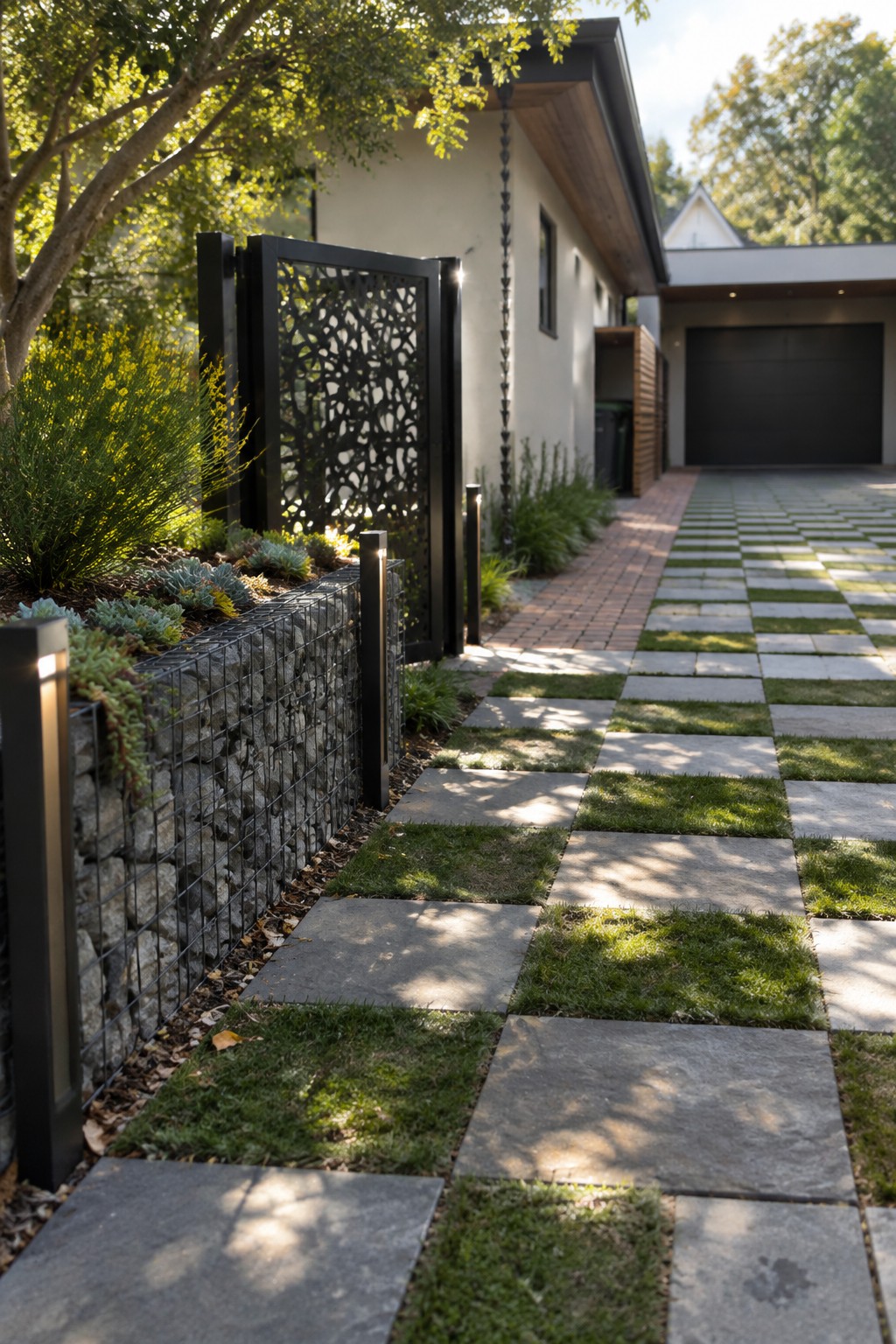
A simple grid of large stone pavers set with squares of turf between them gives a side driveway more character without taking up extra width. The pattern breaks up the hard surface so the drive feels less like a slab of concrete and more like part of the garden. It works especially well on narrow lots where every inch of frontage counts and you still need room for a car.
This layout suits modern homes that already use clean lines and mixed materials. Keep the pavers large and the grass sections consistent so the pattern stays easy to mow and walk on. Just make sure the base under the pavers is solid enough to handle regular vehicle weight.
Corten Steel Screens Along Narrow Side Paths

A corten steel screen works well along a narrow side driveway because it adds a solid edge without eating into the limited width. The warm rust tone pairs naturally with concrete paving and soft planting, and it gives a bit of privacy from the neighbor while still letting light through the open sections.
This approach suits modern homes where the side access needs to feel intentional rather than leftover space. Tuck the mailbox and house number into the metal so the wall does double duty, and keep the path itself simple with large pavers and low ground cover between the joints.
Line a Side Driveway With Tall Narrow Trees

Tall slim evergreens planted in a raised bed work well along narrow side driveways because they add height and screening without eating into the limited width. The trees create a green wall that softens the hard surfaces and gives some privacy from the street or neighbors while still leaving room for walking or bike access.
This approach suits modern homes on tight lots where a full garden bed would feel cramped. Keep the bed narrow and linear, choose columnar varieties that stay compact, and add simple lighting at the base so the path stays usable at night. Just watch the root space and make sure the trees will not outgrow the bed over time.
Wooden Planks Over Gravel Work Well In Narrow Side Passages
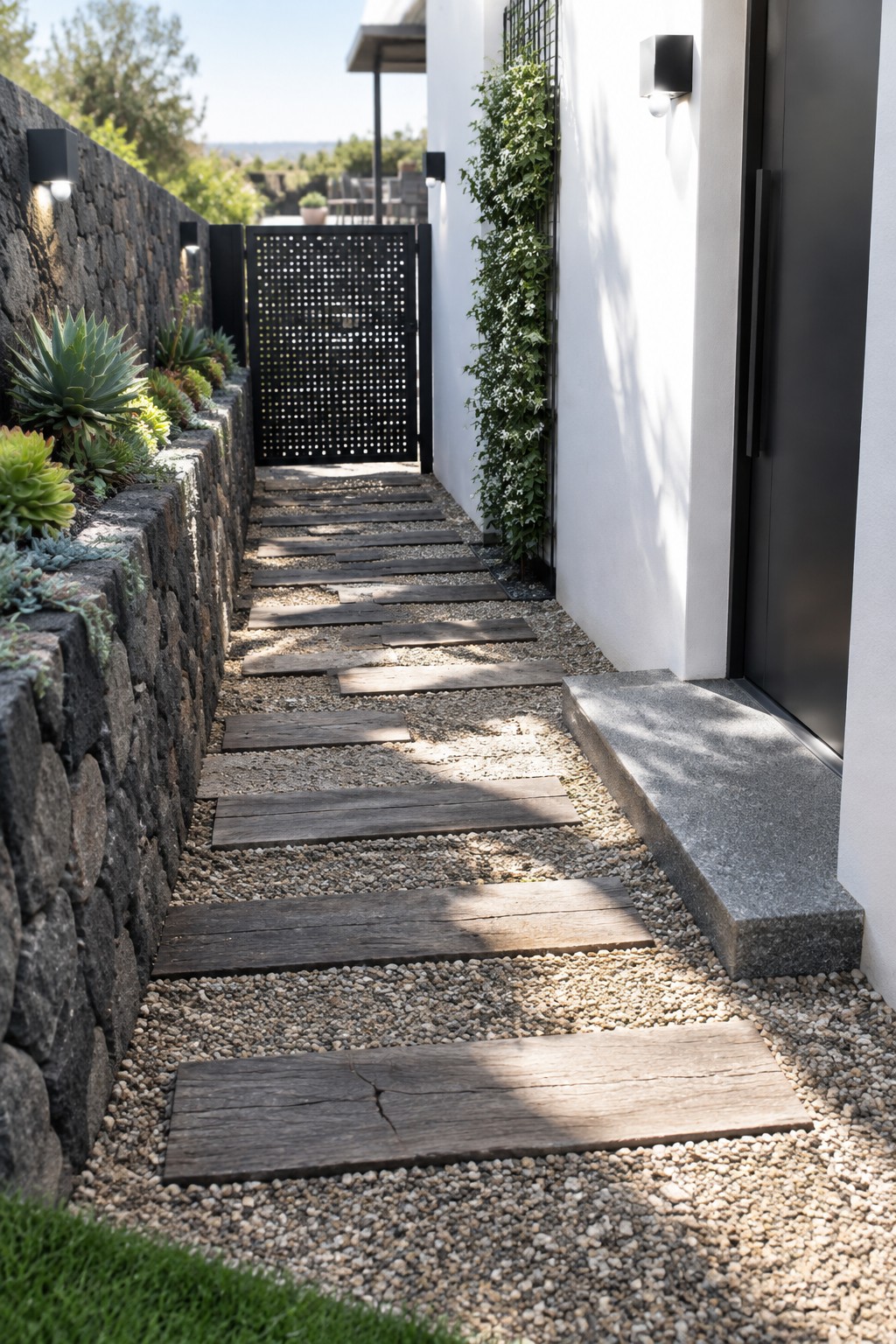
This setup keeps a side path functional without making the space feel crowded. The planks sit right on the gravel so water drains through easily, and the whole thing stays low maintenance even with regular foot traffic.
It fits homes where the frontage is tight and you still need side access to the backyard. Treat the timber for weather, space the planks at a comfortable stride, and let low plants along the edge soften the look without blocking the way.
Paver Paths With Pebble Borders Work Well In Narrow Side Yards
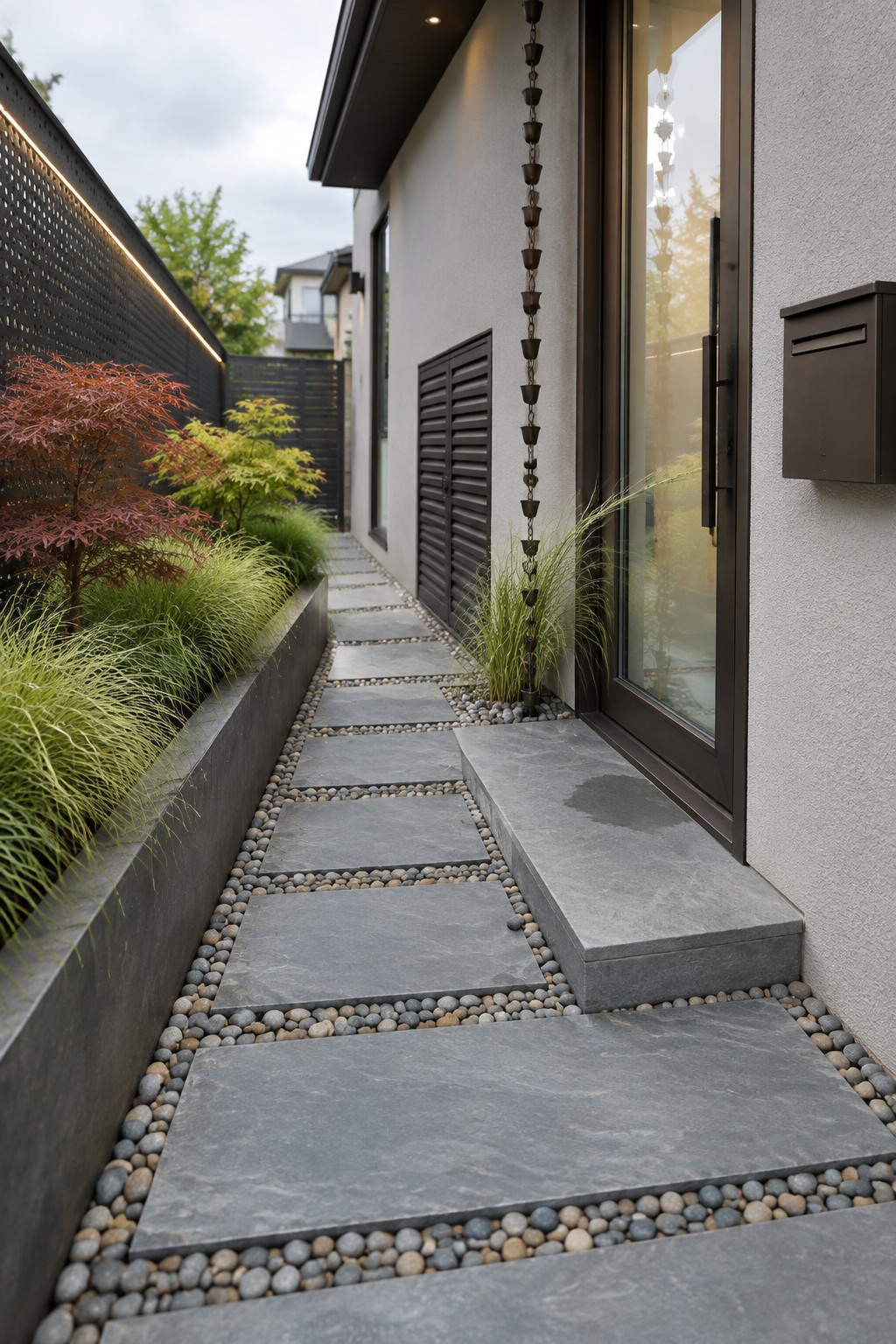
A simple path made from large stone pavers set into a pebble border keeps the walkway narrow but still feels solid underfoot. The border holds everything in place and stops the pavers from shifting over time, which matters when space is tight along the side of a house.
This setup suits modern homes with limited frontage because it tucks neatly between the building and a planting bed without eating into usable width. Just make sure the pavers are wide enough for comfortable steps and that the pebbles sit slightly lower so they do not scatter onto the main walk.
Planting Between Pavers In Narrow Driveways
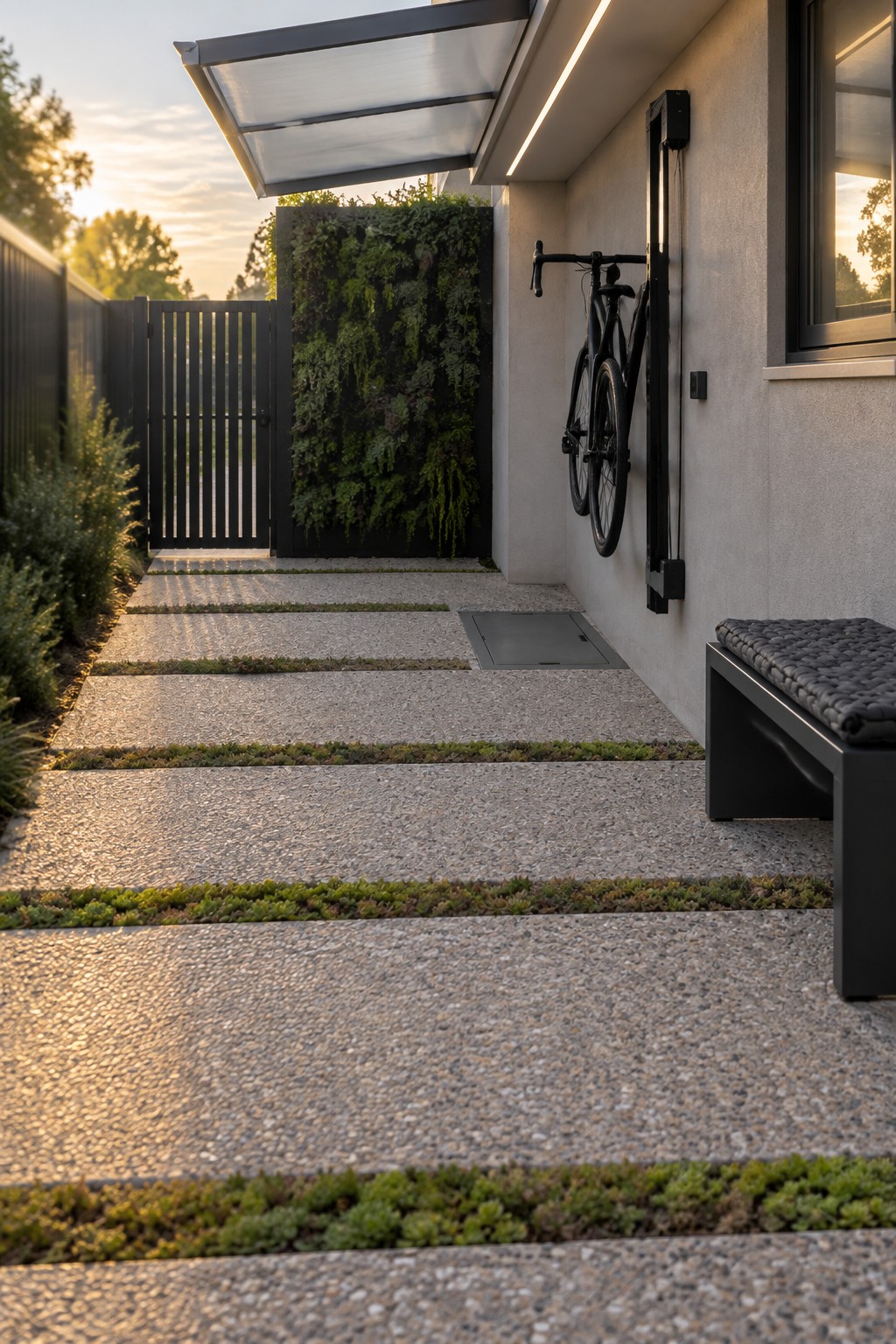
Many modern homes with tight side access end up with long stretches of plain concrete that feel harsh. Spacing out large pavers and letting low plants grow in the gaps softens the look right away while still keeping the surface practical for walking or light vehicle use.
This works especially well on narrow lots where you need a clear path but do not want the whole area to read as solid hardscape. Choose tough, low-growing plants that can handle some foot traffic and occasional shade from the house, and keep the gaps narrow enough that the pavers still feel stable underfoot.
Combine Stone Pavers and Gravel for a Narrow Side Path
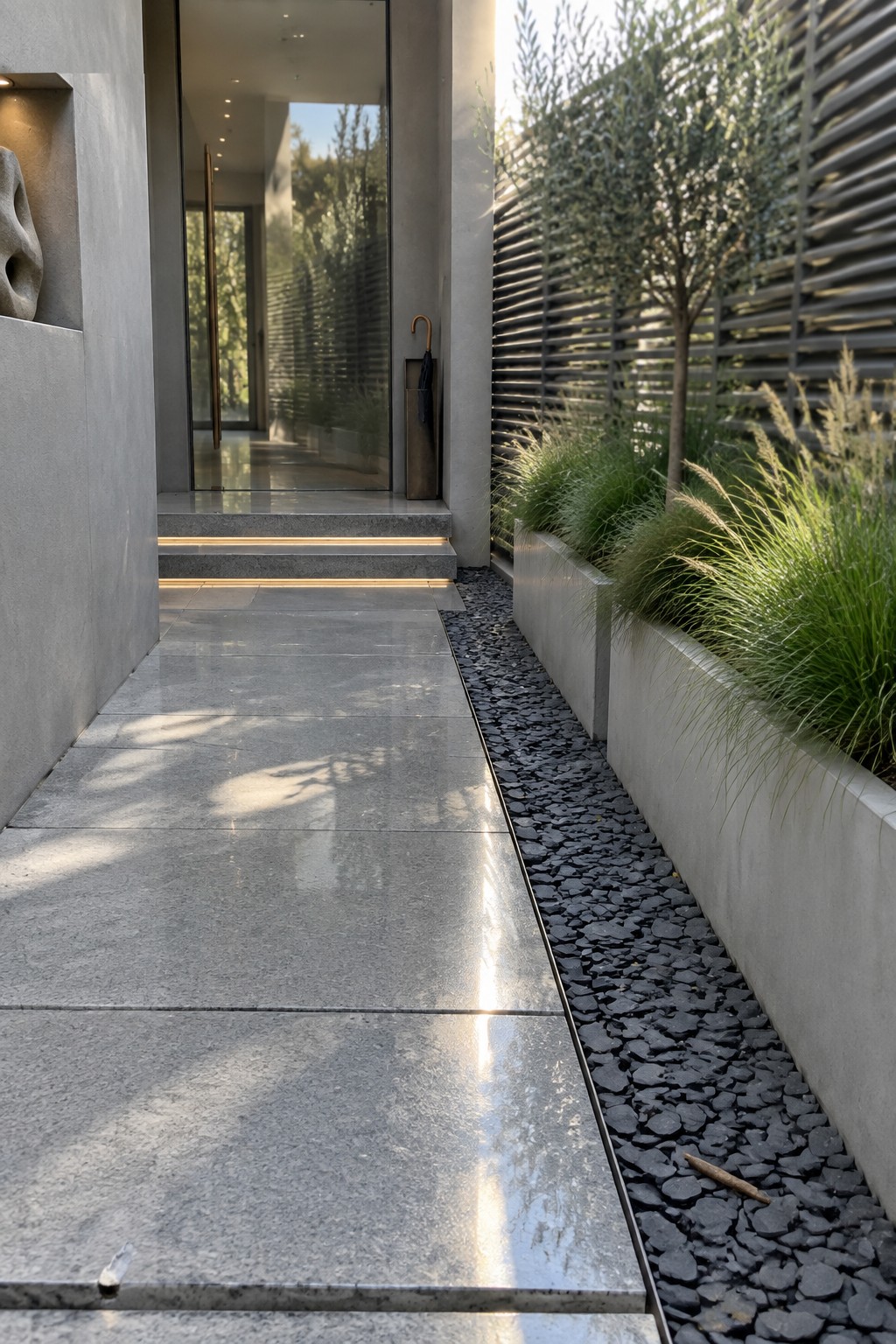
A long run of large stone pavers next to a gravel strip gives a clean, simple way to move along the side of a house when the frontage is tight. The gravel takes up little width but adds texture and a place for planting that keeps the whole area from feeling like a plain slab.
This setup suits modern homes that need practical access without eating into limited yard space. The raised planters keep soil and roots contained, while the gravel helps with drainage and makes the path feel a little wider than it really is. Stick to tough grasses or small trees so the strip stays low maintenance.
Stepping Stones Over Gravel

A gravel path with large stepping stones works well for narrow side access because it stays functional without needing a full width walkway. The stones give you solid footing while the gravel fills in around them, so the whole thing feels open and drains well after rain. It also keeps the look simple next to the house instead of adding another paved surface.
This approach suits modern homes where the side yard is tight and you still need a way to reach the back or a side door. Keep the stones big and spaced for comfortable steps, and add a low border or lighting if you want it to feel more finished. Just make sure the gravel stays contained so it does not spill onto other areas.
Insert Grass Strips Between Pavers
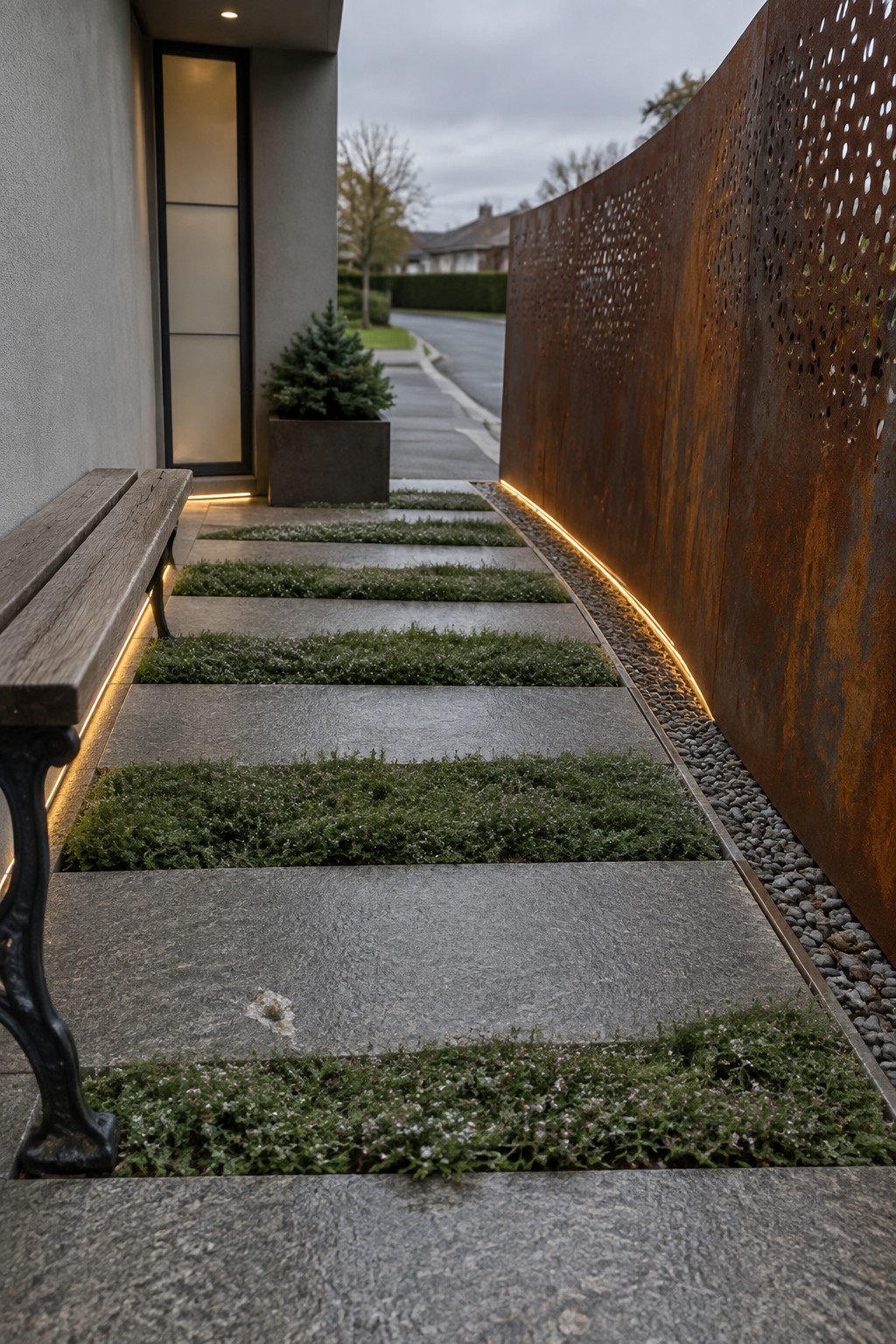
A path made of large pavers with grass growing in the gaps works well when space is tight along the side of a house. It keeps the surface usable while adding a bit of green that breaks up all the hard material. The strips also help with drainage and make the whole route feel less cramped than solid paving would.
This approach suits modern homes where the side access needs to stay narrow but still look intentional. Keep the paver sizes consistent and choose a low-growing grass or ground cover that can handle some foot traffic. Add a simple border like gravel along one edge if you want to separate it from a wall or screen.
Cover a Narrow Side Path With a Pergola
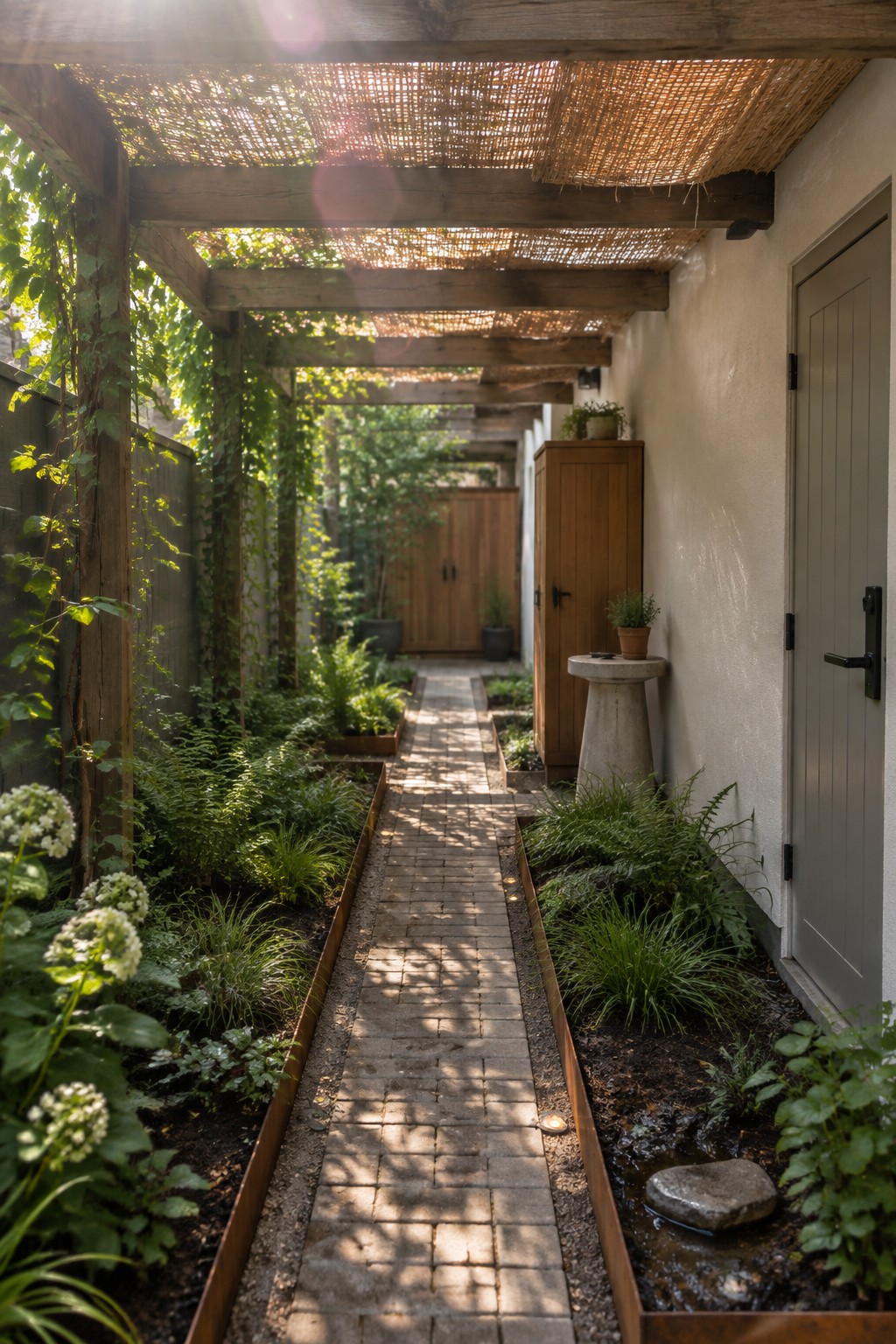
A long narrow side space often ends up as wasted ground or just a strip of gravel. Adding a simple pergola overhead with a brick path below turns it into a real walkway that feels intentional instead of leftover.
This setup works best on homes where the side passage needs to stay clear for access but could still look better. Keep plantings low along the edges so the path stays open, and let a few vines climb the posts for shade without taking over the space.
Add A Linear Drain To Narrow Side Paths
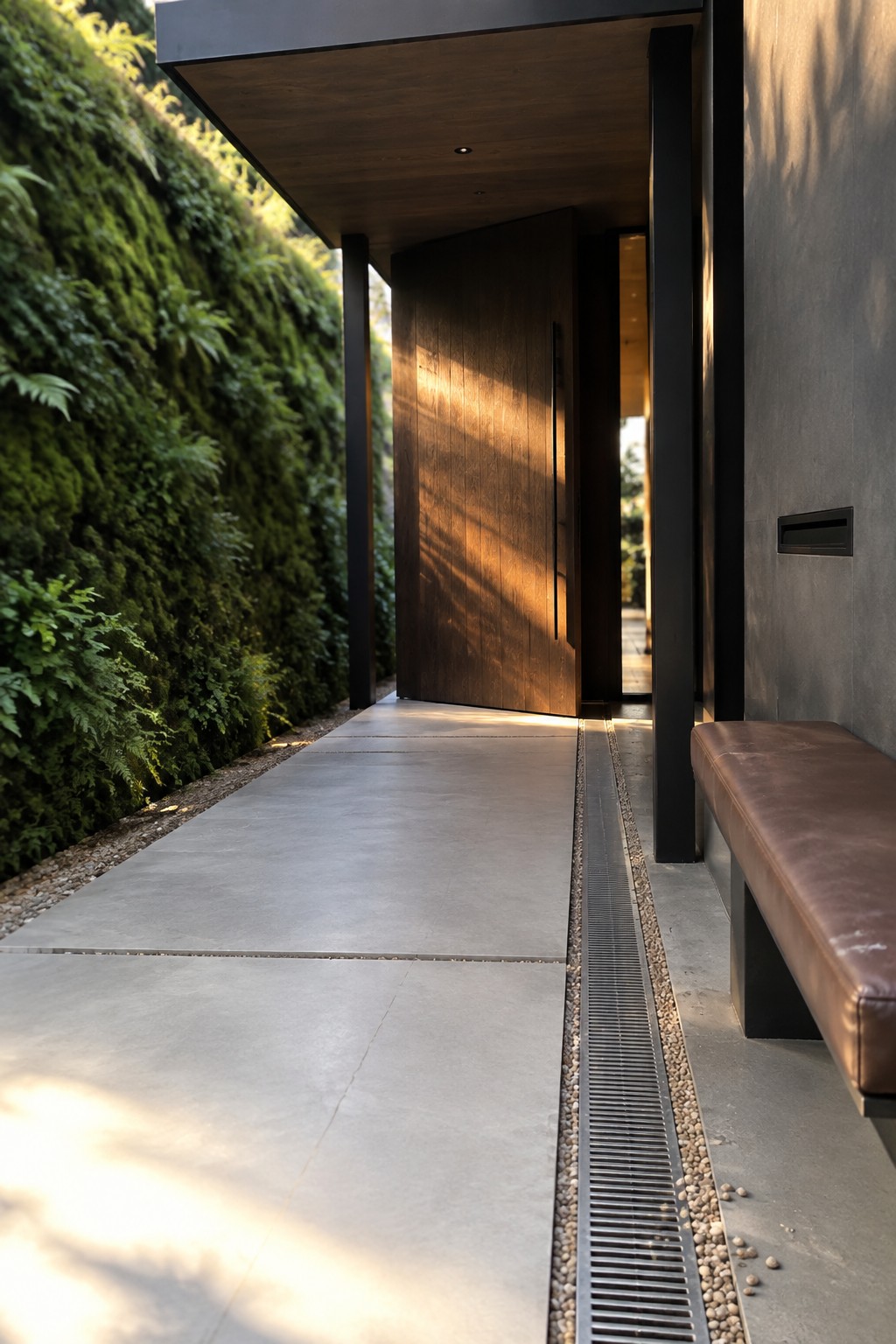
A linear drain works well when space is tight because it handles water without forcing the path to slope heavily or look cluttered. In homes with narrow frontages, this keeps the walkway flat and wide enough for daily use while moving runoff out of the way quickly.
Place the drain along one edge where the hard surface meets gravel or planting. It suits modern entries that already use simple materials like concrete and wood, and it reduces the need for extra grates or visible pipes. Just make sure the slope still directs water toward the channel so it does not pool near the door.
Brick Pavers Work Well for Narrow Side Driveways

A narrow side driveway often needs to stay functional without taking over the whole yard. Brick pavers laid in a straight run give a clear walking and driving surface while gravel on either side helps with drainage and keeps the width from feeling too tight.
Low shrubs planted along the house soften the edge and make the path feel more intentional. This approach suits homes where the side yard is the only option for access and you want something simple that still looks neat year after year.
Edge Narrow Paths With Pebble Strips
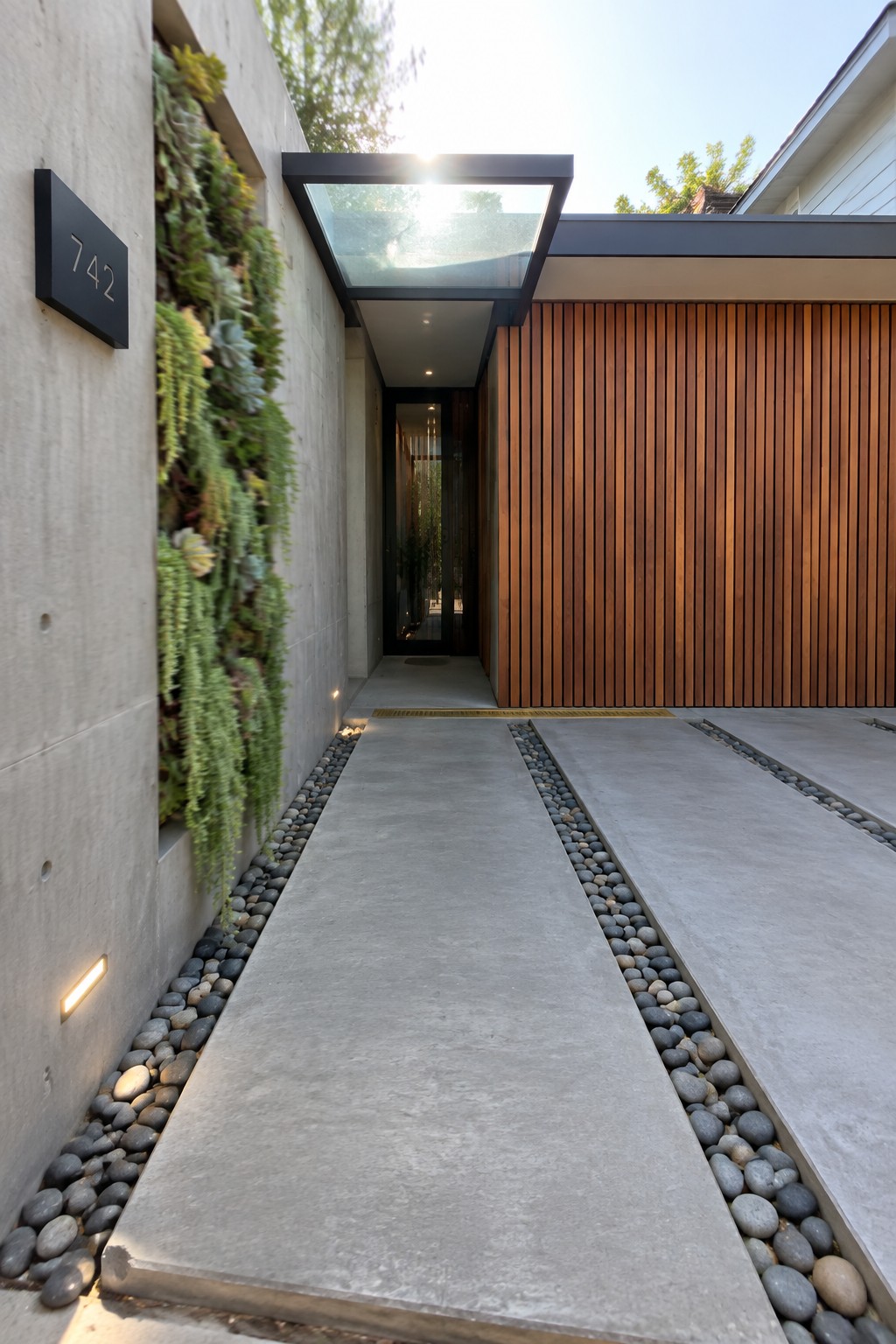
Pebble channels running alongside concrete slabs give a narrow side entry some texture and help with drainage at the same time. The setup keeps the walkway feeling open instead of cramped, which matters when the frontage is tight and every inch counts.
This works best on modern homes where you want clean lines but still need a bit of softness. Keep the pebbles in a single size and color so the look stays simple, and make sure the strips sit slightly lower than the concrete to avoid tripping points.
Line a Narrow Side Path With a Long Planter
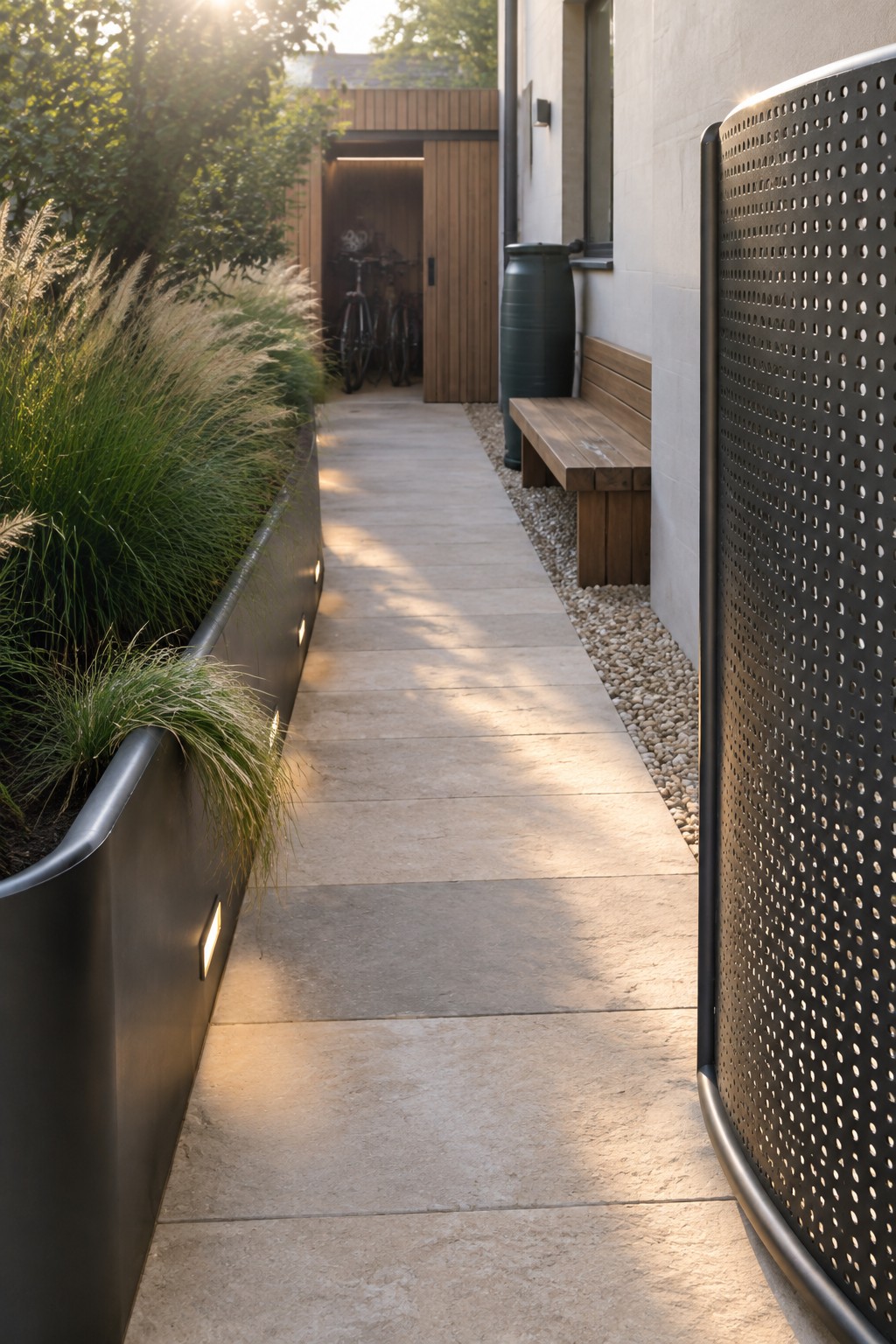
A long planter running the length of a tight side path keeps plants in bounds while still leaving room to walk. The built-in lights along the base make the route feel safer after dark without needing extra fixtures overhead.
This works best on homes where the side access doubles as both a walkway and a service route. Stick with tough grasses that do not need much trimming, and keep the planter height low so it does not crowd the space or block light from windows.
Frequently Asked Questions
Q: Can I fit a side driveway if my frontage is under twenty feet wide? A: Measure the space from your house to the property line first. Many modern designs tuck a narrow strip right along the side without crowding the front. You can angle it slightly to make entry smoother.
Q: What happens if rain pools along the side of the house? A: Slope the driveway surface away from the foundation right from the start. Add a simple French drain along the edge if water tends to collect there. This keeps your basement dry and the drive usable year round.
Q: Is gravel a good choice for a side driveway on a narrow lot? A: Gravel drains well and costs less to install. But it shifts under tires so you may need to rake it back into place every few months.
