


When you pull up to a property the gate is often the first thing that shapes how the whole house feels from the road.
Matching the gate to the siding and roofline usually makes the entrance look more settled than trying to add contrast just for show.
Some gates work better once they are actually built than they do in drawings.
I have found that checking how the posts sit against the existing fence line saves a lot of adjustments later on.
A few of these setups are worth sketching out on site before committing to the final materials.
Wooden Gates with Stone Pillars

A wooden gate set between stone pillars gives a farmhouse driveway a clear starting point without making the entrance feel closed off. The simple cross bracing and weathered finish on the wood add just enough structure while the stone keeps the whole thing grounded and lasting.
This approach works best on properties that already have gravel or brick drives and older homes with similar natural materials. Keep the gate height modest and the hardware straightforward so it feels like part of the landscape rather than a separate feature.
Solid Gates With Brick Columns
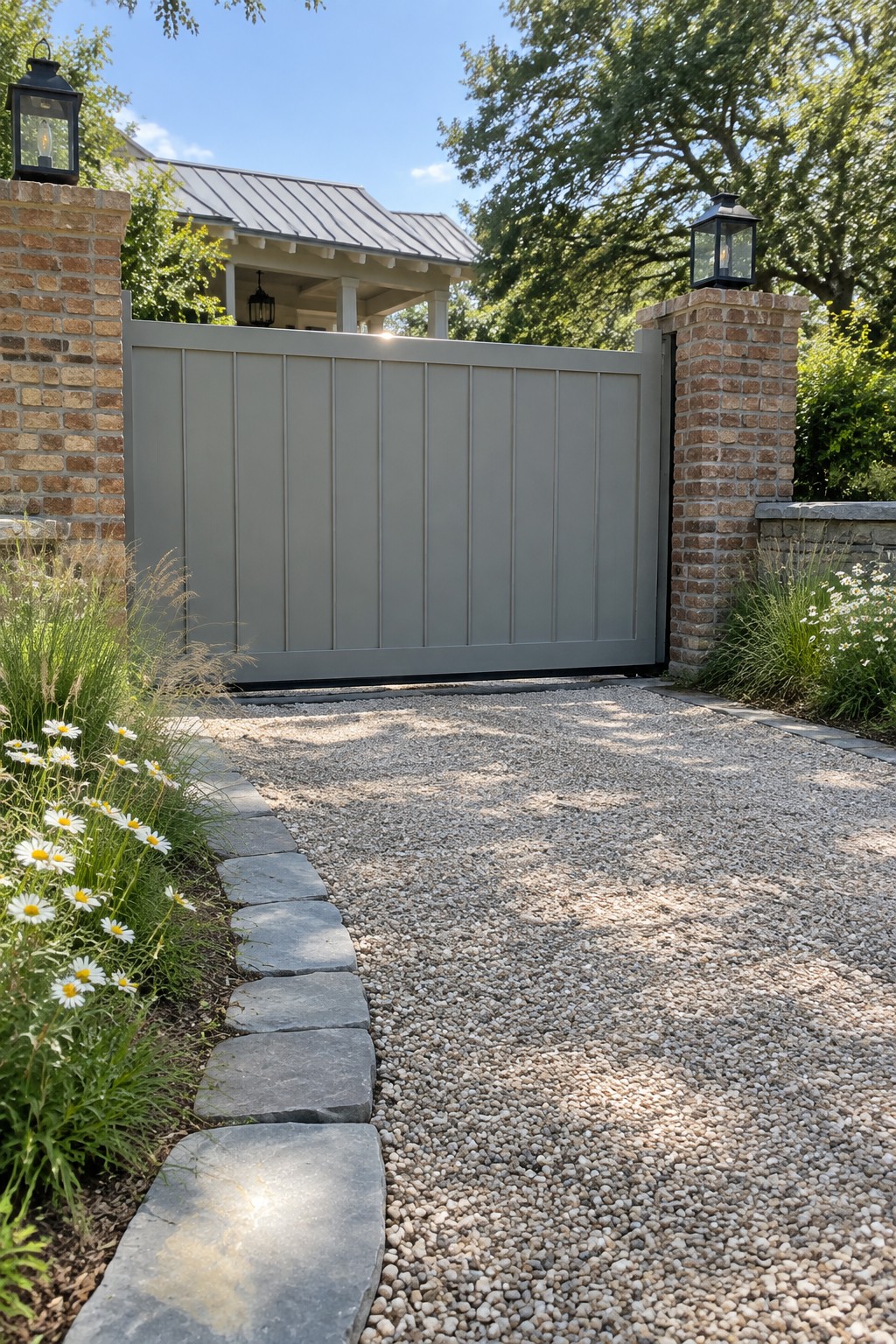
A solid gate like this one gives the entrance a clean, closed-off look that still feels welcoming from the road. The vertical boards keep the style simple and farmhouse appropriate, while the muted gray color blends in without drawing too much attention.
Brick columns on each side make the whole setup feel more finished and lasting. This approach works especially well on gravel drives where you want clear boundaries without adding ornate details or extra upkeep.
Wooden Gate With A Rose Arbor

A wooden gate topped with an arbor gives the entrance a finished look that feels welcoming without trying too hard. The climbing roses soften the wood and add height right where the driveway meets the road.
This setup works well on gravel paths for farmhouse style homes. Keep the arbor simple and choose a rose variety that can handle your climate so it does not need constant fuss.
Vertical Slat Gates With Brick Pillars

A vertical slat gate in a dark finish gives a driveway entrance clear lines and a bit of privacy without looking heavy. The contrast with light brick columns keeps the whole thing simple and easy to read from the street. It works especially well on homes that lean modern farmhouse, where you want the gate to feel current but still welcoming.
This approach suits properties that already have clean siding or white brickwork. Keep the slats evenly spaced and the columns substantial so the gate sits solidly in the landscape. Avoid making the gate too tall or the spacing too tight, or it can start to feel closed off rather than open.
Start the Path With a Picket Gate

A low white picket gate gives the entrance a clear starting point without making the space feel closed off. The stone path and loose flowers on either side help the gate feel like part of the garden instead of just a barrier.
This works best on smaller properties or homes where the front area is mostly garden rather than a long driveway. Keep the gate simple, use sturdy hardware, and make sure the path stays wide enough for two people to walk side by side.
Wrought Iron Gates Between Stone Pillars

A wrought iron gate set between stone pillars gives a driveway a clear sense of entry while still feeling open. The dark metal stands out against the lighter stone, and the whole setup reads as sturdy without looking heavy.
This approach works well on farmhouses or older homes where the entrance sits a little ways back from the road. Keep the gate simple in pattern if the house already has a lot of detail, and make sure the pillars match the scale of the drive so they do not feel too small once installed.
Rope Between Posts For A Simple Driveway Gate

Stringing a thick rope between two wooden posts gives a driveway entrance an easy, unfussy look that fits right into a farmhouse setting. It marks the boundary without the bulk of a full gate and keeps the whole approach feeling open and practical.
This works especially well on gravel drives where you want a visual line but still need occasional vehicle access. Set the posts firmly in the ground so the rope stays taut, and keep the surrounding planting loose and natural so the posts blend into the landscape rather than stand out as a separate feature.
Stone Pillars With Lanterns At The Entrance

Stone pillars topped with lanterns give a driveway a settled, welcoming start without needing anything fancy. They work because the material feels sturdy and the light adds a soft glow that shows the way in after dark. Many older farmhouses already use this look, so it fits right in with that style.
Try matching the stone to what is already on the house or walls if you can. Keep the lanterns simple and warm rather than too bright. This setup suits longer driveways or properties where you want the entrance to feel clear and inviting from the road.
Rustic Metal Gates with Farm Motifs

A metal gate with cutout scenes of barns, windmills, and fencing gives a farmhouse driveway a clear point of interest right at the entrance. The rusted finish helps the gate settle into the landscape instead of standing out as brand new.
This works best on properties that already use stone walls or simple plantings along the drive. Match the gate color to any metal accents on the house so the whole entrance feels connected rather than added on later.
Wrought Iron Gates With Lanterns

A simple wrought iron gate can turn an ordinary garden path into a clear entrance. The dark metal stands out against the greenery without feeling heavy, and it gives visitors an obvious spot to pause before stepping through.
Hang a lantern on a nearby post or wall so the gate stays easy to spot after dark. This setup works best on homes with established shrubs or vines that can grow around the frame, and it keeps the entrance feeling welcoming rather than closed off.
Stone Arches For Gate Entries

A stone arch over a driveway gate gives the entrance some real weight. It feels solid and permanent, which helps the whole property look more settled instead of just another opening in a fence.
This approach works best on older homes or places that already have stone somewhere on the property. Pair it with simple black metal gates so the stone stays the focus, and keep the path wide enough for easy vehicle access.
Cobblestone Driveways With a Simple Gate

A cobblestone driveway gives the whole entrance a settled, old-house feel that works especially well with a basic gate. The rough texture slows you down in a good way and makes the approach feel more intentional than a plain paved road ever does.
This setup suits farmhouses or older homes that already have some brick or stone on the property. Keep the gate straightforward in color and style so the driveway itself does most of the work. Just watch the upkeep, since cobblestone can collect leaves and needs occasional resetting.
Mixing Wood And Metal For A Farmhouse Gate

Many people like the look of wood paired with metal on a driveway gate because it keeps things simple while adding some visual interest. The wood gives a warm, natural feel and the metal panel lets light through without opening up the whole entrance.
This approach works best on homes with brick or stone posts and gravel drives. Use a dark frame to tie the two materials together and keep the design from feeling too busy or overly styled.
Define the Entry With a Dark Picket Gate

A black picket gate gives the front walk a clear starting point. The dark paint makes the gate easy to spot from the street while the simple vertical boards keep the look clean and unfussy.
Set two large matching planters on either side of the gate posts to tie the entrance together. This setup suits farmhouse homes where the walk begins near the sidewalk, and it works best when the planters are kept in scale with the gate itself.
Add Woven Fencing Beside Your Gate
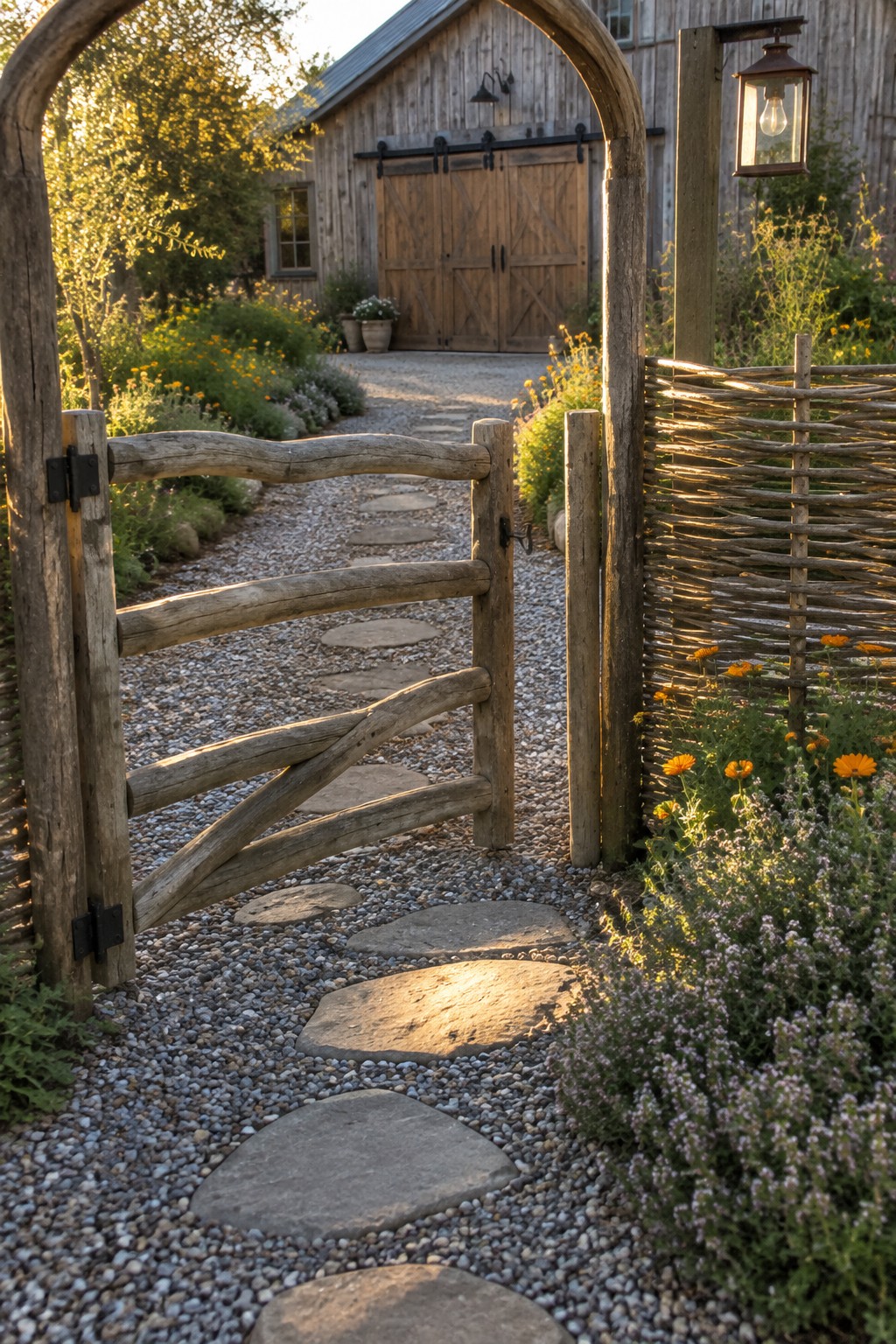
A woven fence panel next to a wooden gate gives the entrance a softer look than a solid fence would. The branches catch light nicely and let some of the garden show through, which makes the whole entry feel more open and welcoming on a farmhouse driveway.
This works best when the path is gravel with a few stepping stones set in it. Keep the planting fairly loose on either side so the fence reads as part of the garden rather than a hard boundary. Treated wood and branches hold up well in most climates, though you may need to replace the woven section every few years.
Wood Slat Gates With Stone Posts

A wood gate built with simple horizontal slats often feels more welcoming than a solid panel. The open lines keep the entrance from looking closed off, and the wood brings warmth that works well with farmhouse homes. Stone posts add weight and structure without needing extra decoration.
This approach suits homes that already use stone somewhere on the property. Match the stone on the posts to any stone on the house, and keep the wood tone natural or lightly stained so it ages evenly. Avoid making the gate too tall, or it can start to feel like a fence instead of an entry.
Frequently Asked Questions
Q: How wide should my gate be for a standard two car driveway?
A: Start by measuring the full width between your posts. Add a little extra so the gate clears easily when it swings. A pair of gates often balances the look better than one big panel.
Q: Do wood gates need much upkeep in rainy areas?
A: Seal the wood every year or two to keep moisture out. Check for cracks after storms and fix them quick. That keeps the gate looking fresh without big repairs later.
Q: Can I install the gate myself or should I hire help?
A: Basic gates go in with basic tools if you set the posts level. Call a pro for anything with wiring or heavy stone work.
