

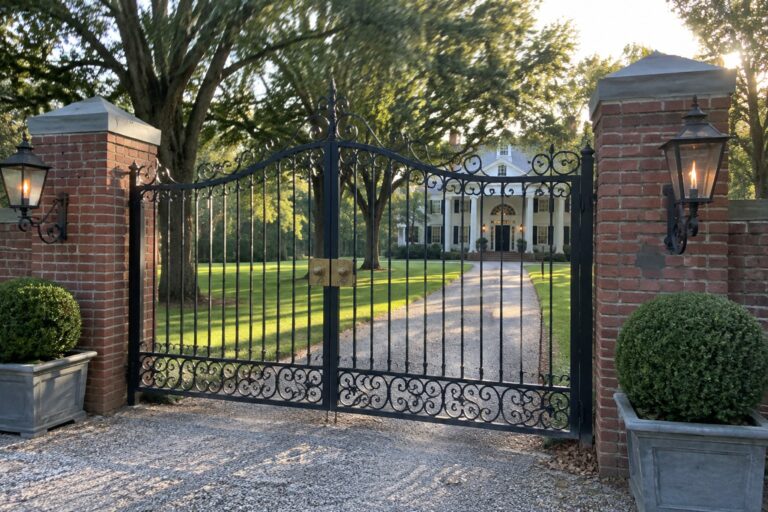
I have always noticed how the gate at the end of a driveway sets the tone for the entire property before you even reach the front door. Choosing the right style and material can either blend with the colonial architecture or stand out in a way that feels off balance. Some options work better on paper than they do once installed. I usually test ideas by picturing how the gate would frame the house from the street and whether the proportions would still feel right once the rest of the facade comes into view. That kind of check keeps the entrance looking intentional rather than added on later.
Classic Wrought Iron Driveway Gates
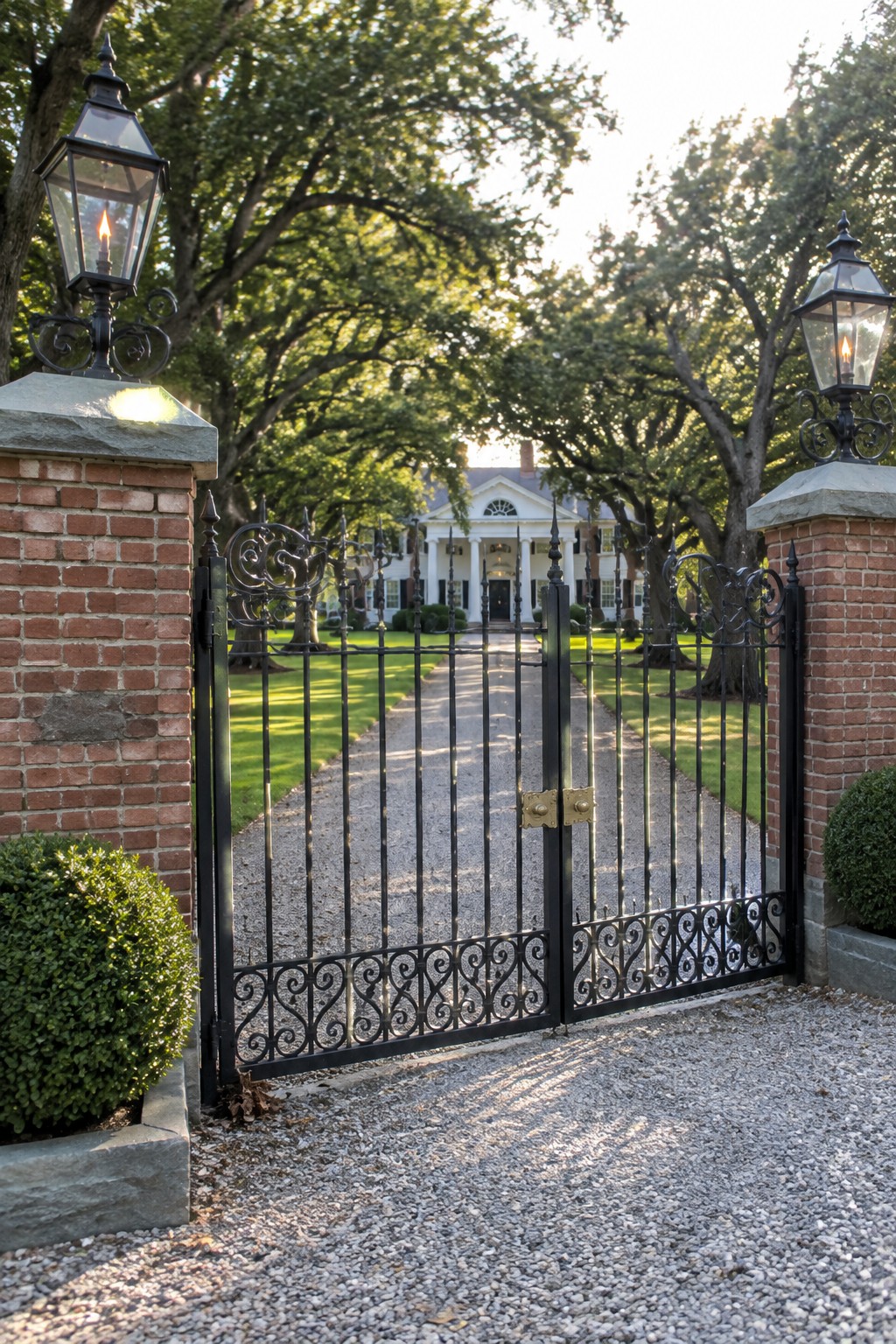
Wrought iron gates give a colonial home that formal first impression without feeling overdone. The dark metal stands out nicely against brick piers, and the simple scrollwork adds just enough detail to feel traditional rather than fussy. Many people like this look because it keeps the entrance feeling open while still marking the property line clearly.
This approach works best on homes with a centered driveway and some space between the street and the house. Keep the gate height consistent with the piers, and match the lantern style to the rest of the exterior lighting so everything reads as one clean entry. Avoid adding too many extra flourishes if the house itself is already detailed.
White Driveway Gates With Stone Pillars
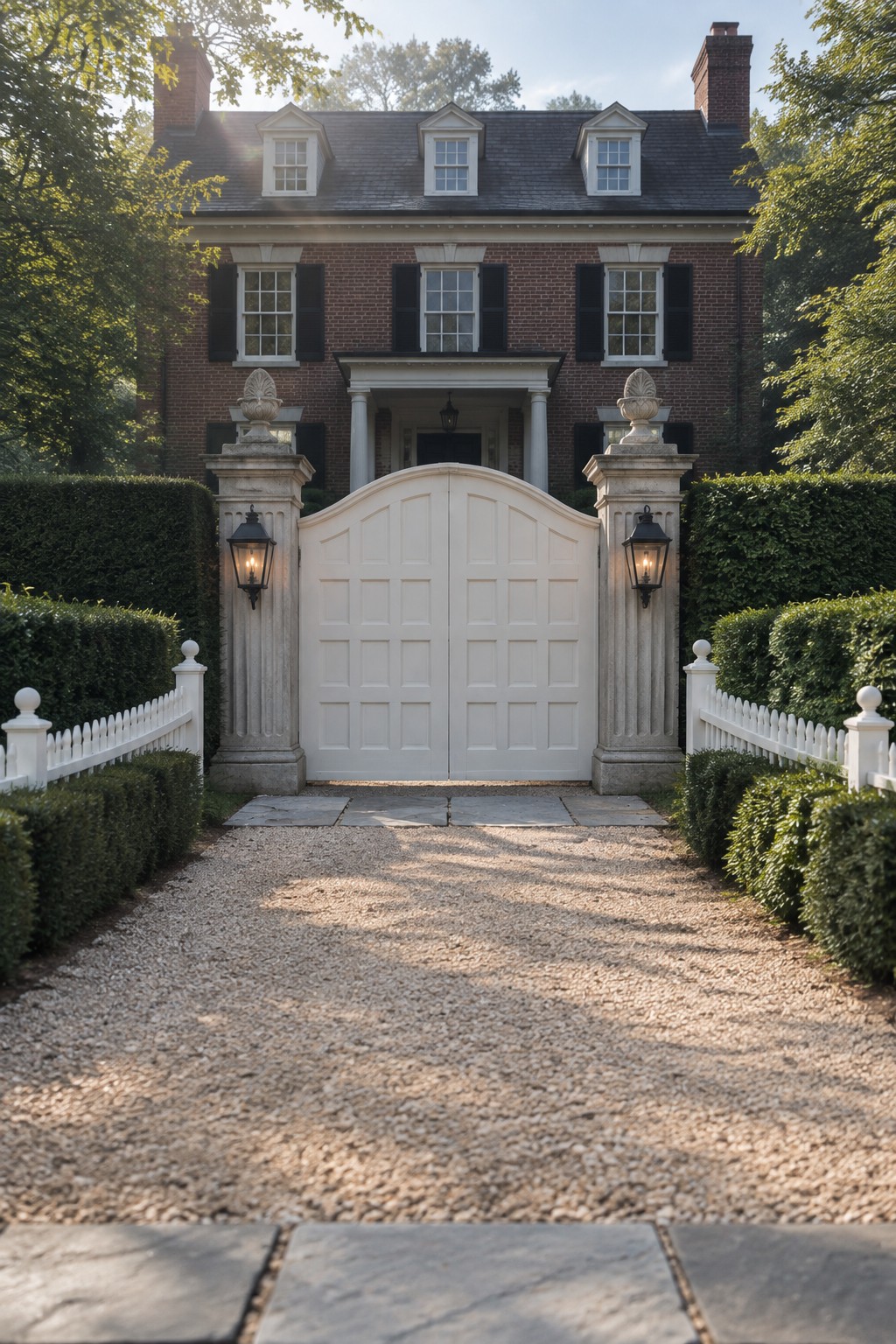
A simple white gate set between stone pillars gives a colonial entrance that clean, settled look many people want. The arched top and solid panels keep it from feeling too fussy while still marking the entrance clearly.
This approach works best on homes with brick or traditional siding and established hedges. Use matching stone for the pillars, add a pair of lanterns for light at night, and keep any fencing low so the gate stays the main feature.
Wrought Iron Gates Between Stone Pillars
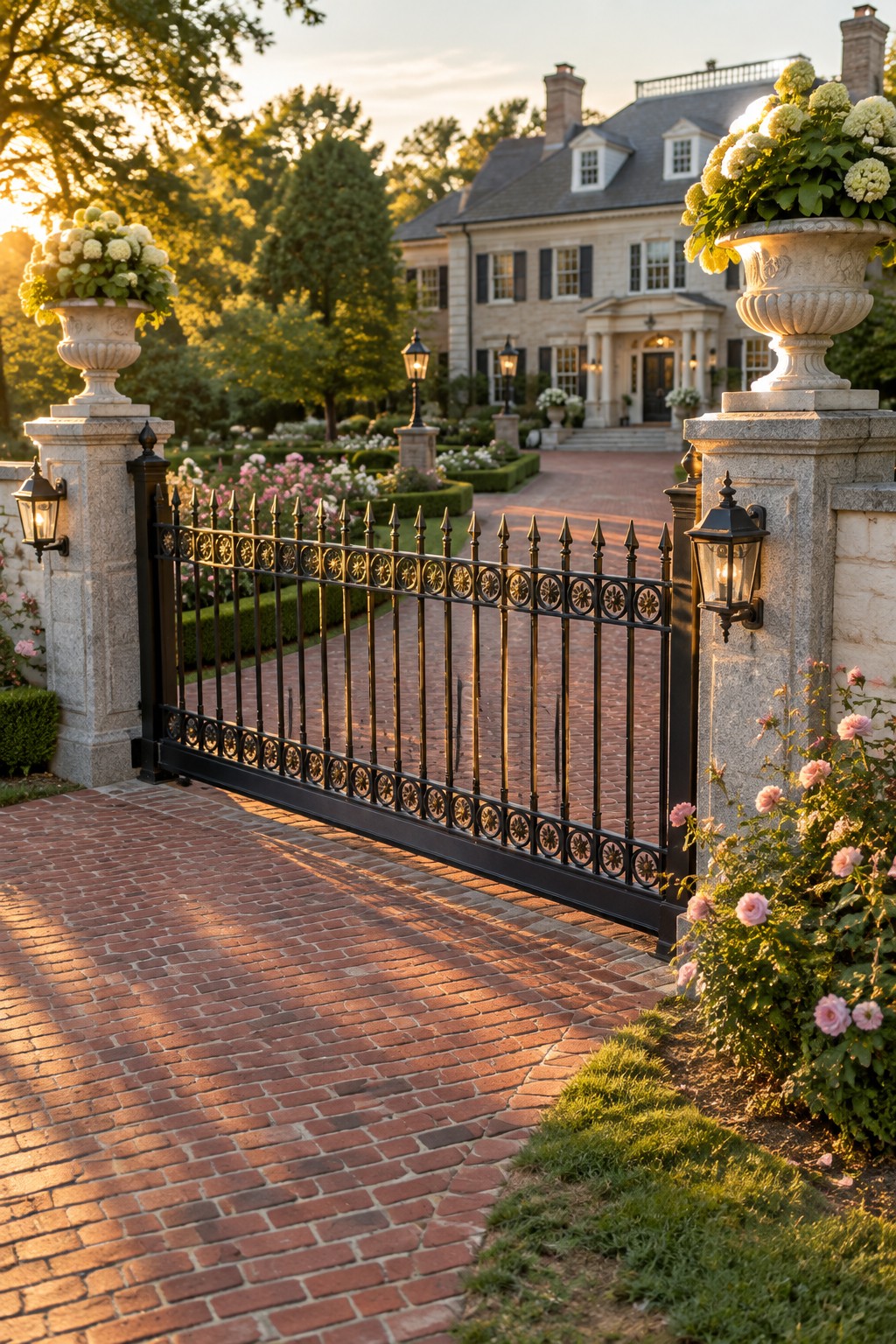
A black iron gate with repeating circular patterns makes a strong first impression when it sits between matching stone pillars. The solid pillars give the gate weight and presence, which helps it feel like a permanent part of the entrance rather than something added later.
This setup works best on homes with a formal colonial style and a longer driveway where you want to mark the boundary clearly. Keep the gate design simple enough to match the house trim, and make sure the pillars are wide enough to carry the look without appearing top heavy.
Wrought Iron Gates Between Matching Pillars
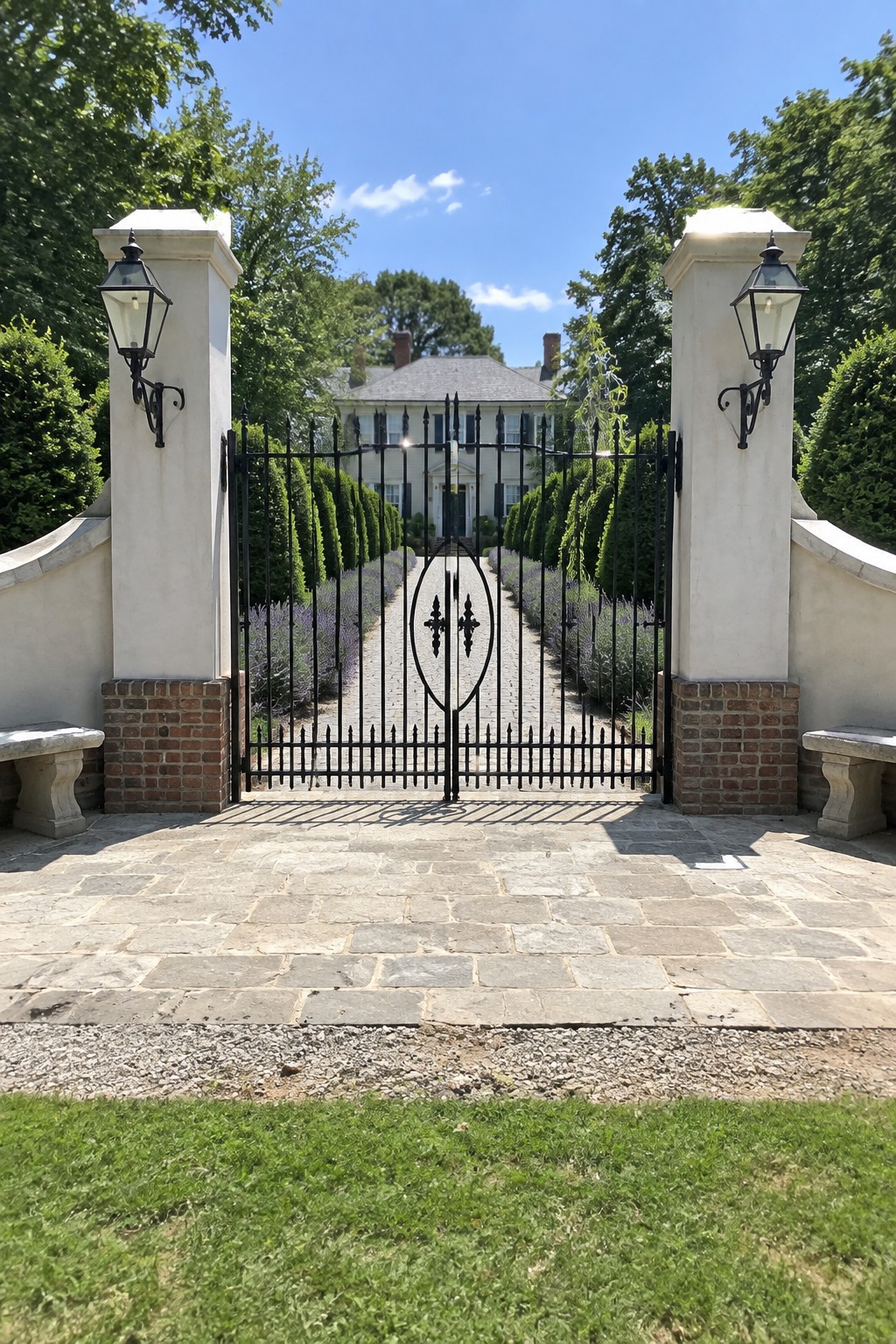
A tall wrought iron gate set between two solid pillars makes a clear statement at the start of a driveway. The dark metal stands out against lighter pillars, and the open design keeps the view to the house intact while still marking the entrance as something special.
This works best on colonial homes with straight driveways and some length to them. Match the pillar style to the house trim, keep the gate pattern simple, and add lights on top if you want the entrance to read well after dark.
Stone Pillars With Black Iron Gates
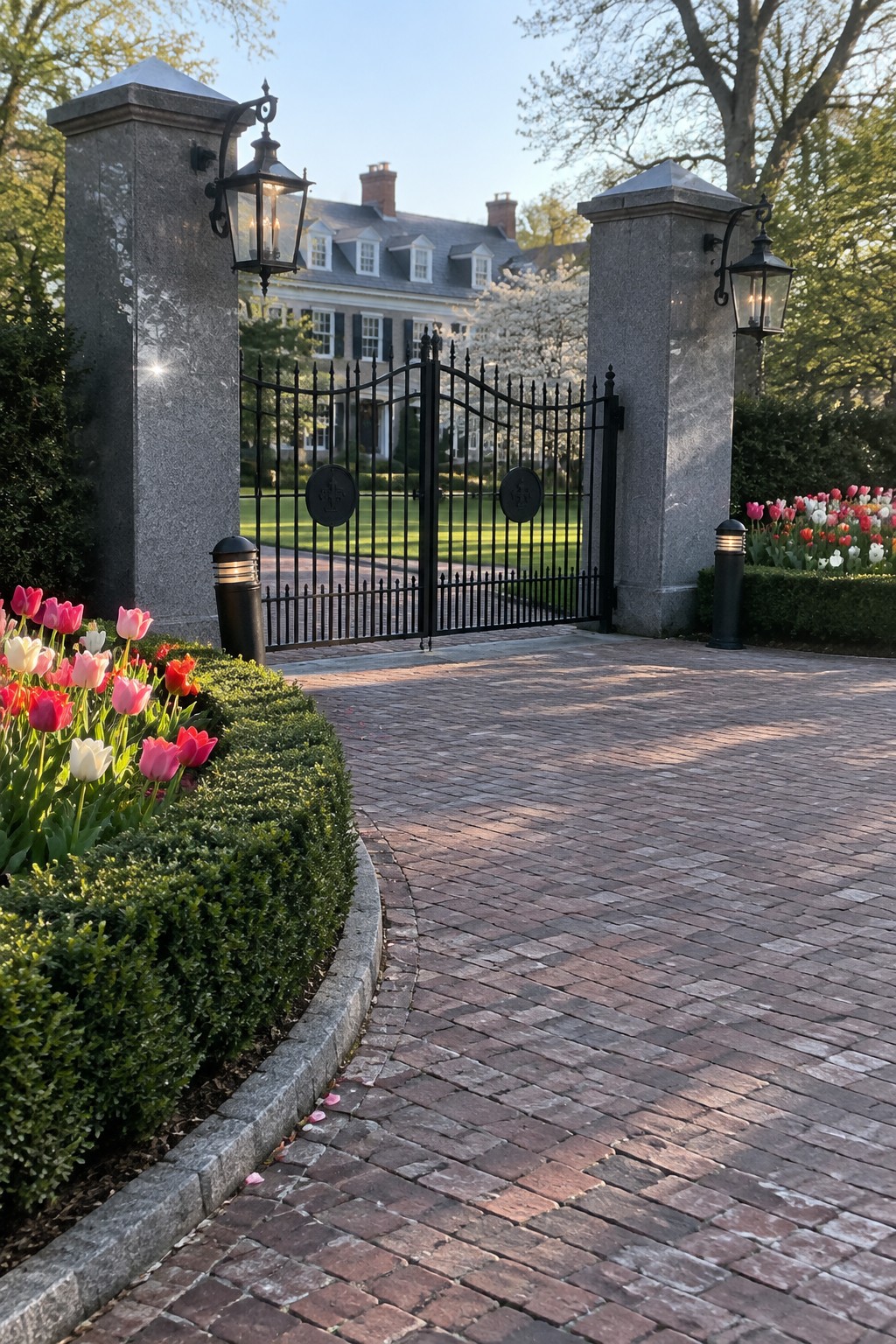
Stone pillars give a driveway gate real presence. They anchor the entrance and make the ironwork feel more substantial instead of delicate or fussy. On homes with a traditional look, this combination reads as classic rather than trendy.
This approach works best on larger properties where the gate sits back from the road. Match the stone to any existing walls or foundations on the property and keep the pillars fairly plain so the gate itself stays the focus.
Arched Gates With A Transom Window
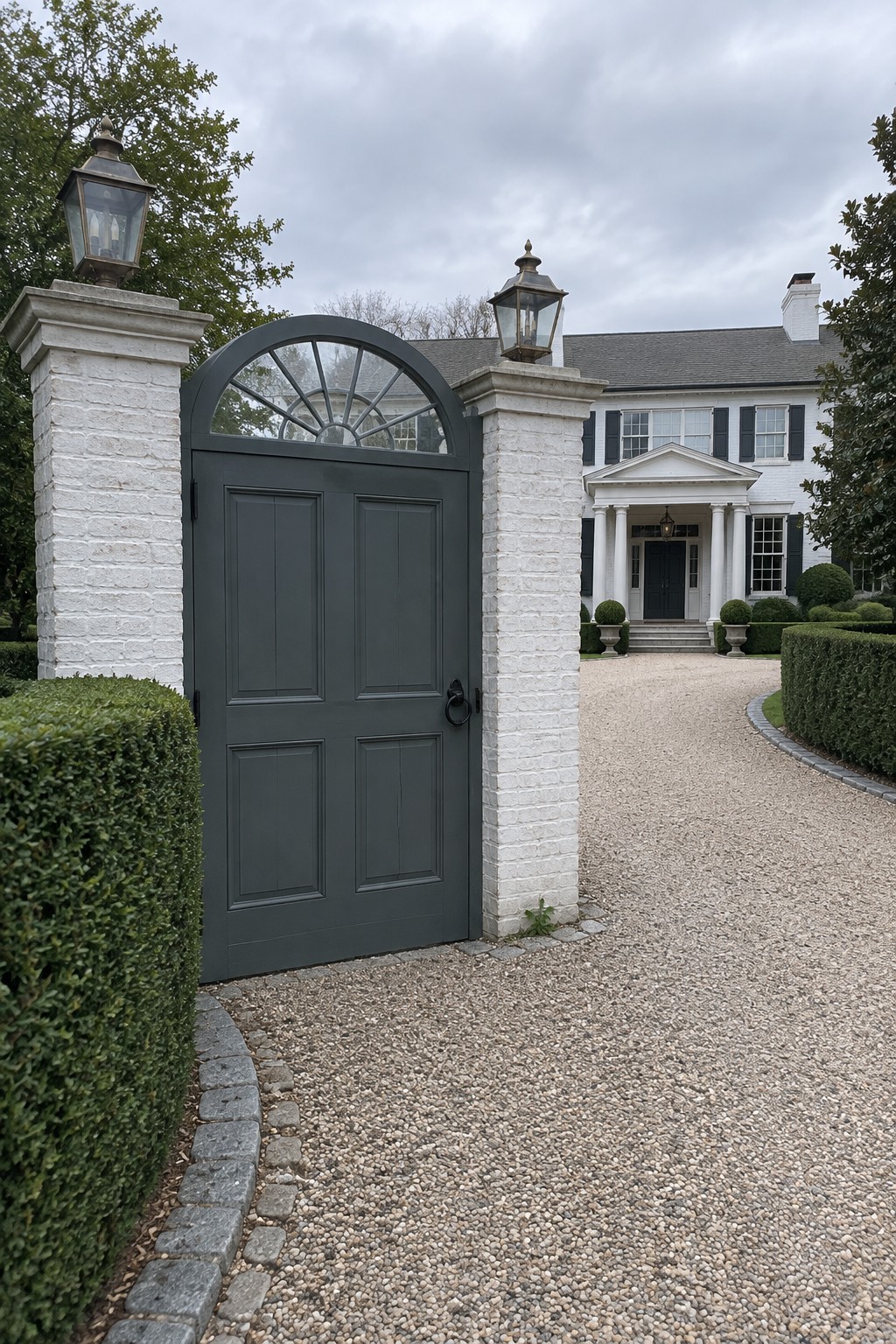
An arched driveway gate with a fanlight transom gives a colonial entrance more presence without extra ornament. The curve breaks up the straight lines of the pillars and house front, and the dark paint makes the gate stand out against the white brick.
This works best on homes with a centered entry and a simple gravel drive. Use a solid dark color on the gate so the shape reads clearly from the street, and keep the transom glass plain rather than patterned.
Classic Metal Gates with Stone Pillars
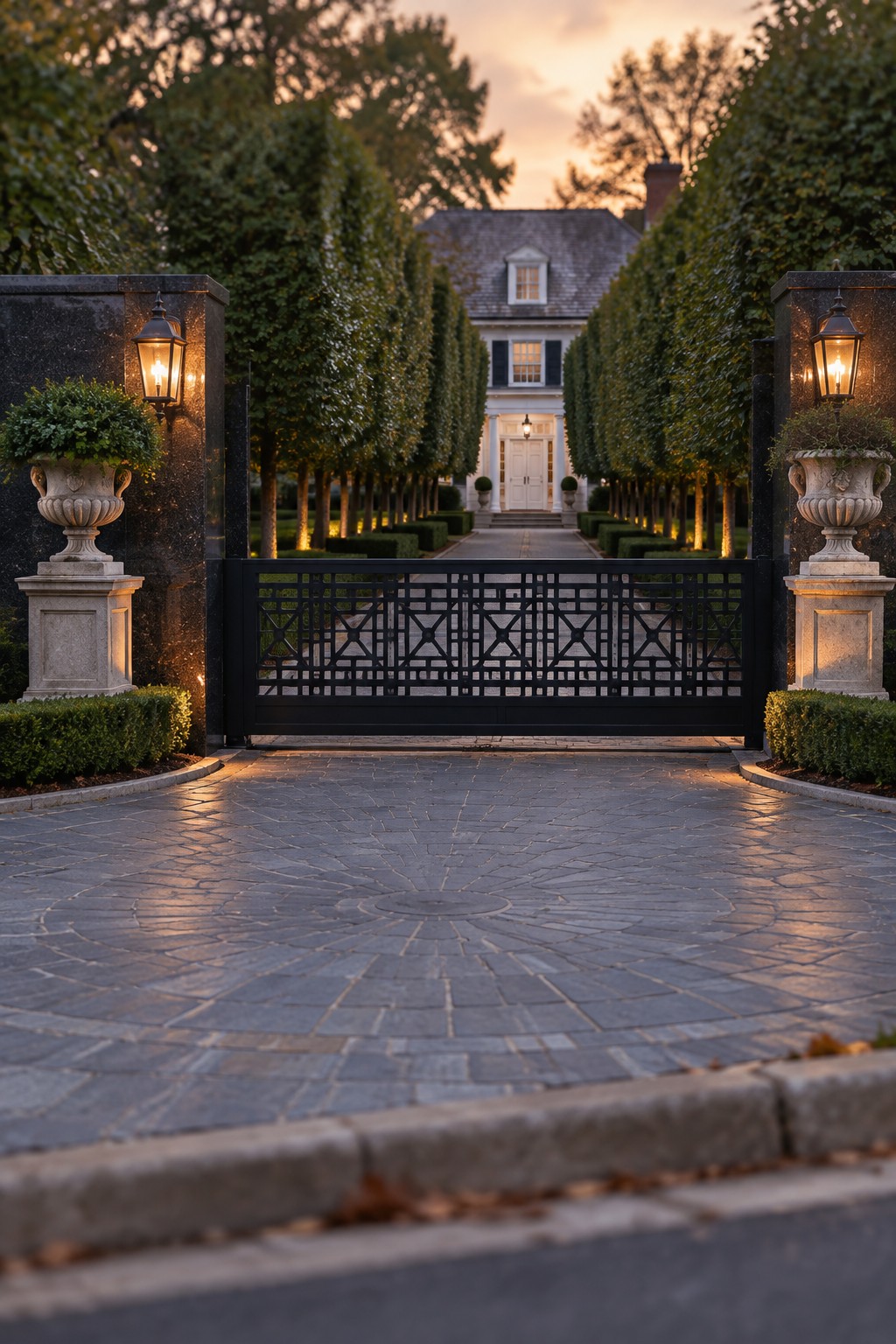
A patterned metal gate set between stone pillars gives a driveway a clear sense of arrival without closing off the view. The open design keeps the entrance feeling approachable while still marking the start of the property in a formal way.
This setup suits colonial homes best when the gate and pillars stay simple in color and detail. Stick with dark metal and natural stone, and add just a pair of lanterns so the whole entrance reads as balanced rather than busy.
Wrought Iron Gates On Stone Pillars
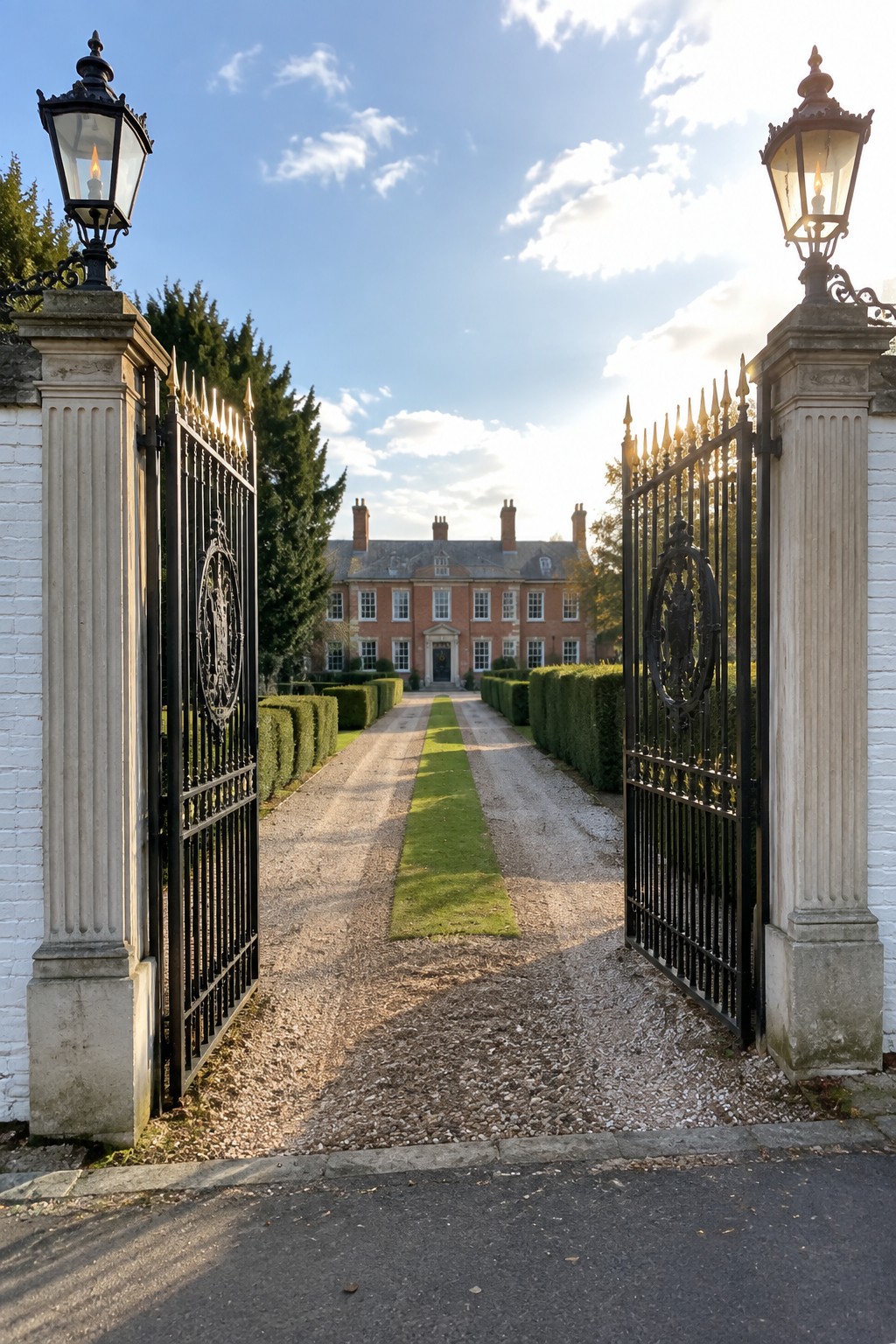
These gates give the entrance a clear sense of arrival without trying too hard. The dark iron stands out against the pale stone, and the lanterns on top add a finished look that works especially well with older brick homes.
They suit properties that already have a straight approach and some symmetry in the planting or layout. Just keep the pillars in scale with the gates so the whole setup feels balanced rather than top-heavy.
Wooden Gates with Stone Pillars
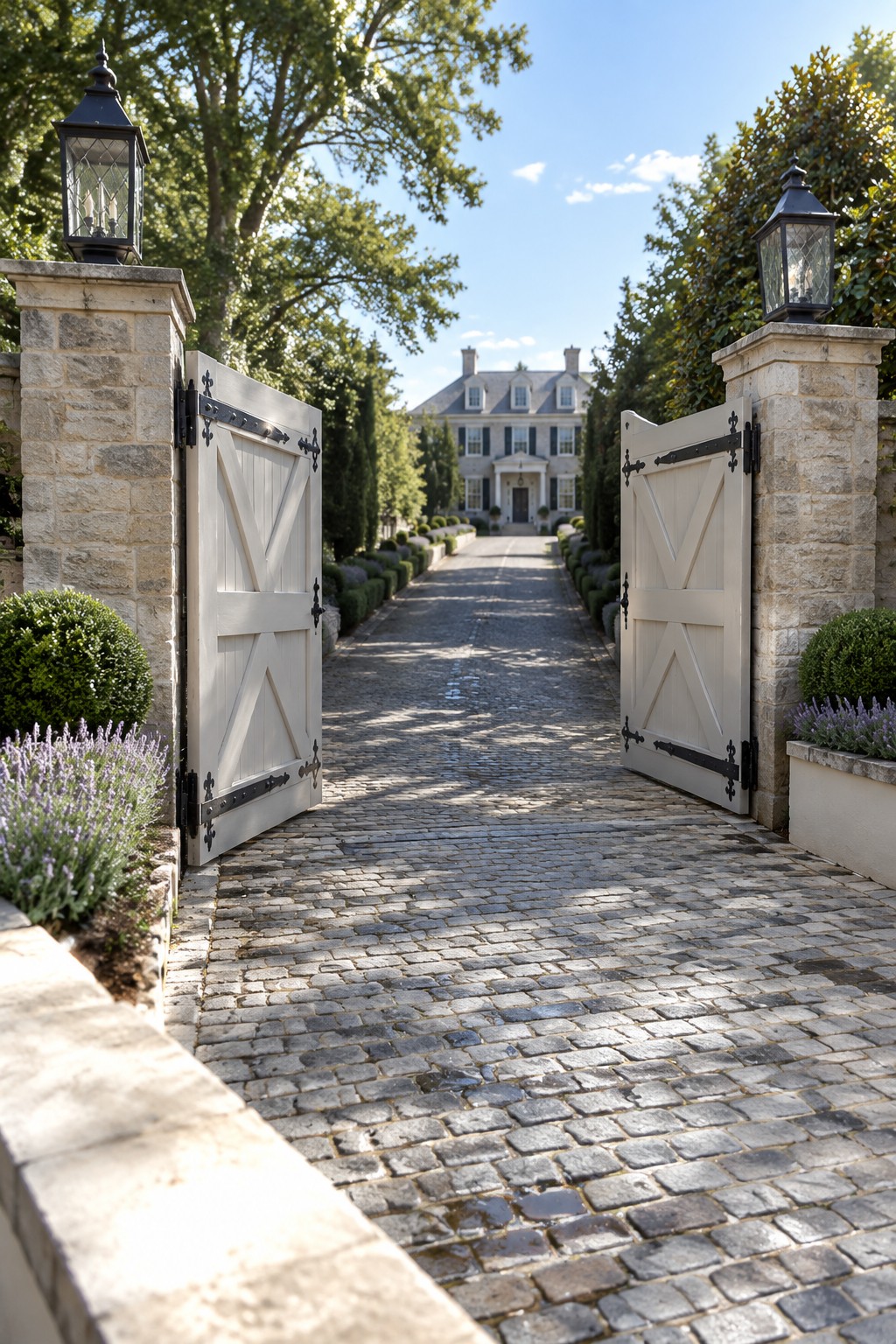
Wooden gates on stone pillars give a driveway a clear, formal start that suits colonial homes. The simple X-bracing and dark hardware keep the look traditional without extra detail, and the stone bases add weight that matches the house style farther up the drive.
This approach works well on straight drives where you want to signal the entrance without blocking the view. Stone pillars hold up in most climates, and the gates can be painted to match shutters or trim. Just check that the opening is wide enough for two cars so the whole entry feels balanced rather than squeezed.
Frame the Gate with Matching Columns
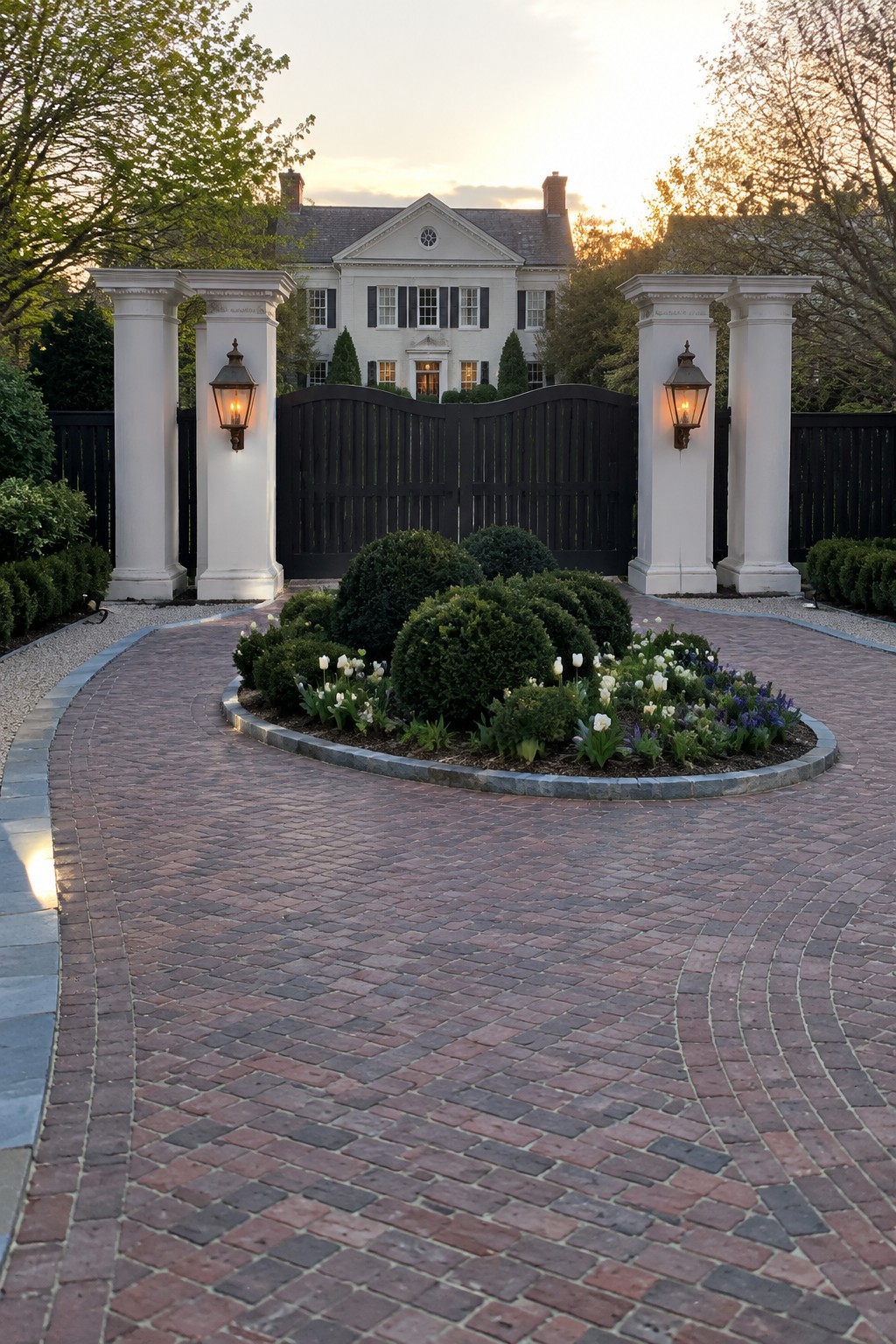
Placing a pair of tall white columns on either side of the gate gives the whole entrance a balanced, solid look. The columns turn what could feel like a simple barrier into a clear focal point that matches the scale of a larger colonial house.
This approach works best on homes with white trim or similar classical details. Keep the columns the same height and style, add lanterns for evening light, and let the driveway curve gently around a central planting area so the gate feels like a natural part of the property rather than a separate addition.
Monogrammed Wrought Iron Gates
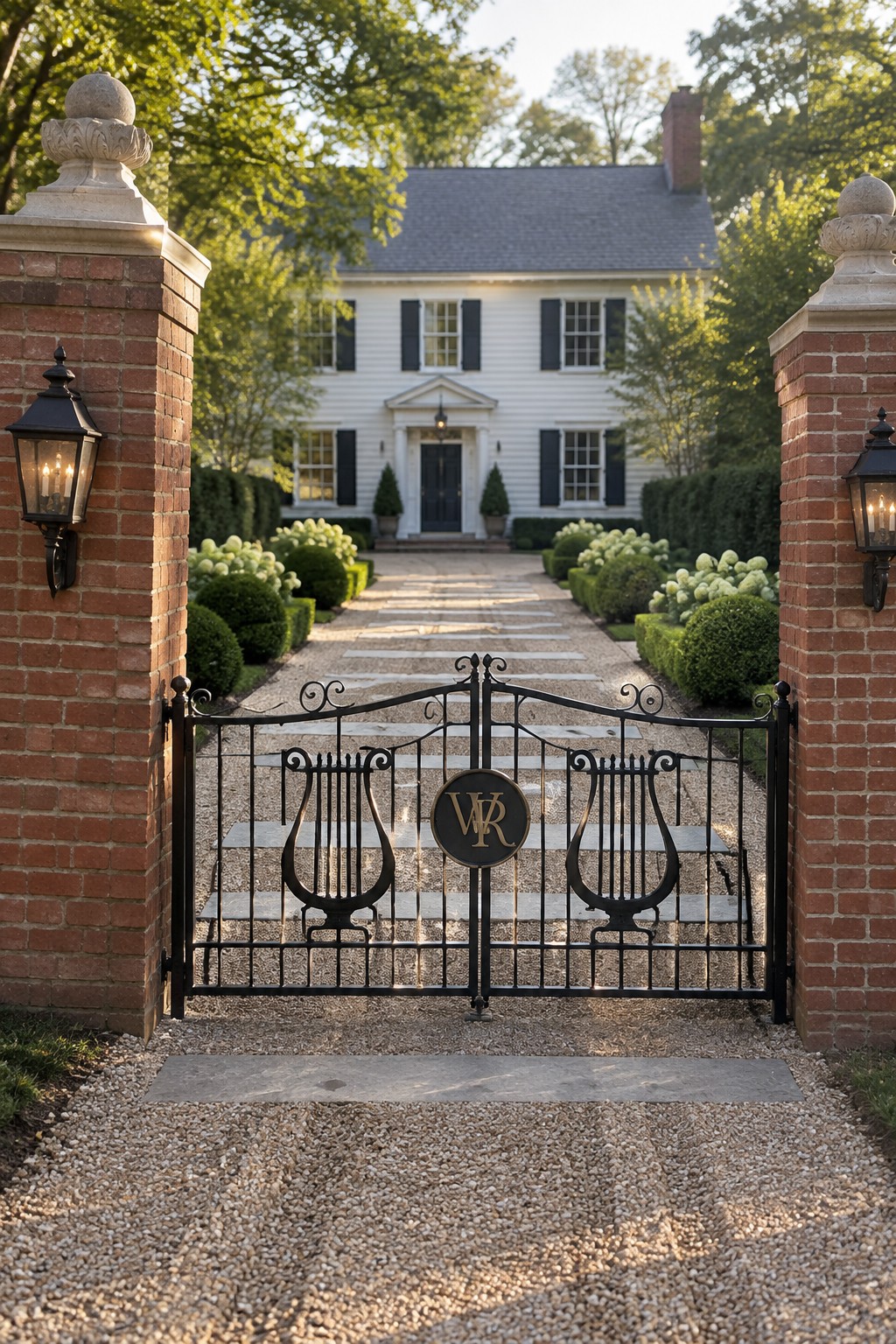
A monogram on the center of a driveway gate gives the entrance a personal stamp without needing extra ornament. It turns the gate into something that feels tied to the house rather than just a barrier at the street.
This approach suits colonial homes where the architecture already has clean lines and formal proportions. Keep the lettering simple and centered so it reads clearly from the road, and pair it with restrained iron patterns so the monogram stays the main detail.
Stone Pillars with a Wooden Gate
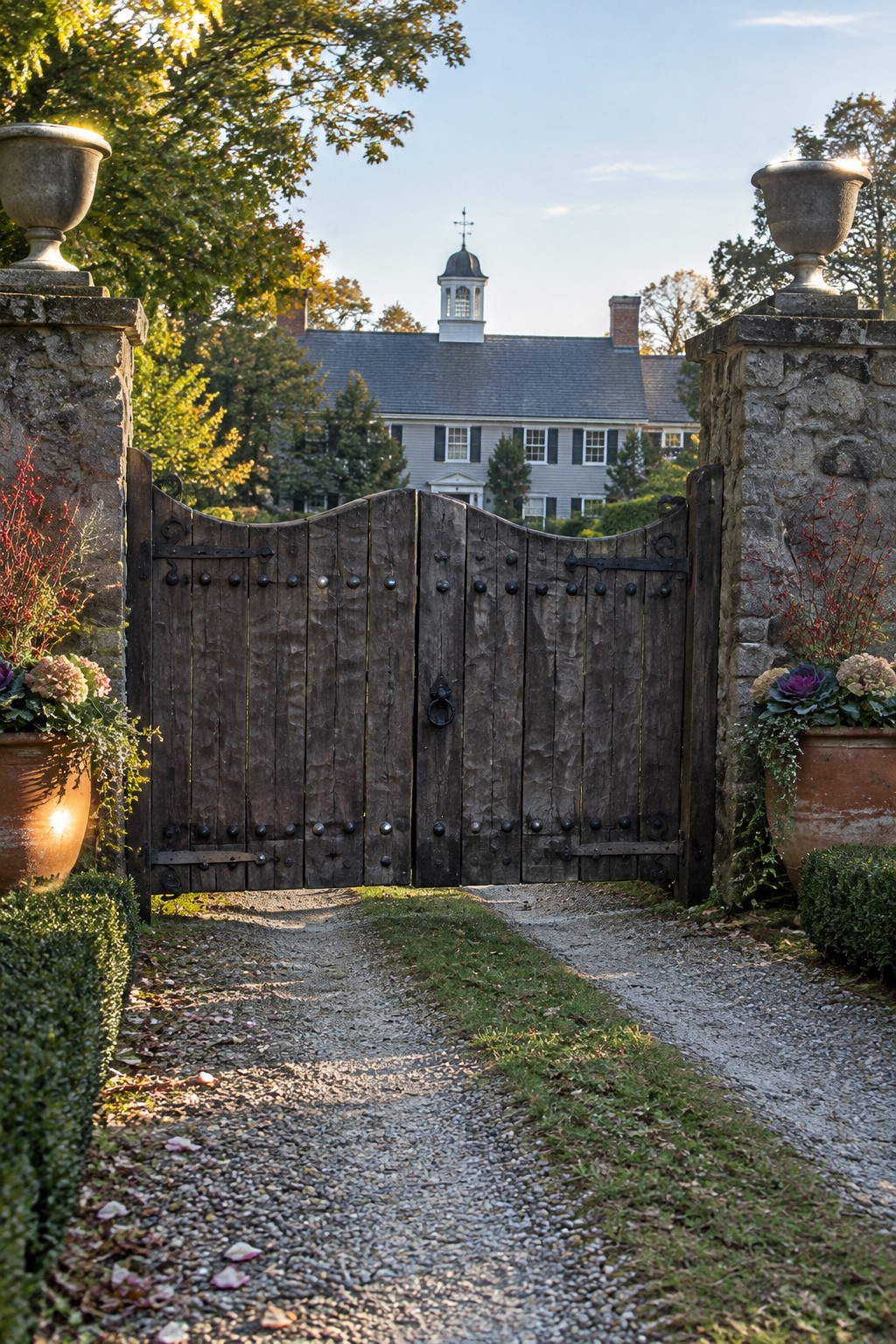
A heavy wooden gate set between stone pillars gives a driveway a clear sense of arrival. The stone adds weight and permanence while the wood keeps the entrance from feeling too rigid or cold. This combination works especially well with older homes that already have a formal or colonial character.
It suits properties with a long approach or a clear boundary line. Keep the pillars simple in shape and let the gate carry most of the detail so the whole entrance stays balanced rather than busy.
Black Gates Between White Brick Pillars
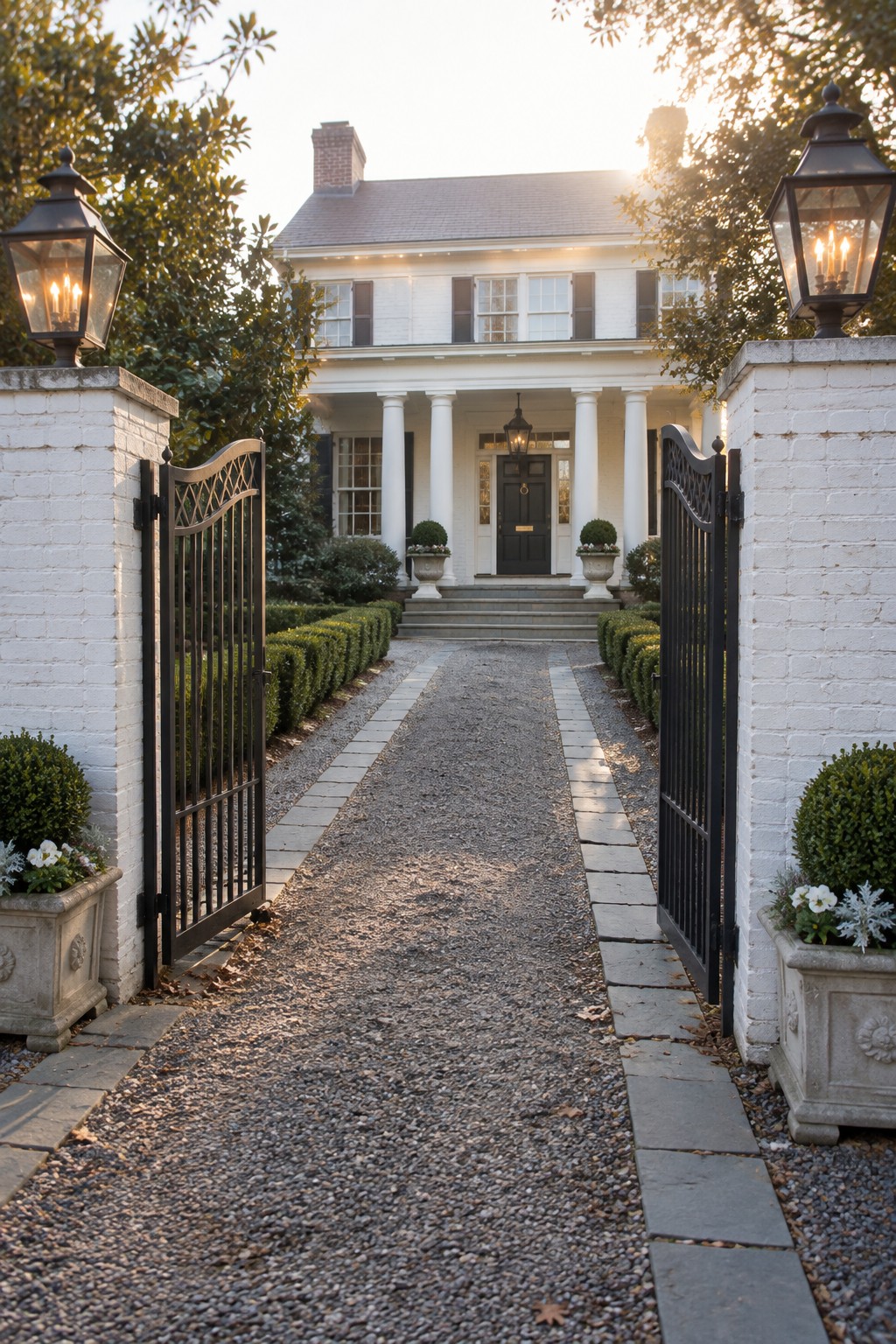
This setup works because the white brick pillars give the black gates a solid frame that feels balanced and formal without trying too hard. The lanterns on top add height and help the entrance read as intentional rather than just a fence opening. It suits colonial houses that already have clean lines and white trim.
Use it on a gravel drive where the path stays narrow and straight. Keep the pillars at least as wide as the gate posts so they do not look spindly, and match the lantern style to other exterior lights on the house. Avoid this look if your driveway curves sharply or if the front of the house has very different materials.
Frequently Asked Questions
Q: How wide should a colonial gate be for a two-car driveway? A: Measure your opening first and plan for twelve to fourteen feet across. That width keeps the formal look balanced and lets both cars pass without squeezing the posts.
Q: Can I add an opener to these gates later? A: Swing versions take motors easily if the frame has solid bracing. Have an installer check the hinges and add support before you buy the unit.
Q: How often does wood need sealing? A: Apply a fresh coat every couple of years. That simple step stops warping and keeps the grain looking sharp.
Q: What if the ground feels soft where the posts go? A: Dig deeper and pour concrete footings to lock the posts in place. Gravel at the base helps water drain so the gate stays level.
