


When I look at a house from the road, the driveway gate often decides whether the entrance feels welcoming or closed off right away.
Classic traditional gates usually succeed because they pick up on the lines of the home and use materials that weather nicely over the years.
Details like hardware and height make a bigger difference than expected.
I would probably start by checking how each style lines up with the existing fence or wall before committing to anything.
Over time those small matches help the whole front of the property read as one complete picture rather than separate pieces.
Stone Pillars With Wrought Iron Gates
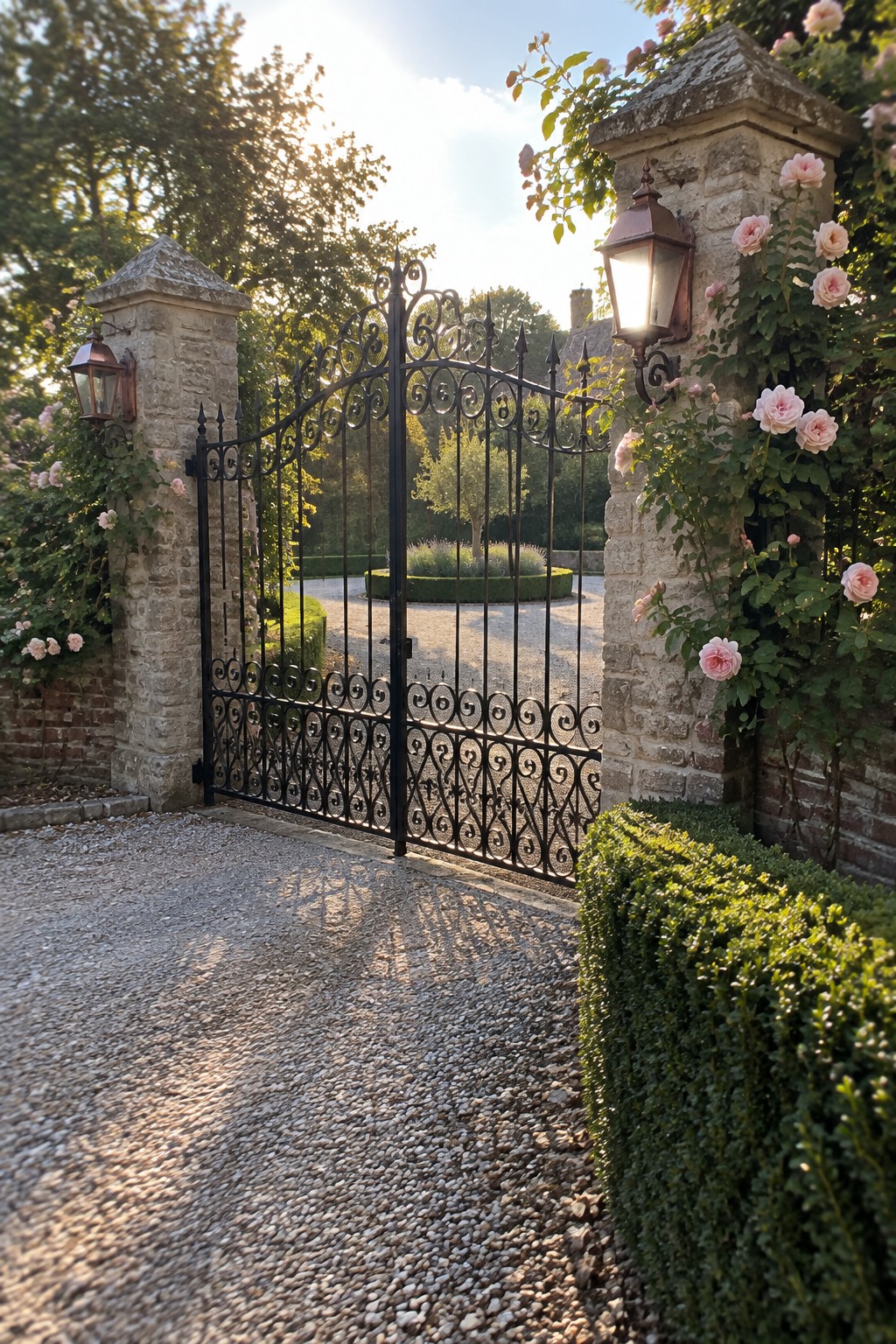
A simple stone pillar on each side of the driveway gives the gate real presence without making the whole entrance feel heavy. The black ironwork adds the detail, and the pillars keep everything grounded and lasting.
This setup works best on properties that already lean traditional or have some age to them. It needs a bit of width at the front so the pillars do not crowd the drive, and the iron should stay simple enough that it does not fight with the stone.
Wrought Iron Gates Between Brick Columns
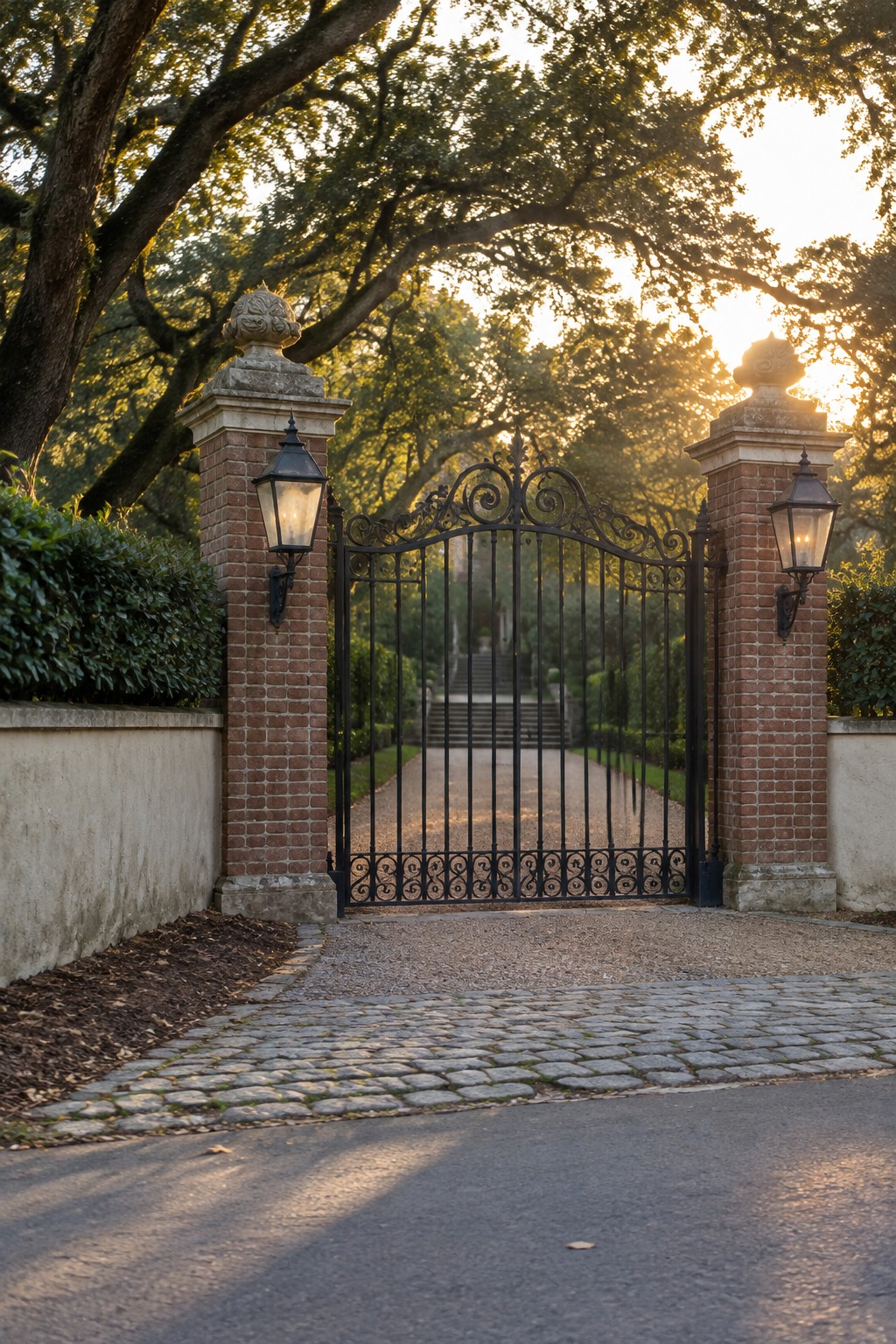
A wrought iron gate set between brick pillars gives a clear sense of entry while still feeling open. The dark metal contrasts nicely with the warm brick, and the lanterns on each side add both light and a bit of extra detail without going overboard.
This approach works best on properties where the driveway moves through trees or established landscaping. Keep the pillars simple in shape and match the lantern style to the gate so nothing feels added on later.
White Picket Gates
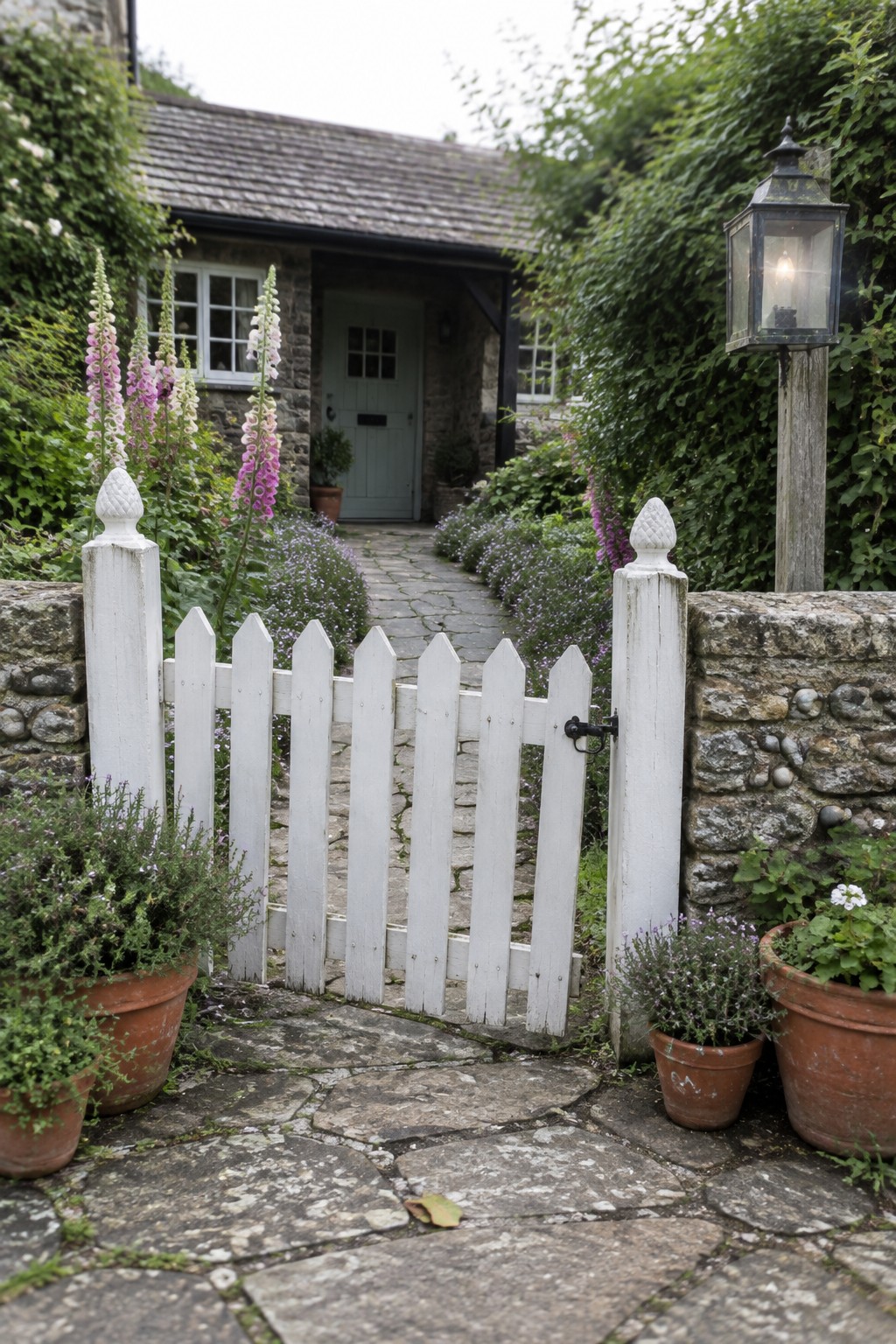
A white picket gate gives a property entrance a clean, familiar look that never feels dated. It works especially well with stone walls because the bright wood softens the heavier material and keeps the whole entrance from feeling too heavy or closed off. Many older homes already have this combination, and it still reads as welcoming without any extra effort.
This style suits cottage homes or any place where you want a clear boundary that does not block the view. Keep the gate simple, match the posts to the fence, and let the stone do most of the work. Avoid painting the gate a bold color if you want the timeless effect to last.
Wooden Driveway Gates With Black Hardware
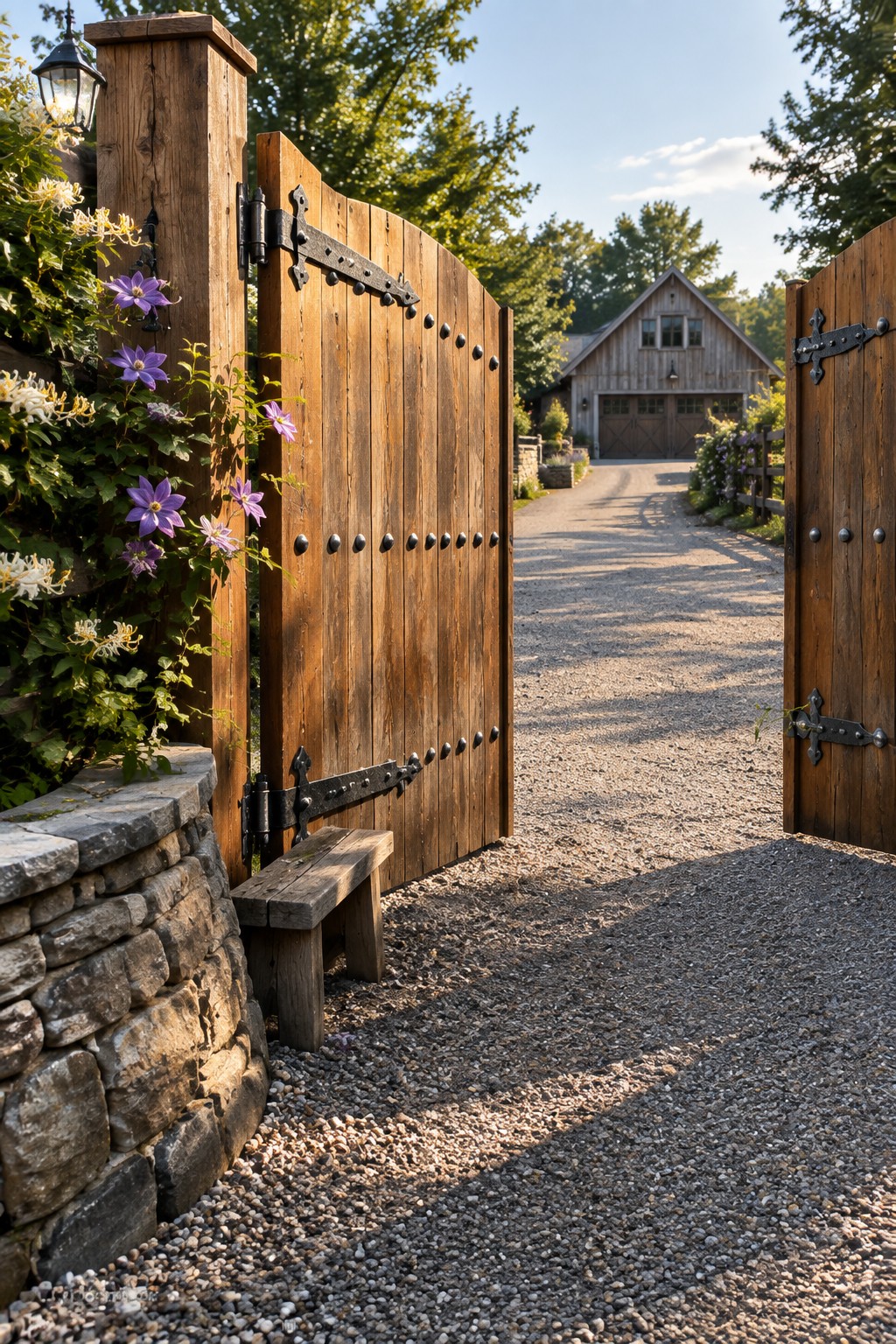
Wooden gates like these stand out because they feel solid and traditional without trying too hard. The vertical planks, black strap hinges, and simple stud details give the entrance weight and character that fits older homes or properties with a natural setting.
This approach works best on homes that already have wood or stone elements nearby. It pairs well with gravel drives and low walls, though the wood needs regular sealing to hold up over time.
Iron Gates on Brick Pillars
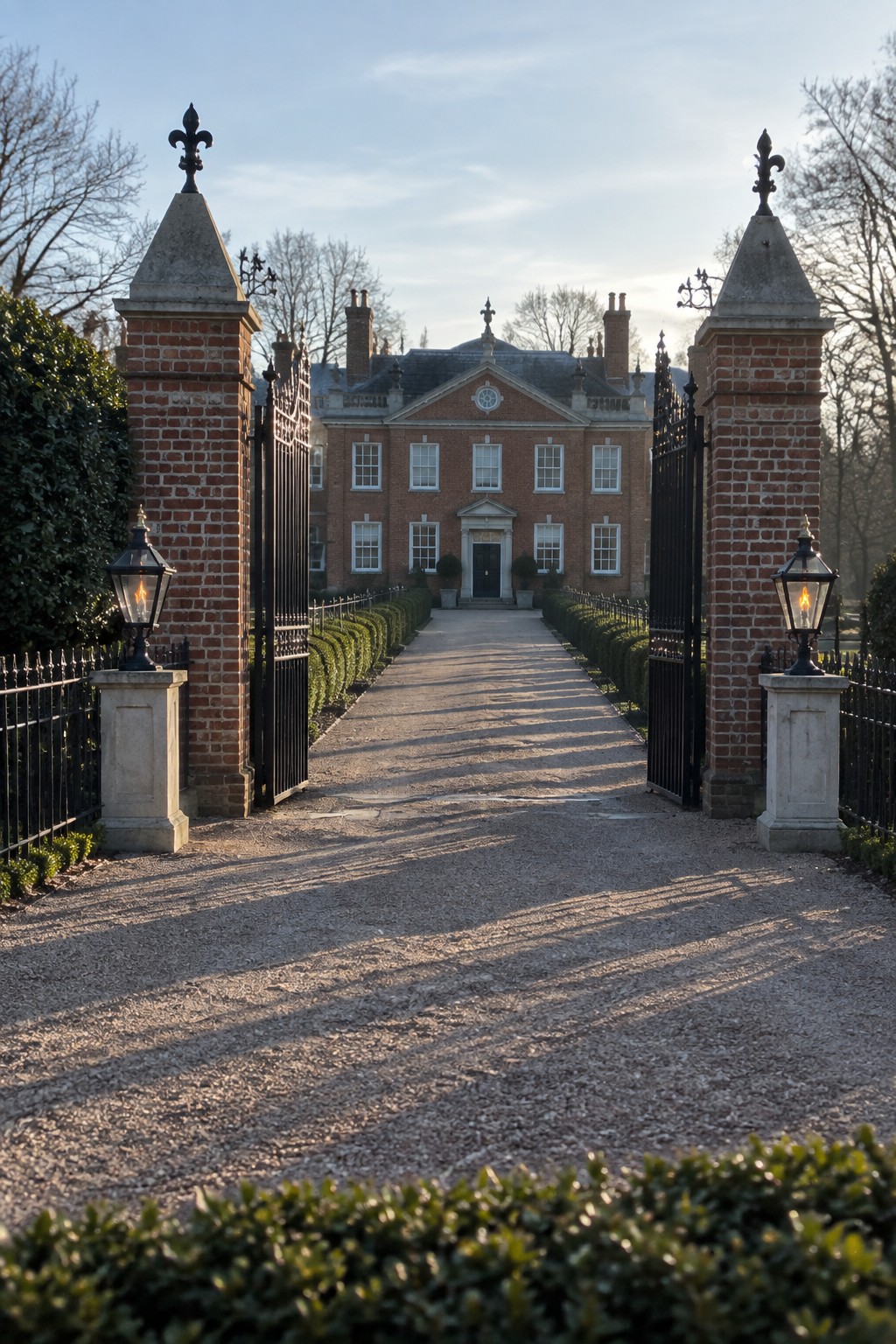
Iron gates mounted between brick pillars give a driveway a clear sense of arrival without feeling overly grand. The dark metal stands out against the warm brick, and the simple vertical bars keep the view open to the house beyond. This setup works especially well on properties with established landscaping because the gates add structure without competing with the trees and hedges.
It suits older homes or new builds that want a traditional look. Keep the pillars in proportion to the width of the drive and match the brick to the house if possible. Avoid overly ornate tops or finials if you want the entrance to stay timeless rather than decorative.
Climbing Roses On Wooden Gates
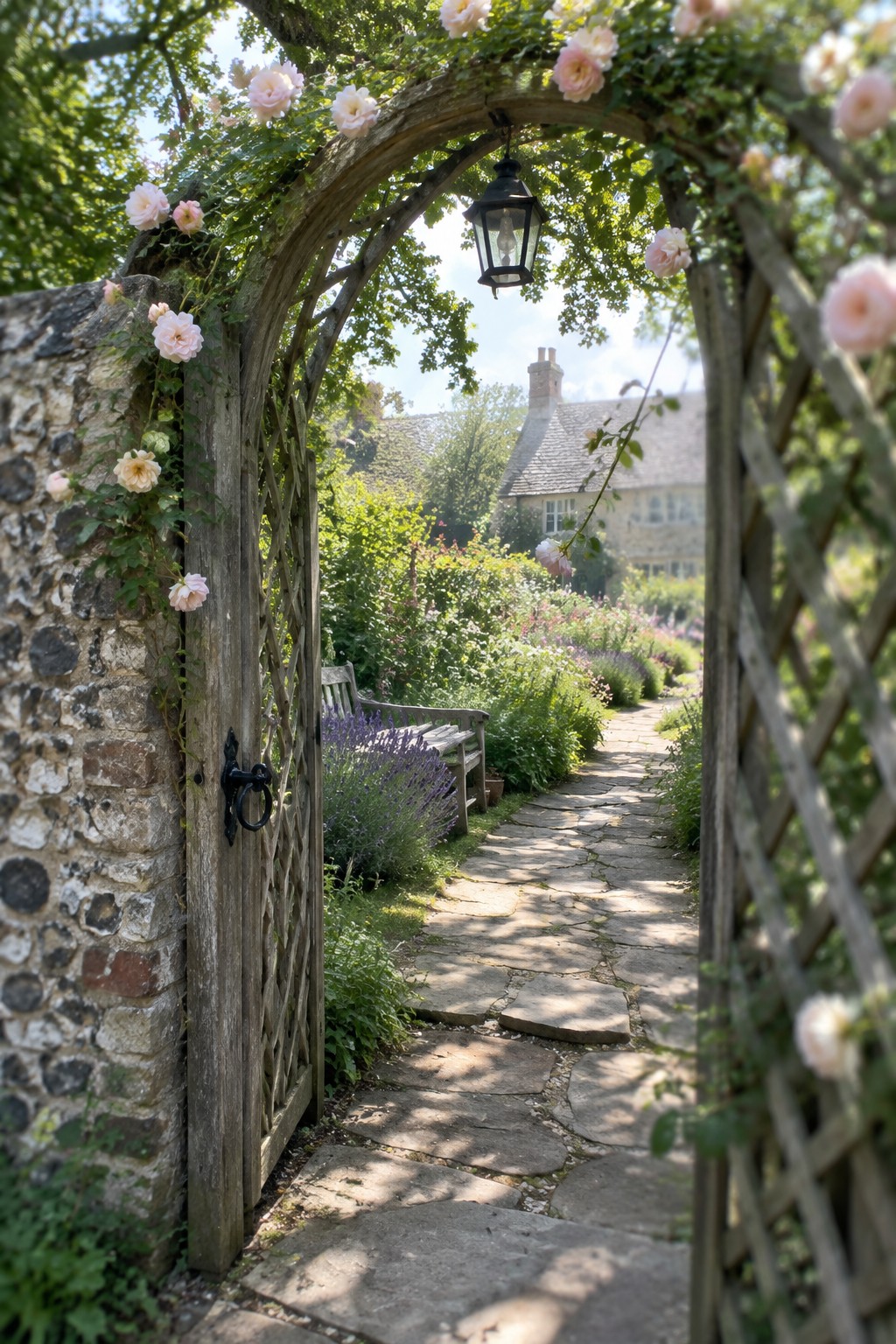
A wooden gate gains a lot of charm when you let climbing roses grow over the top and along the sides. The flowers soften the straight lines of the wood and make the whole entrance feel settled and welcoming rather than stark.
This approach works best on older homes or properties with stone walls where you already have some greenery nearby. Choose a repeat blooming variety and give the canes room to spread so they do not crowd the latch or hinges over time.
Wrought Iron Gates Between Brick Pillars
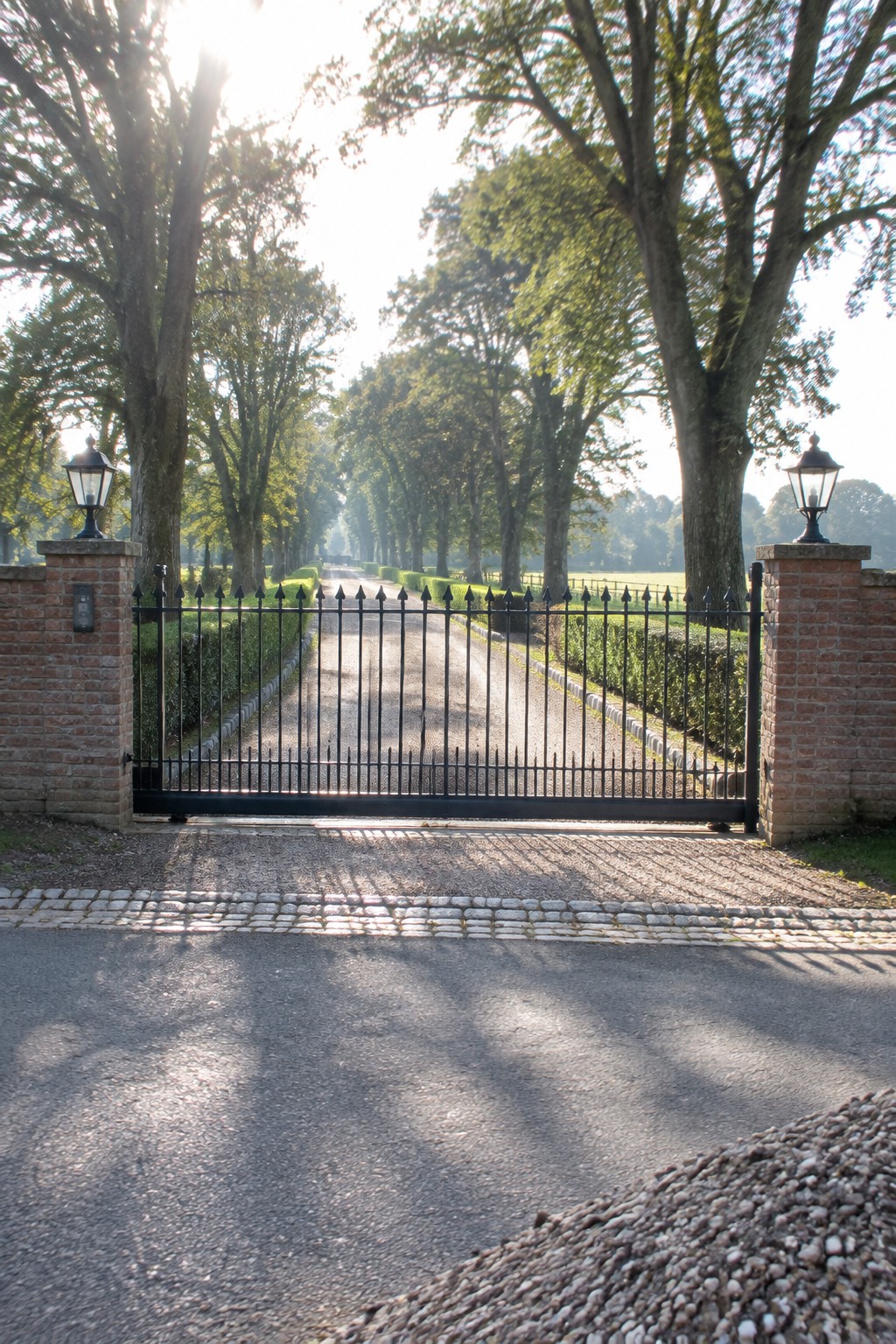
This gate style stands out because the brick pillars give the entrance real weight while the iron keeps everything open and light. The dark metal reads classic without feeling heavy, and the simple lines let the surrounding trees and driveway do most of the work.
It suits older homes or properties that already have formal landscaping. Use matching lanterns on the pillars, keep the gravel or paving understated, and make sure the brick color ties into any other hardscape on the property.
Wooden Gates With Rope Latches
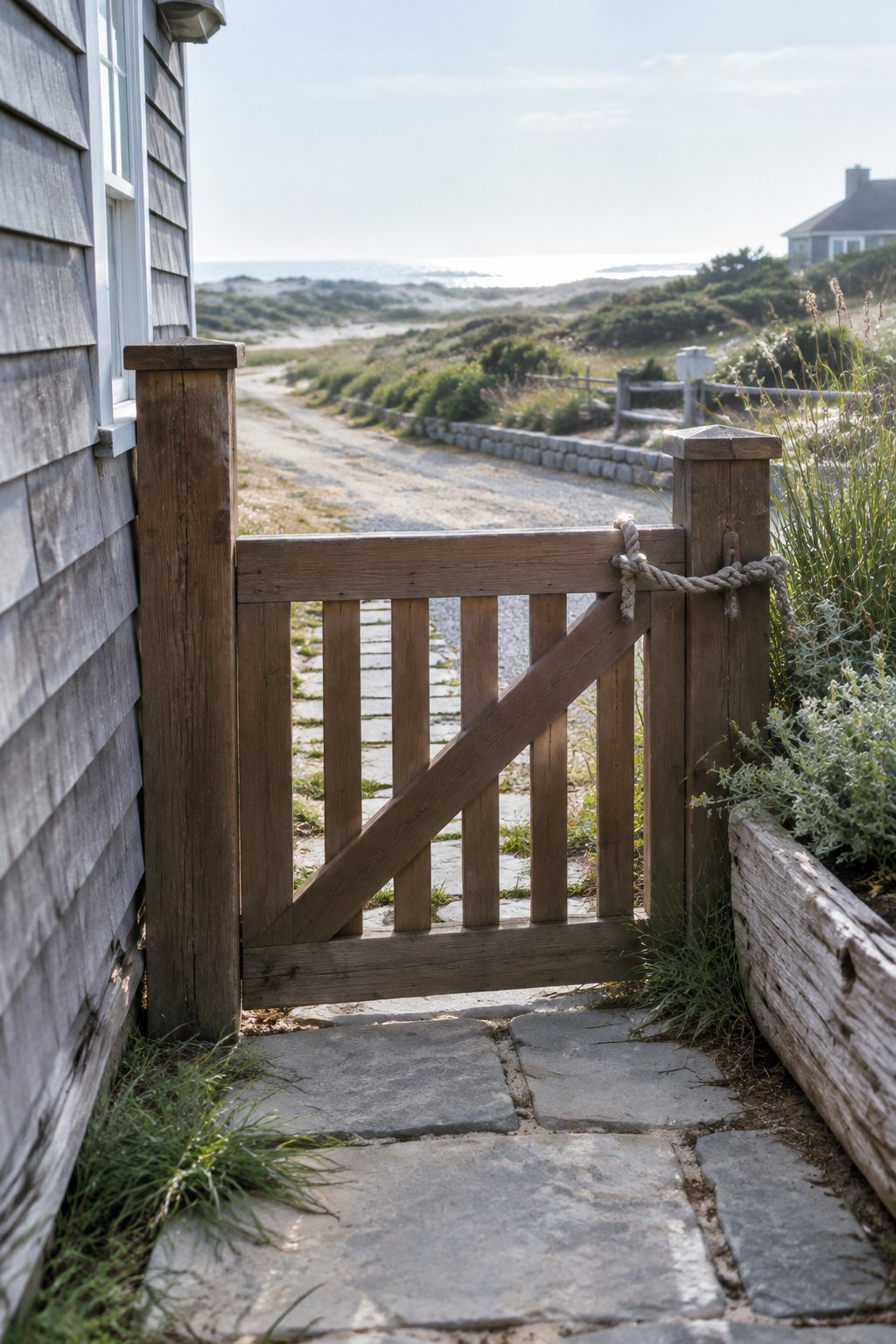
A simple wooden gate held closed by rope feels right at home on many older properties. The look stays modest, the materials hold up without much fuss, and the whole thing ages into the landscape instead of standing out against it.
This approach works best on homes with gravel drives or paths that already lean natural. Use straight boards, keep the hardware minimal, and let the wood weather on its own so the gate settles in rather than looking new.
Painted Wooden Gates With Stone Pillars
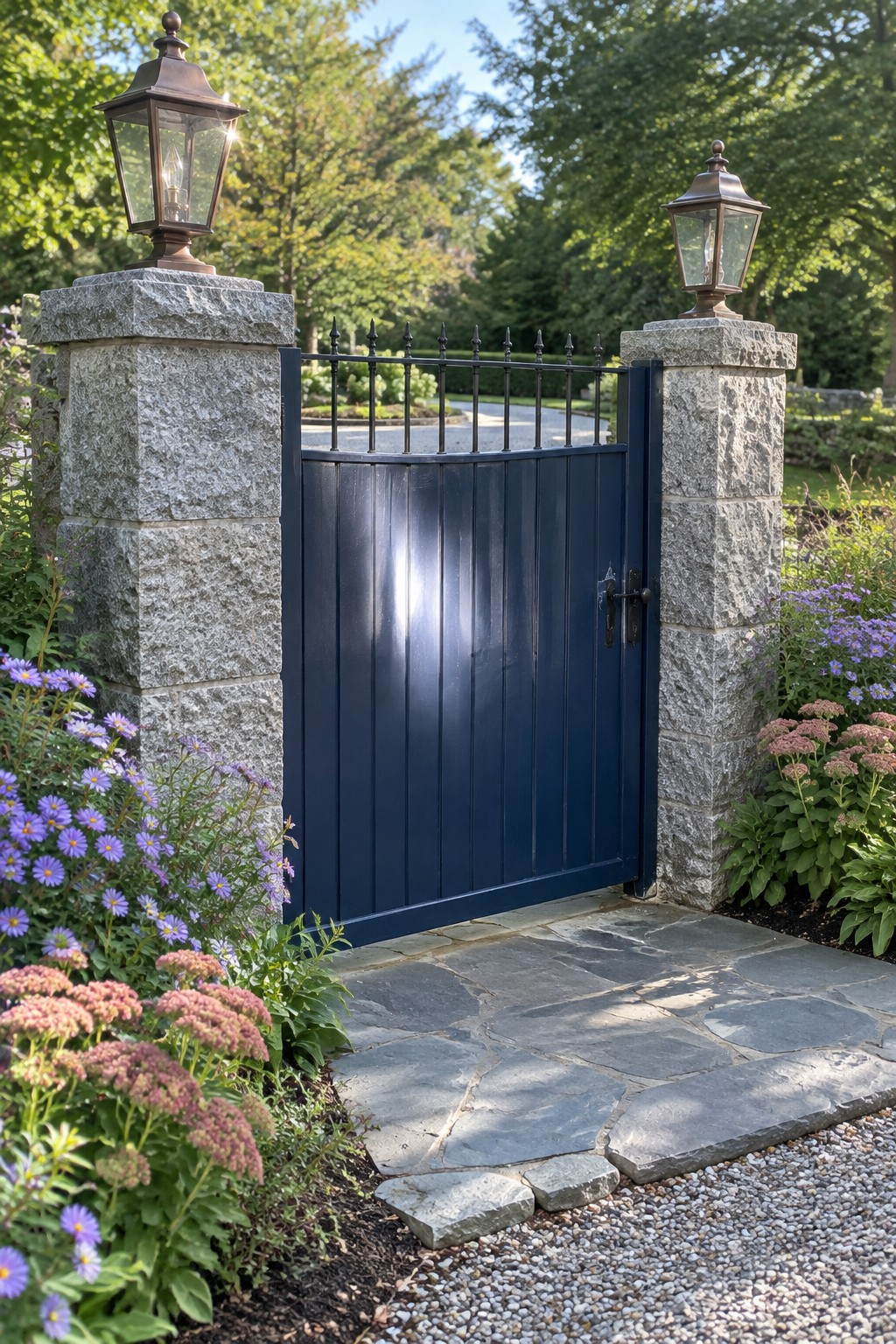
A solid wooden gate painted in a deep color gives a driveway entrance real presence without looking fussy. The blue works well here because it contrasts with the gray stone and still feels grounded rather than showy.
This style suits traditional homes and properties that already have masonry walls or natural stone details. Keep the top rail simple and match the hardware to the lanterns so the whole entry reads as one quiet statement rather than a collection of pieces.
Classic Wooden Gates With Metal Hardware
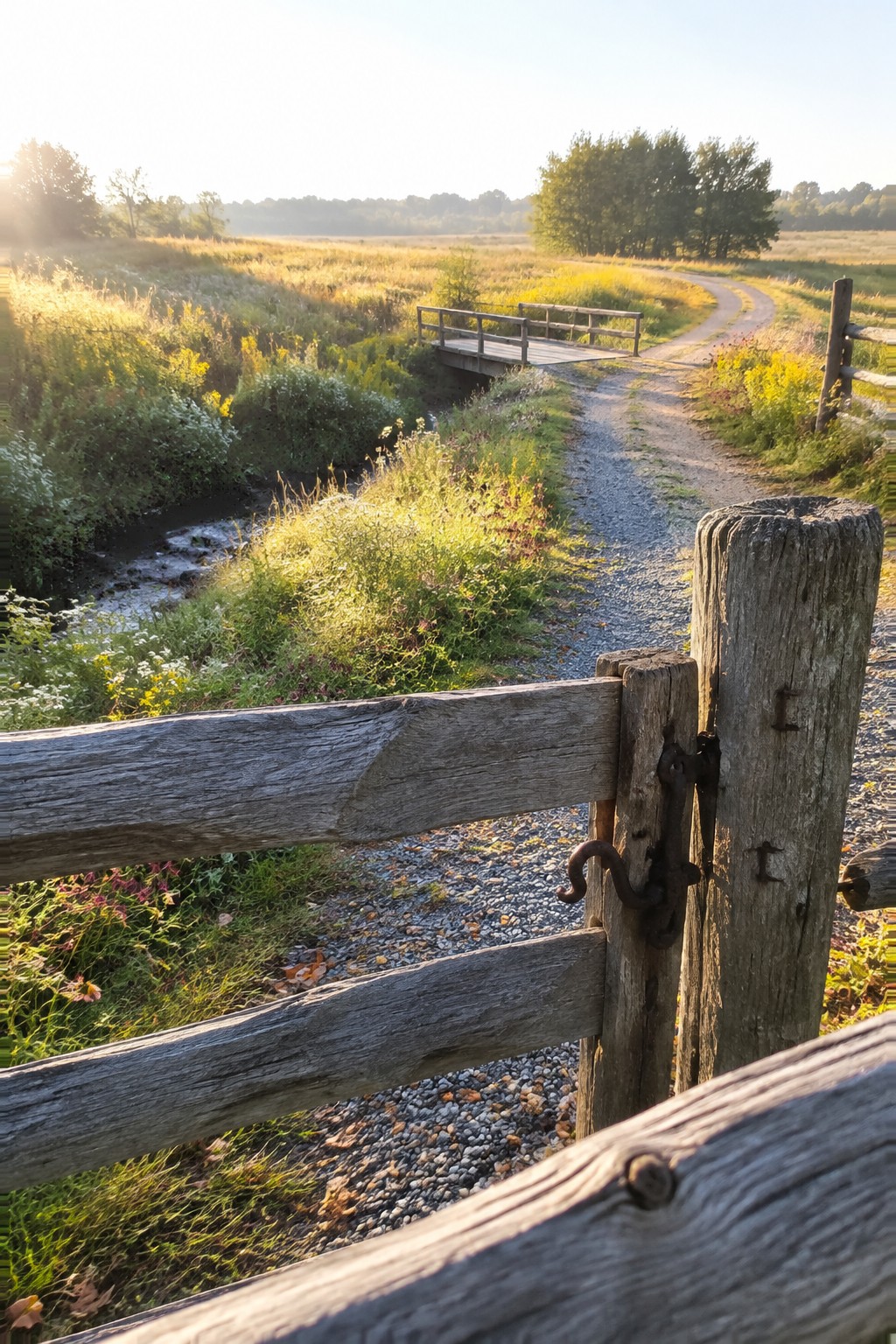
Wooden gates like this one have a straightforward charm that holds up well over time. The aged wood and basic metal latch keep things simple while still looking intentional next to a gravel path.
This approach suits country homes or properties with open fields and natural edges. It works best when the gate matches the fencing style and the surrounding plants are left a little loose rather than overly trimmed.
Brick Pillars With Stone Urns
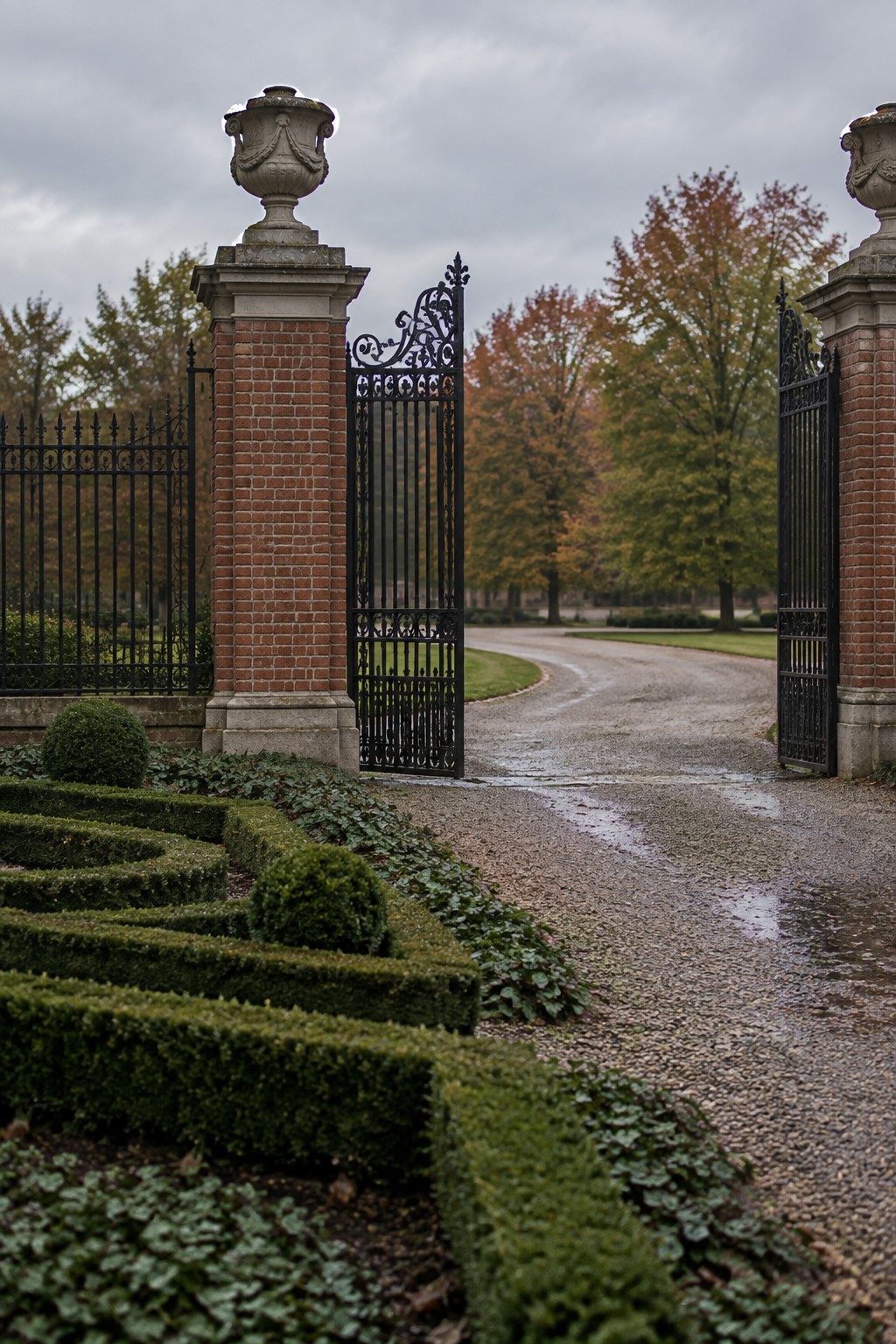
Brick pillars give a driveway gate real weight and presence. The solid base makes even simple iron gates feel more established, and the urns on top add a quiet classical touch without going over the top. This setup works especially well when the rest of the property already has some structure, like clipped hedges or mature trees.
It suits traditional homes or larger lots where you want the entrance to read as permanent rather than temporary. Keep the gates fairly straightforward in pattern so the pillars stay the main feature, and make sure the brick and stone match the house or other hardscape on the property.
Stone Pillars And Lanterns For The Gate
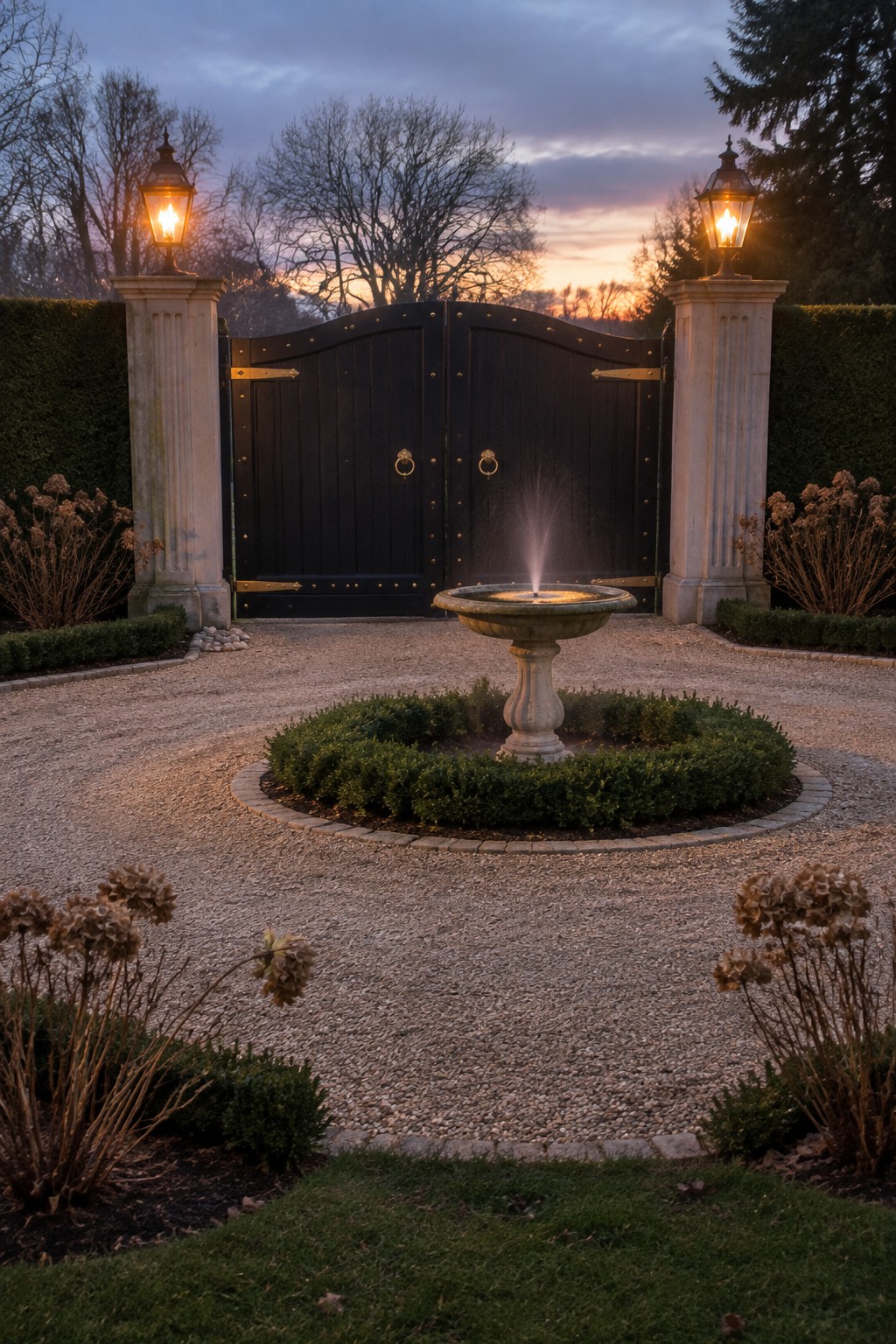
Stone pillars topped with lanterns give a driveway gate a solid, finished look that feels right at home on older properties. The pillars create clear boundaries and lift the gate up visually so it reads as the main feature rather than just a barrier at the end of the drive. Lanterns add a gentle light at night without needing extra fixtures along the path.
This approach works best on homes that already lean traditional, where the stone can echo other masonry details on the house. Keep the pillars simple in shape and match the lantern style to the gate hardware so nothing feels added on later. Too many different materials around the entrance can start to look busy.
Iron Gates Between Stone Pillars
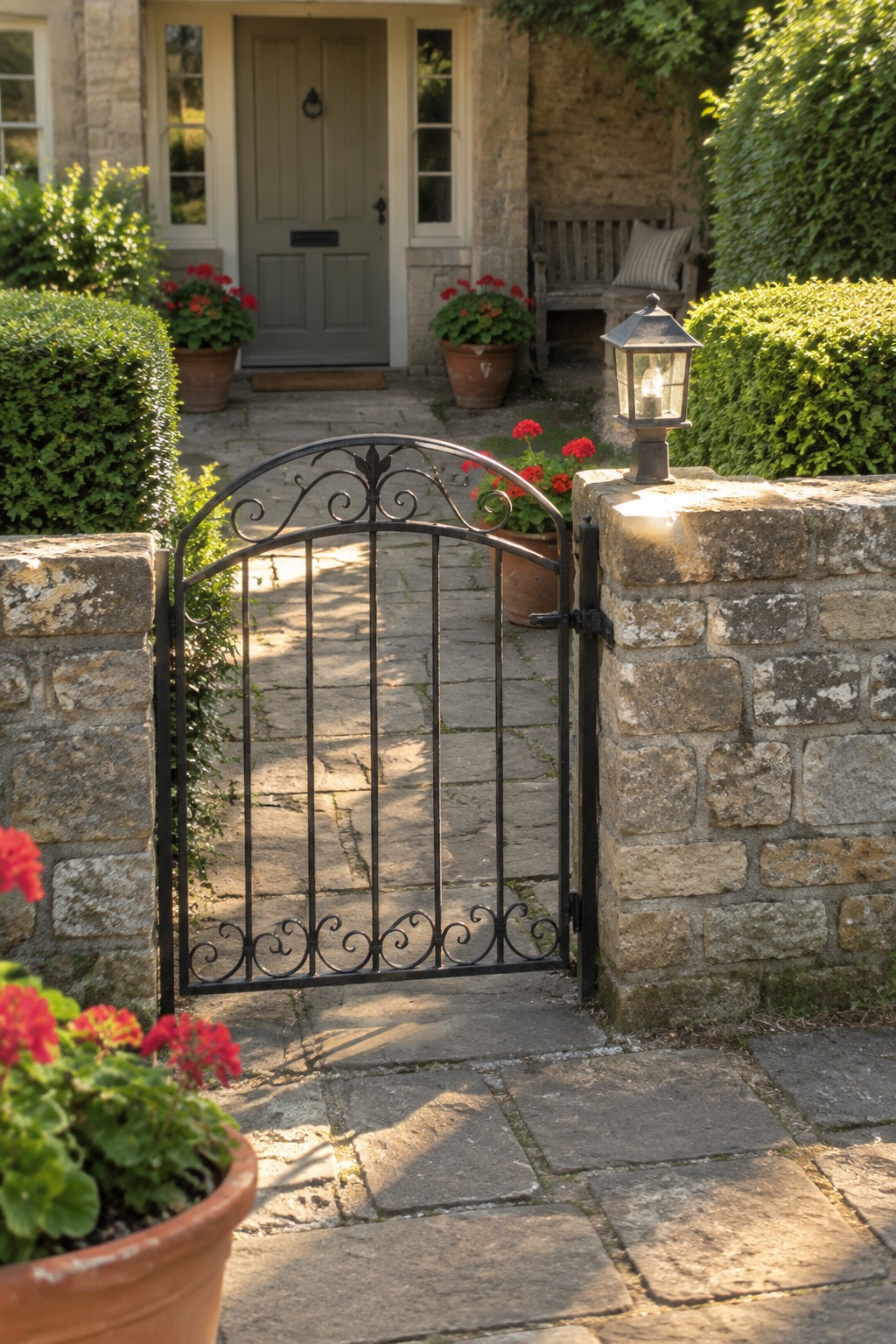
A simple iron gate set between stone pillars gives an entrance a finished, traditional look without much fuss. The dark metal stands out nicely against the lighter stone, and the open scrollwork keeps it from feeling too heavy or closed off. Many older homes already have stone walls or posts in place, so adding a gate like this can pull the whole front together.
This approach works best on properties with existing stonework or a similar material on the house itself. Keep the gate design fairly open and avoid overly ornate patterns if your entrance is on the smaller side. The stone should match or complement what is already on the house so the whole entry reads as one clear feature rather than separate pieces added over time.
Frequently Asked Questions
Q: Will a wooden gate hold up in wet weather? A: Pick a hardwood like cedar and apply a good sealer every couple years. This keeps the grain protected without much fuss. Metal gates might suit you better if rain is constant in your area.
Q: How do I match the gate to my house style? A: Look at the details on your front door or windows for clues. A simple wrought iron design often fits older homes nicely. Avoid anything too fancy if your place has clean lines.
Q: Is it hard to install one of these gates myself? A: Basic setups go in with basic tools if you have help. Call in a pro for anything with motors or heavy posts. It saves headaches down the road.
Q: What about adding a keypad for entry? A: Most traditional gates work fine with a simple wired keypad. Mount it on a post near the gate and run the cable underground.
