


I remember painting a test patch of sage green in my garage and seeing it warm up unexpectedly as the afternoon light filtered in from the door.
Garages throw off most people because their lighting mixes harsh fluorescents with whatever natural glow sneaks through.
Colors that succeed there usually echo subtle tones from your home’s exterior or trim to create flow without effort.
Ones relying too much on stark contrasts often look chopped up once the sun shifts.
A few in here deserve a real-light trial in your space.
Navy Blue Garage Door
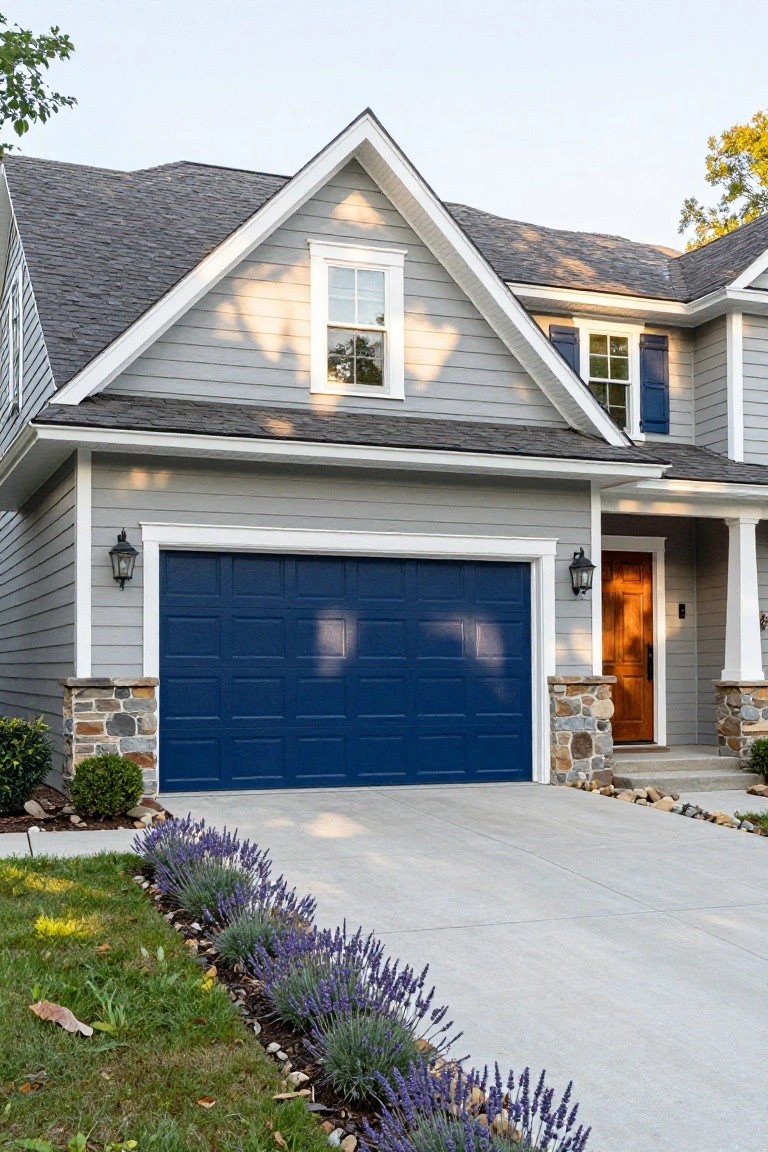
A deep navy blue on this garage door stands out nicely against the gray house siding. It reads very close to Sherwin-Williams Naval or Benjamin Moore Hale Navy, maybe Behr’s Midnight Blue too. Folks like it because that bold color adds some weight to a mostly neutral exterior without going overboard.
Cool undertones keep it from feeling too heavy. It suits modern farmhouses or craftsman styles best, especially next to stone or brick. White trim keeps things crisp, and those lavender plants along the drive add a soft purple echo.
Barn Red Garage Doors

This garage pulls off a deep barn red on the door and siding that gives the whole front a pulled-together look. It’s a warm red in the classic barn family. I’d say it reads close to Sherwin-Williams Red Barn or Behr Barn Red, with Benjamin Moore Rope Red not far off. Folks like it because it stands out without being too loud, especially next to brick.
That warm undertone keeps it from going orange in the sun. It works great on garages where you want some color punch. Stick to black trim like here, and maybe white windows. Just watch it doesn’t fade fast if your area’s super sunny.
Light Turquoise Garage
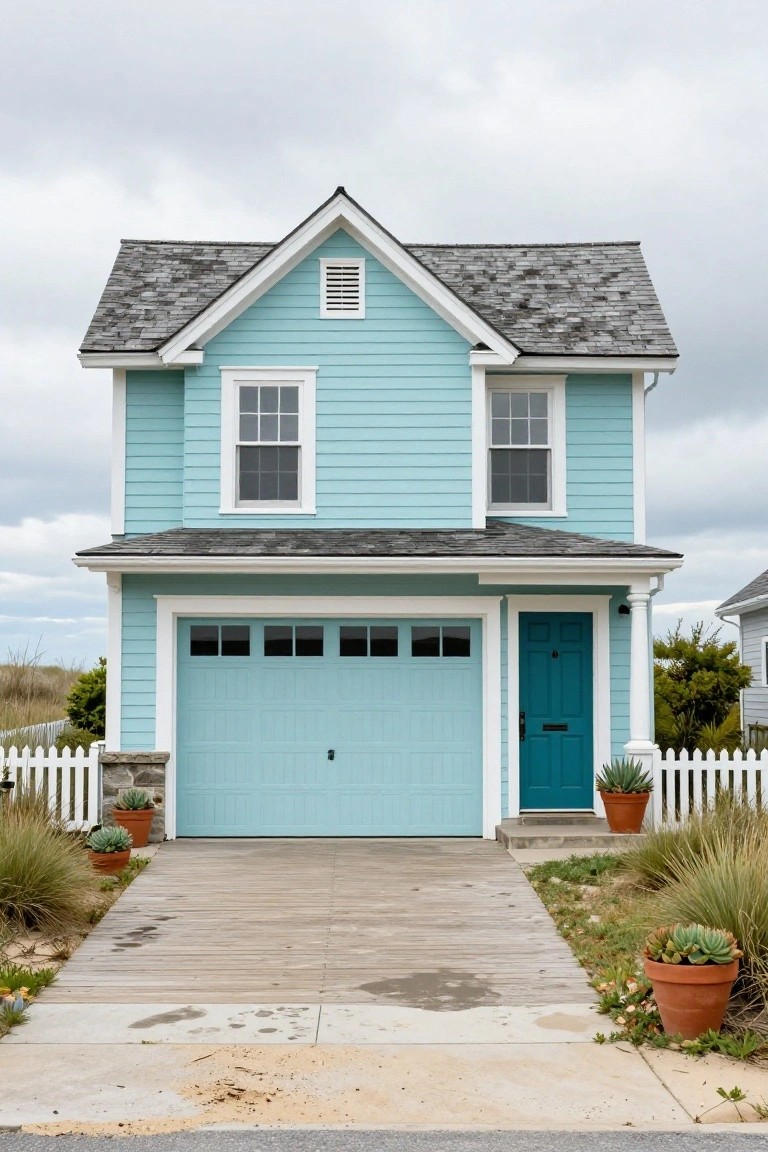
That garage door and house siding show off a soft turquoise paint. It falls in the cool blue-green family and looks closest to Sherwin-Williams Sea Salt or Benjamin Moore Palladian Blue. Behr’s Aqua Smoke reads pretty similar too. Homeowners pick this shade for its fresh beachy look that stays light and easy on the eyes.
The cool undertones keep it from going too green in most lights. It works best on coastal homes or anywhere with plenty of sun. White trim like you see here sets it off clean. Pair with natural plants or wood accents… just skip anything too yellow.
Sage Green Garage Door

This garage door pulls off a soft sage green that seems closest to Sherwin-Williams Clary Sage or Benjamin Moore October Mist. Behr’s Silver Sage reads very close too. It’s the kind of muted green with a warm earthy feel that sits easy next to brick.
That undertone keeps it from going too cool in shady spots. It works best on garages like this, where wood accents and plants nearby make it pop without trying. Stick to warm trim colors around it.
Charcoal Gray Garage Door

This setup features a deep charcoal gray on the garage door, the kind that looks closest to Sherwin-Williams Iron Ore or Benjamin Moore Onyx, maybe Behr Cracked Pepper too. It’s a solid dark gray with cool undertones that pulls the house together nicely against plain white walls. People go for it because it adds some weight up front without overwhelming the whole facade.
That cool edge makes it read even and modern in good light. Stick it on a bigger garage where it can stand out, and pair with black lanterns or simple plants like agave. Just check your lighting, north sides can make it feel a touch colder.
Bright Red Garage Door
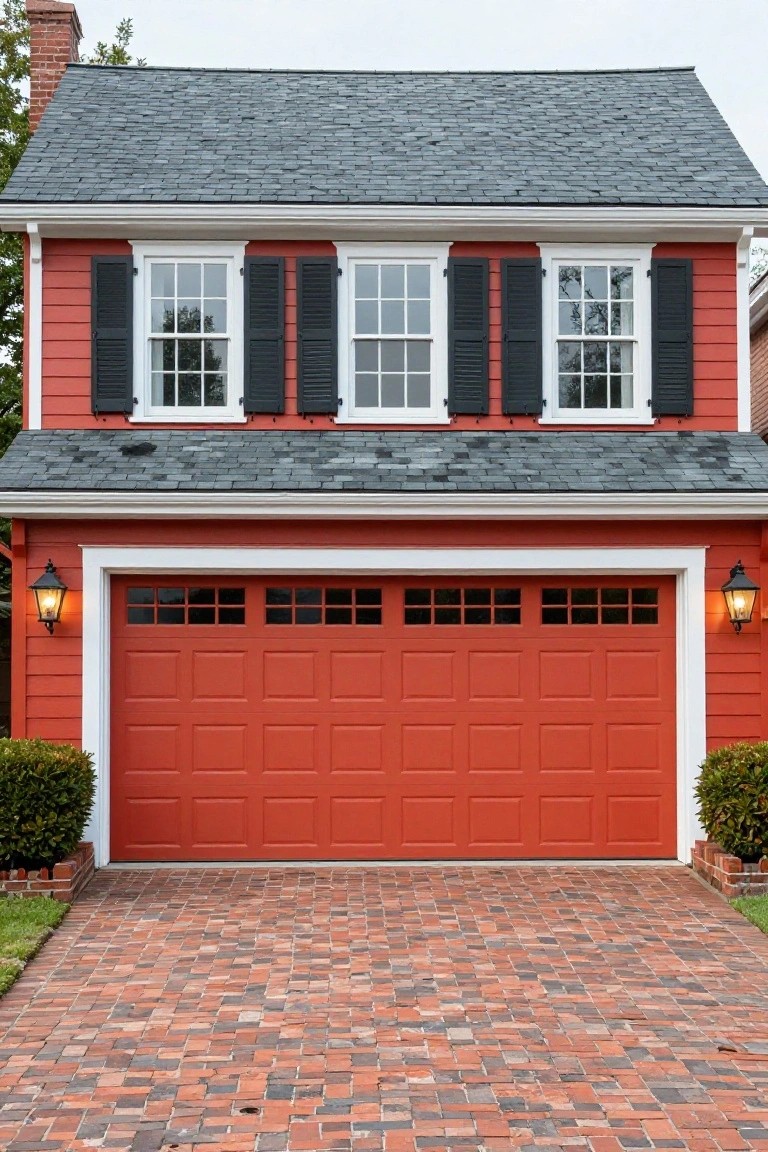
This garage door paint job goes with a true bright red. It looks closest to Sherwin-Williams Real Red or Benjamin Moore Caliente. Maybe Behr Limitless too. That kind of red pulls the whole front together since the house siding is in a close shade. People like it because it makes the garage feel like part of the house, not an add-on.
The warm undertones in this red work best in full sun. It holds up next to white trim and brick pavers without clashing. Just pair it with crisp whites on the house edges to keep things clean. Avoid cool grays nearby, or it might fight them a bit.
Barn Red Garage Doors
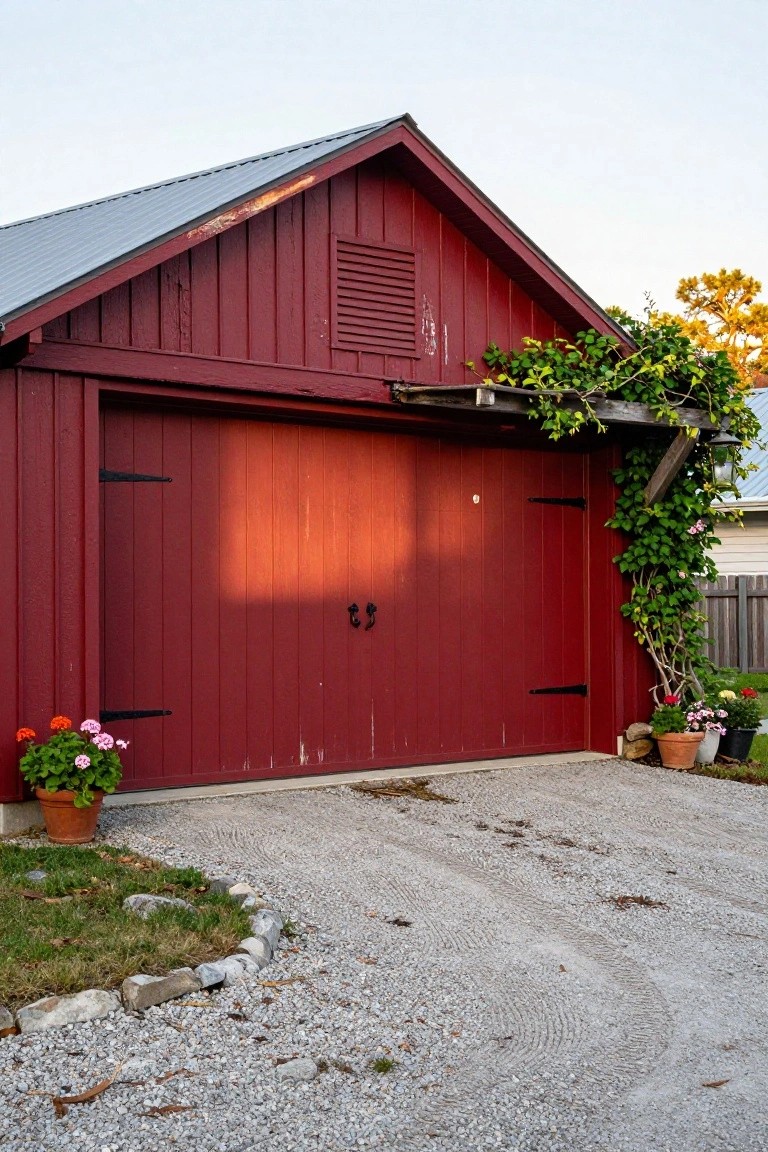
This garage uses a warm barn red paint that gives it that classic farm look. It seems closest to Sherwin-Williams Real Red (SW 6868), Benjamin Moore Caliente (AF-290), or Behr Barn Red (P270-7). Folks go for this color because it’s bold yet familiar. It stands up well on wood siding and makes the whole structure pop.
The red has warm undertones that suit gravel driveways and black hardware. Pair it with greenery or simple pots out front. It works best in good natural light… avoids looking too orange in shade.
Pale Teal Garage Door

This garage door pulls off a pale teal paint that’s got a nice cool vibe. It reads very close to Sherwin-Williams Sea Salt or Benjamin Moore Palladian Blue, maybe even Behr’s Willow Shade. Folks like it because it ties right into the house color without overpowering the wood accents nearby. Keeps everything looking fresh and pulled together.
That blue-green undertone shows up best in morning light. Pair it with warm wood like the siding here, or crisp white trim. It suits coastal spots or yards with plants, but test it north-facing to avoid going too gray.
Sunny Yellow Garage Doors
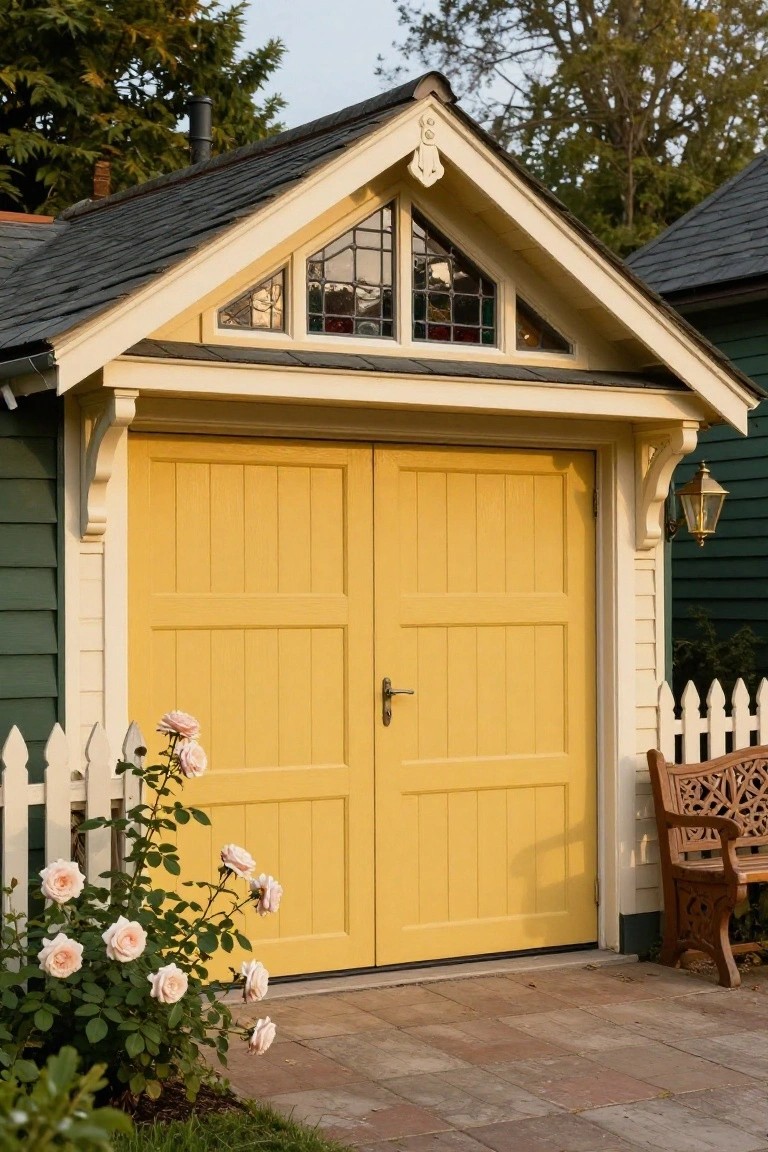
Big sunny yellow garage doors like these bring a happy pop to the front. It’s a warm yellow in the buttery family that stands out without trying too hard. Reads close to Sherwin-Williams Lemon Twist or Benjamin Moore Hawthorne Yellow. Behr Sprightly Yellow has that same feel. Folks pick this shade when they want cheer that lasts through seasons.
Warm undertones keep it from going brassy in the sun. Notice how it sits against that olive green siding and cream trim. Works best on detached garages in yard spots. Pair with soft whites or sages. Just test samples outside first.
Crisp White Siding
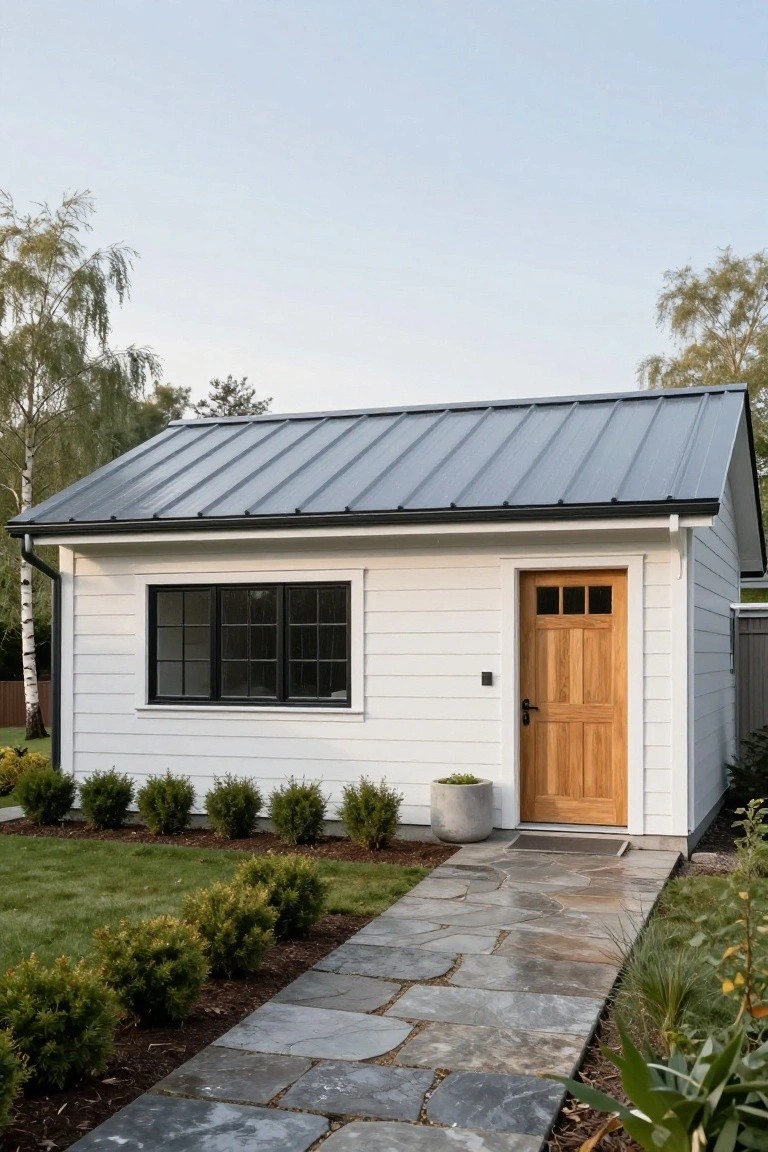
This garage uses a clean, bright white on the siding that reads closest to Sherwin-Williams Extra White or Benjamin Moore Chantilly Lace. Or Behr Ultra Pure White would be right there too. It’s the kind of white that stays sharp and fresh. No yellowing or going dingy. Folks like it because it lets the wood door and black trim stand out nice and clear.
That white has a cool undertone. It works best where you get good light. Pairs easy with natural wood tones or dark accents like the metal roof here. Just watch it doesn’t look too stark next to warmer brick. A little landscaping softens things up.
Vibrant Purple Garage Door

This garage door shows off a vibrant purple that’s hard to miss. It’s a bold take in the purple family, with enough saturation to pop nicely. The shade looks closest to Sherwin-Williams Intrigue, Benjamin Moore Exuberant Purple, or Behr Violet Verbena.
That cool blue undertone keeps it lively next to warm shingle siding and white trim. It shines in dappled natural light like this setup. Pair it with beiges and soft greens… or brick paths. On a bigger garage, it feels right at home without overpowering.
Warm Terracotta Garage Door
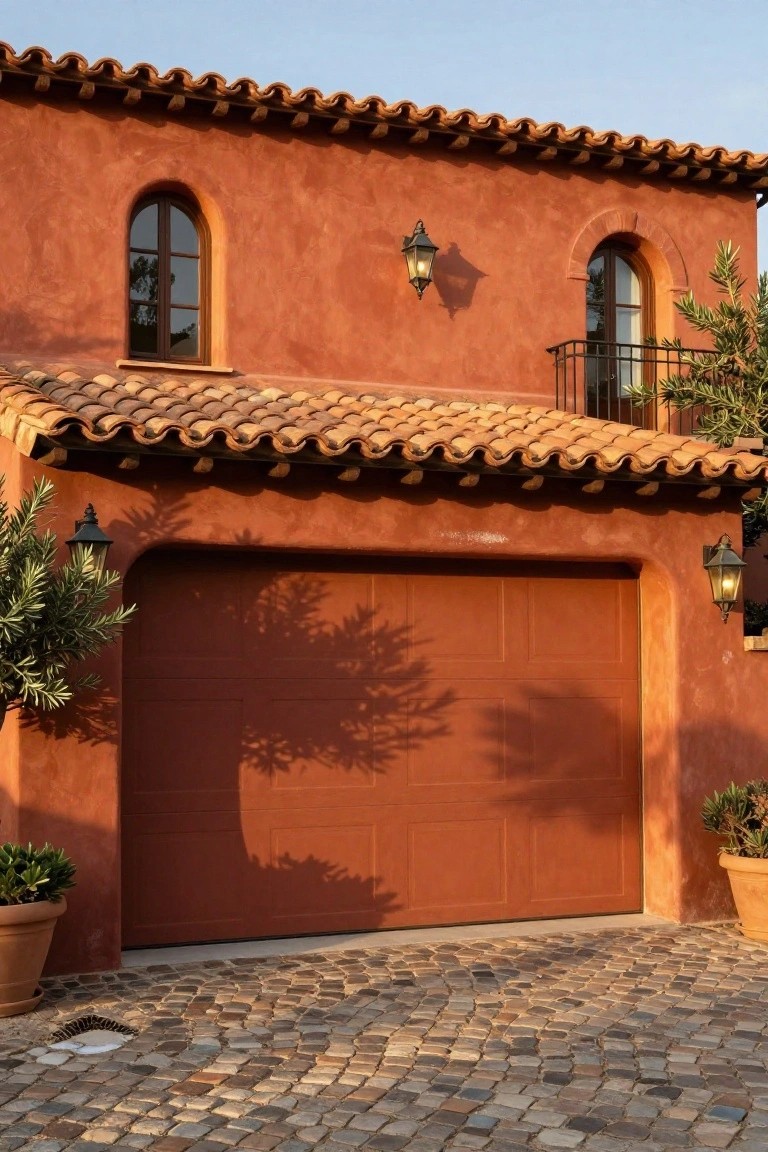
This garage door pulls from a warm terracotta family. It looks closest to Sherwin-Williams Rookwood Red, Benjamin Moore Potters Clay, or Behr Terracotta Tile. That earthy red-brown shade keeps things cohesive with stucco walls. Homeowners go for it when they want a Southwest feel without bold reds taking over.
Warm orange undertones make it glow in sunlight. Black trim and lanterns set it off nice. It suits driveways with some shade. Just test a sample first. Fades less on north sides.
Deep Green Garage Door

That deep green on the garage door pulls the whole front together. It’s a classic forest green shade, reading close to Sherwin-Williams Jasper or Benjamin Moore’s Hunter Green HC-123. Behr’s Dark Secret comes pretty near too. Folks like it because it feels solid next to stone and plants, without shouting.
The color sits with a touch of blue undertone. Good in partly shaded driveways like this one. Pair it with light stone or wood accents to keep things from going too dark… just watch if your spot gets full sun all day.
Deep Navy Garage Door

This garage door takes on a deep navy blue that’s rich and strong. It reads very close to Sherwin-Williams Naval or Benjamin Moore Hale Navy, maybe even Behr’s Abyss. Folks like it because it gives the front of the house some punch, especially next to all that warm cedar siding.
The blue has cool undertones that hold up well in shady spots or cloudy weather. It works best on bigger garages where it can make a statement. Stick with light trim around it, and keep plants simple… nothing too busy.
Warm Brown Garage Door

This garage door in a warm medium brown pulls the whole setup together without overpowering things. It’s got that cozy earth tone feel, reading close to Sherwin Williams Urbane Bronze or Benjamin Moore’s Black Suede, maybe Behr’s Cordovan Leather too. Folks like it because it stands up to the wood accents and siding nearby, keeping everything looking connected and lived-in.
The warm undertones make it work best in spots with good natural light, like facing a yard or driveway. Pair it with creamy siding or natural wood trim, and it won’t feel too heavy. Just watch for cooler north-facing garages, where it might read a touch darker.
Sage Green Garage Siding
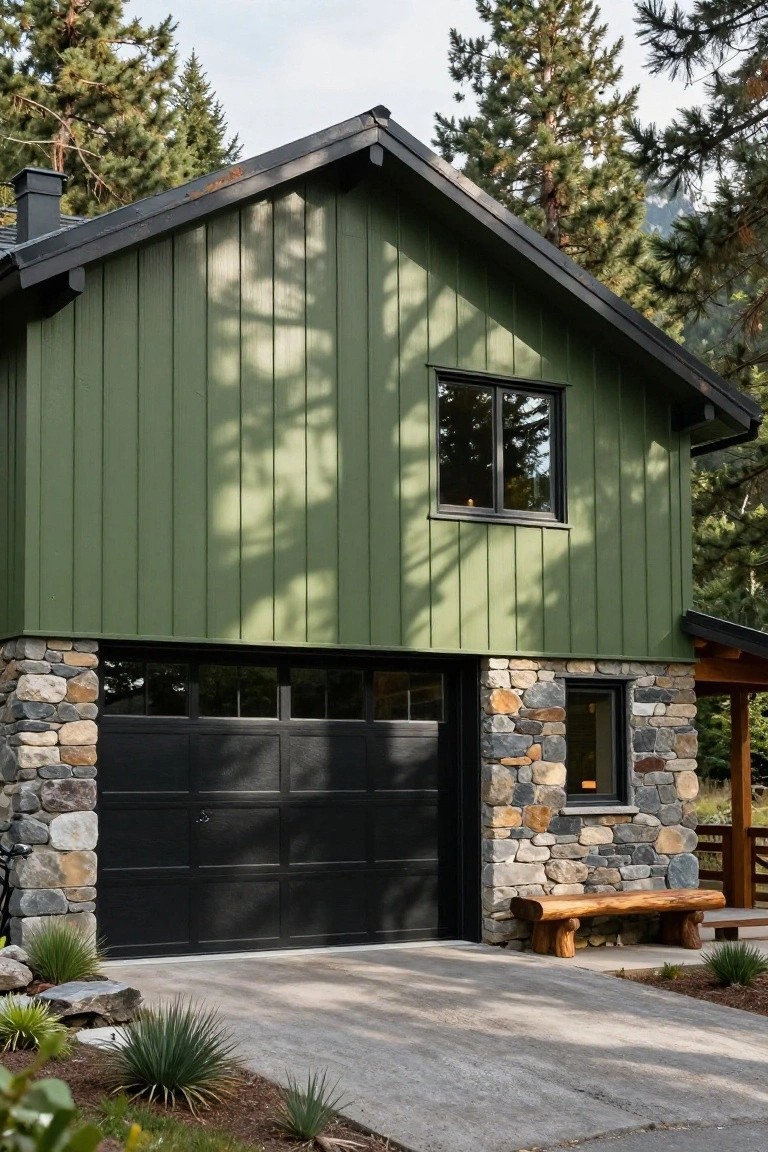
This garage shows off a muted sage green on the siding. It looks closest to Sherwin-Williams Pewter Green. Benjamin Moore Guilford Green reads very close too, along with Behr’s Silver Sage. It’s a soft, earthy green that sits right at home outdoors without shouting.
That gray undertone keeps it from going too yellow in the light. It pairs easy with the stone base and black door here, plus wood details. Good pick for wooded spots, just test it north-facing to see how cool it stays.
Soft Gray Garage Door
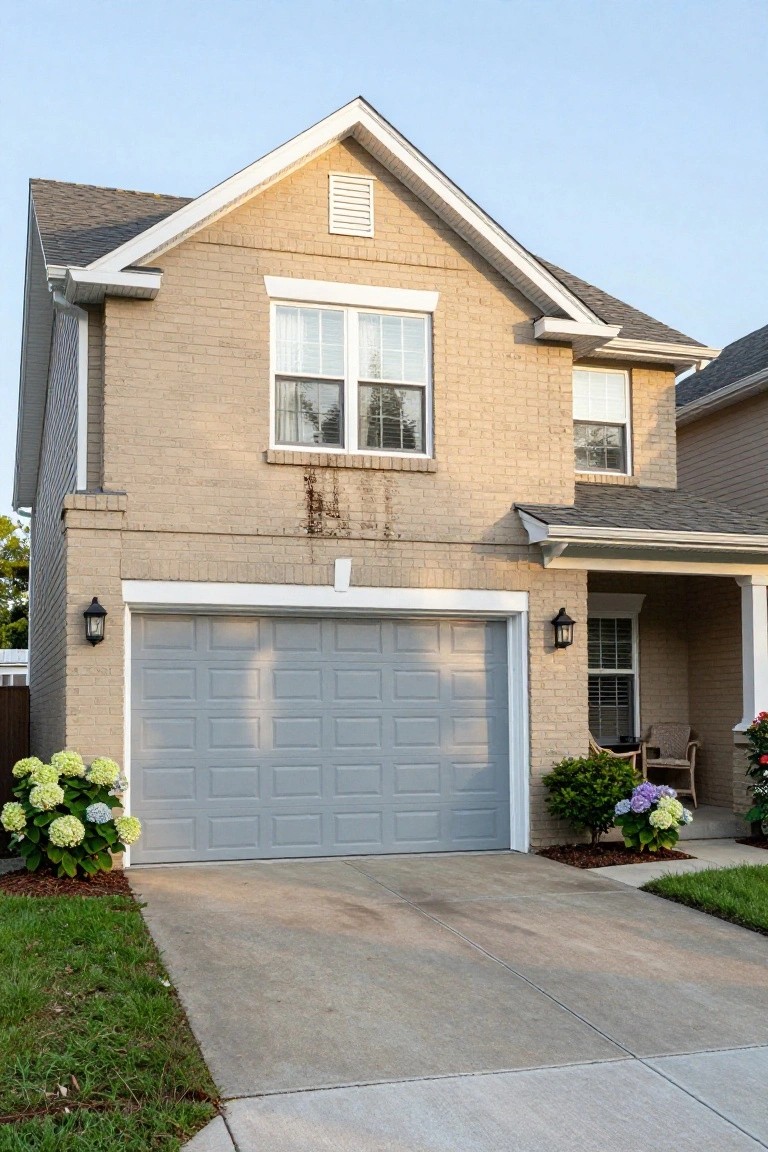
A soft gray like on this garage door keeps things looking clean and pulled together. It’s a neutral gray in the cool family that blends right into the beige brick without fighting it. Closest matches would be Sherwin-Williams Repose Gray, Benjamin Moore Gray Owl, or Behr Silver Drop. Folks go for this shade because it updates the front but stays easy on the eyes.
That cool undertone shows up best in morning light. It pairs fine with white lanterns or trim, and a few plants nearby soften it more. Skip it if your brick runs too yellow, though.
Deep Black Garage Siding

This garage uses a deep black paint on the siding that gives off a charred wood vibe. It’s solidly in the rich black color family. Closest matches would be Sherwin-Williams Iron Ore, Benjamin Moore Onyx, or Behr Black. Folks like it because it makes the white stucco next door pop and ties right into a sleek outdoor setup.
The undertone leans warm enough to feel grounded instead of harsh. It shines in modern homes with clean lines, paired against light floors or glass doors. Skip it if your garage is tiny, though. The scale matters here.
Cheerful Pale Yellow Garage Door
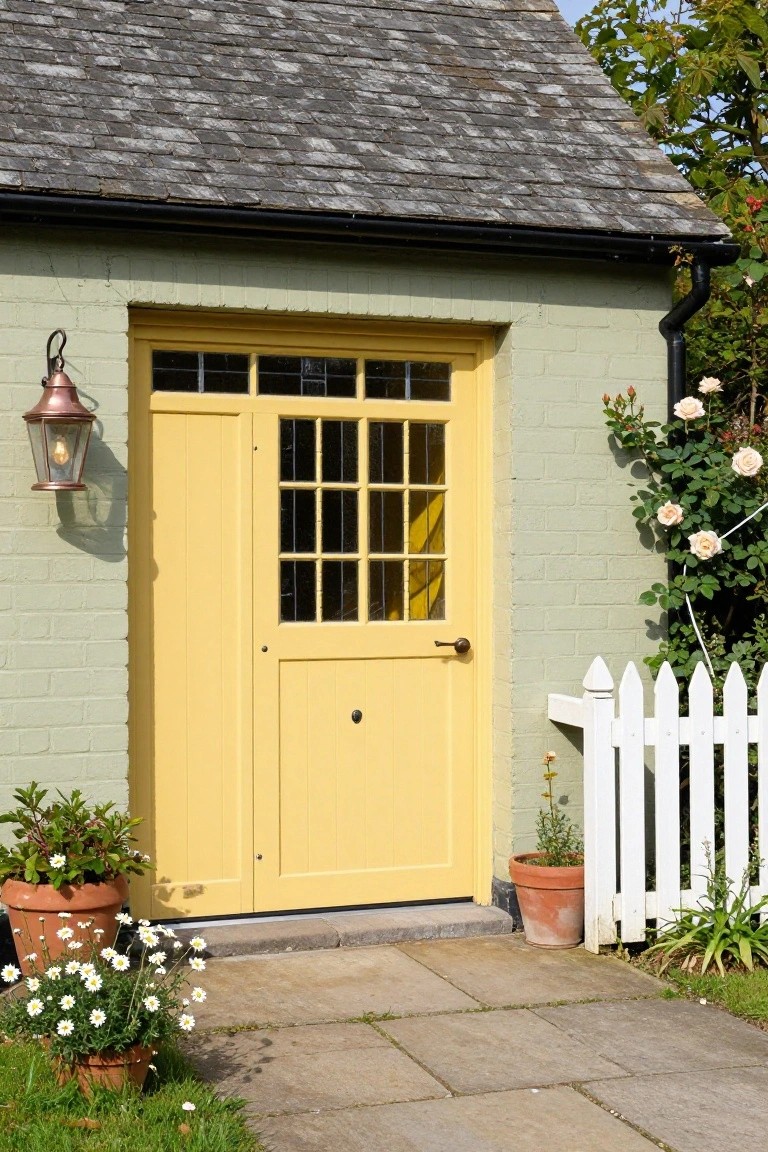
This garage door shows off a soft pale yellow that’s full of cheer without being too loud. It’s a warm yellow in that classic buttery family, and it looks closest to Sherwin-Williams Lemon Sorbet or Benjamin Moore Pale Yellow. Behr’s Lemon Glow has that same easy feel too. What stands out is how it perks up the whole front without overwhelming the space. Folks like it because it just feels happy, especially next to greenery.
The warm undertone keeps it from going brassy in sunlight. It works best on a detached garage or shed like this one, where the pale green walls let it shine. Pair it with white trim or black hardware, and maybe some potted plants out front. Just keep an eye on fading if it’s in full southern sun.
Frequently Asked Questions
Q: How do I test garage paint colors to match my house?
Paint big sample patches right on the garage walls. Check them morning, noon, and evening to see real light shifts. That way you nail the perfect blend.
Q: Should I paint my garage door the same color as the walls?
Paint the door a shade deeper from the same family for depth. It frames the entrance without overwhelming. Keep walls lighter to balance it out.
Q: What’s the best way to prep a dingy garage for painting?
Scrub off dirt and loose flakes with TSP cleaner. Rinse well and let it dry a full day. Fresh start makes paint stick like glue.
Q: Can bold colors work on a garage without clashing?
Pull accents straight from your house trim or roof. Use them sparingly on doors or edges. Neutrals on the rest keep harmony.
